What Color Do Orange and Black Make When Mixed?
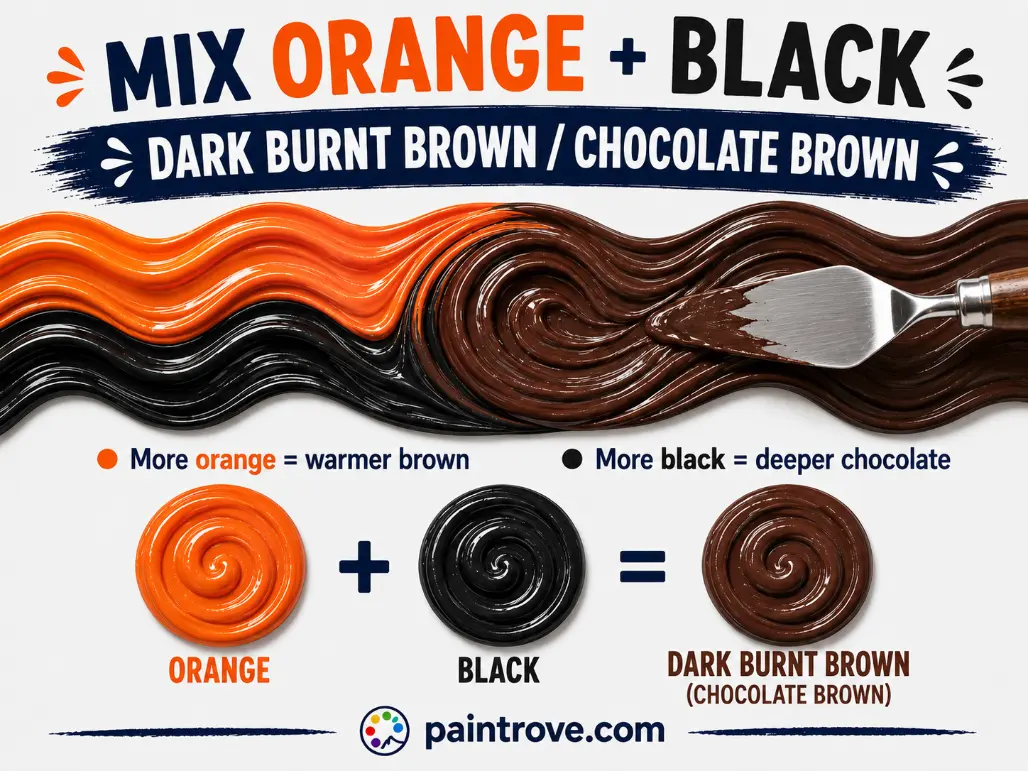
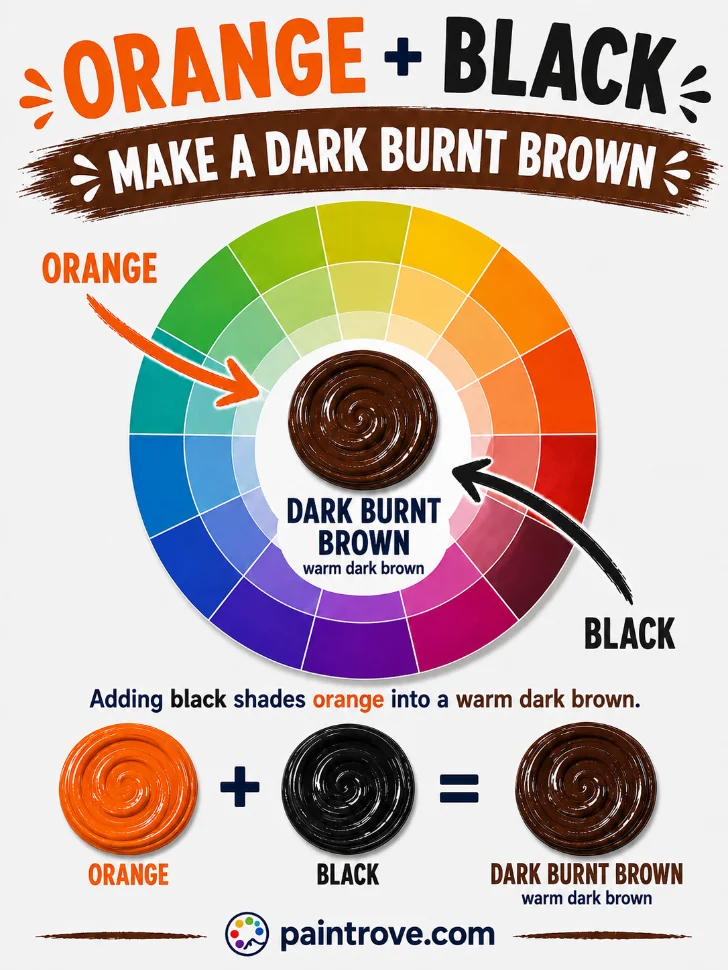
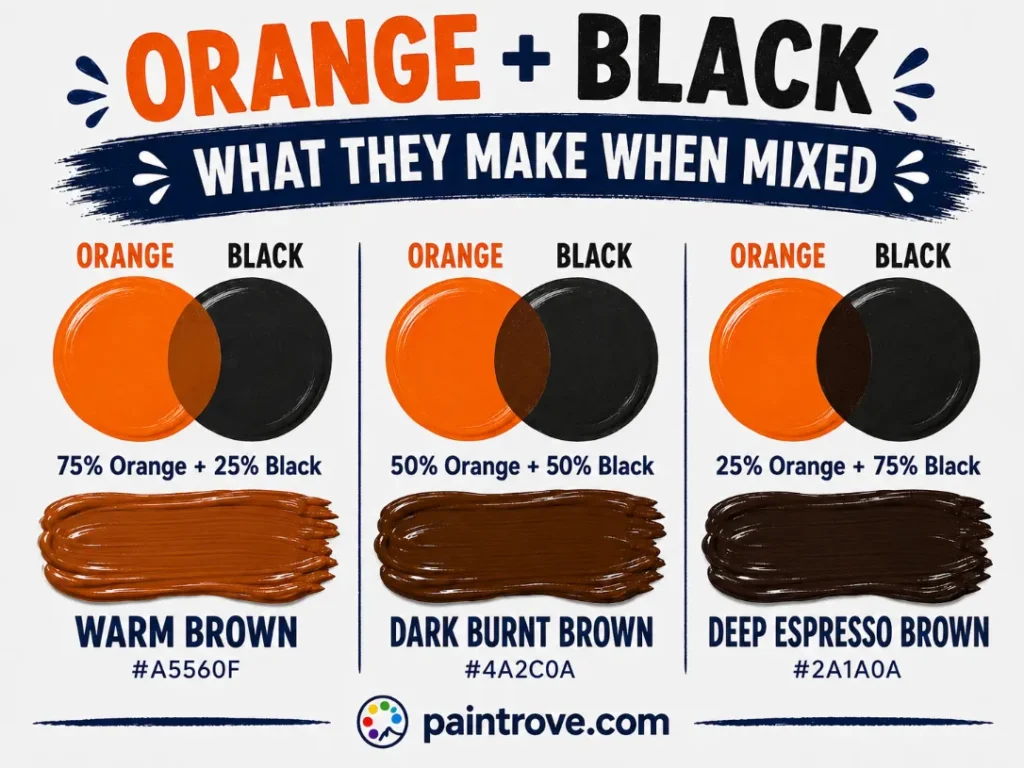
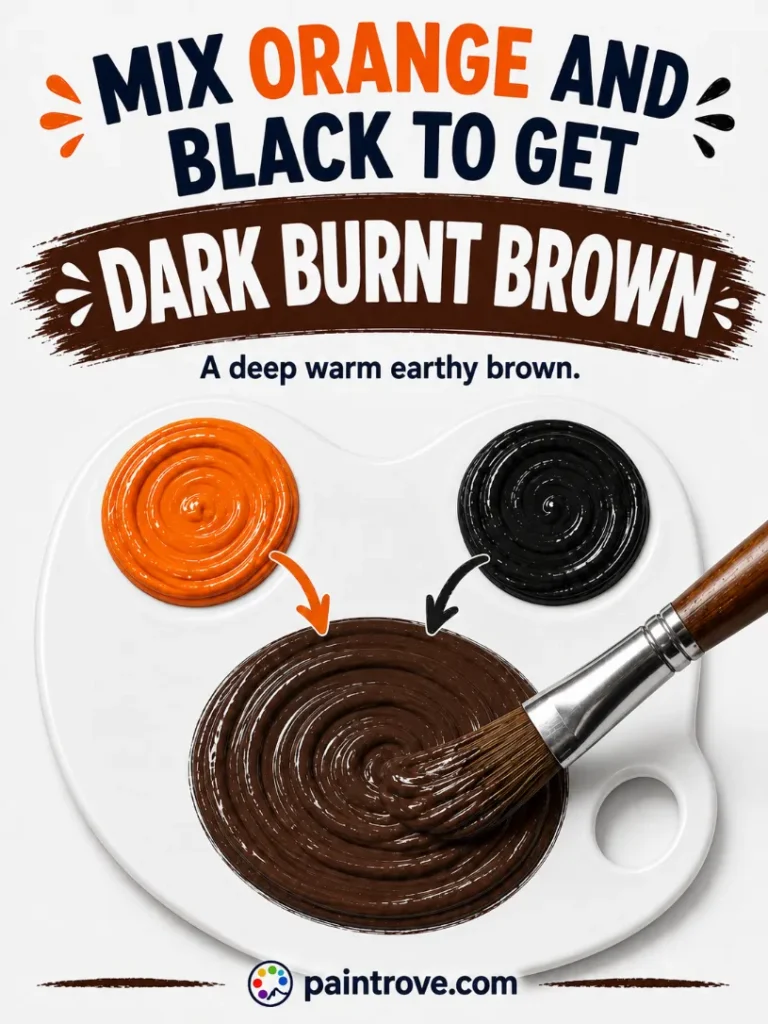
What Color Do Orange and Black Make? Quick answer: Orange and black make a dark burnt brown, at around hex #4A2C0A. Adding black to orange darkens it into brown, because brown is literally a shade of orange, a dark, desaturated version of it. A little black gives a rich warm brown; more black gives a deep chocolate or near-black brown.
Orange and black is the single easiest way to make brown, and understanding why unlocks the whole logic of the brown family. Because brown is simply orange with the lights turned down, adding black to orange is the most direct route to it.
This guide covers why the mix works, the exact ratios with hex codes, the pigments that give the best burnt browns, the full shade range, and how black behaves in light and print.
Why Do Orange and Black Make Brown?
Orange and black make brown because brown is a shade of orange, and adding black to any color creates a shade, a darker version of it.
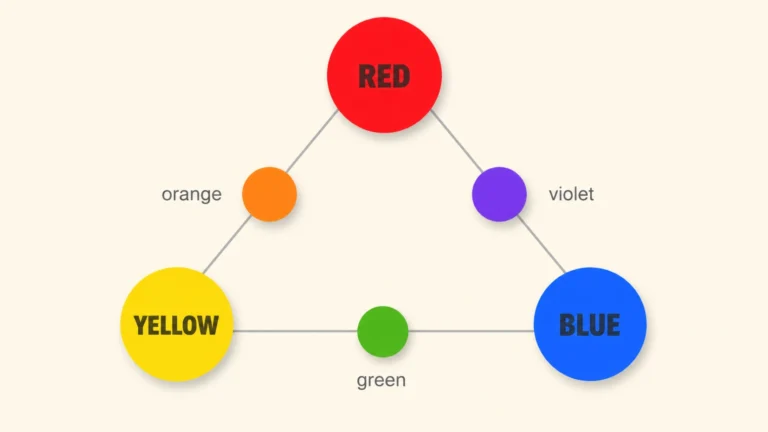
This is the key insight, and it is simpler than most color-mixing questions. Brown is not really its own hue. Brown is a dark, desaturated orange, which is why it does not appear as a separate slice on the color wheel. Orange is a secondary color made from red and yellow, as covered in what colors make orange. Black is not a hue at all; it is the absence of reflected light, and in mixing it works by absorbing light rather than adding color.
So when you add black to orange:
Orange + Black = Orange darkened = Brown
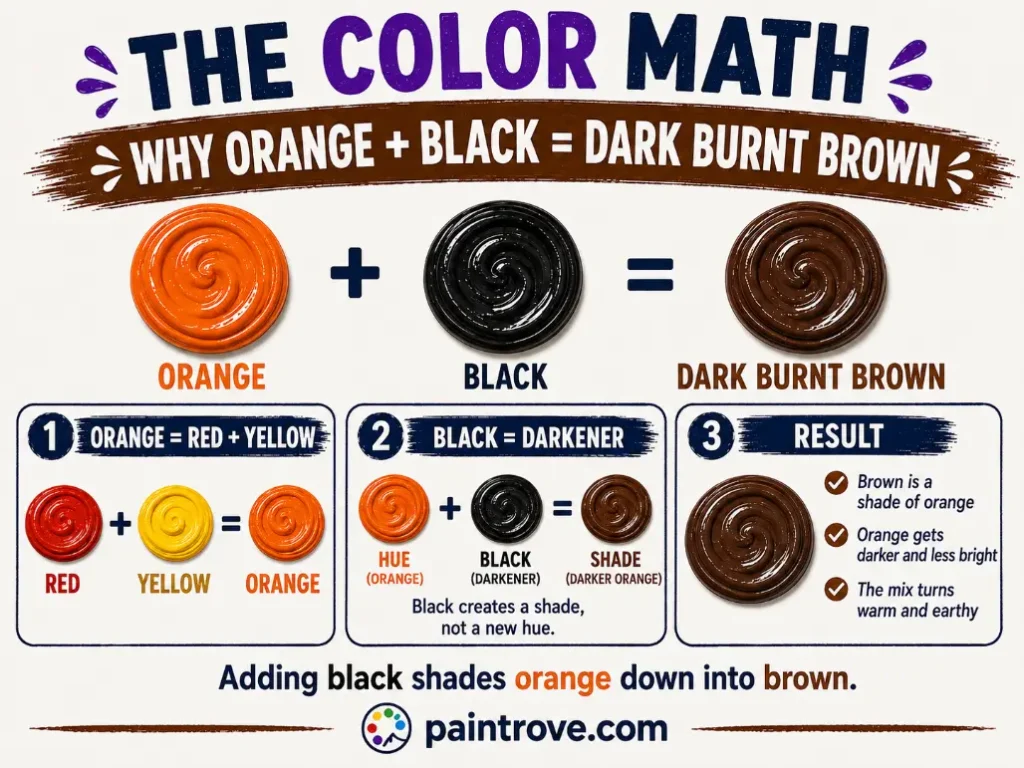
That is the whole equation. In color theory, adding black to a color creates a shade, and brown is the shade of orange. This makes orange and black the most direct answer to the common question “what two colors make brown,” even more direct than mixing all three primaries, because you are simply darkening orange straight to its brown form. It is covered in full in our guide to how to make brown.
What Colors Do Orange and Black Make? The Full Range
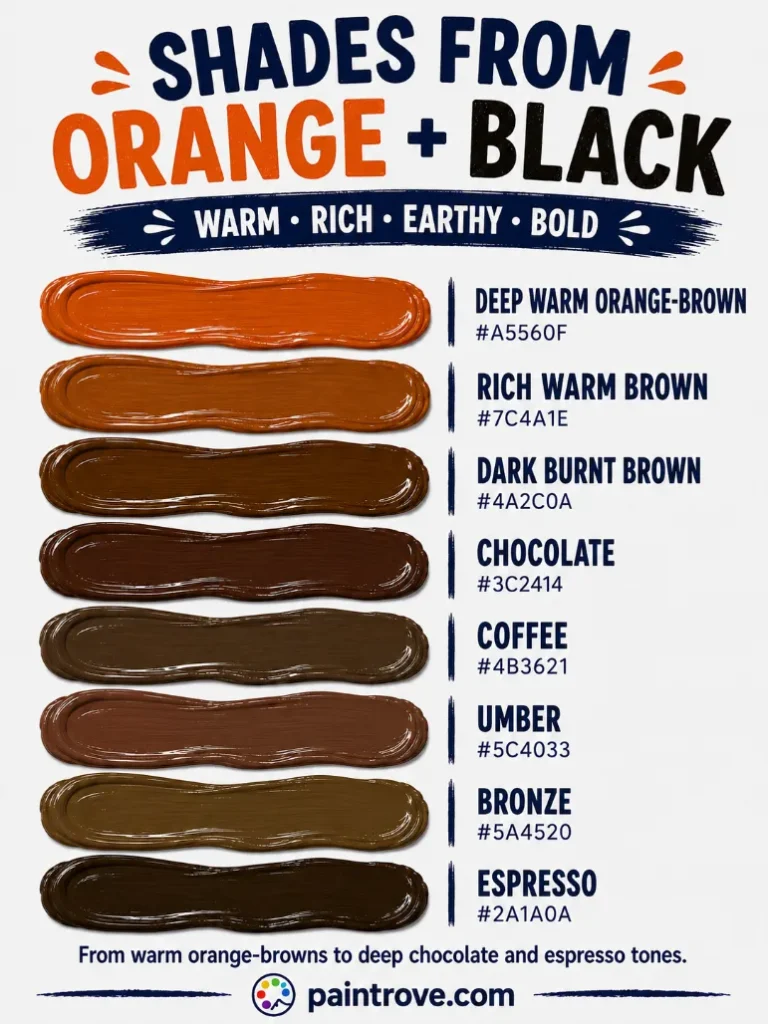
Orange and black produce a family of deep, warm browns rather than a single color. The exact shade depends on the ratio and the type of orange you use:
| Result | Hex code | When you get it |
|---|---|---|
| Burnt brown | Hex #4A2C0A | Balanced mix |
| Warm brown | Hex #6F4E37 | Orange-heavy mix |
| Chocolate | Hex #3C2414 | Black-heavy mix |
| Coffee | Hex #4B3621 | Balanced mix, warm |
| Rust brown | Hex #7C3A1D | Red-orange plus black |
| Bronze | Hex #5A4520 | Yellow-orange plus black |
| Espresso | Hex #2A1A0A | Very black-heavy mix |
| Umber | Hex #5C4033 | Balanced mix, muted |
Orange and Black Mixing Ratios and Hex Codes
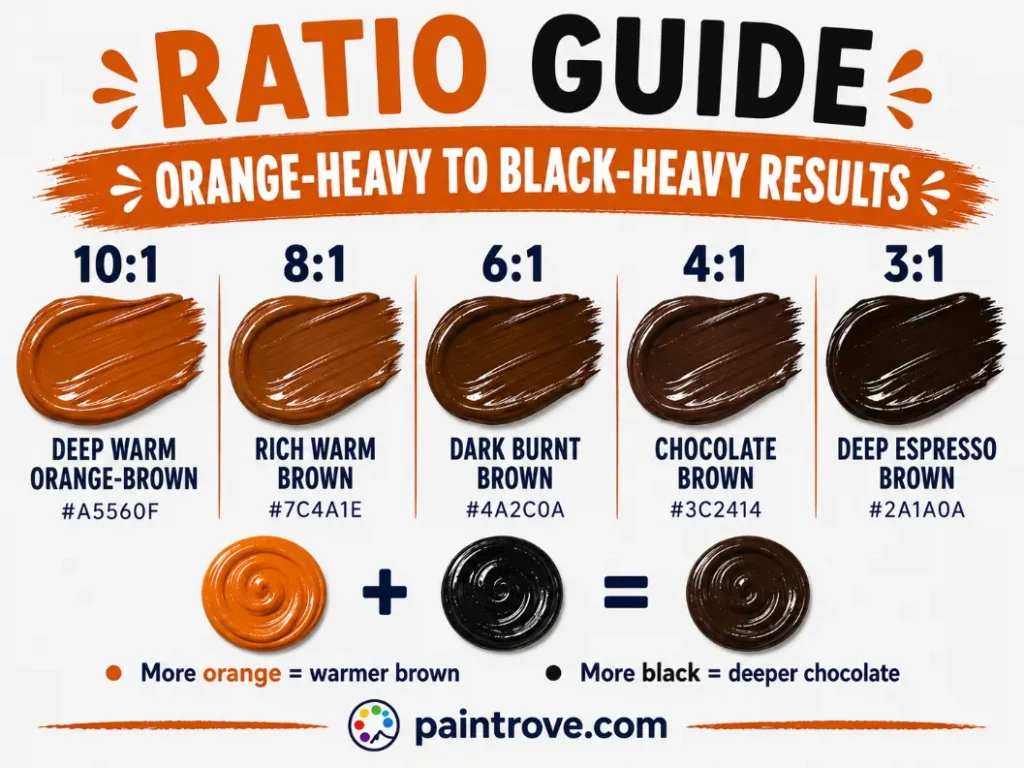
Black is extremely strong, so the ratios lean heavily toward orange. Here is the working chart with hex targets in plain text:
| Ratio (Orange : Black) | Resulting shade | Hex code |
|---|---|---|
| 10 : 1 | Deep warm orange-brown | Hex #A5560F |
| 8 : 1 | Rich warm brown | Hex #7C4A1E |
| 6 : 1 | Burnt brown | Hex #4A2C0A |
| 4 : 1 | Chocolate brown | Hex #3C2414 |
| 3 : 1 | Deep espresso brown | Hex #2A1A0A |
| 2 : 1 | Near-black brown | Hex #1C1208 |
| 8 : 1 with red-orange | Rust brown | Hex #7C3A1D |
| 8 : 1 with yellow-orange | Bronze-brown | Hex #5A4520 |
Practical notes:
- Add black to orange in tiny amounts. Black is one of the strongest pigments on any palette, so a brush-tip shifts a whole pile of orange. It is far easier to add more than to rescue an over-darkened mix.
- Mix thoroughly before judging. Half-mixed black leaves streaks that look darker than the finished blend.
- Test on white paper and let it dry. Dark browns are hard to read in a pile, and acrylics dry darker still.
Which Orange and Black Pigments Should You Use?
The type of orange decides the character of the brown, and the type of black matters too:
| Orange used | Black used | Resulting brown |
|---|---|---|
| Cadmium orange | Ivory black | Warm, rich burnt brown |
| Red-orange (vermilion) | Mars black | Deep rust-brown, maroon-leaning |
| Yellow-orange (amber) | Ivory black | Lighter bronze-brown, slight green |
| Burnt orange | Any black | Deep, earthy chocolate |
| Bright orange | Lamp black | Cooler, more neutral brown |
The pattern from painters: a red-leaning orange gives a warmer, maroon-flavored brown, while a yellow-leaning orange gives a lighter, slightly greenish bronze-brown. The type of black adds a subtle bias too. Ivory black is warm and works beautifully here, keeping the brown rich, while lamp black and mars black are cooler. For a classic warm burnt brown, use cadmium orange with ivory black, and add the black sparingly.
Every Burnt Brown Shade You Can Make
Between ratio, pigment choice, and additions of white, orange and black cover the deep, warm brown family. The reference table:
| Shade | Hex code | How to mix it |
|---|---|---|
| Warm brown | Hex #6F4E37 | Orange plus a little black |
| Burnt brown | Hex #4A2C0A | Orange plus black |
| Chocolate | Hex #3C2414 | Orange plus more black |
| Coffee | Hex #4B3621 | Balanced warm mix |
| Espresso | Hex #2A1A0A | Orange plus heavy black |
| Rust brown | Hex #7C3A1D | Red-orange plus black |
| Bronze | Hex #5A4520 | Yellow-orange plus black |
| Umber | Hex #5C4033 | Muted orange plus black |
| Mahogany-brown | Hex #6B2F1A | Red-orange plus black, deep |
| Tan | Hex #D2B48C | Burnt brown plus white |
| Khaki-brown | Hex #7C6E4A | Yellow-orange brown plus white |
| Near-black brown | Hex #1C1208 | Orange plus very heavy black |
How Do You Make Dark Brown from Orange and Black?
Add black to orange gradually until you reach a deep, rich brown around hex #4A2C0A. Use a warm cadmium orange and add black by the brush-tip, since it darkens fast. For chocolate and espresso tones, add a little more black, but stop before the mix loses all its warmth and reads as plain black. This is the quickest way to a dark brown, though for the very richest darks many painters prefer to deepen with blue, as covered in how to make brown.
How Do You Make Lighter Burnt Brown?
Use less black, or lighten the finished brown with white for tan and khaki-brown tones. Because the mix is warm, these lightened browns stay cozy. Adding a touch of yellow instead of white keeps them warmer and brighter. This connects to the tan and beige family covered in brown and white mixed.
How Do You Make Rust or Bronze?
Use a red-orange for a warmer, rust-flavored brown, or a yellow-orange for a lighter bronze-brown. These warm variations connect to the rust tones of red and brown mixed and the golden browns of brown and yellow mixed.
The Halloween Connection
Orange and black is, of course, the color pairing of Halloween, and there is real color theory behind why it works so well side by side. Orange and black create one of the highest-contrast pairings possible: orange is bright, warm, and advancing, while black is the darkest possible value.
That maximum contrast makes orange pop dramatically against black, which is exactly why it reads as bold, energetic, and slightly eerie. The same two colors that mix into humble burnt brown become electric when placed next to each other, a perfect example of how mixing and pairing colors produce opposite effects.
What Do Orange and Black Make in Light and Print?
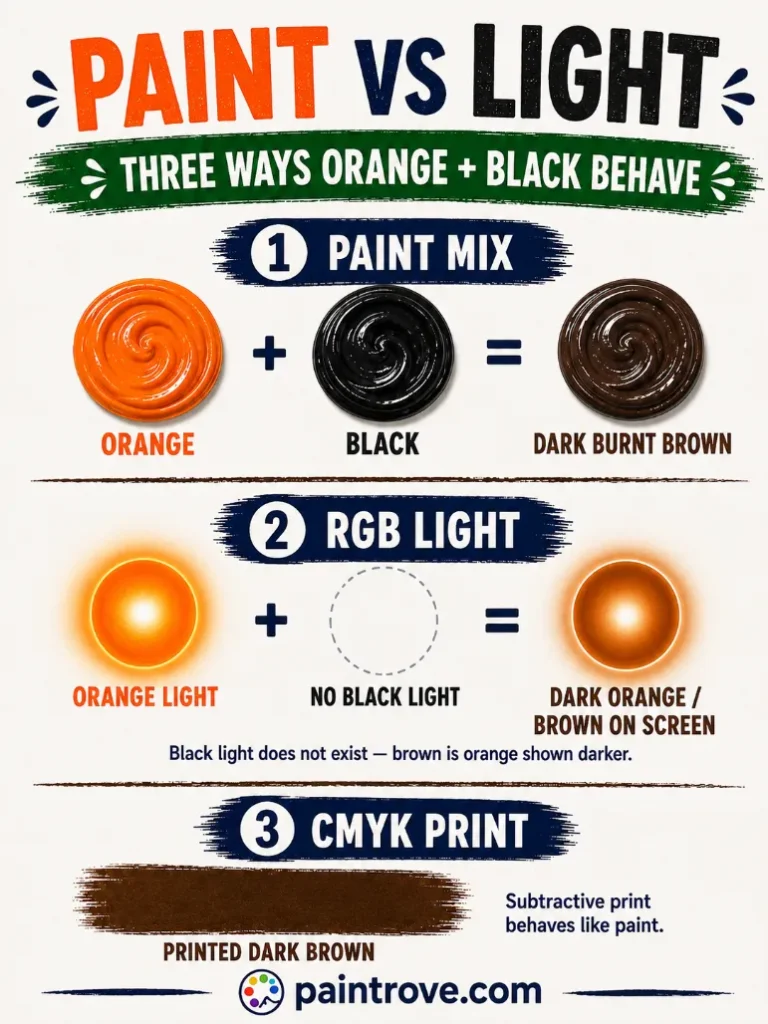
In light, you cannot mix orange and black, because black light does not exist. Black is the absence of light, so there is no black beam to add to an orange one. Screens use the RGB model, where a darker orange is simply orange displayed at lower brightness, which reads as brown, reached by dimming rather than adding black pigment.
In printing, using the CMYK color model, black is very real and important. The K in CMYK stands for the key black plate. Dark brown in print comes from orange-making inks plus black, working much like the paint version, since both are subtractive.
| System | Type | Orange + Black makes | Notes |
|---|---|---|---|
| RYB (paint) | Subtractive | Dark burnt brown | Hex #4A2C0A |
| RGB (light) | Additive | Orange at low brightness | No black beam exists |
| CMYK (printing) | Subtractive | Dark brown with black (K) | Black is a base ink |
Troubleshooting Orange and Black Mixes
The mix went straight to black. Too much black, which overwhelms fast. Rebuild and use a fraction of the black, adding it by the brush-tip.
The brown looks flat and dead. Too much black desaturated it. Add a little orange back, or for deep browns, deepen with blue instead of black to keep the color alive.
The brown shifted color unexpectedly. Your black has a bias. Ivory black is warm and keeps brown rich; lamp and mars black are cooler and can dull it.
The brown is too warm or too cool. Adjust the orange: a red-orange warms it, a yellow-orange lightens and cools it slightly.
It dried darker. Standard acrylic behavior, pronounced with dark colors. Mix a step lighter than your target.
Burnt Brown in Art, Fashion, and Design
The deep burnt browns from orange and black are warm, grounding earth tones, while the unmixed pairing is one of the most striking contrasts in design.
In Art
Burnt browns are essential earth tones in painting, capturing soil, wood, leather, and warm shadow. Because orange and black make brown so directly, it is a quick studio route to a deep warm brown, though painters often prefer to deepen with blue for the richest darks, since heavy black can flatten a color.
Understanding that brown is a shade of orange is one of the most useful concepts in color mixing, and this pairing demonstrates it perfectly. Used unmixed, orange and black create the high-contrast drama seen in everything from tiger stripes to warning signs.
In Fashion
Burnt brown, rust, and chocolate are warm, earthy staples of autumn and winter wardrobes, reading as cozy and grounded. Orange and black worn together, unmixed, is bold and high-energy, carrying strong associations with Halloween, sports teams, and streetwear that wants to command attention. The mixed browns, by contrast, are quiet and versatile, pairing with cream, tan, and denim.
In Interiors and Branding
Deep burnt browns bring warmth and richness to interiors, especially in wood, leather, and earthy schemes. Used unmixed, orange and black create a dramatic, energetic contrast popular in bold and sporty design. In branding, warm browns signal craft and reliability, while the orange-black contrast signals energy and boldness, which is why it appears across sports, entertainment, and attention-grabbing identities.
Quick Reference: Orange + Black Cheat Sheet
| Question | Answer |
|---|---|
| Orange + black in paint | Dark burnt brown (hex #4A2C0A) |
| Orange + black in light | Dimmed orange; no black light exists |
| Why brown | Brown is a shade of orange |
| A little black | Warm brown |
| More black | Chocolate, espresso, near-black |
| Red-orange | Rust-brown, maroon-leaning |
| Yellow-orange | Bronze-brown, lighter |
| Plus white | Tan, khaki-brown |
| Best pigments | Cadmium orange + ivory black |
| Color type | Dark brown, a shade of orange |
FAQs:
What color do orange and black make when mixed?
Orange and black make a dark burnt brown, at around hex #4A2C0A. Because brown is a shade of orange, adding black simply darkens orange into brown. A little black gives a warm brown; more black gives chocolate, espresso, and near-black tones.
Why do orange and black make brown?
Because brown is literally a shade of orange, a dark, desaturated version of it. Adding black to any color creates a shade, so adding black to orange produces its shade, which is brown. This makes orange and black the most direct way to mix brown.
How do you make dark brown with orange and black?
Add black to a warm orange gradually, by the brush-tip, until you reach a deep brown around hex #4A2C0A. For chocolate and espresso, add a little more black, but stop before it loses its warmth. For the richest darks, deepening with blue instead of black keeps the brown more alive.
Do orange and black make the best brown?
It is the most direct brown, since brown is a shade of orange. However, black can flatten and desaturate a color, so while orange and black gives a quick, easy brown, many painters build their richest browns by darkening orange with blue or by mixing all three primaries.
What kind of black should I use with orange?
Ivory black is warm and keeps the brown rich, making it the best choice for warm burnt browns. Lamp black and mars black are cooler and can dull the mix slightly. Use whichever bias matches the brown you want.
Can you mix orange and black in light?
No. Black light does not exist, because black is the absence of light. On a screen, a darker orange is simply orange shown at lower brightness, which reads as brown, reached by dimming rather than adding black.
Why is orange and black associated with Halloween?
Because they create one of the highest-contrast pairings possible. Bright, warm orange pops dramatically against the darkness of black, producing a bold, eerie effect. The same two colors that mix into brown become striking and energetic when placed side by side.
How do you keep the brown from going flat?
Use black sparingly and add a little orange back if it dulls, or deepen with blue instead of black for a richer dark. Black desaturates as it darkens, so restraint keeps the burnt brown warm and alive.
Orange and black make a dark burnt brown, the most direct mix on the palette because brown is simply a shade of orange. Add black sparingly, choose your orange to set the warmth, and the whole deep earthy brown family is yours.
For the full brown system, see how to make brown, explore the parent color at what colors make orange, lighten the result with brown and white mixed, or step back to the color wheel.