What Colors Make Pink? Mixing Guide + Shades
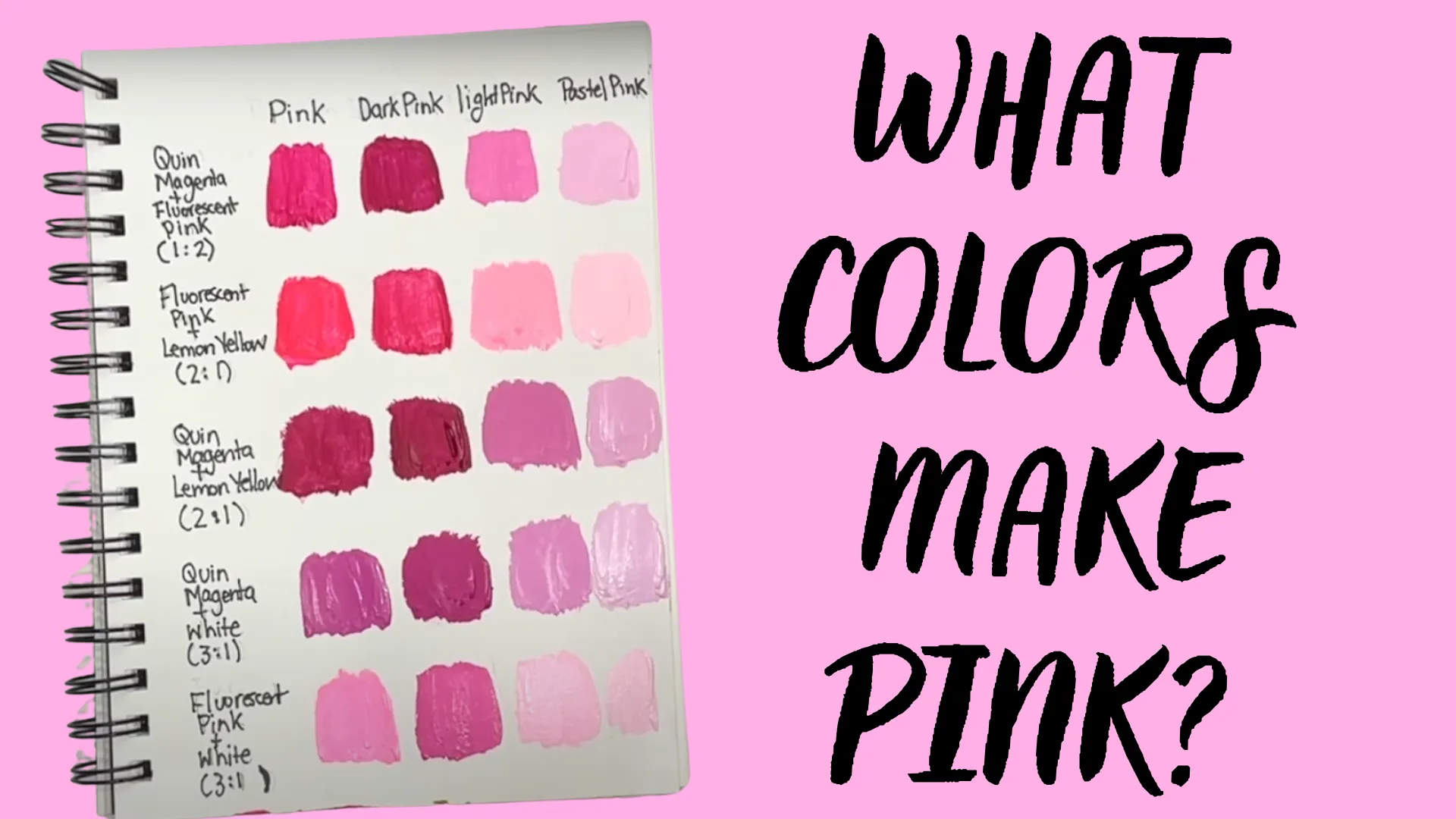
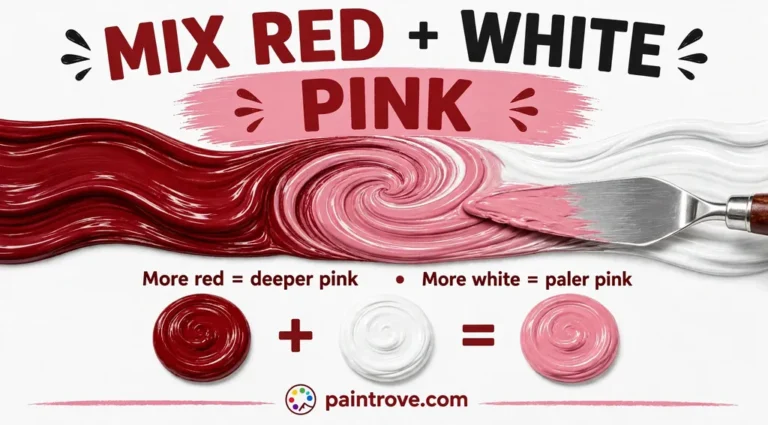
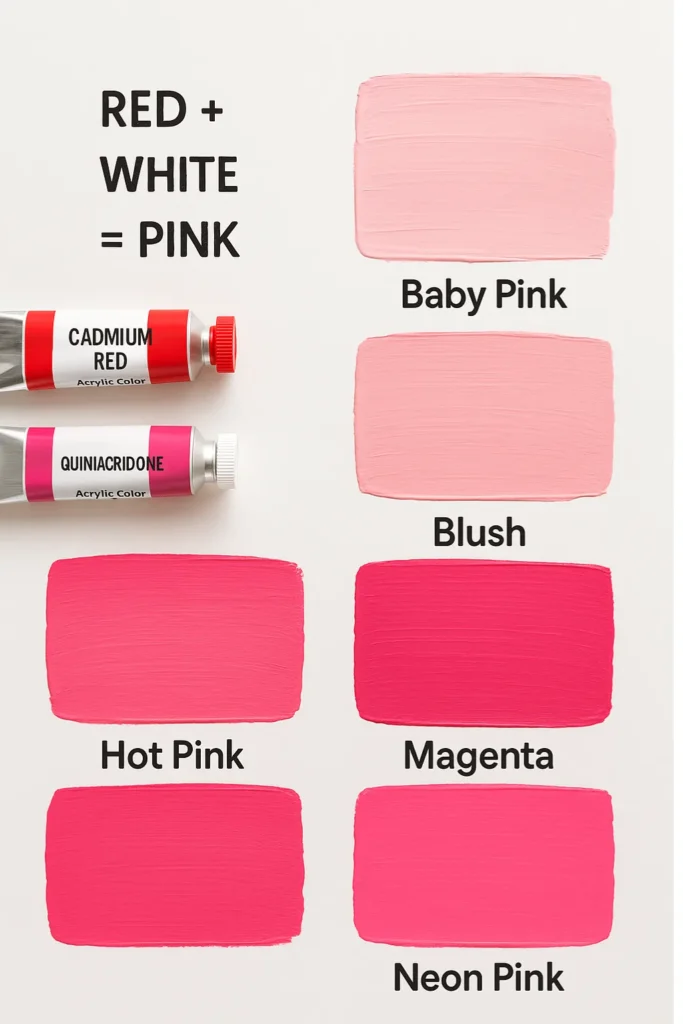
Quick answer: Pink is made by mixing red and white. Equal parts give a medium pink at around hex #FF69B4 range, more white gives a soft pastel pink, and more red gives a deeper rose. The red you choose decides the shade: a cool red like magenta or quinacridone makes bright, vivid pink, while a warm red like cadmium makes a softer, peachy pink.
Pink looks like the simplest color to mix, just red and white, but the exact pink you get depends entirely on which red you start with. Choose the wrong red and your pink turns dull or peachy instead of the bright, clean color you pictured. This guide covers the core recipe, the pigments that make the best pink, the exact ratios with hex codes, how to mix every shade from pastel to hot pink, how to make pink without white, and how pink behaves in light and print.
What Two Colors Make Pink?
Pink is made by mixing red and white. Red provides the hue, and white lightens it into pink.
In color theory, pink is not a hue of its own on the color wheel. It is a tint of red, which means red lightened with white. Any time you add white to red, you move along a scale from deep red through rose and medium pink to the palest blush. This makes pink one of the easiest colors to mix, since it needs only one primary color, red, plus white. In fact, pink is usually defined as a light or desaturated shade of red, rose, or magenta.
The amount of white controls the lightness: the more white, the paler and softer the pink; the less white, the deeper and more saturated. But lightness is only half the story. The other half, the part that trips most people up, is which red you use.
The Secret to Great Pink: Choose the Right Red
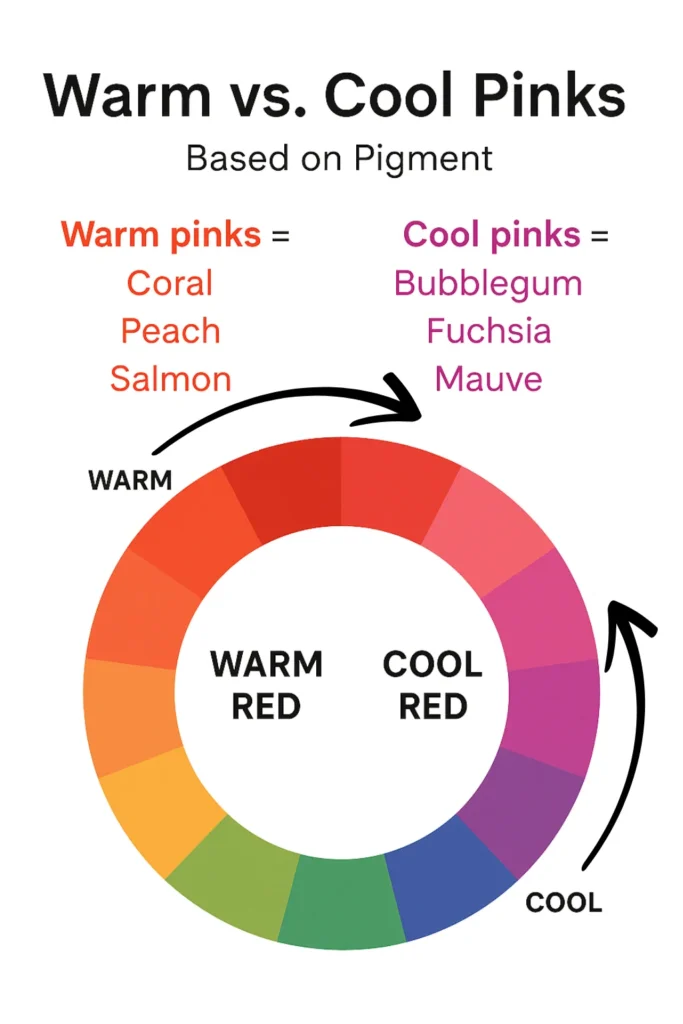
Here is what separates a bright, clean pink from a dull one: the undertone of your red. Every red leans slightly warm or cool, and that bias decides the pink you get.
- Cool reds (magenta, quinacridone red, permanent rose, crimson, alizarin crimson) lean toward purple, containing a hint of blue. Mixed with white, they make bright, vivid, clean pinks.
- Warm reds (cadmium red, vermilion, scarlet) lean toward orange, containing a hint of yellow. Mixed with white, they make softer, peachier, more muted pinks.
The rule: for bright pink, use a cool red; for soft or peachy pink, use a warm red. This is why a beginner reaching for cadmium red is often surprised their pink looks dusty rather than vivid. The cadmium’s hidden yellow mutes it. Switch to quinacridone or magenta and the pink suddenly glows.
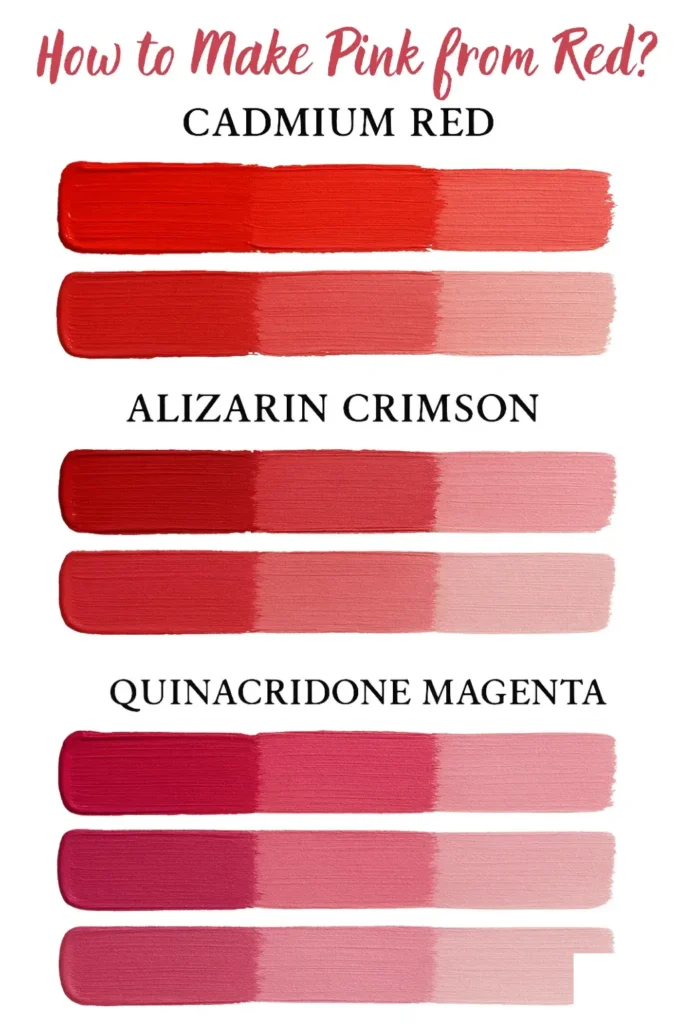
| Red used | Resulting pink |
|---|---|
| Quinacridone red | Bright, clean pink |
| Magenta | Vivid, hot-pink-capable |
| Permanent rose | Fresh, slightly cool pink |
| Alizarin crimson | Deep, rich cool pink |
| Cadmium red | Soft, peachy, muted pink |
| Venetian red (earth) | Dull, dusty pink, avoid for bright |
Pink Mixing Ratios and Hex Codes
The ratio of red to white decides the depth of the pink. Here is the working chart with hex targets in plain text:
| Ratio (Red : White) | Resulting shade | Hex code |
|---|---|---|
| 1 : 1 | Deep rose pink | Hex #E75480 |
| 1 : 2 | Medium pink | Hex #FF69B4 |
| 1 : 4 | Soft pink | Hex #FFB6C1 |
| 1 : 8 | Pastel baby pink | Hex #FFD1DC |
| 1 : 1 with magenta | Hot pink | Hex #FF1493 |
| 1 : 2 with cadmium red | Peachy pink | Hex #FFB09C |
| 1 : 4 plus a touch of blue | Cool mauve-pink | Hex #E0A4C4 |
| 1 : 4 plus a touch of yellow | Warm coral-pink | Hex #FFB6A0 |
Practical notes:
- Always add red into white, not white into red. Red is far stronger, so starting with white and adding tiny amounts of red gives control and prevents overshooting into a color too dark to lighten back.
- Add red gradually, a little at a time, mixing fully between additions.
- Use clean brushes and water. Any stray color, especially yellow or green, dulls a pink instantly.
- Test on white paper and let it dry. Acrylics dry slightly darker.
How Do You Make Each Shade of Pink?
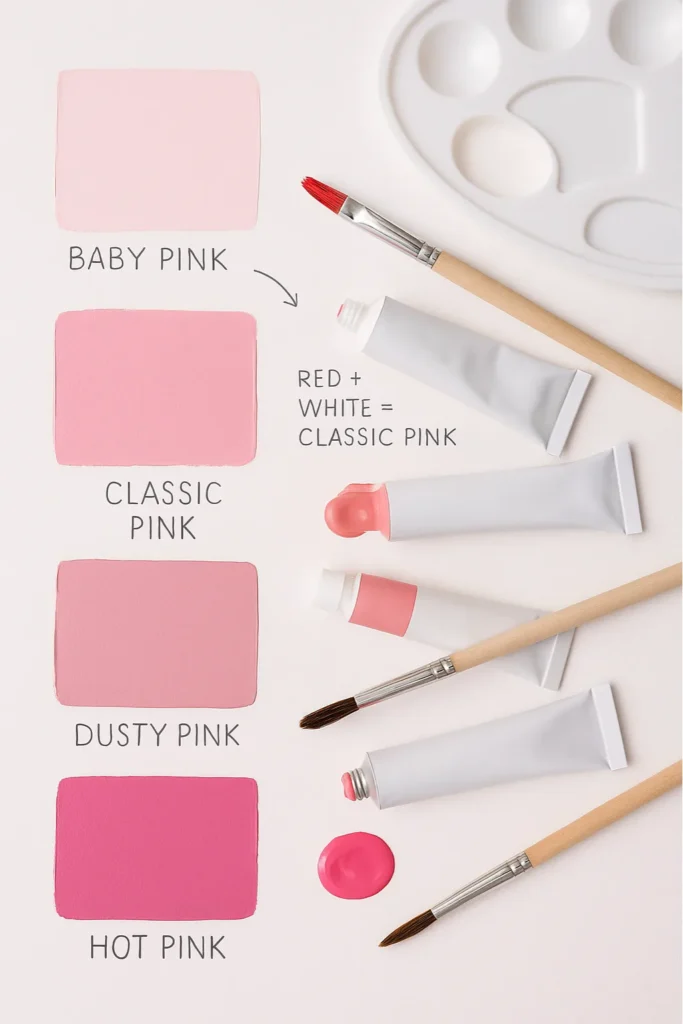
How Do You Make Hot Pink or Bright Pink?
Start with the most saturated cool pink or red on your palette, magenta, opera pink, quinacridone, or permanent rose, and lighten it with as little white as possible. Hot pink lives at around hex #FF1493 and depends on keeping the mix saturated, so adding too much white weakens it. For the brightest neon pinks, a dedicated fluorescent pigment is needed, since mixing alone cannot reach neon.
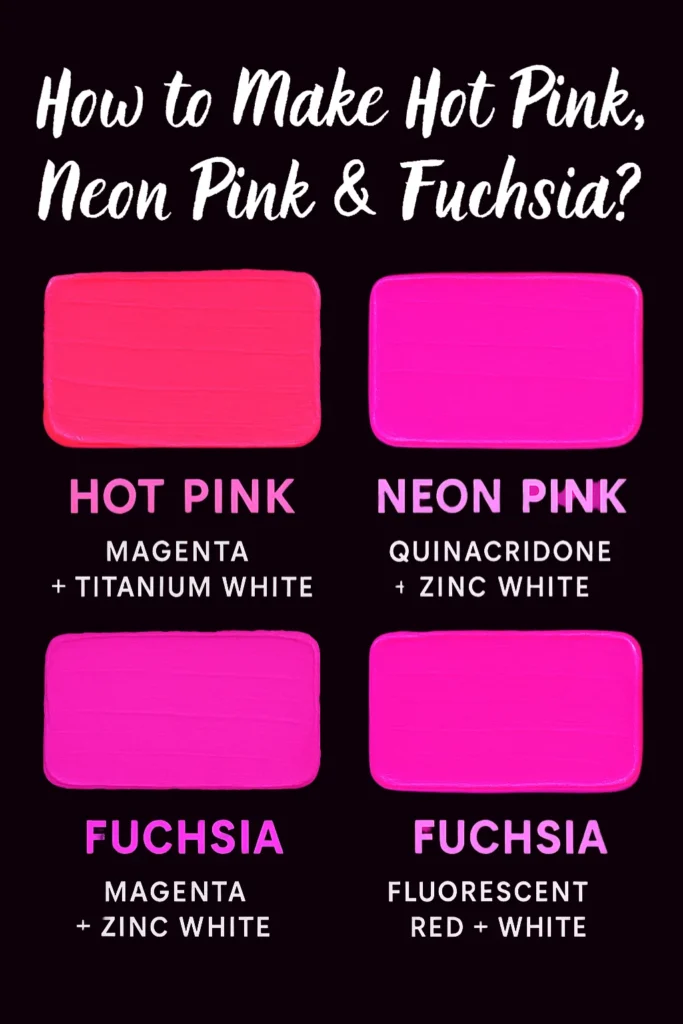
How Do You Make Light or Pastel Pink?
Add plenty of white to any red, keeping the amount of red very small. Soft, powdery pastel pinks like baby pink (hex #FFD1DC) come from a cool red heavily diluted with white. Add white in small increments until the color turns soft and delicate. For the cleanest pastels, use a bright cool red so the pink stays fresh rather than chalky.
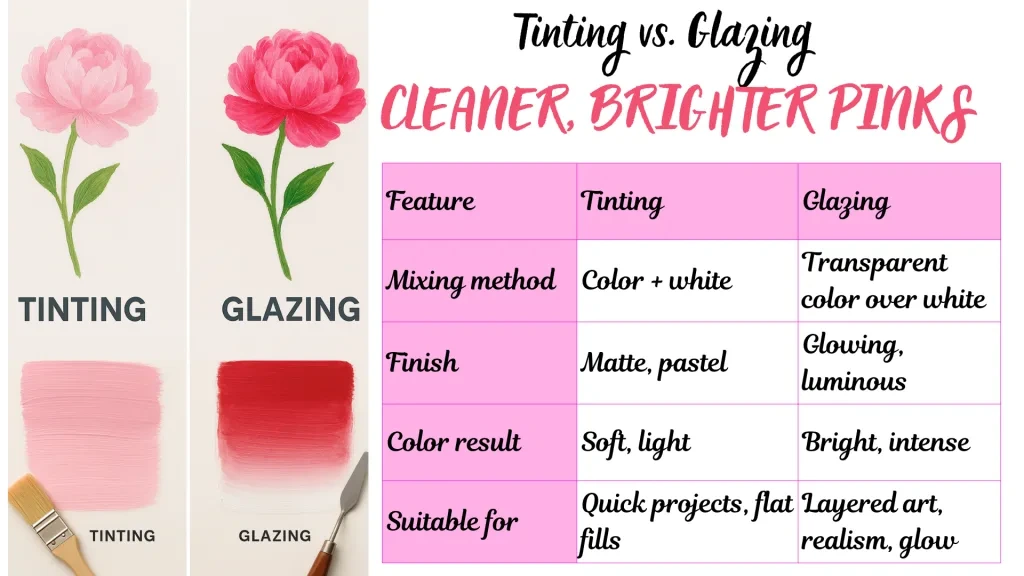
How Do You Make Coral or Peachy Pink?
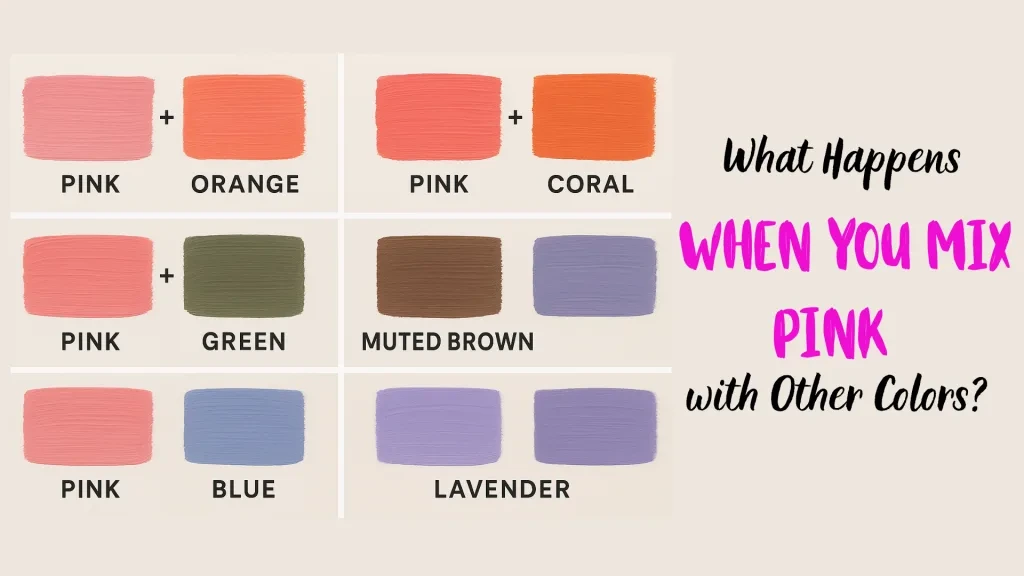
Use a warm red like cadmium, or add a touch of yellow or orange to a pink. This warms the mix toward coral and salmon. The full recipe is covered at yellow and pink mixed.
How Do You Make Dusty or Muted Pink?
Add a tiny touch of the pink’s complement, green, or a little gray or brown, to mute a bright pink into sophisticated dusty rose and mauve. These muted pinks are covered at brown and pink mixed and pink and green mixed.
How Do You Make Pink Without White?
You can make pink without white by diluting red heavily, with water in watercolor or with a clear medium in acrylic and oil, so the red thins into a pale, transparent pink. You can also lighten red with a very pale yellow, which gives a warm, slightly peachy pink, though true soft pink really depends on white or dilution.
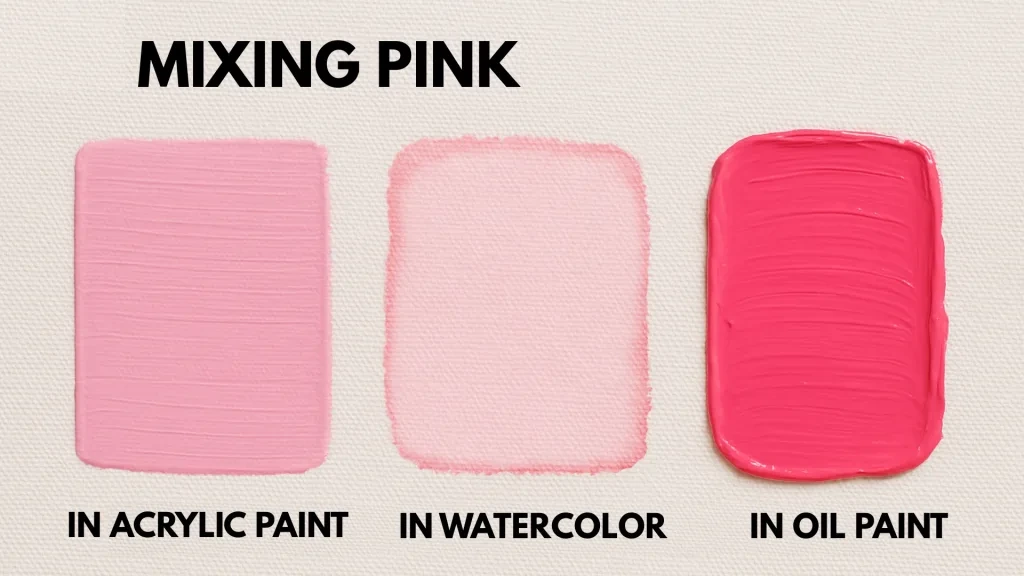
Every Shade of Pink: Recipes and Hex Codes
Between the red you choose, the ratio, and small additions, red and white cover the entire pink family. The reference table:
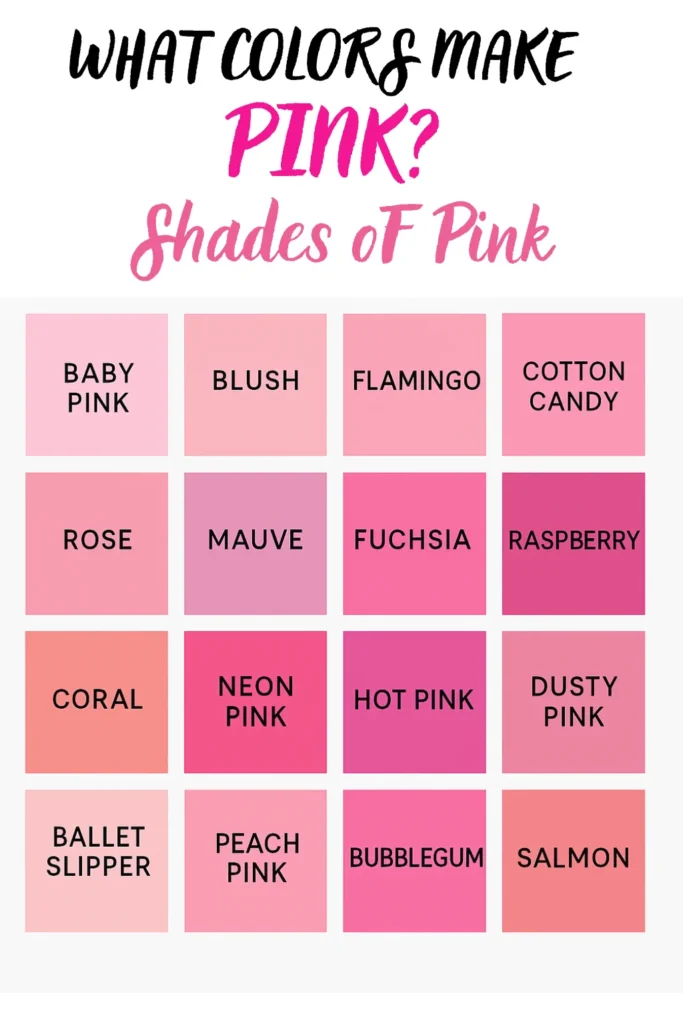
| Shade | Hex code | How to mix it |
|---|---|---|
| Pink | Hex #FFC0CB | Cool red plus generous white |
| Hot pink | Hex #FF69B4 | Magenta plus a little white |
| Deep pink | Hex #FF1493 | Magenta, minimal white |
| Light pink | Hex #FFB6C1 | Cool red plus lots of white |
| Baby pink | Hex #FFD1DC | Cool red plus heavy white |
| Rose pink | Hex #FF66CC | Red plus white, slightly deep |
| Salmon pink | Hex #FF91A4 | Warm red plus white |
| Coral pink | Hex #F88379 | Warm red plus white and a touch of orange |
| Dusty rose | Hex #C08081 | Pink muted with a touch of brown |
| Blush | Hex #FFE0E6 | Red plus very heavy white |
| Fuchsia | Hex #FF00FF | Magenta plus purple |
| Magenta pink | Hex #FF0090 | Magenta base, minimal white |
| Bubblegum | Hex #FFC1CC | Cool red plus white, bright |
| Mauve pink | Hex #E0A4C4 | Pink plus a touch of blue or purple |
What Colors Make Pink in Light and Print?
In light, pink is made by combining red and blue light at lower intensity, or red light with white. Screens use the RGB model, where pink appears as a high-red value with moderate green and blue, such as hex #FFC0CB. There is no single pink wavelength; pink is the brain’s reading of red mixed with white light.
In printing, using the CMYK color model, pink is produced from magenta ink used lightly, letting the white paper show through, since there is no white ink. More magenta gives a deeper pink; less gives a pale one.
| System | Type | How pink is made | Hex code |
|---|---|---|---|
| RYB (paint) | Subtractive | Red + white | Hex #FFC0CB |
| RGB (light and screens) | Additive | High red, moderate green and blue | Hex #FFC0CB |
| CMYK (printing) | Subtractive | Light magenta, paper shows through | Hex #FFC0CB |
Troubleshooting Pink Mixes
The pink is dull or peachy, not bright. Your red has a warm, yellow bias. Cadmium red and earth reds mute pink. Switch to a cool red like quinacridone or magenta.
The pink is muddy. A stray color contaminated the mix, often yellow or green from a dirty brush. Use clean tools, and start from a clean cool red.
The pink is too dark. Too much red. Add more white, or next time start with white and add red by the brush-tip.
The hot pink looks weak. Too much white. Hot pink needs saturation, so use magenta with minimal white, or a fluorescent pigment for neon.
It dried darker. Standard acrylic behavior. Mix a step lighter than your target.
Pink in Art, Fashion, and Design
Pink is one of the most expressive colors in any palette, ranging from delicate and romantic to bold and electric.
In Art
Pink has a rich history in art, from the soft rococo pinks of Boucher and Fragonard to the shocking pinks of modern and pop art. Interestingly, pink was long considered a strong, even masculine color in Western history before its 20th-century association with femininity, a shift documented in the color’s cultural history. Painters use pink constantly for skin tones, flowers, skies at dawn and dusk, and soft light. Because pink is a tint of red, mixing your own gives precise control over warmth and depth, essential for convincing complexions and natural light.
In Fashion
Pink spans the full range in fashion, from the barely-there blush of minimalist elegance to the electric hot pink of bold statement dressing. “Barbie pink” and hot pink surge in and out of trend, while soft pinks and dusty rose remain perennial favorites that flatter many skin tones. Pink pairs strikingly with navy, gray, green, and gold, and reads as anything from sweet to powerful depending on the shade.
In Interiors and Branding
Pink brings warmth, softness, or energy to interiors, from calming blush bedrooms to bold fuchsia accents. Millennial pink became a defining interior and design color of the 2010s. In branding, pink signals playfulness, femininity, creativity, and approachability, appearing across beauty, lifestyle, and youthful brands, with hot pink used for bold, confident energy.

Quick Reference: What Makes Pink Cheat Sheet
| Question | Answer |
|---|---|
| What two colors make pink | Red + white |
| For bright pink | Cool red (magenta, quinacridone) + white |
| For soft pink | Any cool red + plenty of white |
| For peachy pink | Warm red (cadmium) + white |
| For hot pink | Magenta + minimal white |
| For dusty pink | Pink + a touch of brown or green |
| Pink without white | Dilute red, or lighten with pale yellow |
| Mixing tip | Add red into white, not the reverse |
| Why it goes dull | Warm or earth red muting the pink |
| Color type | A tint of red |
Frequently Asked Questions
What two colors make pink?
Red and white make pink. Pink is a tint of red, red lightened with white. The amount of white controls the lightness, and the type of red controls the shade: cool reds make bright pink, warm reds make soft peachy pink.
What red makes the best pink?
A cool red makes the brightest, cleanest pink. Quinacridone red, magenta, and permanent rose are the top choices. Warm reds like cadmium red make softer, more muted pinks, and earth reds like Venetian red dull the pink and should be avoided for bright results.
How do you make hot pink?
Start with magenta or the most saturated cool pink on your palette and add only a little white. Hot pink depends on staying saturated, so too much white weakens it. For neon pink, a fluorescent pigment is needed, since mixing alone cannot reach neon brightness.
How do you make pink without white?
Dilute red heavily, with water in watercolor or a clear medium in acrylic and oil, so it thins into a pale transparent pink. You can also lighten red with a very pale yellow for a warm pink, though true soft pink depends on white or dilution.
Why is my pink muddy or dull?
Your red has a warm or earthy bias, or a stray color contaminated the mix. Cadmium red and Venetian red mute pink. Use a clean cool red like quinacridone, clean brushes, and clean water for a bright, clean pink.
How do you make light pink?
Add plenty of white to a small amount of cool red. The more white, the paler the pink. For a clean pastel, use a bright cool red so the result stays fresh rather than chalky. Baby pink sits at around hex #FFD1DC.
Is pink a primary or secondary color?
Pink is neither. It is a tint of red, meaning red lightened with white. Red is the primary color behind it. Pink does not appear as a distinct hue on the traditional color wheel.
Do red and white always make pink?
Yes, red and white always make some shade of pink, but which shade depends on the red. The result ranges from bright pink with a cool red to soft peachy pink with a warm red to dull pink with an earth red.
What two colors make pink? Red and white make pink. Pink is a tint of red, red lightened with white. The amount of white controls the lightness, and the type of red controls the shade: cool reds make bright pink, warm reds make soft peachy pink.
What red makes the best pink? A cool red makes the brightest, cleanest pink. Quinacridone red, magenta, and permanent rose are the top choices. Warm reds like cadmium red make softer, more muted pinks, and earth reds like Venetian red dull the pink and should be avoided for bright results.
How do you make hot pink? Start with magenta or the most saturated cool pink on your palette and add only a little white. Hot pink depends on staying saturated, so too much white weakens it. For neon pink, a fluorescent pigment is needed, since mixing alone cannot reach neon brightness.
How do you make pink without white? Dilute red heavily, with water in watercolor or a clear medium in acrylic and oil, so it thins into a pale transparent pink. You can also lighten red with a very pale yellow for a warm pink, though true soft pink depends on white or dilution.
Why is my pink muddy or dull? Your red has a warm or earthy bias, or a stray color contaminated the mix. Cadmium red and Venetian red mute pink. Use a clean cool red like quinacridone, clean brushes, and clean water for a bright, clean pink.
How do you make light pink? Add plenty of white to a small amount of cool red. The more white, the paler the pink. For a clean pastel, use a bright cool red so the result stays fresh rather than chalky. Baby pink sits at around hex #FFD1DC.
Is pink a primary or secondary color? Pink is neither. It is a tint of red, meaning red lightened with white. Red is the primary color behind it. Pink does not appear as a distinct hue on the traditional color wheel.
Do red and white always make pink? Yes, red and white always make some shade of pink, but which shade depends on the red. The result ranges from bright pink with a cool red to soft peachy pink with a warm red to dull pink with an earth red.
Pink is made by mixing red and white, and the secret to a great pink is choosing the right red: cool for bright, warm for soft. Add red into white gradually, keep your tools clean, and the whole pink family from pale blush to electric hot pink is yours.
Explore the individual mixes at red and white and pink and black, or see how pink turns bright and bold at pink and purple mixed.