What Color Do Brown and White Make When Mixed?
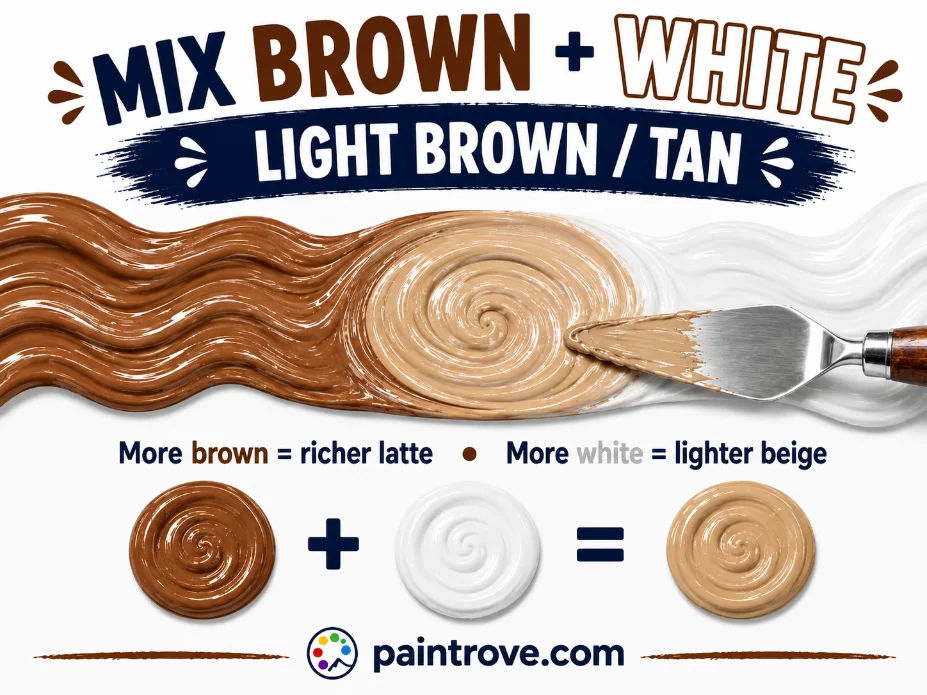
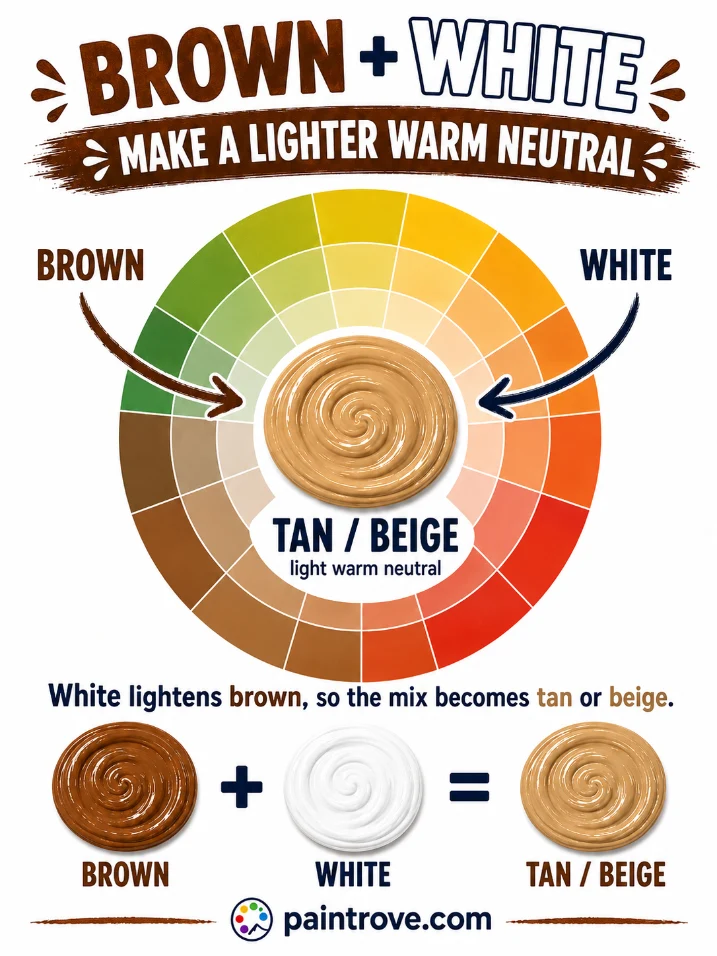
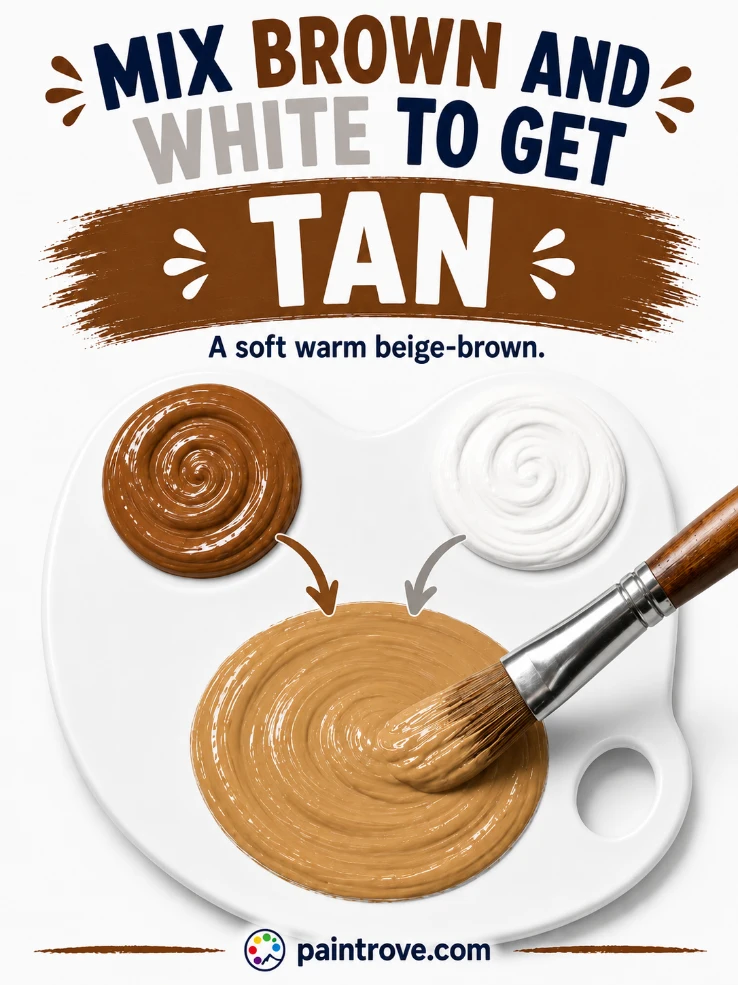
What Color Do Brown and White Make? Brown and white make beige or tan, a soft light-brown neutral. Beige sits at around hex #F5F5DC and tan at hex #D2B48C. Adding white lightens brown into a paler, softer version of itself; the more white you add, the closer you move from tan toward beige, cream, and ivory.
Brown and white is the simplest lightening mix on the palette, and it produces some of the most useful colors in all of design: the warm neutrals that back almost every room, outfit, and painting. The only real subtlety is the difference between beige and tan, which trips a lot of people up.
This guide covers exactly what brown and white make, the beige-versus-tan distinction, the ratios with hex codes, the full range of soft neutrals, and how to keep the mix from going chalky or gray.
Why Do Brown and White Make Beige?
Brown and white make beige because white lightens brown without changing its underlying hue, creating what artists call a tint.
White is not a color in the usual sense. It carries no hue of its own and simply reflects nearly all light. When you add white to a color, you increase how much light the mix reflects, which the eye reads as a paler, lighter version of the original. In color theory terms:
- Adding white to a color makes a tint (lighter). Brown plus white gives tan and beige.
- Adding black makes a shade (darker). Brown plus black gives chocolate and espresso.
- Adding gray makes a tone (muted). Brown plus gray gives taupe.
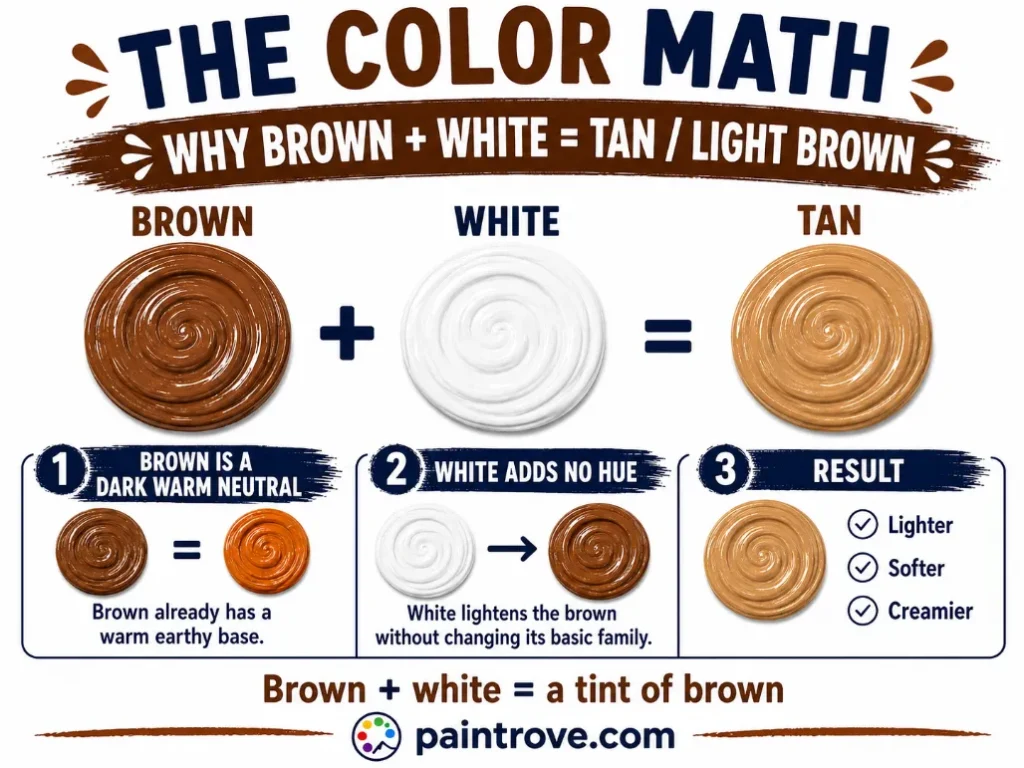
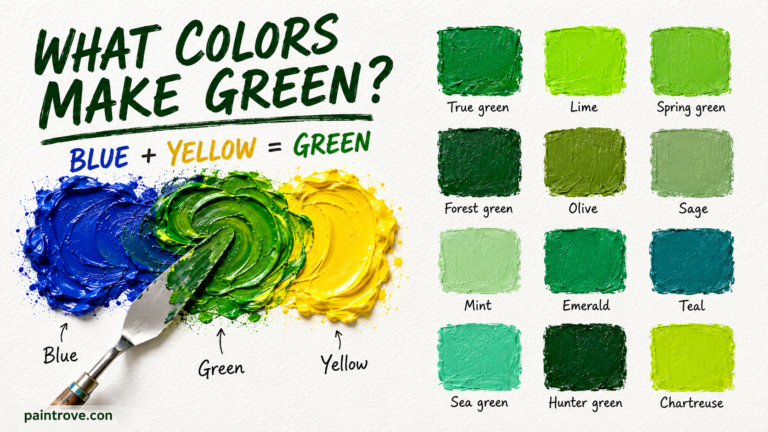
Brown itself contains all three primary colors, red, yellow, and blue, as explained in how to make brown. White lightens the whole mix evenly without disturbing that balance, so the character of your brown carries straight through. A warm brown gives a warm beige; a cooler brown gives a cooler, grayer beige. Beige is, quite simply, a tint of brown.
Beige vs Tan: What Is the Difference?
This is the distinction most people miss, and it is the key to getting the neutral you actually want.
Tan is a light brown that leans warm and golden, sitting at around hex #D2B48C. It stays closer to true brown and carries a yellow warmth. Tan is what you get from brown and white when the brown is warm, or when you add a touch of yellow.
Beige is a very light brown that carries a subtle pink or cream undertone, sitting at around hex #F5F5DC. It is lighter than tan and slightly softer. To make a true beige, many painters add a tiny dab of red or a warm off-white along with the brown, which gives beige its characteristic gentle warmth.
In short: tan is a golden light brown, beige is a paler, pinker-cream light brown. Both come from brown and white; the undertone and the amount of white decide which one you land on.
| Color | Hex code | Character |
|---|---|---|
| Tan | Hex #D2B48C | Warm, golden light brown |
| Beige | Hex #F5F5DC | Pale, slightly pink-cream neutral |
| Cream | Hex #FFFDD0 | Very pale warm off-white |
| Ivory | Hex #FFFFF0 | Palest warm white |
| Ecru | Hex #C2B280 | Grayish light tan |
| Taupe | Hex #483C32 | Darker gray-brown neutral |
Brown and White Mixing Ratios and Hex Codes
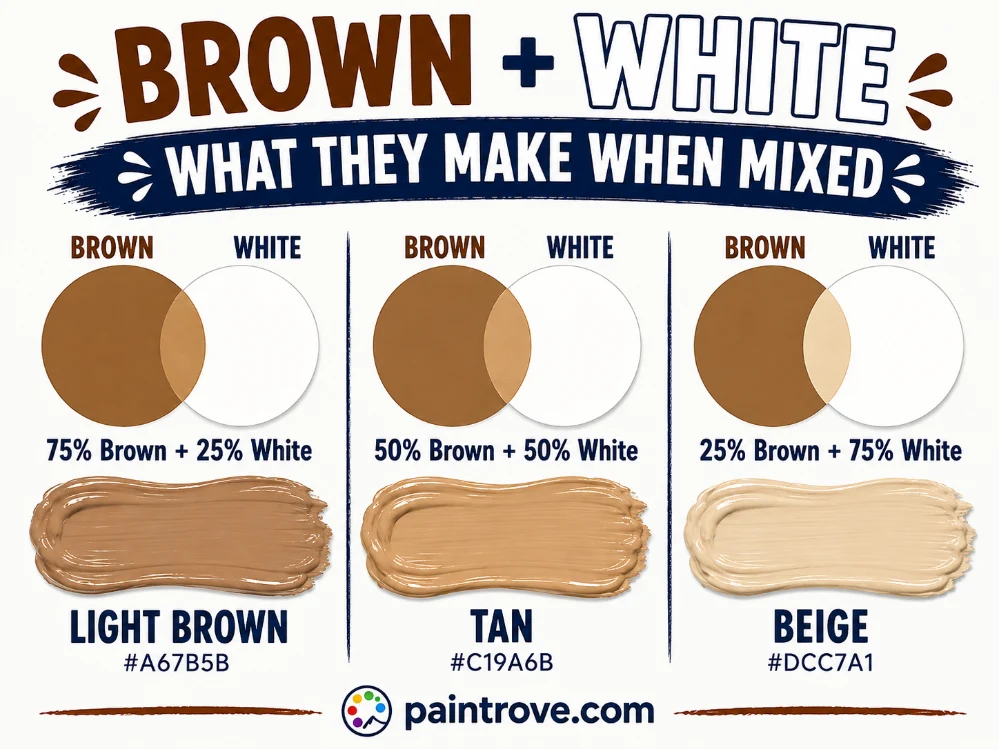
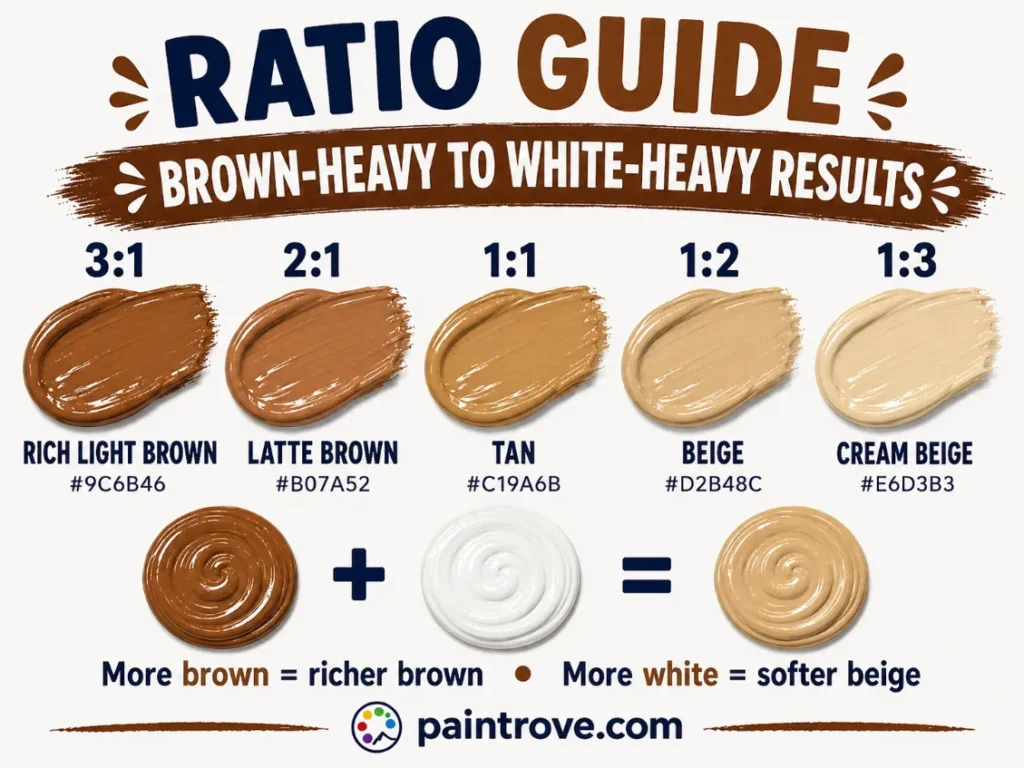
The ratio decides how light your neutral turns out. Here is the working chart with hex targets in plain text:
| Ratio (Brown : White) | Resulting shade | Hex code |
|---|---|---|
| 4 : 1 | Deep tan / light brown | Hex #B08D57 |
| 3 : 1 | Tan | Hex #C19A6B |
| 2 : 1 | Light tan | Hex #D2B48C |
| 1 : 2 | Beige | Hex #E8DCC0 |
| 1 : 4 | Cream | Hex #F5F0E1 |
| 1 : 8 | Ivory / pale eggshell | Hex #FBF9F0 |
| 2 : 1 plus a dab of red | Warm beige | Hex #E3C4A8 |
| 2 : 1 plus a touch of gray | Ecru / greige | Hex #D6CDBB |
Practical notes:
- Add brown into white, not white into brown. This is the golden rule for tints: start with white and add brown gradually, so you can sneak up on the exact lightness instead of overshooting and having to start over.
- Go slowly. Brown is far stronger than white, so a little brown shifts a lot of white.
- Mix thoroughly and test on white paper. Neutrals are subtle, and acrylics dry slightly darker.
Every Soft Neutral Shade You Can Make mixing Brown and White
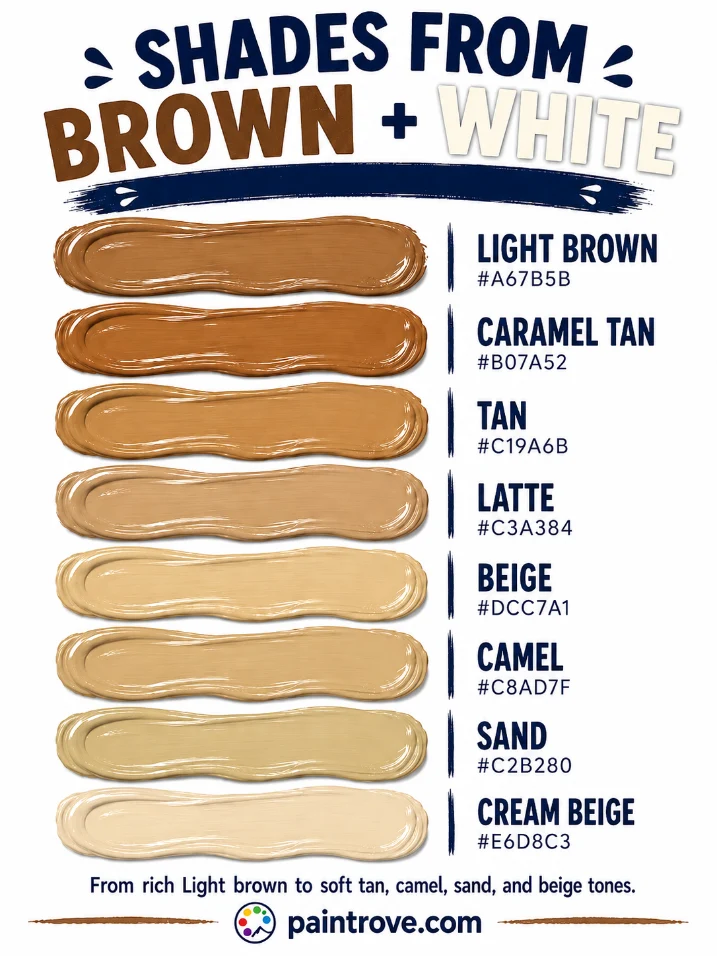
Between ratio, brown undertone, and small additions of yellow, red, or gray, brown and white cover the entire warm-neutral family. The reference table:
| Shade | Hex code | How to mix it |
|---|---|---|
| Tan | Hex #D2B48C | Brown-heavy mix |
| Beige | Hex #F5F5DC | White-heavy mix, slight warm undertone |
| Cream | Hex #FFFDD0 | White-heavy mix plus a touch of yellow |
| Ivory | Hex #FFFFF0 | Mostly white, tiny brown |
| Ecru | Hex #C2B280 | Brown and white plus a touch of gray |
| Camel | Hex #C19A6B | Warm brown plus white |
| Khaki | Hex #C3B091 | Brown and white plus a touch of yellow-green |
| Taupe | Hex #B8A99A | Brown and white plus gray |
| Sand | Hex #C2B280 | Warm tan |
| Nude | Hex #E3BC9A | Warm beige plus a touch of pink |
| Mushroom | Hex #BDB2A7 | Cool beige plus gray |
| Oatmeal | Hex #D8CFC0 | Soft warm beige |
how to make beige paint?
Start with white on your palette and add small amounts of brown until you reach a light, soft neutral. For a true beige with its characteristic warmth, add a tiny dab of red or a drop of yellow. Beige sits at around hex #F5F5DC. If it turns too dark, add more white; if it looks flat or gray, warm it with a whisper of yellow. Starting from white rather than brown is the trick that makes beige easy to control.
what colors make tan?
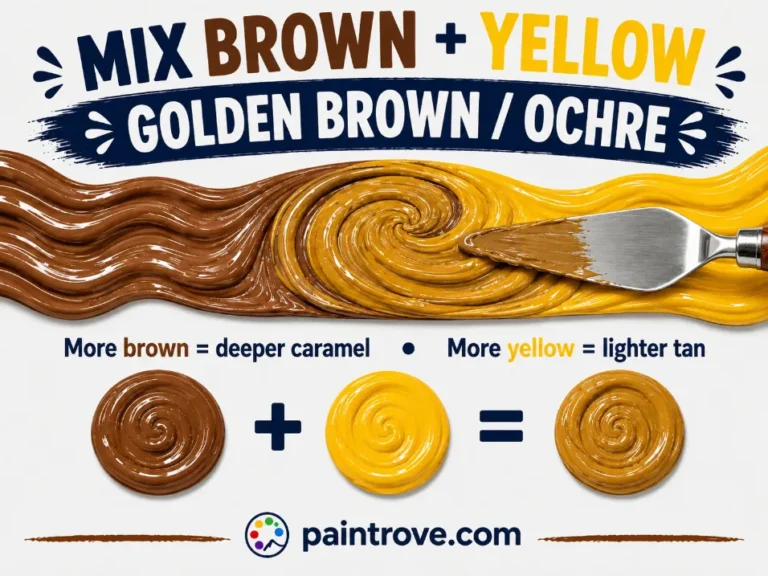
Tan is a warmer, more golden light brown than beige. Mix a warm brown with white, and add a touch of yellow to bring out the golden character. Avoid adding red, which would push it toward the pinker beige. Tan sits at around hex #D2B48C, and adding yellow instead of relying only on white keeps it warm and rich, as covered in brown and yellow mixed.
How Do You Make Cream and Ivory?
For the palest neutrals, use mostly white with just a whisper of brown, plus a tiny touch of yellow for cream or almost nothing for ivory. These barely-there warm whites are among the most useful colors in interior design, softer and warmer than pure white.
Keeping the Mix from Going Chalky or Gray
Two problems can spoil a brown-and-white neutral:
Chalky. Too much white leaves the mix dusty and flat. Add a whisper of yellow or a touch more brown to restore warmth and life.
Gray or dull. If your brown leans cool, or is slightly muddy, the beige comes out grayish rather than warm. Start with a warmer brown, or add a tiny amount of yellow or red to warm the neutral. A cool beige is not wrong, greige and taupe are popular, but if you wanted warm and got gray, warmth is the fix.
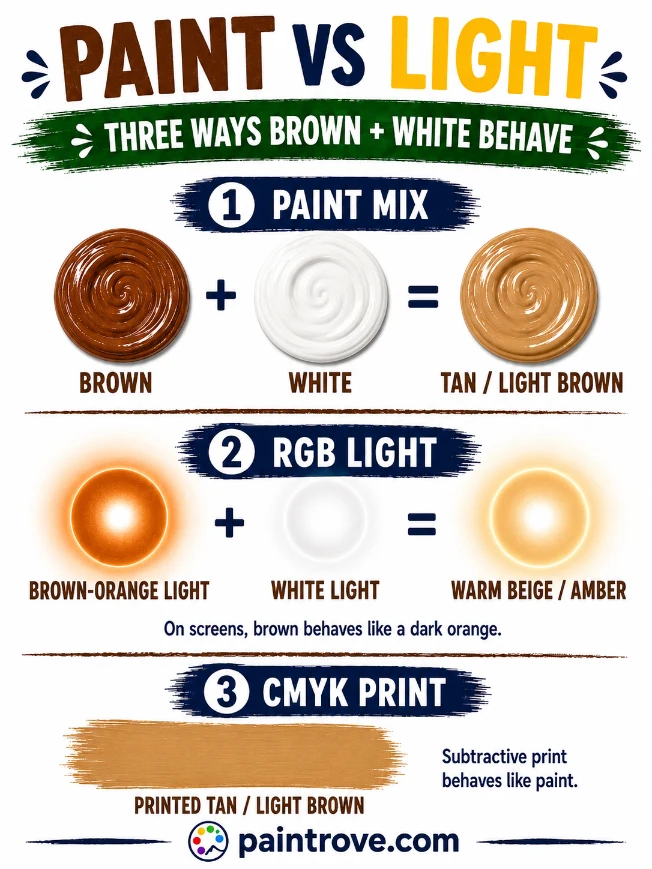
What Do Brown and White Make in Light and Print?
In light, there is no brown to mix, because brown light does not exist. Brown only appears as a dark, dull orange seen in context, and light can only add brightness. Screens use the RGB model, where colors add and brighten, so a lighter brown is simply a brown displayed at higher brightness, which reads as tan or beige, reached by adjusting brightness rather than adding white pigment.
In printing, using the CMYK color model, there is no white ink in standard four-color printing. Light browns like beige are produced by using less ink and letting the white of the paper show through, which is why pale neutrals in print depend heavily on paper quality. Because CMYK and paint are both subtractive, the printed result closely matches the mixed one.
| System | How beige is made | Notes |
|---|---|---|
| RYB (paint) | Brown plus white pigment | Reliable, keeps warmth |
| RGB (light) | Brown shown at higher brightness | No white light added as pigment |
| CMYK (printing) | Less ink, paper shows through | No white ink used |
Troubleshooting white and brown combination
The beige is chalky. Too much white. Add a whisper of yellow or a little more brown to bring it back to life.
The beige is gray, not warm. Your brown leans cool or muddy. Warm it with a touch of yellow or red, or start from a warmer brown.
It went too light too fast. Brown is strong, white is efficient. Start with white and add brown by the brush-tip.
The tan looks pink. You added too much red, or your brown leans red. For tan, use yellow to warm it instead of red, and save red for beige.
It dried darker. Standard acrylic behavior. Mix a shade lighter than your target.
Beige and Tan in Art, Fashion, and Design
The soft neutrals from brown and white are the quiet backbone of the visual world, and few colors are more universally useful.
In Art
Beige, tan, and cream are essential to painting, forming the base of skin tones, sand, stone, weathered wood, and countless natural surfaces. Painters mix these neutrals constantly, and controlling their warmth precisely, warm for sunlit skin, cooler for shadow, is one of the marks of skill.
Beige and cream grounds also serve as gentle underpaintings that let brighter colors sing. Because these tints are so subtle, mixing your own from brown and white gives far more control than any single tube.
In Fashion
Beige, tan, camel, and cream are timeless fashion neutrals, the foundation of the quiet-luxury and minimalist wardrobes that never go out of style. The camel coat, the tan trench, and cream knitwear are enduring staples precisely because these warm neutrals flatter nearly everyone and pair with everything. Beige reads as calm, sophisticated, and effortless, which is why it anchors so many capsule wardrobes.
In Interiors and Branding
Beige, greige, and cream are among the most popular interior colors ever, prized as warm, flexible backdrops that make spaces feel calm and inviting. They pair with wood, stone, and virtually any accent color. In branding, soft neutrals signal understated luxury, calm, and natural quality, appearing across beauty, wellness, and premium lifestyle identities that want to feel refined rather than loud.
Quick Reference: Brown + White Cheat Sheet
| Question | Answer |
|---|---|
| Brown + white in paint | Tan or beige (hex #D2B48C and #F5F5DC) |
| More white | Cream, ivory, palest neutrals |
| More brown | Deep tan, light brown |
| For warm tan | Add yellow, not red |
| For true beige | Add a dab of red or warm off-white |
| Plus gray | Ecru, greige, mushroom |
| Mixing tip | Add brown into white, not the reverse |
| The risk | Chalky or gray beige from cool brown or too much white |
| Brown + white in light | No brown light exists |
FAQs:
What color do brown and white make when mixed?
Brown and white make tan or beige, a soft light-brown neutral. White lightens the brown into a paler version of itself. The more white you add, the closer you move from tan toward beige, cream, and ivory.
What is the difference between beige and tan?
Tan is a warmer, more golden light brown at hex #D2B48C, staying closer to true brown. Beige is a paler, softer neutral at hex #F5F5DC with a subtle pink or cream undertone. Tan leans yellow-warm; beige leans lighter and slightly pinker.
how to make beige paint?
Start with white and add small amounts of brown until you reach a light neutral, then add a tiny dab of red or a drop of yellow for beige’s characteristic warmth. Beige sits at hex #F5F5DC. Working from white gives the most control.
what colors make tan?
Mix a warm brown with white and add a touch of yellow to bring out the golden character. Avoid red, which pushes the mix toward pinker beige. Tan sits at hex #D2B48C.
Why is my beige gray or dull?
Your brown leans cool or muddy. Warm the mix with a touch of yellow or red, or start from a warmer brown. A cool beige like greige is fine if intended, but warmth is the fix if you wanted a warm neutral.
How do you make beige without brown?
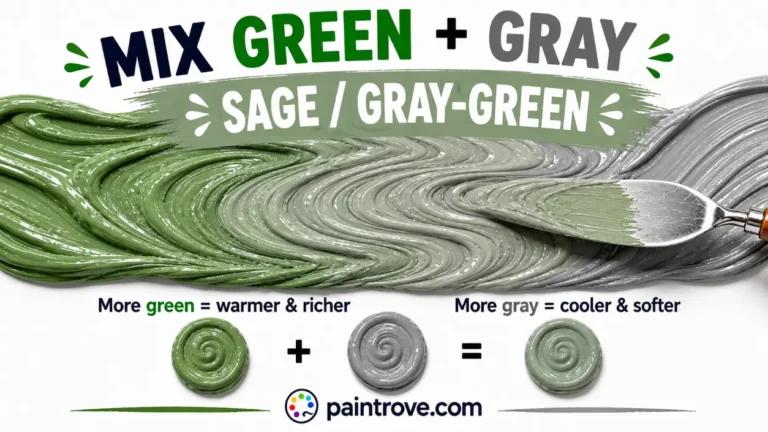
Mix white with small amounts of yellow and a touch of red, or mix the primary colors red, yellow, and blue into a brown first, then lighten with white. Beige is essentially a very light, warm brown, so any route to a light warm neutral works. For the muted, grayer members of this family, adding gray gives the taupe and greige tones related to green and gray mixed.
Can you mix brown and white in light?
Not as such, because brown light does not exist. Brown is a dark, dull orange, and light only adds brightness. On a screen, a lighter brown is simply brown shown brighter, which reads as tan or beige.
What colors go with beige and tan?
Because they are warm neutrals, beige and tan pair with almost anything: white, cream, brown, denim blue, sage green, rust, black, and warm metals. This versatility is why they are cornerstone colors in fashion and interiors.
Brown and white make tan and beige, the warm neutrals at the heart of art, fashion, and design. Remember the distinction, tan is golden, beige is paler and pinker, add brown into white for control, and keep a little yellow handy to stop the mix going chalky.