What Colors Make Green? Every Mix and Shade
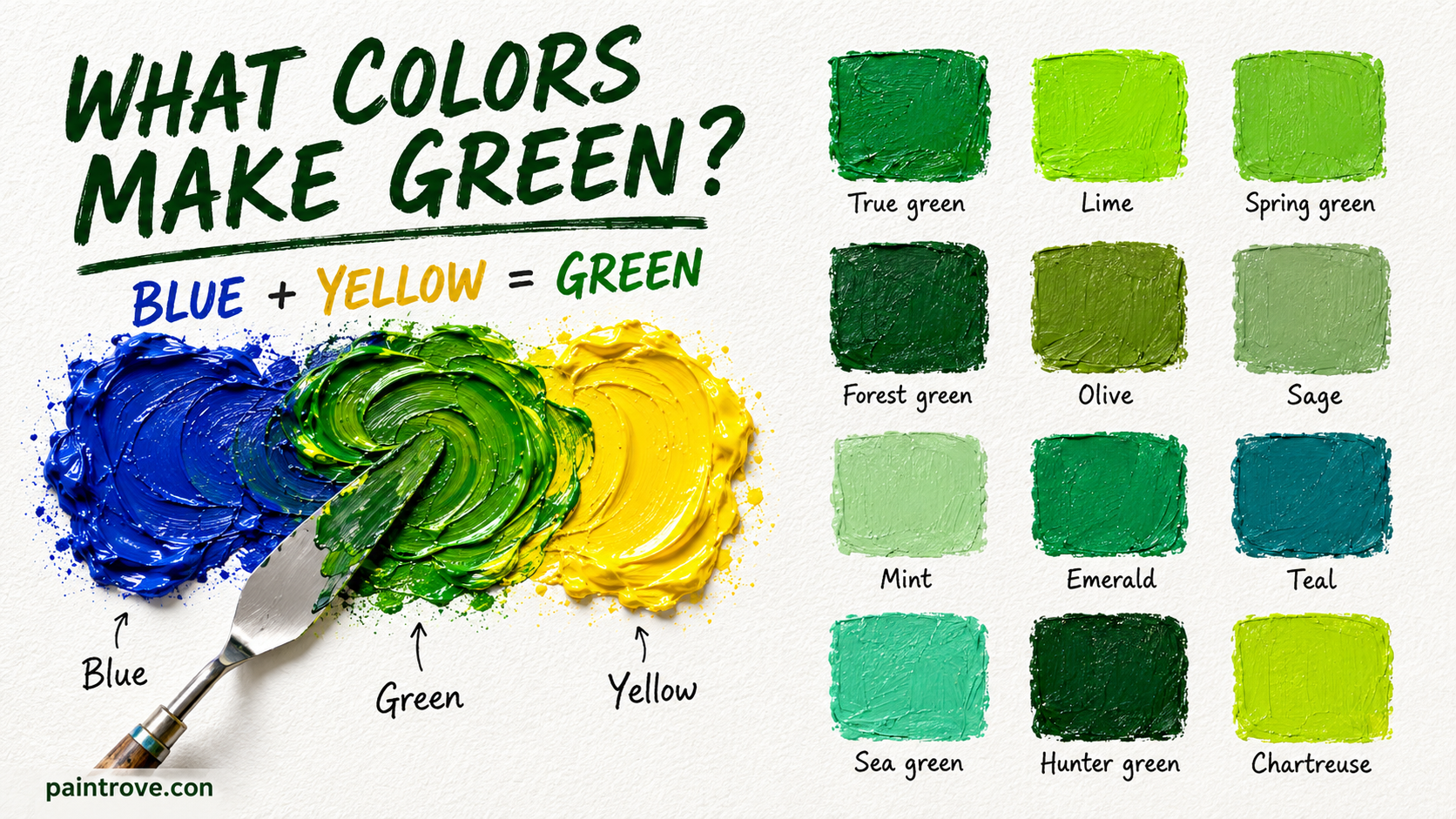
What Colors Make Green? Blue and yellow make green. Mix equal parts blue (#0000FF) and yellow (#FFFF00) paint and you get a solid mid-green around #008000. Add more yellow for lime, more blue for teal-leaning greens, white for mint, or a touch of black for forest green.
That is the complete short answer: blue + yellow = green. The longer story is that “green” covers everything from neon lime to near-black forest, and the exact blue and yellow you choose decides which one you get. This guide maps out every mix, every major shade, and the fixes for greens that come out dull or muddy.
Why Blue and Yellow Make Green
Green is a secondary color on the traditional color wheel. Each secondary color comes from mixing two of the three primary colors:
- Red + yellow = orange
- Red + blue = purple
- Yellow + blue = green
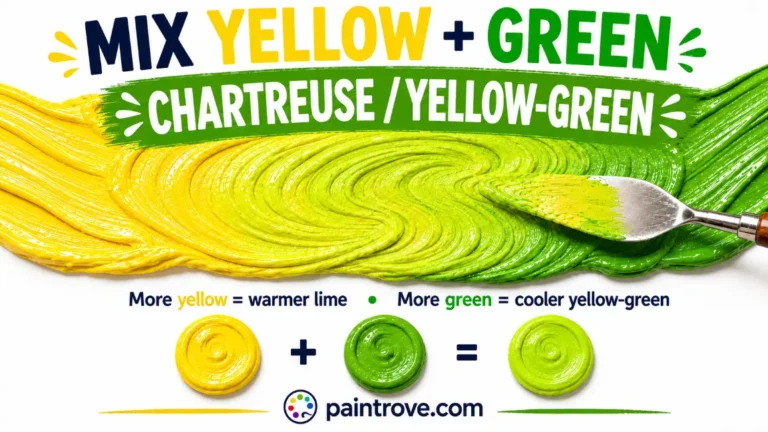
Green sits between yellow and blue on the wheel because it is built from both. Slide the ratio toward yellow and you move through spring green and lime. Slide toward blue and you head into teal and sea green.
For the full step-by-step paint walkthrough with ratios and troubleshooting, see our dedicated guide to blue and yellow mixed.
The Basic Mix: Ratios That Work
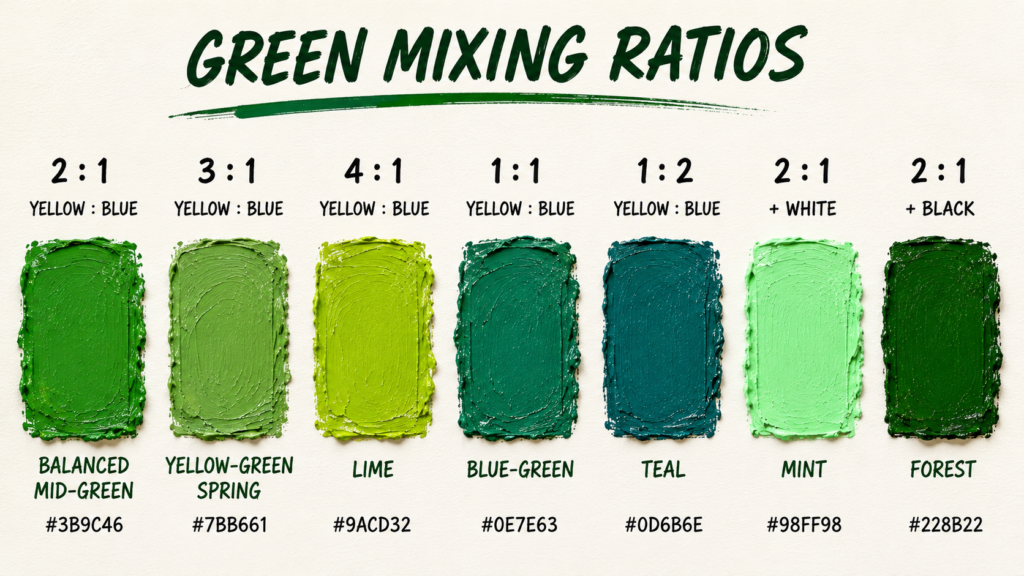
Yellow is a weak pigment and blue is a strong one, so the practical starting point is not 1:1. Start with yellow and add blue in small touches.
| Ratio (yellow : blue) | Result | Approx hex |
|---|---|---|
| 2 : 1 | Balanced mid-green | #3B9C46 |
| 3 : 1 | Yellow-green / spring | #7BB661 |
| 4 : 1 | Lime | #9ACD32 |
| 1 : 1 | Blue-green | #0E7E63 |
| 1 : 2 | Teal territory | #0D6B6E |
| 2 : 1 + white | Mint | #98FF98 |
| 2 : 1 + touch of black | Forest | #228B22 |
The single most common beginner mistake with green is adding yellow to blue. Blue dominates instantly and you end up using half a tube of yellow trying to recover. Always add blue to yellow, one small dab at a time.
The Secret to Bright Green: Pigments Matter
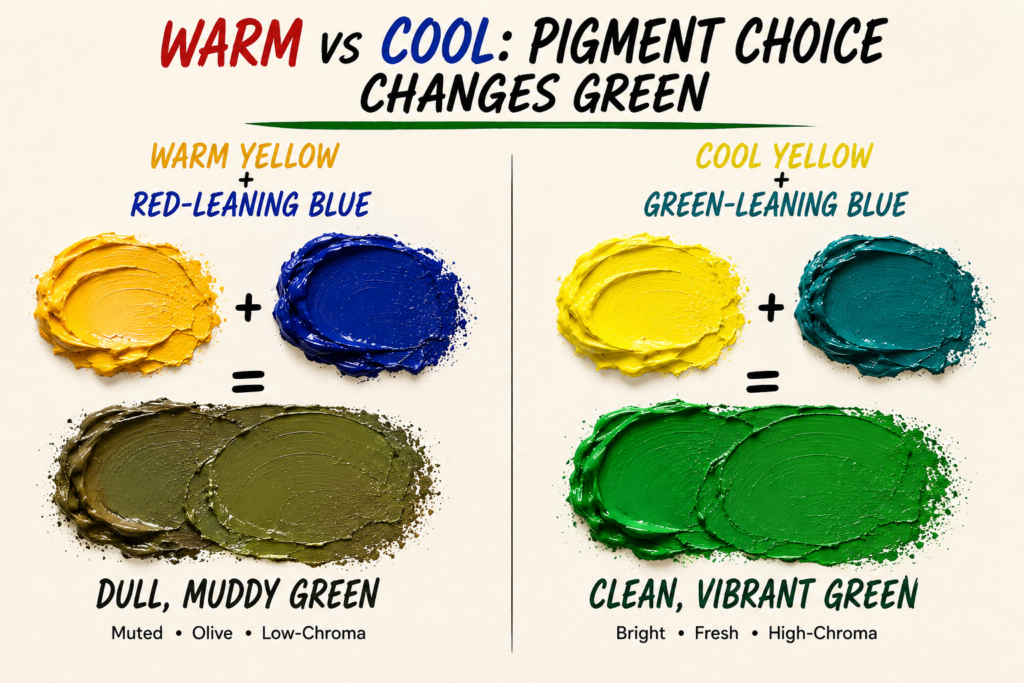
Just like purple, green lives or dies by pigment choice. The enemy of a clean green is red, green’s complement. Many blues and yellows carry hidden red undertones, and even a trace pushes the mix toward olive or mud.
For clean, vivid greens, use:
- A cool, green-leaning yellow: lemon yellow, hansa yellow light, cadmium yellow light
- A green-leaning blue: phthalo blue, cerulean, Prussian blue
Avoid for bright greens:
- Warm yellows: cadmium yellow deep, yellow ochre (they carry red)
- Red-leaning blues: ultramarine (it carries violet, which carries red)
Notice this is the exact opposite of purple mixing. Ultramarine, the hero of purple, is the villain of bright green. Phthalo blue, which ruins purples, makes electric greens. One rule covers both: keep the third primary out of the mix.
Every Green Shade and How to Mix It
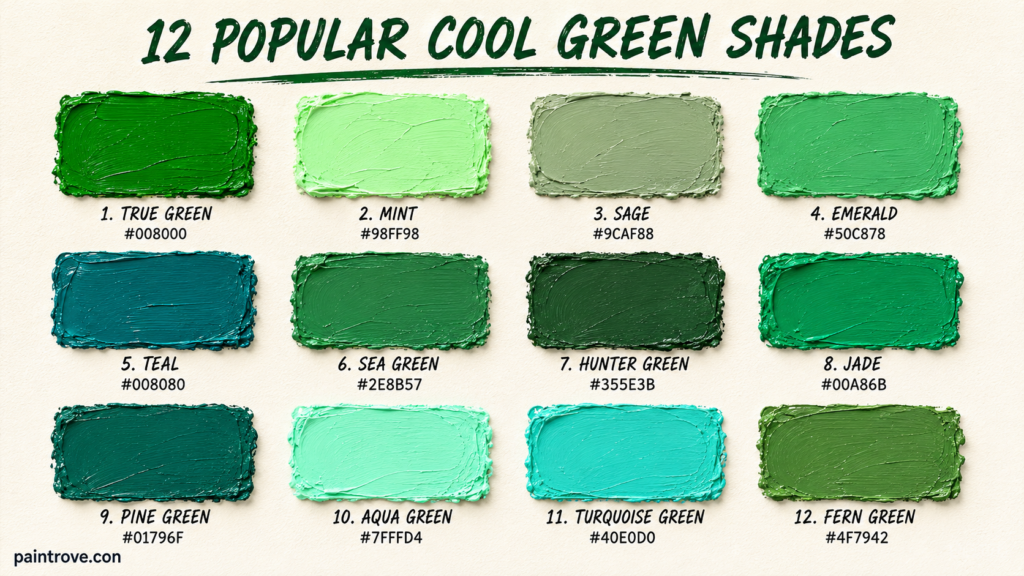
Green is the largest color family the human eye can distinguish. Here are the twelve shades people search for most, with hex codes and mixing directions.
| Shade | Hex | How to mix it |
|---|---|---|
| True green | #008000 | 2 parts cool yellow + 1 part phthalo blue |
| Lime | #9ACD32 | 4 parts yellow + 1 part blue |
| Spring green | #7BB661 | 3 parts yellow + 1 part blue + touch of white |
| Forest green | #228B22 | Green + tiny touch of black or extra blue |
| Olive | #808000 | Green + small amount of red or yellow ochre |
| Sage | #9CAF88 | Green + white + tiny touch of gray |
| Mint | #98FF98 | Green + generous white |
| Emerald | #50C878 | Bright green + touch of white + touch of blue |
| Teal | #008080 | 1 part yellow + 2 parts blue |
| Sea green | #2E8B57 | Green + extra blue + touch of white |
| Hunter green | #355E3B | Green + black + touch of yellow |
| Chartreuse | #7FFF00 | Mostly yellow + smallest possible dab of blue |
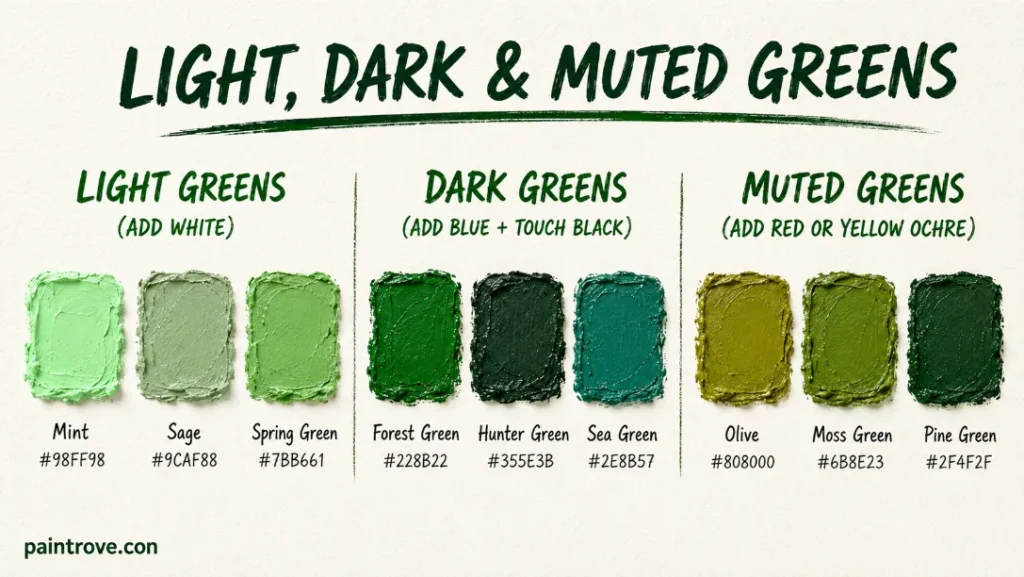
Light Greens: Mint, Sage, and Spring
Mint is green plus a lot of white, often 4 parts white to 1 part green. Sage takes that further by muting it: add a whisper of gray, or the tiniest speck of red, to knock the saturation down into that dusty herb tone. Spring green keeps more yellow in the mix and only needs a little white.
Dark Greens: Forest, Hunter, and Sea Green
Darken green with more blue before you reach for black. Blue keeps the green alive; black flattens it. Forest green takes only a tiny amount of black. Hunter green is darker still and benefits from a touch of yellow added back at the end so it does not go gray. Sea green leans blue and stays slightly lighter.
Muted Greens: Olive and Earth Tones
Olive is the one green where “mud” is the goal. Add a small amount of red, or use a warm yellow like yellow ochre from the start. Because red is green’s complement, it desaturates the mix into exactly those military, earthy tones.
Green on Screens: The RGB Twist
Paint logic says green is a mixed color. Screen logic says the opposite: in RGB, green is a primary. Your monitor cannot mix green; it has dedicated green sub-pixels.
- Pure screen green:
rgb(0, 255, 0)=#00FF00 - Standard web green:
rgb(0, 128, 0)=#008000
Meanwhile, in RGB, mixing blue and yellow light does not give green at all — it gives white-ish gray, because yellow light already contains green and red. So “blue + yellow = green” is strictly a paint (subtractive) rule. This trips up digital artists constantly, and it is why color pickers have a green slider rather than expecting you to mix one.
Fixing a Dull or Muddy Green
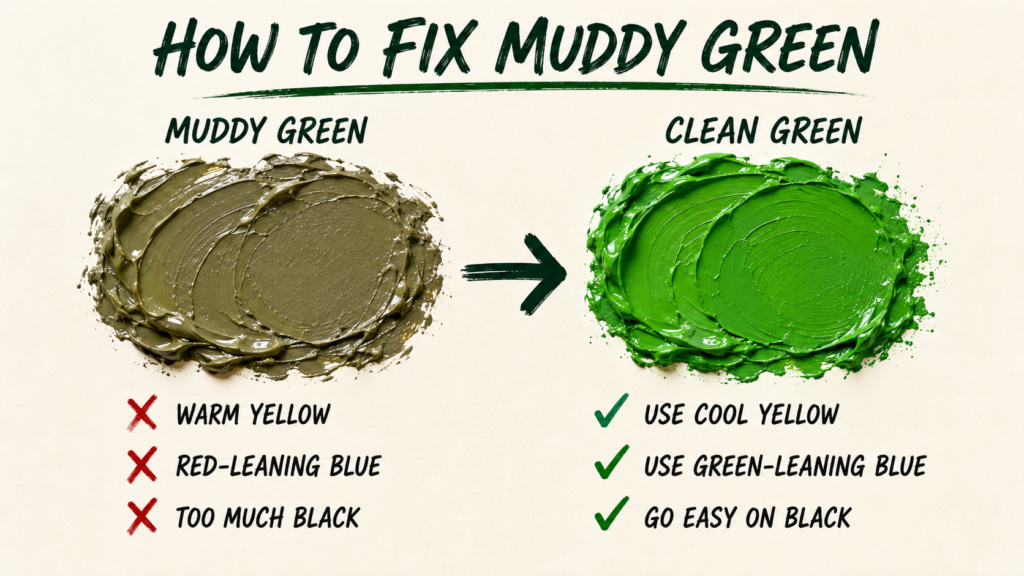
Mixed a green that looks like swamp water when you wanted grass? One of three things happened.
Your yellow carries red. Cadmium yellow deep, Indian yellow, and most “golden” yellows have red undertones. Red is green’s complement and neutralizes it. Fix: switch to lemon yellow or hansa yellow light.
Your blue carries red. Ultramarine leans violet, and violet is half red. Fix: switch to phthalo, Prussian, or cerulean blue.
Too much black. Black plus yellow actually makes a dull olive-green on its own, so black in a green mix compounds fast. Darken with blue instead, and add black only in tiny final touches.
If your green has already gone muddy, treat it as free olive or shadow green rather than fighting it. Foliage in real life is mostly muted green anyway, so ugly mixes rarely go to waste in landscape painting.
Green Mixes That Use Other Starting Colors
Blue and yellow is the main road, but these alternates come up all the time:
Yellow + black. Surprisingly, this makes olive green with no blue at all. Black paint usually has a blue bias, and it shows the moment yellow enters. Handy trick for quick earthy greens.
Cyan + yellow. The printer’s method, and the source of the brightest mixable greens. Cyan carries zero red, so the result stays electric.
Green + white / green + black. Not new mixes, but the fastest routes to mint and forest once you have a base green down.
Can you make green without yellow? Only via the yellow hiding inside other colors. Cyan + a warm color will not do it, but blue + orange sometimes yields a dull green-gray because orange contains yellow. For any green worth using, you need a yellow component and a blue component.
Quick Answer Recap
- Green = blue + yellow. Start 2 parts yellow to 1 part blue and adjust.
- Bright green needs a cool yellow (lemon) and a green-leaning blue (phthalo).
- Mint = green + lots of white. Forest = green + extra blue + tiny black.
- Muddy green means red snuck in. Check your yellow, your blue, and go easy on black.
FAQs
What two colors make green?
Blue and yellow make green. In paint, start with 2 parts yellow to 1 part blue for a balanced mid-green around hex #008000, then adjust: more yellow for lime, more blue for teal-leaning greens.
How do you make green without blue?
Mix yellow with black. Most black paints have a blue bias, so yellow plus black produces olive green (#808000). It will never be bright, but it is a genuine green and a common shortcut for earthy foliage tones.
What colors make light green or mint?
Mix your green first from blue and yellow, then add white gradually. Mint (#98FF98) typically takes about 4 parts white to 1 part green. For sage, add a tiny touch of gray after the white to mute it.
What colors make dark green?
Add more blue first, then a tiny amount of black if needed. Forest green (#228B22) is green with a touch of black or extra blue. Hunter green (#355E3B) is darker and needs a speck of yellow at the end so it stays green rather than gray.
Why does my green look muddy or olive?
Red got into the mix. Warm yellows like cadmium deep and violet-leaning blues like ultramarine both carry red undertones, and red is green’s complement, which dulls it. Switch to lemon yellow plus phthalo or cerulean blue for clean greens.
What is the best blue and yellow for mixing green?
Use a cool, green-leaning yellow like lemon yellow or hansa yellow light, paired with phthalo blue, Prussian blue, or cerulean. These pigments carry almost no red, so the green stays vivid instead of drifting toward olive.
Do blue and yellow make green on screens?
No. In RGB light, green is a primary color that screens produce directly, and mixing blue and yellow light gives a grayish white instead. The blue + yellow rule only applies to paint, ink, and other pigments, which mix subtractively.
What colors make lime green?
Use mostly yellow with a very small amount of blue, roughly 4 parts yellow to 1 part blue, for lime (#9ACD32). For neon chartreuse (#7FFF00), use the smallest dab of blue you can manage in a pile of cool lemon yellow.
What colors make teal?
Reverse the usual ratio: about 2 parts blue to 1 part yellow gives teal (#008080). Phthalo or cerulean blue works best. Add a touch of white for a softer aqua, or a speck of black for deep peacock teal.
Is green a primary or secondary color?
In paint (the RYB model), green is a secondary color made from blue plus yellow. In light (the RGB model used by screens), green is one of the three primary colors. Both statements are correct within their own system.
What is the hex code for green?
Standard green is #008000. Pure RGB green is #00FF00. Other common codes include lime #9ACD32, forest #228B22, olive #808000, mint #98FF98, teal #008080, and emerald #50C878.
What colors make green with acrylic paint?
Blue and yellow, same as any paint. With acrylics, lemon yellow plus phthalo blue gives the brightest result, added blue-into-yellow a dab at a time. Acrylics dry slightly darker, so mix your green a touch lighter than your target shade.