What Color Do Blue and Yellow Make When Mixed? (Green)
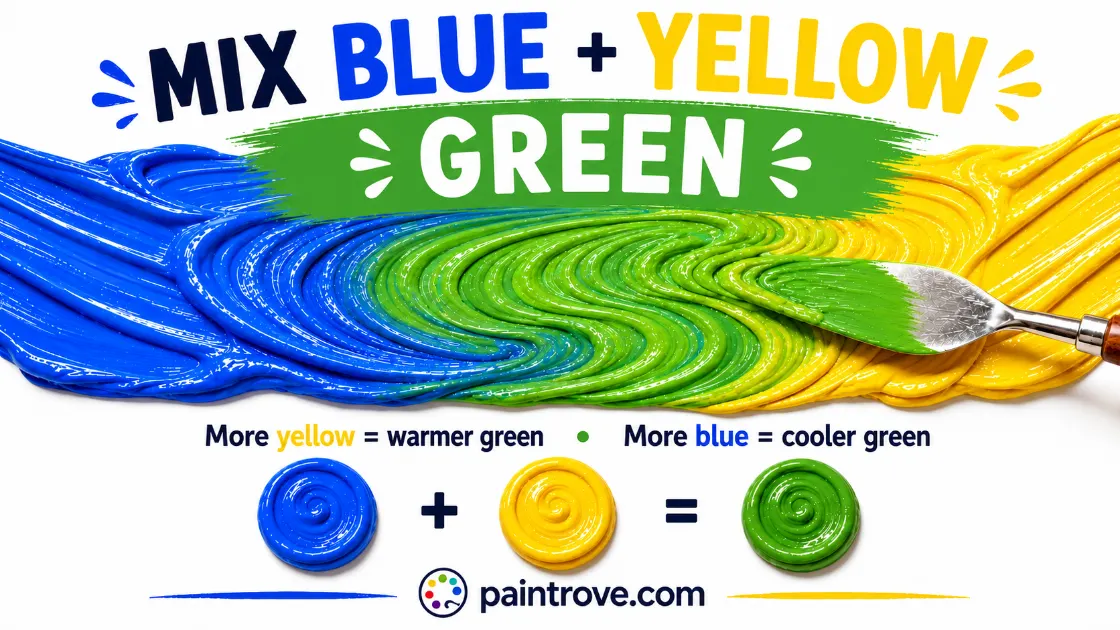
What Color Do Blue and Yellow Make? Mix blue and yellow together and you get green. Equal parts give a balanced green at hex #008000. More yellow gives a bright, fresh yellow-green; more blue gives a deep, cool blue-green. The exact green depends heavily on which blue and which yellow you start with, which is why the same two-color recipe can produce a grassy lime one time and a dull olive the next.
Green is the most fundamental mix in color theory, the first one most of us learn. But mixing a clean, vivid green is trickier than it sounds, because most blues and yellows carry hidden biases that quietly muddy the result.
This guide covers the color theory, the exact ratios with hex codes, the pigment pairings that give the cleanest green, the full range of shades, and how to fix a mix that turned olive or gray.
Why Blue and Yellow Make Green
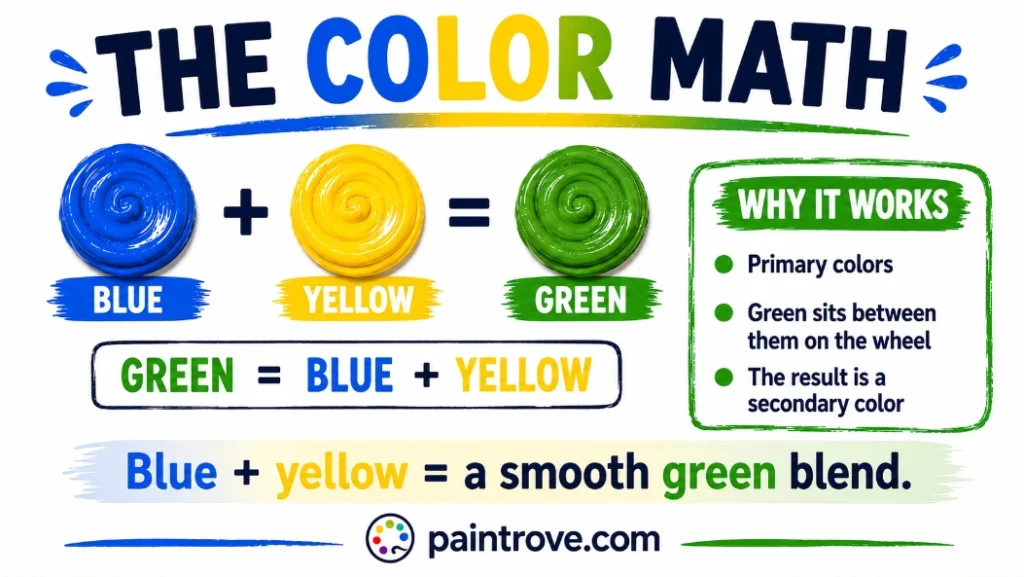
Blue and yellow are two of the three primary colors in the traditional RYB model, alongside red. Primary colors cannot be mixed from other colors, but combining any two of them produces a secondary color:
- Blue + Yellow = Green
- Red + Yellow = Orange
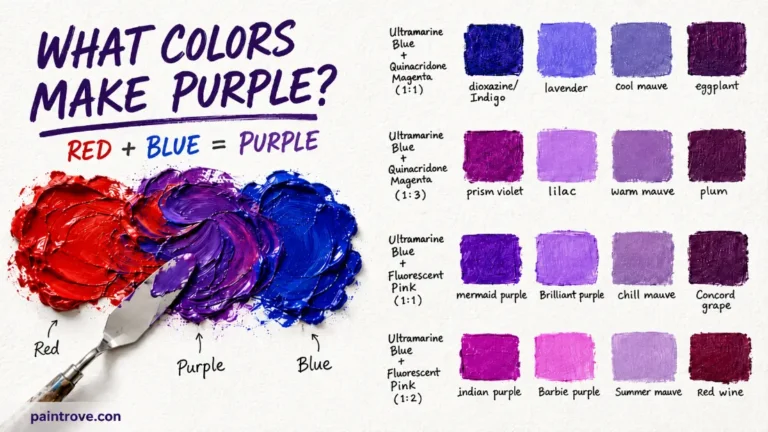
- Red + Blue = Purple
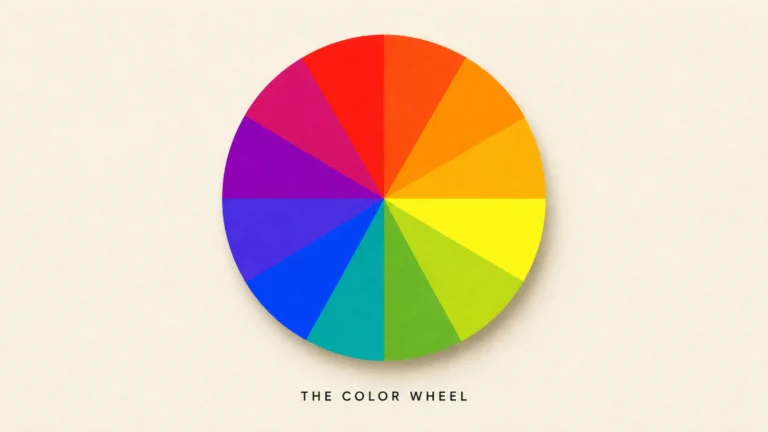
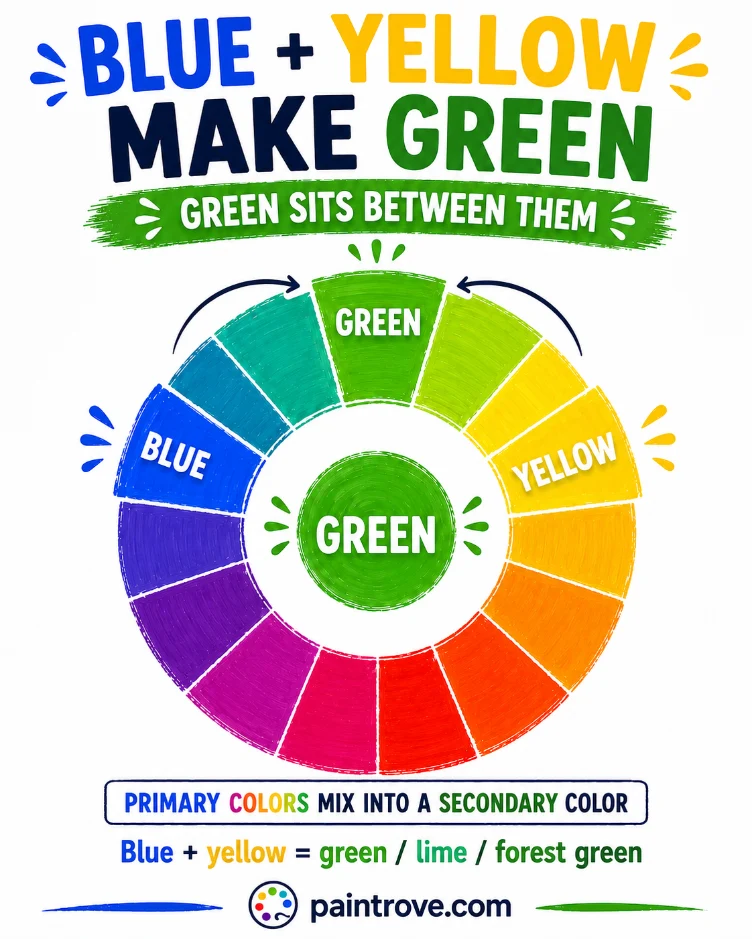
On the color wheel, green sits directly between blue and yellow, exactly where their mix lands. Green is also the bridge between the warm and cool halves of the wheel, inheriting yellow’s warmth and energy on one side and blue’s coolness and calm on the other. That is part of why green feels so balanced and natural to the eye. For the full picture of this color, including shades you cannot reach from blue and yellow alone, see our guide to what colors make green.
The Catch: Color Bias Decides Your Green
Here is where clean greens are won or lost. Almost every blue and yellow paint carries a bias, a slight lean toward a neighboring color, and that bias decides whether your green sings or sinks.
The rule that governs green: red is the enemy of green. Red sits opposite green on the wheel, so any hidden red in your blue or yellow works to neutralize the green into olive, khaki, or gray. And several common paints smuggle red in:
- Warm blues (ultramarine) lean toward purple, meaning they contain red. Mixed with yellow, they make duller, olive-leaning greens.
- Cool blues (phthalo, cerulean) lean toward green already, containing a trace of yellow. These make the cleanest, brightest greens.
- Warm yellows (cadmium yellow, yellow ochre) lean toward orange, meaning they contain red. These mute the green.
- Cool yellows (lemon yellow, hansa yellow) lean toward green, containing a trace of blue. These keep green vivid.
The golden rule for bright green: pair a cool blue with a cool yellow. Phthalo blue plus lemon yellow makes an intensely vivid green. Pair warm with warm, like ultramarine plus cadmium yellow, and you get a lovely muted olive instead, which is useful but not vivid.
Blue and Yellow Pigment Pairings for Green
| Goal | Blue to use | Yellow to use | Result |
|---|---|---|---|
| Vivid grass green | Phthalo blue | Lemon yellow | Bright, saturated green |
| Clean spring green | Cerulean blue | Hansa yellow | Fresh, light-friendly green |
| Deep forest green | Phthalo blue | Cadmium yellow | Rich, slightly muted deep green |
| Natural olive green | Ultramarine | Yellow ochre | Earthy, muted olive |
| Muted sage green | Ultramarine | Cadmium yellow | Soft grayish green |

Mixing Ratios: From Lime to Deep Forest
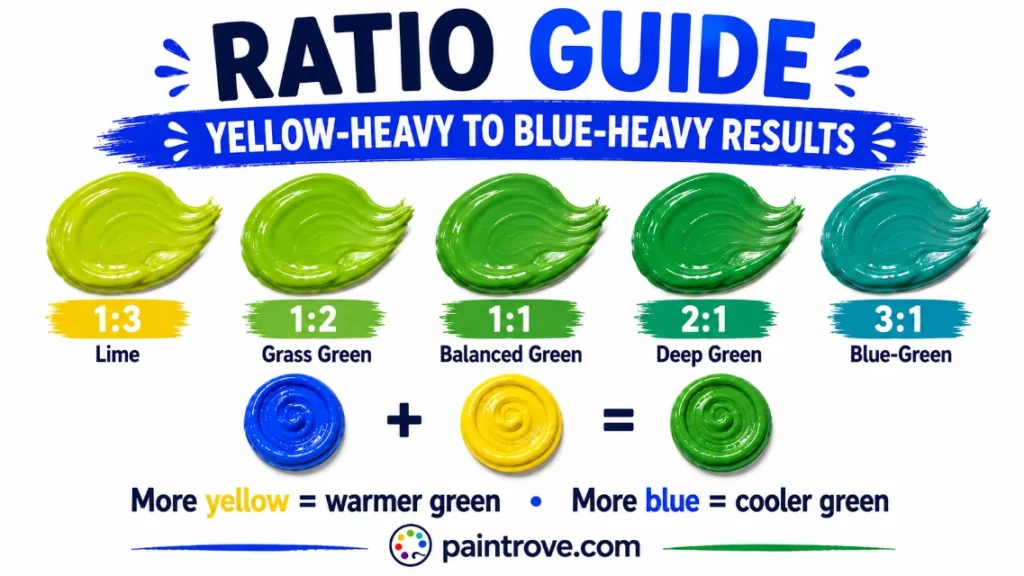
The blue-to-yellow ratio decides how warm or cool your green is. Here is the working chart with hex targets in plain text:
| Ratio (Blue : Yellow) | Resulting shade | Hex code |
|---|---|---|
| 1 : 3 | Yellow-green / lime | Hex #9ACD32 |
| 1 : 2 | Bright grass green | Hex #7CFC00 |
| 1 : 1 | Balanced green | Hex #008000 |
| 2 : 1 | Deep green | Hex #006400 |
| 3 : 1 | Blue-green | Hex #17A589 |
| 1 : 1 plus white | Pastel green | Hex #B5E550 |
| 1 : 1 plus a touch of black | Dark forest green | Hex #013220 |
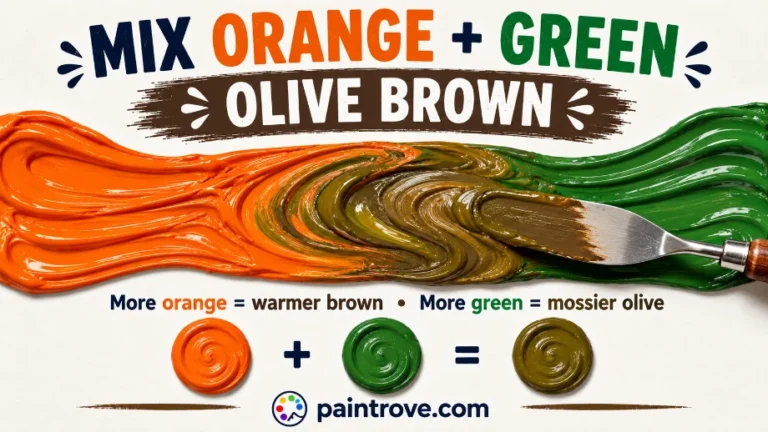
| 2 : 1 with warm colors | Olive | Hex #808000 |
Practical notes:
- Add blue to yellow, not the other way around. Blue is far stronger and will overwhelm yellow quickly. Start with yellow and add blue by the brush-tip.
- Mix thoroughly before judging. A half-mixed green always looks patchy and darker than the finished blend.
- Test on white paper and let it dry, since greens read differently spread thin, and acrylics dry a shade darker.
Every Shade of Green from Blue and Yellow
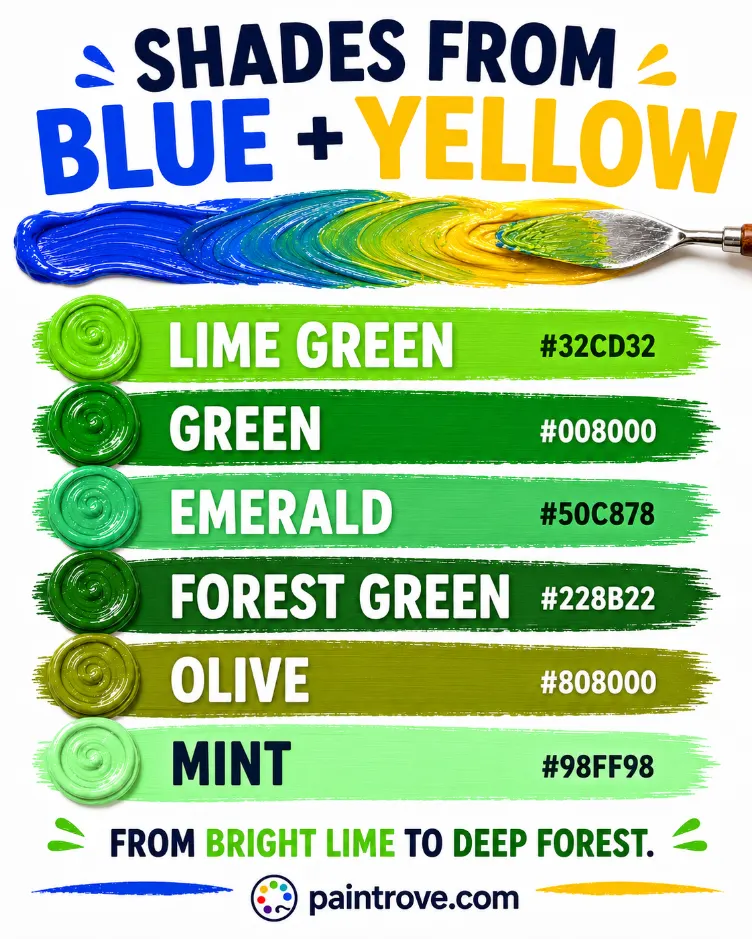
Between ratio, pigment choice, and additions of white, black, or gray, blue and yellow cover the entire green spectrum. The reference table:
| Shade | Hex code | How to mix it |
|---|---|---|
| Green | Hex #008000 | Equal parts blue and yellow |
| Lime green | Hex #32CD32 | Yellow-heavy mix |
| Chartreuse | Hex #7FFF00 | Very yellow-heavy mix |
| Grass green | Hex #7CFC00 | Yellow-leaning mix, cool pigments |
| Kelly green | Hex #4CBB17 | Balanced bright green |
| Emerald | Hex #50C878 | Balanced green plus a touch of white |
| Forest green | Hex #228B22 | Blue-heavy mix |
| Dark forest green | Hex #013220 | Blue-heavy mix plus a touch of black |
| Sea green | Hex #2E8B57 | Blue-heavy mix, slight blue lean |
| Olive | Hex #808000 | Warm blue plus warm yellow |
| Sage | Hex #9CA18C | Muted green plus gray |
| Mint | Hex #98FF98 | Green plus generous white |
| Pastel green | Hex #B5E550 | Yellow-green plus white |
| Teal | Hex #008080 | Very blue-heavy mix |
Lighter Versions (Tints)
Add white to lift green into mint, pastel, and sage-adjacent tints, the fresh colors of new leaves and spring. Because green carries no inherent red, its tints stay clean rather than chalky. The full route is covered in green and white mixed. Add a whisper more yellow if a whitened green looks washed out.
Darker Versions (Shades)
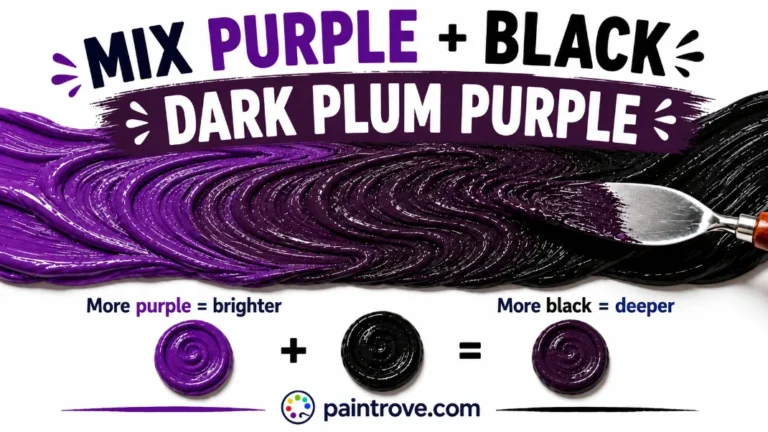
A touch of black turns green into deep forest and pine tones. Black works reasonably here but can flatten and cool the green too far, so add it sparingly. A livelier route is to deepen with more blue, or a tiny amount of green’s complement, red, for a natural shadow green. See green and black mixed for the technique.
Muted Versions (Tones)
Gray softens green into sage and moss, the quiet naturals of interiors and knitwear, covered in green and gray mixed. A tiny amount of red mutes green even more naturally than gray, since it is the direct complement, pulling green toward sophisticated olive.
Shifting Warmer or Cooler
Push the mix toward yellow and you reach the chartreuse and lime territory covered in yellow and green mixed. Push it toward blue and you reach the teal and turquoise of blue and green mixed. Green is the wide middle of a corridor that runs from warm yellow-green all the way to cool blue-green.
Blue and Yellow in Light: The Surprising Answer
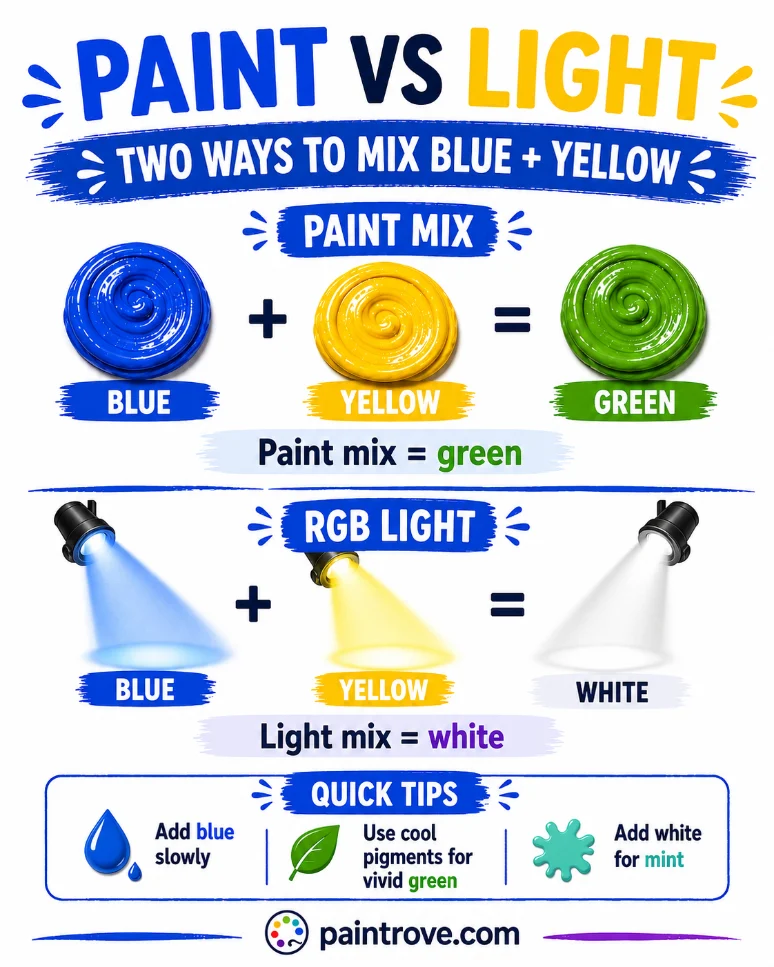
Everything above describes paint. Mix blue and yellow as light and the result is genuinely surprising.
Screens use the RGB model, where colors add together. In light, yellow is not a primary; it is itself made from red and green light. So blue light plus yellow light is really blue plus red plus green, which is all three light primaries combined, and all three combined make white. Blue and yellow light make white, not green.
| System | Type | Blue + Yellow makes | Result |
|---|---|---|---|
| RYB (paint) | Subtractive | Green | Hex #008000 |
| RGB (light and screens) | Additive | White | Hex #FFFFFF |
| CMYK (printing) | Subtractive | Green from yellow + cyan | Varies |
This is why blue and yellow are called complementary colors in the light model, even though they make green in paint. In printing, covered in our guide to the CMYK color model, green comes from yellow ink plus cyan, the printing stand-in for blue, which works much like the paint version. Same two colors, three different systems, three different answers.
Troubleshooting: Why Your Green Went Muddy
The green looks olive or khaki when you wanted vivid. Hidden red. Either your blue leans purple (ultramarine) or your yellow leans orange (cadmium, ochre). Switch to a cool blue and cool yellow: phthalo blue and lemon yellow.
The green is too dark and dull. Too much blue, or a very strong blue like phthalo added too heavily. Rebuild starting from yellow and add blue in tiny amounts.
The green looks gray. Both parents carry opposing biases that are canceling out. Simplify to two clean, cool pigments.
The green is barely green. Not enough blue, or a weak blue. Some yellows dominate; keep adding blue past the point that feels reasonable, but slowly.
It dried darker and duller. Standard acrylic behavior. Mix a step brighter and lighter than your target.
Different mediums behave differently. Watercolor greens mix optically and can go lifeless if overworked; many watercolorists layer thin blue and yellow washes instead of premixing. Oils and acrylics premix cleanly on the palette.
Green in Art, Fashion, and Design
Green is the color of life itself, and its mix from blue and yellow reflects that balance of cool and warm.
In Art
Green surrounds the landscape painter, and mixing convincing greens is one of the classic challenges of the craft. Tube greens often look artificial, so many painters mix their own from blue and yellow to match the endless greens of nature, from spring’s yellow-greens to summer’s deep blue-greens.
Historically, stable green pigments were hard to come by; some early greens, like Scheele’s green, were made with arsenic and were genuinely poisonous. Mixing green from reliable blues and yellows solved both the availability and the safety problem, which is why the two-color mix became a studio staple.
In Fashion
Green covers enormous ground in fashion, from the muted olive and sage of utility and heritage styles to the vivid emerald and kelly green of statement pieces. Its warm-cool flexibility means there is a flattering green for nearly every skin tone: cooler blue-greens for cool complexions, warmer yellow-greens for warm ones. Emerald in particular reads as rich and luxurious, while sage has become one of the defining soft neutrals of recent seasons.
In Interiors and Branding
Green brings the calm of nature indoors, which is why sage, olive, and forest greens anchor so many interior palettes alongside wood and cream. In branding, green signals growth, health, nature, and increasingly sustainability, which is why it dominates organic food, wellness, finance, and eco identities. It is the color that says natural, balanced, and alive, all at once.
Quick Reference: Blue + Yellow Cheat Sheet
| Question | Answer |
|---|---|
| Blue + yellow in paint | Green (hex #008000) |
| Blue + yellow in light | White |
| More yellow | Lime, grass green |
| More blue | Forest, blue-green |
| Plus white | Mint, pastel green |
| Plus black | Deep forest green |
| Plus gray | Sage, moss |
| Best pigments for vivid green | Phthalo blue + lemon yellow |
| Why it goes olive | Hidden red from warm blue or warm yellow |
| Color type | Secondary |
FAQs
What color do blue and yellow make when mixed?
Green. Blue and yellow are primary colors, and mixing them produces the secondary color green. More yellow gives a lighter, warmer green; more blue gives a deeper, cooler green.
What blue and yellow make the brightest green?
Phthalo blue and lemon yellow. Both are cool, green-leaning pigments with no hidden red, so they produce the cleanest, most saturated green. Add the phthalo sparingly, since it is very strong.
Do blue and yellow always make green?
In paint, yes, though the shade varies with the pigments. In light, no: blue and yellow light combine to make white, because yellow light is itself red plus green, adding up to all three light primaries.
How do you make dark green from blue and yellow?
Use more blue than yellow, ideally phthalo blue with cadmium yellow for a rich forest green. Deepen further with a touch of black or, for a livelier result, a tiny amount of red.
How do you make light green from blue and yellow?
Mix your green, then add white for mint and pastel tones, or simply use more yellow and a cool blue for a naturally lighter, fresher green. Add white gradually to avoid a chalky result.
Is green warm or cool?
Green sits on the cool side of the color wheel but bridges both halves. Yellow-heavy greens read warm, while blue-heavy greens read cool. This flexibility is what makes green so useful across painting and design.
Blue and yellow make green, but the green you get is entirely in your hands. Match your pigment biases, control the ratio, and the whole family from bright lime to deep forest is yours to mix.
For the bigger picture, see our complete guide to what colors make green, explore the neighboring mixes at yellow and green and blue and green, or go back to basics with primary colors.