What Color Do Blue and Purple Make When Mixed?

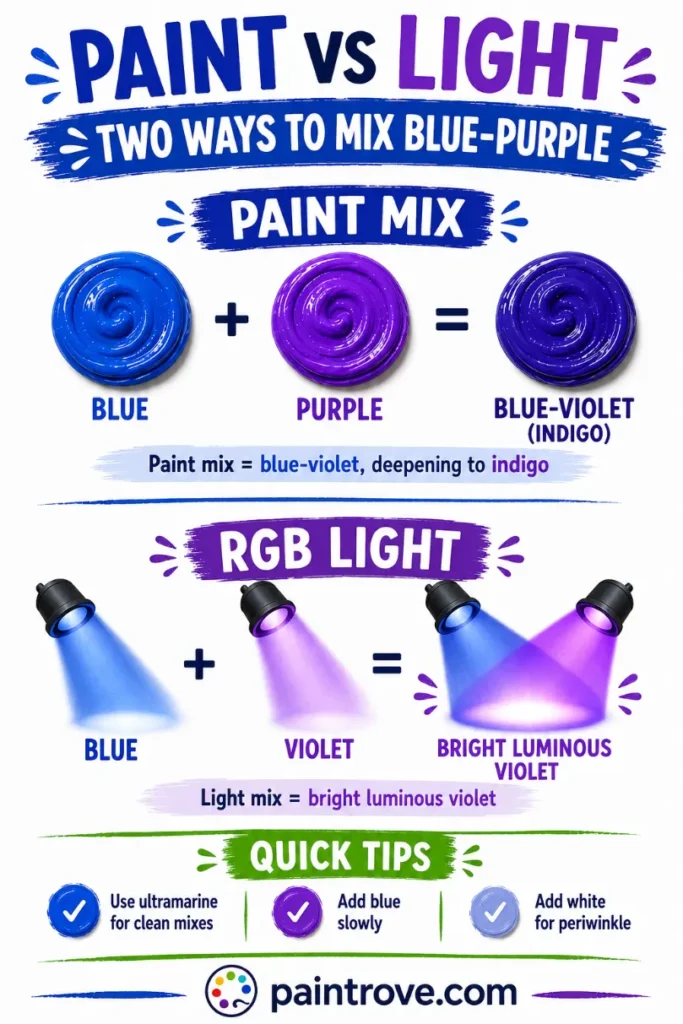
What Color Do Blue and Purple? Mix blue and purple together, and you get blue-violet, a deep, cool purple that leans toward blue. It sits at hex #8A2BE2 in its brightest form and deepens toward indigo (hex #4B0082) as you add more blue. Add white, and it lifts into periwinkle; add black, and it drops into midnight and near-navy tones.
Blue and purple are neighbors on the color wheel, which makes this one of the smoothest, most forgiving mixes you can make. There is no risk of mud. The only question is how blue or how purple you want the result, and how light or dark.
This guide covers the exact ratios with hex codes, the pigments that keep the mix vivid, the full range from periwinkle to midnight, and what changes when you mix blue and purple as light instead of paint.
Why Blue and Purple Make Blue-Violet
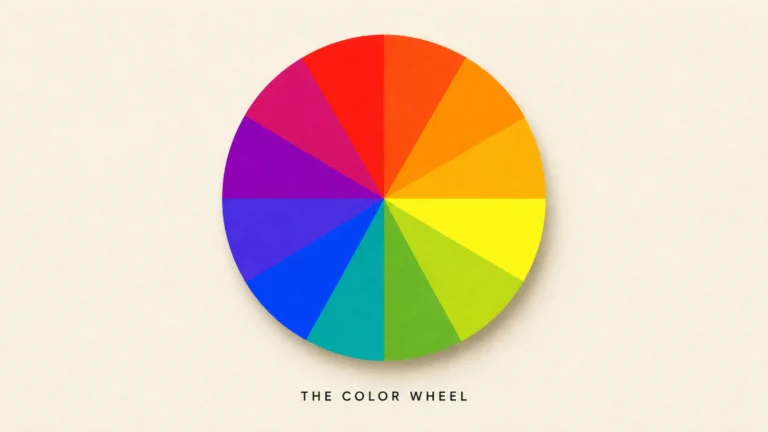
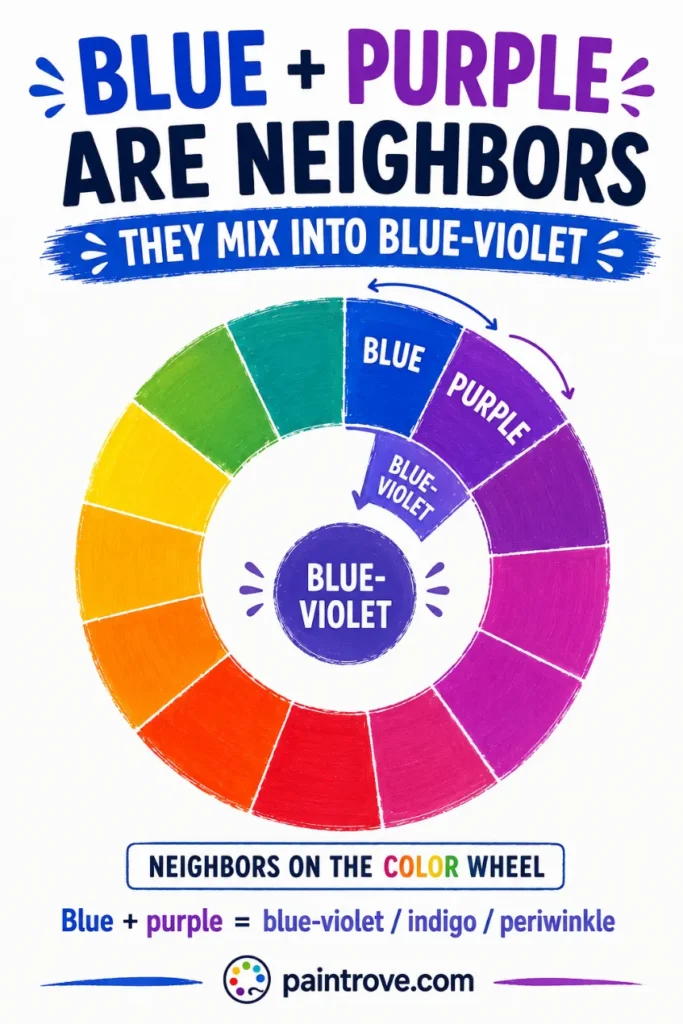
On the color wheel, purple sits right beside blue. Colors that neighbor each other are called analogous, and mixing them produces harmony, not contrast. The result lands cleanly between the two parents, on blue-violet.
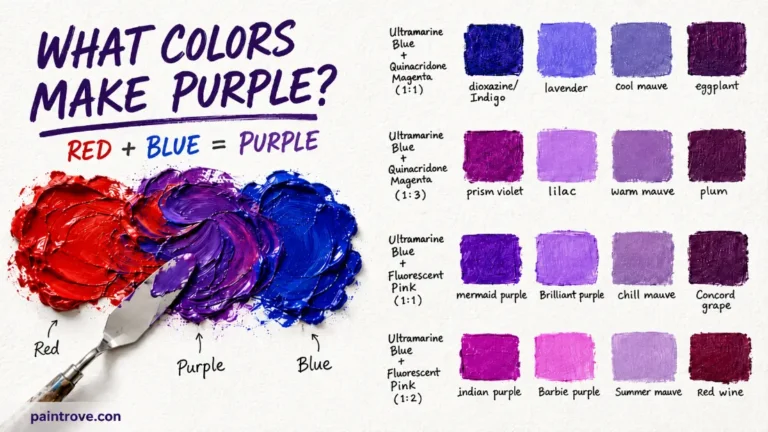
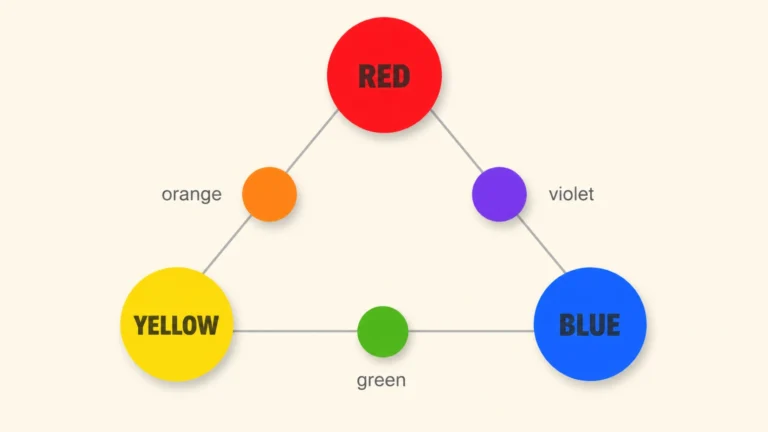
There is a family relationship underneath, too. Purple is a secondary color, made from red and blue, as covered in what red and blue make. So purple already contains blue. When you add more blue to it, you are simply strengthening a component that is already there. The red half gets outnumbered, the blue rises, and the color slides from purple toward blue, stopping at blue-violet.
That makes blue-violet a tertiary color: a primary, blue, mixed with its neighboring secondary, purple. It is one of six tertiary colors on the wheel, sitting alongside red-violet, red-orange, yellow-orange, yellow-green, and blue-green. Its warm-side twin is red and purple mixed, which produces red-violet or magenta, the mirror image of blue-violet on the other shoulder of purple. For the parent color’s full story, see what colors make purple.
Blue-Violet, Indigo, Periwinkle, Violet: What Is the Difference?
The blue-purple family carries several names that describe genuinely different colors. Here is how they separate:
| Color | Hex code | Character |
|---|---|---|
| Blue-violet | Hex #8A2BE2 | Bright, balanced blue-purple |
| Violet | Hex #7F00FF | Slightly more purple, luminous |
| Indigo | Hex #4B0082 | Deep, dark, blue-dominant |
| Periwinkle | Hex #CCCCFF | Pale, whitened, soft |
| Ultramarine violet | Hex #6A5ACD | Muted mid blue-purple |
| Amethyst | Hex #9966CC | Soft jewel-toned blue-purple |
| Midnight | Hex #2E0854 | Near-black deep blue-purple |
| Iris | Hex #5A4FCF | Cool mid blue-violet |
The names worth keeping straight:
Blue-violet is the balanced result, an even mix leaning slightly blue.

Indigo is the deep one, the color between blue and violet in the rainbow that Newton named as its own band of the spectrum. A blue-heavy blue-purple mix, deepened, lands on indigo. It is the color of denim dye and of a clear sky just after sunset.
Periwinkle is the pale one, blue-violet lightened with white until it becomes soft and airy. You can also reach it from pink and blue mixed.
Violet leans a touch more purple and reads as more luminous than blue-violet.
Mixing Ratios: From Violet to Indigo
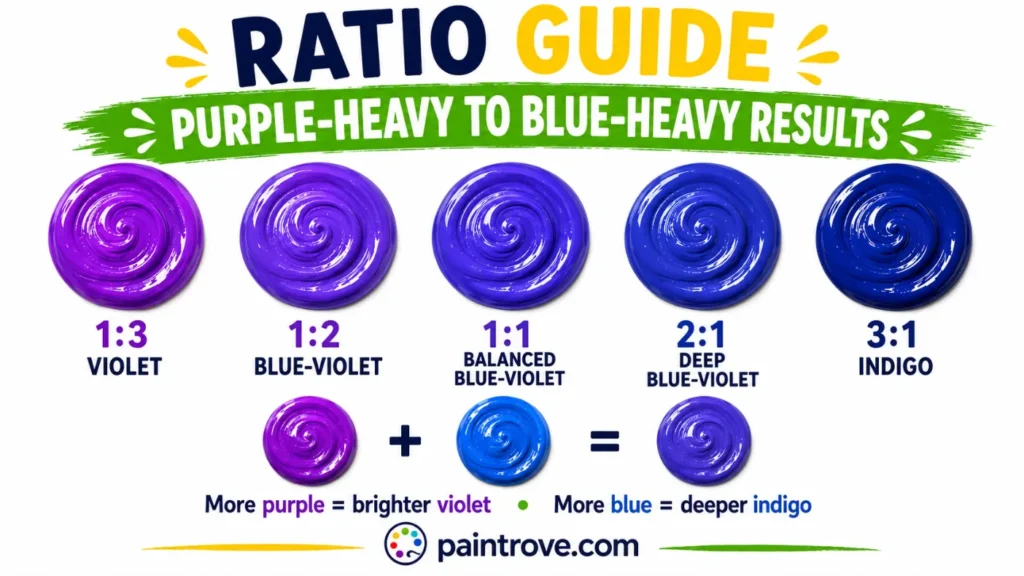
The blue-to-purple ratio decides where you land. Here is the working chart with hex targets in plain text:
| Ratio (Blue : Purple) | Resulting shade | Hex code |
|---|---|---|
| 1 : 3 | Purple leaning blue / violet | Hex #7F00FF |
| 1 : 2 | Blue-violet, warm side | Hex #8A2BE2 |
| 1 : 1 | Balanced blue-violet | Hex #6A0DAD leaning blue |
| 2 : 1 | Deep blue-violet | Hex #4B3F9E |
| 3 : 1 | Indigo | Hex #4B0082 |
| 1 : 1 plus white | Periwinkle | Hex #CCCCFF |
| 1 : 1 plus a touch of black | Midnight blue-purple | Hex #2E0854 |
| 2 : 1 plus white | Soft cornflower-violet | Hex #7B77C9 |
Practical notes:
- Add blue to purple in small steps. Blue is strong and will race the mix toward indigo faster than you expect.
- Because purple already contains blue, you need less added blue than you might think to tip the balance. Go gently.
- Judge on white paper and let it dry, since blue-purples read very differently spread thin versus piled up, and acrylics dry a shade darker.
Which Blue and Which Purple to Use
Pigment choice decides how vivid and clean the mix stays:
| Goal | Blue to use | Purple to use | Result |
|---|---|---|---|
| Bright blue-violet | Ultramarine | Dioxazine purple | Vivid, saturated blue-violet |
| Deep indigo | Phthalo blue or Prussian | Dioxazine purple | Rich, dark indigo |
| Soft periwinkle | Cerulean | Purple plus white | Airy, pale blue-violet |
| Muted iris | Ultramarine | Muted or grayed purple | Soft, dusty blue-violet |
The key: warm, violet-leaning blues make the cleanest blue-violets. Ultramarine already leans toward purple, so it merges seamlessly and keeps the mix bright. A green-leaning blue like phthalo can slightly dull the mix, since its hidden yellow works against purple, though phthalo is excellent when you specifically want a deep, dark indigo. Keep dioxazine purple as your purple of choice; it is intense and clean. As always, add the stronger pigment sparingly.
Every Shade You Can Make from Blue and Purple
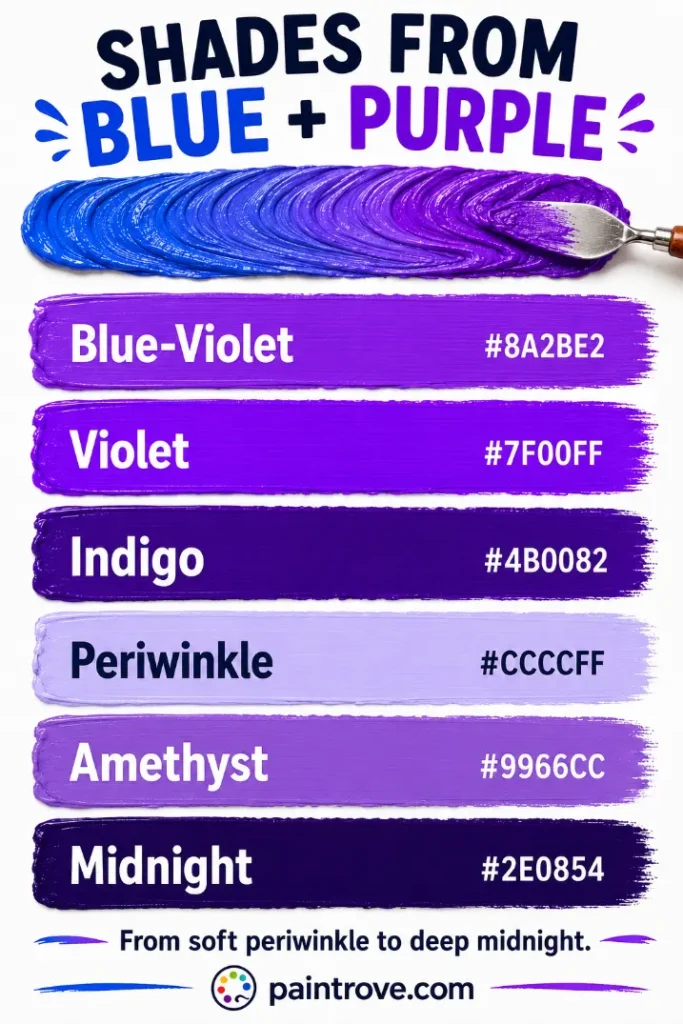
Between ratio, pigment, and additions of white, black, or gray, blue and purple cover a rich band of cool colors. The reference table:
| Shade | Hex code | How to mix it |
|---|---|---|
| Blue-violet | Hex #8A2BE2 | Two parts purple, one part blue |
| Violet | Hex #7F00FF | Purple-heavy mix |
| Indigo | Hex #4B0082 | Three parts blue, one part purple |
| Periwinkle | Hex #CCCCFF | Equal mix plus generous white |
| Amethyst | Hex #9966CC | Equal mix plus a little white |
| Iris | Hex #5A4FCF | Equal mix, slight blue lean |
| Ultramarine violet | Hex #6A5ACD | Equal mix plus a touch of gray |
| Slate blue | Hex #6A5ACD | Blue-heavy mix plus gray |
| Royal purple | Hex #4B0082 | Balanced mix plus depth |
| Midnight | Hex #2E0854 | Blue-heavy mix plus black |
| Deep indigo | Hex #310062 | Indigo plus a touch of black |
| Wisteria | Hex #C9A0DC | Purple-heavy mix plus white |
| Grape | Hex #6F2DA8 | Purple-heavy mix, deep |
Lighter Versions (Tints)
White lifts blue-violet into periwinkle, wisteria, and soft amethyst, the gentle cool pastels of spring skies and flowers. Because the mix is cool and carries no red-orange to gray it out, these tints stay clean and luminous. Add a whisper more of either parent if a whitened mix loses its character. The related route through purple and white mixed reaches similar pale purples.
Darker Versions (Shades)
A touch of black turns blue-violet into midnight and deep indigo, some of the richest darks on the palette. But this mix is already dark, so black overwhelms fast. Many painters skip it entirely and deepen with more blue, especially Prussian or phthalo, which darkens while keeping the color alive. See purple and black mixed for the technique. A deep blue-violet also makes an excellent alternative to plain black in shadow work, adding depth without deadness.
Muted Versions (Tones)
Gray softens blue-violet into slate blue, ultramarine violet, and dusty iris tones, the sophisticated cool grays used across interiors and fashion. See blue and gray mixed for how a little gray transforms a blue. A tiny touch of yellow, the complement of purple, or orange, the complement of blue, mutes the mix even more naturally than gray.
Blue and Purple in Light: The Magenta Twist
Everything above describes paint. Mix blue and purple as light and something surprising happens.
Screens use the RGB model, where colors add together and brighten. On a screen, purple is itself made from red and blue light. Add more blue light to it and you might expect a deeper blue-violet, and to some extent you get one. But push the balance and the extra blue combined with purple’s red content produces a bright, glowing violet that trends toward magenta at its most intense, far more luminous than any paint blue-violet. Light amplifies where paint deepens.
| System | Type | Blue + Purple makes | Character |
|---|---|---|---|
| RYB (paint) | Subtractive | Blue-violet, deepening to indigo | Cool, deep, moody |
| RGB (light and screens) | Additive | Bright luminous violet | Glowing, electric |
| CMYK (printing) | Subtractive | Blue-violet from cyan-heavy mix | Rich, printable |
In printing, covered in our guide to the CMYK color model, blue-violet comes from a cyan-heavy mix of cyan and magenta inks. Printers dial the cyan up to push a purple toward blue-violet, the same way you would add blue paint. Three systems, three routes into the same cool corner of the wheel.
Troubleshooting Blue and Purple Mixes
The mix went straight to indigo and skipped blue-violet. Too much blue, too fast. Blue overpowers a mix that already contains blue. Rebuild starting from purple and add blue by the brush-tip.
The mix looks dull or grayish. Your blue is green-leaning. Phthalo and cerulean carry a hint of yellow, which works against purple. Switch to ultramarine for a clean, bright blue-violet.
The mix is too dark to judge. Blue-purples are naturally deep. Add a little white to a test pile to reveal the true hue, then adjust the master mix.
The periwinkle looks chalky. Too much white too fast. Rebuild with less white and a slightly stronger base, or restore life with a touch more of both parents.
It dries darker and flatter. Standard acrylic behavior, and more noticeable with already-dark colors. Mix a step lighter and brighter than your target.
Blue-Violet in Art, Fashion, and Design
The blue-purple family carries the calm of blue and the mystery of purple at once, which gives it a moody, twilight character designers reach for deliberately.
In Art
Indigo and blue-violet are the colors of dusk, and landscape painters lean on them for twilight skies, deep water, and the cool shadows of evening. Indigo has a long and heavy history as a dye: extracted from plants across India, Japan, and West Africa for millennia, it was so valuable it was once called blue gold, and the transatlantic indigo trade shaped economies and, darkly, slavery.
In painting, a deep blue-violet is one of the most useful shadow colors available, richer and more atmospheric than black. The Impressionists used blue-violets constantly to make shadows shimmer.
In Fashion
Blue-violet and indigo are the quiet backbone of fashion, largely because of denim: indigo-dyed jeans made this exact corner of the wheel the most worn color family on earth. Beyond denim, blue-violets read as regal but cool, luxurious without the warmth of red-purples. Periwinkle and soft amethyst carry spring collections, while deep indigo and midnight anchor eveningwear as sophisticated alternatives to black.
The family flatters cool skin tones especially well.
In Interiors and Branding
Deep blue-violet and indigo bring drama and depth to interiors, working beautifully in studies, bedrooms, and feature walls paired with brass or warm wood. Softer periwinkle and iris feel calm and current, especially with gray and cream. In branding, blue-violet signals creativity grounded by trust, the imaginative side of purple steadied by the reliability of blue, which is why it appears across tech, finance, and wellness brands that want to feel both innovative and dependable.
Quick Reference: Blue + Purple Cheat Sheet
| Question | Answer |
|---|---|
| Blue + purple in paint | Blue-violet (hex #8A2BE2) |
| More blue | Indigo (hex #4B0082) |
| More purple | Violet (hex #7F00FF) |
| Plus white | Periwinkle (hex #CCCCFF) |
| Plus black | Midnight blue-purple (hex #2E0854) |
| Plus gray | Slate blue, iris |
| Blue + purple in light | Bright luminous violet |
| Best pigments | Ultramarine + dioxazine purple |
| Why it goes dull | Green-leaning blue fighting the purple |
| Color type | Tertiary (primary + secondary) |
FAQs
What color do blue and purple make when mixed?
Blue-violet, a deep cool purple that leans toward blue. Adding more blue deepens it toward indigo; adding more purple lifts it toward violet. White produces periwinkle, and black produces midnight tones.
Do blue and purple make indigo?
Yes, when blue dominates. A blue-heavy blue-purple mix, roughly three parts blue to one part purple, lands on indigo at hex #4B0082, the deep color between blue and violet in the rainbow.
Do blue and purple make violet?
They make blue-violet, which is very close to violet. A purple-heavy version of the mix reads as violet at hex #7F00FF. In everyday language violet, blue-violet, and blue-purple often refer to the same color.
Why did my blue and purple mix turn out dull?
Your blue is probably green-leaning, like phthalo or cerulean, and its hidden yellow works against the purple. Use a warm, violet-leaning blue such as ultramarine for a bright, clean blue-violet.
How do you make periwinkle from blue and purple?
Mix blue and purple to a balanced blue-violet, then add generous white until it becomes a soft, pale blue-purple around hex #CCCCFF. Keep the base slightly blue-leaning, since periwinkle sits on the blue side of the family.
Is blue-violet warm or cool?
Cool. Both parents sit on the cool half of the color wheel, making blue-violet one of the coolest mixed colors possible. Purple-leaning versions read very slightly warmer than blue-leaning ones.
What two colors make indigo?
Blue and purple, with blue dominant. Since purple is red plus blue, you can also build indigo directly from a large amount of blue with a small amount of red. Adding a touch of black deepens it to true indigo.
Blue and purple mixed give you blue-violet at the center, periwinkle and amethyst on the light side, indigo and midnight on the dark side, and one of the most forgiving mixing experiences on the wheel. Two cool neighbors, no mud possible.
To go deeper into this family, see our full guide to what colors make purple, explore the parent color at what colors make blue, or step back to the theory with the color wheel.