What Color Do Purple and Black Make When Mixed?
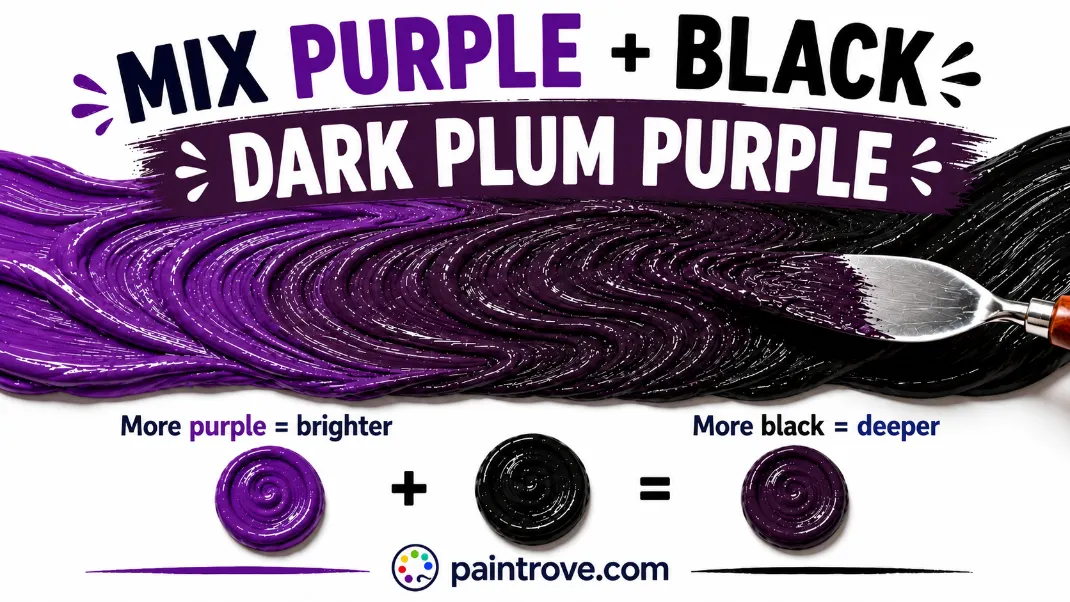
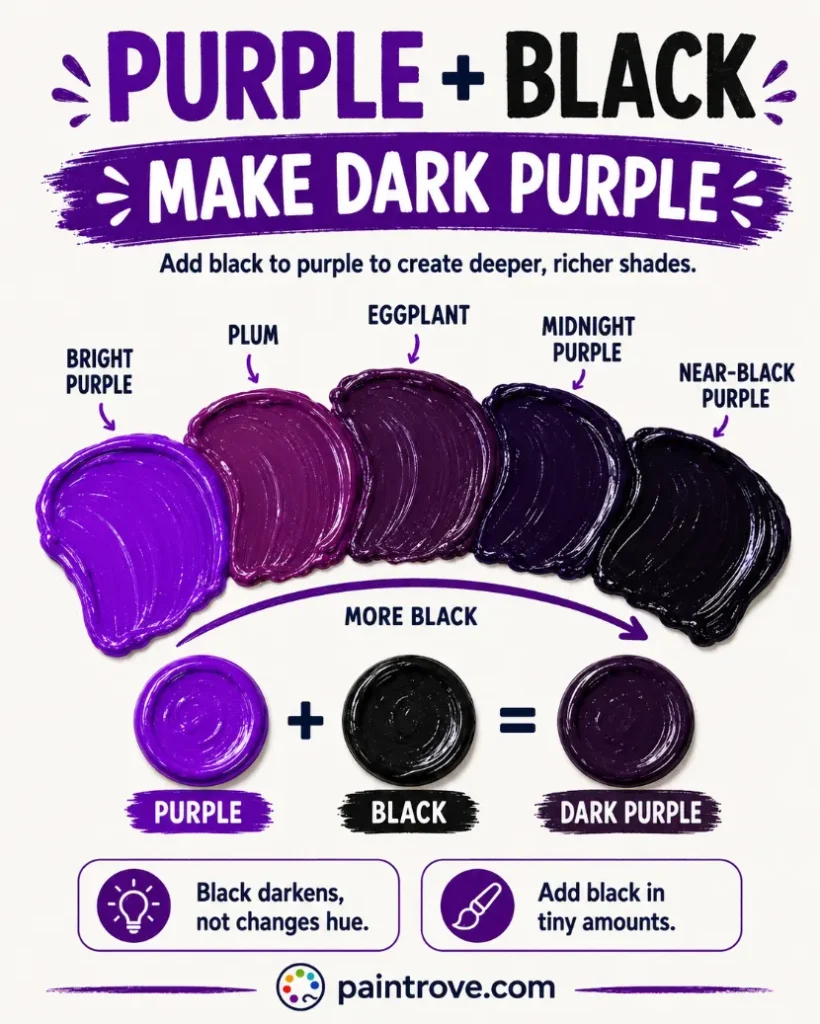
What Color Do Purple and Black Make When Mixed? Mix purple and black together and you get a dark plum or eggplant purple. A very small amount of black turns a bright purple into rich plum at hex #8E4585, and a little more gives eggplant at hex #614051 or midnight purple at hex #2E0854. Push much further and the mix stops reading as purple at all and simply looks black.
That last point is the one most guides skip, and it matters. Purple is unusually vulnerable to black. It is already a dark, mid-value color, so it has very little room to go darker before it loses its identity entirely. Many artists try this mix expecting a luxurious deep plum and end up with something flat and nearly black instead.
This guide covers exactly what purple and black make, the ratios and hex codes that work, why black overwhelms purple so fast, and the better techniques for mixing deep purples that stay rich.
Why Purple and Black Make Dark Purple
Black is not a hue. It is the absence of reflected light, and in mixing it works by absorbing light rather than contributing any color of its own. So adding black to purple introduces no new color information. It simply lowers how much light the mix reflects, which your eye reads as a darker version of the same purple. In color theory terms, adding black to any color creates a shade of that color, while adding white creates a tint.
Purple itself is a secondary color, made from red and blue, as covered in what red and blue make. Black darkens the whole mix uniformly without caring about that internal recipe, so whatever purple you start with gets taken toward its darkest version. A red-leaning purple darkens toward plum and burgundy-purple; a blue-leaning purple darkens toward midnight and near-navy tones. For the full range of the parent color, see what colors make purple.
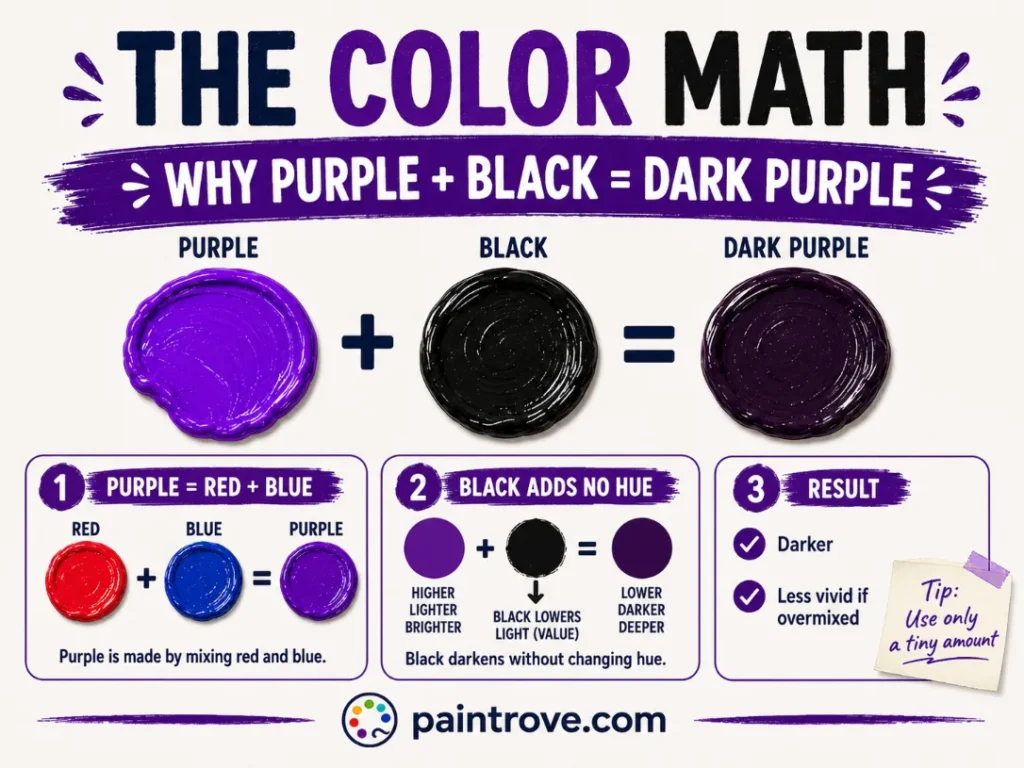
The Catch: Black Overwhelms Purple Faster Than Almost Any Color
Here is the honest warning that separates real mixing advice from theory. Purple has very little headroom before black kills it.
Bright colors like yellow and orange are light in value, so they can absorb a lot of black and still read as themselves, turning into olive and brown along the way. Purple starts out dark. A standard dioxazine or ultramarine violet is already deep, so even a couple of drops of black can take it past plum and straight into “is that black or purple?” territory.
Two things go wrong when black takes over:
It desaturates. Black does not only darken; it mutes. The vividness that makes purple feel rich and jewel-like is the first casualty. What you wanted as luxurious plum arrives as a dull, grayish dark.
It flattens. Because black adds no hue, a purple darkened only with black has no color life in it. Painters call these dead darks. Next to a purple deepened with actual color, a black-darkened purple looks obviously lifeless.
This is not a reason to never use black. A tiny amount, added last, gives beautiful eggplant and midnight tones. The rule is simply restraint: add black in amounts that feel too small, mix fully, and stop early.
Purple and Black Ratios and Hex Codes
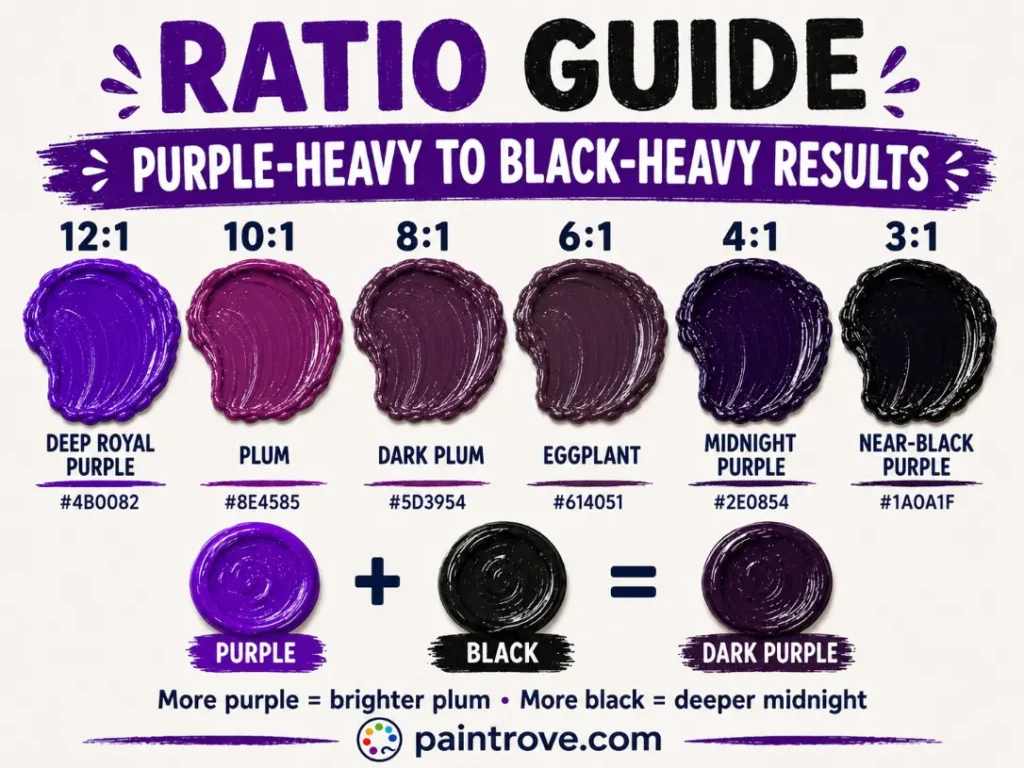
Because black is so strong here, the ratios lean heavily toward purple:
| Ratio (Purple : Black) | Resulting shade | Hex code |
|---|---|---|
| 12 : 1 | Deep royal purple | Hex #4B0082 |
| 10 : 1 | Plum | Hex #8E4585 |
| 8 : 1 | Dark plum | Hex #5D3954 |
| 6 : 1 | Eggplant / aubergine | Hex #614051 |
| 4 : 1 | Midnight purple | Hex #2E0854 |
| 3 : 1 | Near-black purple | Hex #1A0A1F |
| 10 : 1 plus white | Muted dusty grape | Hex #7B6C82 |
Practical notes:
- Add black to purple, never the reverse, and use the very tip of the brush. It is far easier to add more black than to rescue a mix that has gone too dark.
- Mix thoroughly before judging. Streaky half-mixed black always looks darker than the finished blend.
- Test on white paper and let it dry. Dark purples are almost impossible to judge in a pile on the palette, and acrylics dry darker still.
- Mix a larger batch than you need. Matching a dark purple exactly on a second attempt is genuinely difficult.
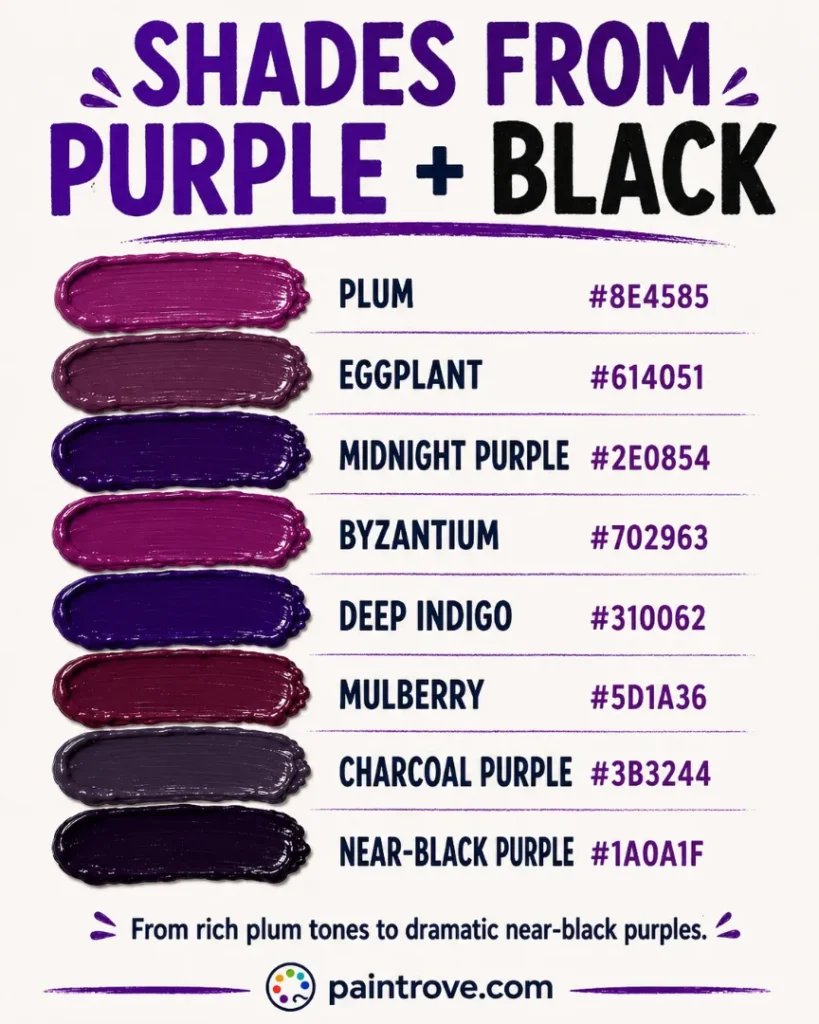
Every Dark Purple You Can Make
Purple plus a touch of black covers the full range of deep purples. The reference table, with hex codes in plain text:
| Shade | Hex code | How to mix it |
|---|---|---|
| Plum | Hex #8E4585 | Red-leaning purple plus a little black |
| Eggplant / aubergine | Hex #614051 | Purple plus black, slightly more |
| Midnight purple | Hex #2E0854 | Blue-leaning purple plus black |
| Byzantium | Hex #702963 | Red-purple plus a touch of black |
| Deep indigo | Hex #310062 | Blue-purple plus black |
| Mulberry | Hex #5D1A36 | Red-heavy purple plus black |
| Dark violet | Hex #3B0A45 | Violet plus black |
| Grape | Hex #4C2882 | Purple plus a very small amount of black |
| Wine purple | Hex #4A192C | Red-purple plus black, warm lean |
| Charcoal purple | Hex #3B3244 | Purple plus black plus a touch of gray |
| Near-black purple | Hex #1A0A1F | Purple plus heavy black |
The Better Ways to Make Dark Purple
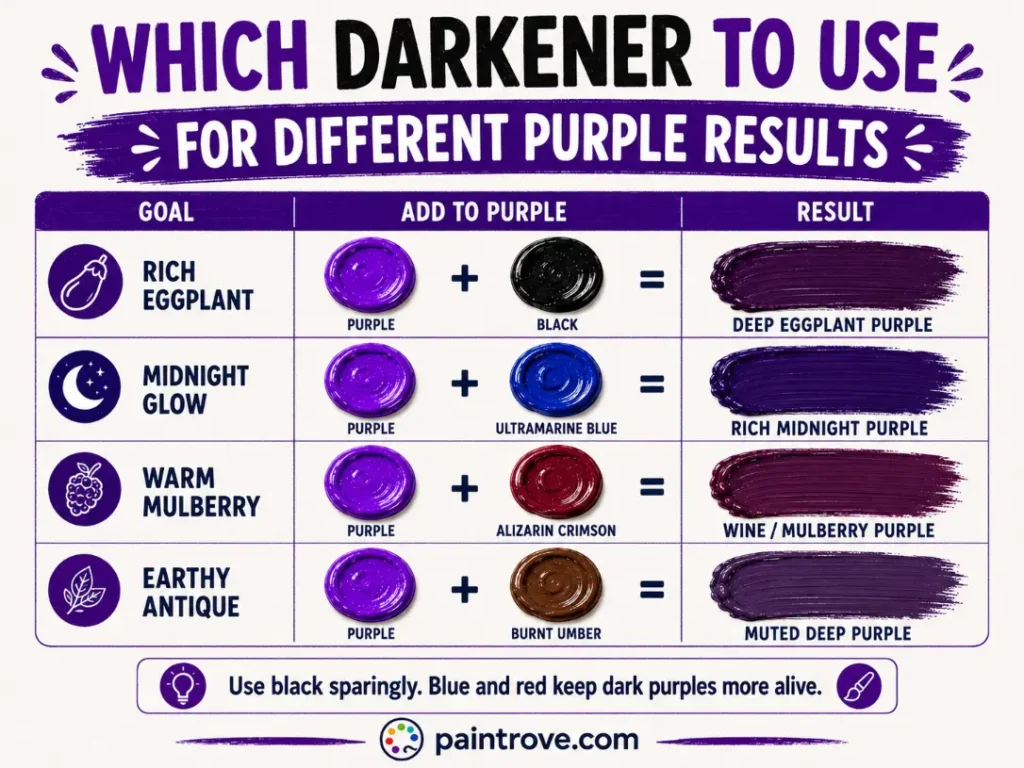
Experienced painters usually build their deepest purples without relying on black. These methods keep the color alive:
Deepen with more blue. Adding ultramarine or Prussian blue to purple darkens it while keeping it chromatic. This is the route to rich midnight and indigo purples that still glow, and it is the same territory covered in blue and purple mixed.
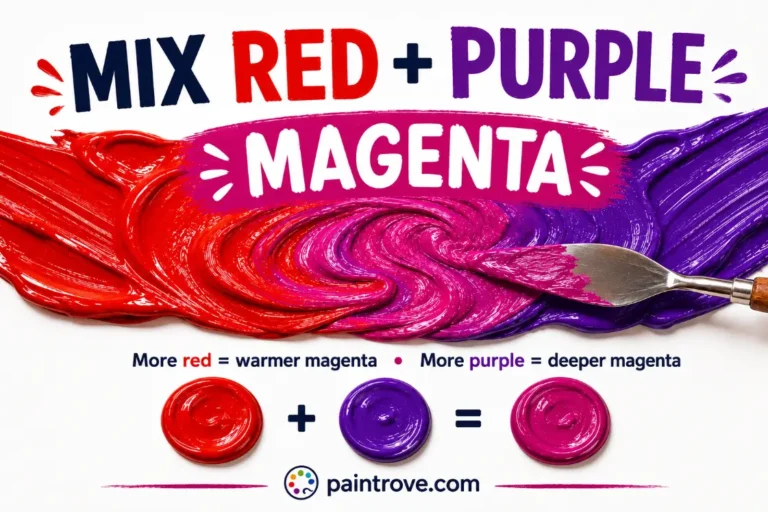
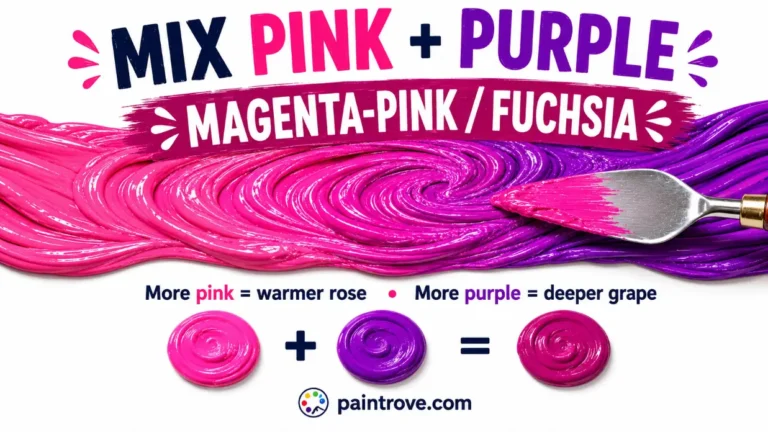
Deepen with a dark red. A deep red like alizarin crimson darkens purple toward plum, mulberry, and wine tones while adding warmth and richness. This is how you get the luxurious burgundy-purples described in red and purple mixed, and the same warm direction that brightens rather than deepens is covered in pink and purple mixed.
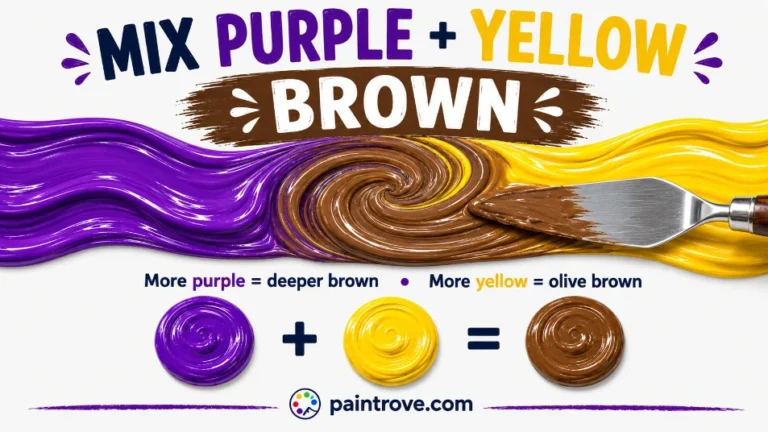
Use the complement, yellow, in tiny amounts. Yellow sits opposite purple on the wheel, so a whisper of it darkens and mutes purple naturally, producing sophisticated, slightly earthy deep purples. Use a very small amount, since too much collapses the mix into the muddy brown described in purple and yellow mixed.
Start with a naturally deep pigment. Dioxazine purple is already extremely dark and rich straight from the tube. Often the answer to “how do I get a deeper purple” is simply a better pigment rather than more black.
Try burnt umber for warmth. A touch of burnt umber deepens purple into a warm, earthy dark, useful for shadow work and antique tones.
For the opposite direction, adding white lifts purple into the lavender and lilac tints covered in purple and white mixed.
Purple and Black in Light and Print
Everything above describes paint. Other color systems handle black differently.
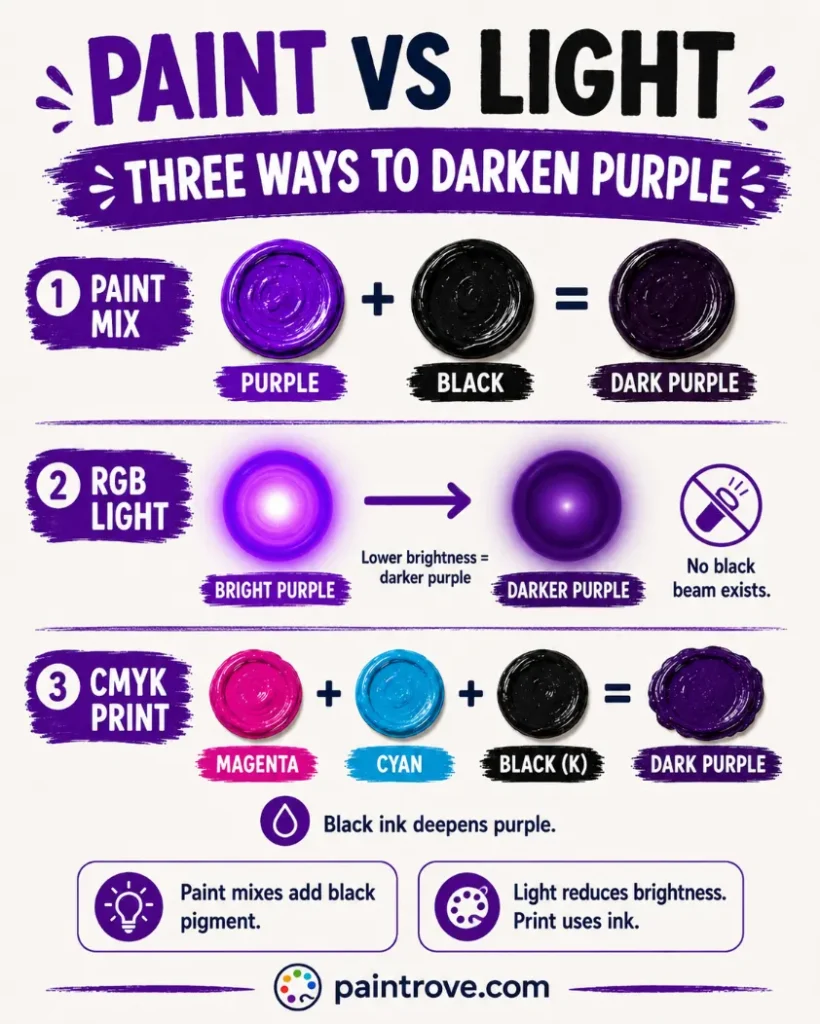
In light, using the RGB model, black does not exist as something you can add. Black on a screen is simply the absence of emitted light, all channels at zero. You cannot shine a black beam onto a purple one. A darker purple on screen is just purple displayed at lower brightness, which reaches the same visual result by a different route.
In printing, using the CMYK color model, black is fundamental. The K in CMYK stands for the key black plate. Dark purple in print comes from magenta and cyan inks with black added, behaving much like the paint version, since both are subtractive systems.
| System | How dark purple is made | Notes |
|---|---|---|
| RYB (paint) | Purple plus a little black, blue, or dark red | Black works but overwhelms fast |
| RGB (light) | Purple at low brightness | No black beam exists |
| CMYK (printing) | Magenta and cyan plus black (K) | Black is a base ink |
Troubleshooting Purple and Black Mixes
The mix looks black, not purple. The most common outcome, and it means too much black. Purple has very little headroom. Rebuild and use a fraction of the black, or deepen with blue or dark red instead.
The dark purple looks gray and muddy. Black desaturated it. Add a little of your original bright purple back in, or remix using a chromatic darkener for a living dark.
The mix lost its richness. A classic black-only dark. Purple’s appeal comes from its saturation, which black removes first. Use dioxazine purple as your base and darken with ultramarine.
The purple shifted color unexpectedly. Your black has a bias. Ivory black is slightly warm and can push purple toward a brownish tone; a cool black like mars black keeps it truer.
It looked right wet and dull dry. Standard acrylic behavior, worse with dark colors. Mix a step lighter and brighter than the target.
Mixing Purple and Black in Different Mediums
The behavior changes noticeably depending on what you are painting with.
Acrylics are the least forgiving. They dry darker than they appear wet, so a purple that looked like plum on the palette can dry closer to eggplant. Mix lighter than your target and expect the shift.
Oils give you the most control, since the long working time lets you adjust a dark purple gradually and judge it properly before it sets.
Watercolor darkens through layering rather than mixing. Rather than adding black pigment, most watercolorists build deep purples by glazing thin washes of purple over each other, or over a blue, which keeps the transparency that makes watercolor purples glow. Adding black to a watercolor purple almost always kills it.
Colored pencils and markers work by layering too. Press a light layer of black over purple rather than blending heavily, and stop earlier than feels right.
Digital work behaves differently again: reducing brightness or adding a black overlay at low opacity gives far more control than paint, and can be undone, which is why digital artists can push much closer to near-black purples safely.
Whichever medium you use, the safest habit is the same one described in purple and white mixed, just in reverse: adjust in tiny increments and stop before you think you need to.
Dark Purple in Art, Fashion, and Design
Deep purples carry more history and drama than almost any color, and their darkest versions are among the richest tones available.
In Art
Purple’s association with wealth and power runs deep. Tyrian purple, extracted from sea snails in the ancient world, was so costly that Roman law restricted who could wear it, and dark purples have signalled luxury ever since. In painting, deep purples serve as some of the most useful shadow colors available, richer and more atmospheric than black.
The Impressionists used them constantly to make shadows shimmer rather than sit flat. This is the practical lesson behind the whole article: a purple darkened with color, rather than with black, is the color that makes a painting feel alive.
In Fashion
Aubergine and plum are two of fashion’s most dependable dark colors, offering the depth of black with far more character. Deep purple reads as luxurious and slightly dramatic, which is why it recurs in eveningwear, velvet, and autumn and winter collections.
It pairs beautifully with gold, cream, and deep green, and it flatters cool skin tones especially well. Worn with black, dark purple adds richness where black alone would feel severe.
In Interiors and Branding
Eggplant and midnight purple bring drama to interiors, working well in dining rooms, studies, and feature walls alongside brass, warm wood, and deep blues. In branding, dark purple signals luxury, creativity, and premium quality, appearing across beauty, spirits, and high-end identities that want to feel imaginative rather than corporate.
Paired with black it reads powerful and mysterious, which is why the combination is a staple of dramatic and nocturnal design themes.
Quick Reference: Purple + Black Cheat Sheet
| Question | Answer |
|---|---|
| Purple + black in paint | Dark plum or eggplant purple (hex #614051) |
| A tiny amount of black | Plum, grape (hex #8E4585) |
| More black | Eggplant, midnight, near-black |
| The risk | Purple has little headroom; black kills it fast |
| Better deep-purple routes | Add blue, dark red, or a whisper of yellow |
| Purple + black in light | Purple at low brightness (no black beam) |
| Purple + black in print | Magenta and cyan plus black key ink |
| Best base pigment | Dioxazine purple, already deep |
| To lighten instead | Add white for lavender and lilac |
FAQs
What color do purple and black make when mixed?
A dark purple, usually plum, eggplant, or midnight purple depending on the amount of black. Black adds no hue of its own; it simply darkens and mutes whatever purple you start with.
Why does my purple look black when I add black?
Because purple is already a dark, mid-value color with very little room to go darker. Even a couple of drops of black can push it past plum into near-black. Use a fraction of the amount you think you need, and add it last.
How do you make dark purple without black?
Deepen with ultramarine or Prussian blue for rich midnight purples, or with a dark red like alizarin crimson for plum and mulberry tones. A tiny amount of yellow, purple’s complement, also darkens it naturally. All three keep the color richer than black does.
What color is purple and black together called?
Depending on depth and lean, the common names are plum, eggplant or aubergine, byzantium, midnight purple, and mulberry. Red-leaning purples darken toward plum and wine; blue-leaning purples darken toward midnight and indigo.
Does purple and black make a new color?
No. It creates a shade of purple, which is simply a darker version of the same hue. Only adding another color changes the hue itself.
What black should I use with purple?
A cool black like mars black or lamp black keeps the purple truest. Ivory black is slightly warm and can pull purple toward a brownish, muddier dark, which is occasionally useful but often unwanted.
Is purple and black a good color combination?
Side by side, yes. Deep purple against black reads as dramatic, luxurious, and mysterious, a staple of eveningwear and moody interiors. As a mix it works too, provided the black is used sparingly enough to keep the purple recognisable.
Purple and black make dark plum, eggplant, and midnight purple, but black is the least forgiving way to get there. For deep purples that keep their richness, reach for blue or a dark red first, and save black for the smallest final adjustment.
To explore the rest of the family, see our full guide to what colors make purple, compare the lightening route at purple and white mixed, or step back to the color wheel.