How to Get Paint Out of Clothes Fast
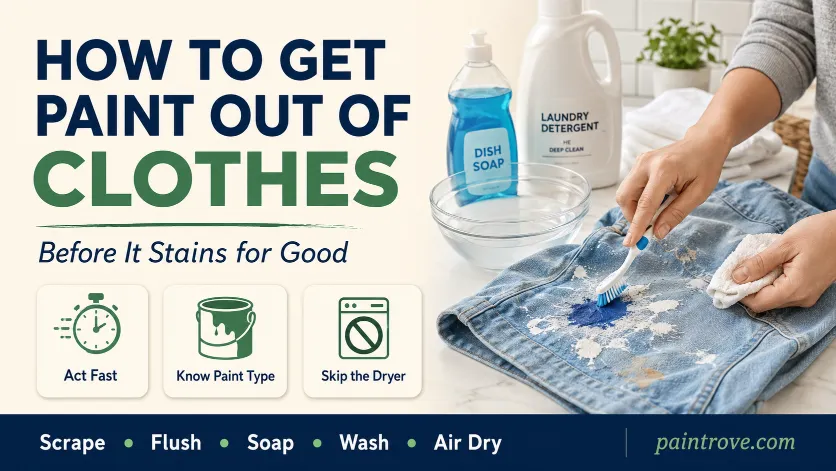
Getting paint out of clothes is easier than you think — if you use the right method for the right paint. In this How to Get Paint Out of Clothes guide, you’ll learn how to remove fresh latex paint, dried acrylic paint, oil-based paint, and stubborn stains from jeans, shirts, sweatshirts, and everyday fabrics with simple step-by-step methods.
What Type of Paint Is on Your Clothes?
The single most important factor in paint stain removal is knowing what type of paint you’re dealing with. Using the wrong method wastes time and can set the stain further.
All paints fall into one of two categories:
Water-based paints include latex, acrylic, tempera, and most wall paints. They dissolve in water, dry faster, and are significantly easier to remove from fabric — especially when caught early.
Oil-based paints use a resin or solvent as their base rather than water. They take longer to dry but bond more stubbornly to fabric fibers and require a solvent (like turpentine or mineral spirits) for removal.
Check the paint can label if you’re unsure. If you painted a room and got wall paint on your clothes, it’s almost certainly water-based latex or acrylic.
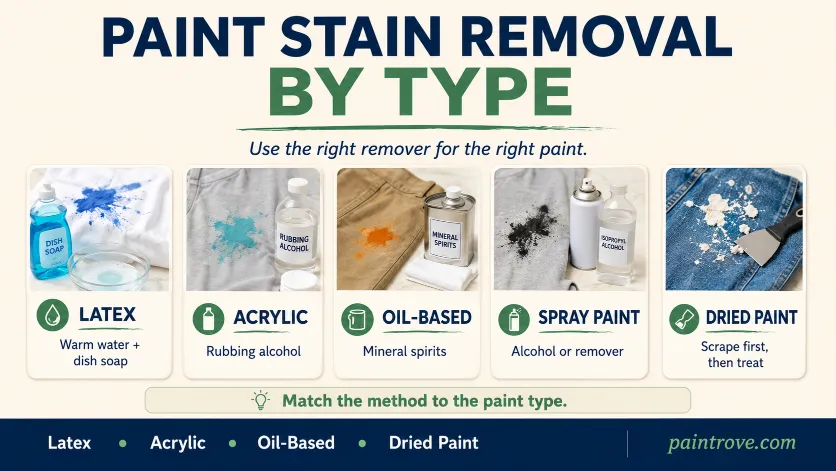
Act Fast: What to Do the Moment Paint Hits Fabric
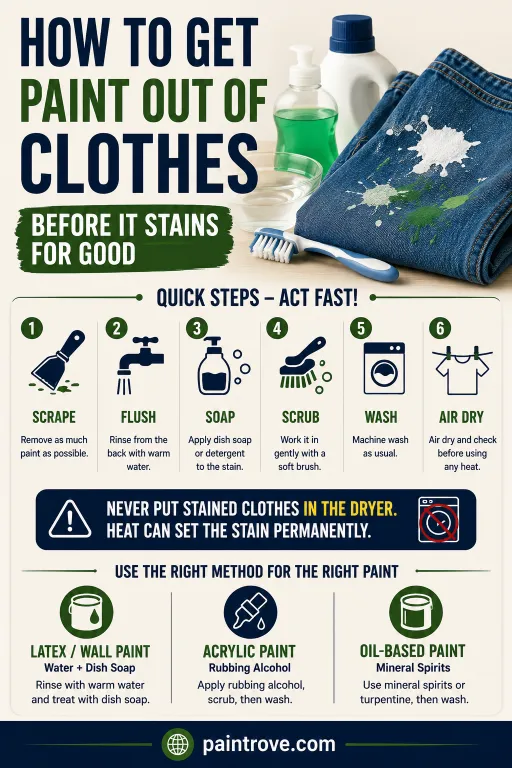
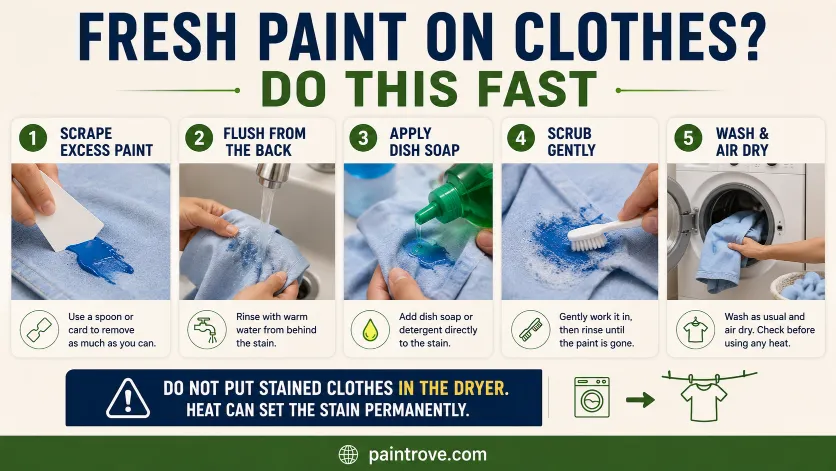
Speed is your biggest advantage. Fresh paint hasn’t bonded to fabric fibers yet and can often be removed with just water and dish soap.
Do this immediately:
- Scrape off as much excess paint as possible using a spoon, dull knife, or old credit card. Work gently — don’t rub or push the paint deeper into the weave.
- Turn the garment inside out and flush the stain from the back with warm running water. Running water from behind forces the paint out rather than pushing it further in.
- Apply a small amount of liquid laundry detergent or dish soap directly to the stain. Work it into a lather with your fingers or a soft cloth, then rinse. Repeat until the paint is gone.
- Machine wash according to the care label.
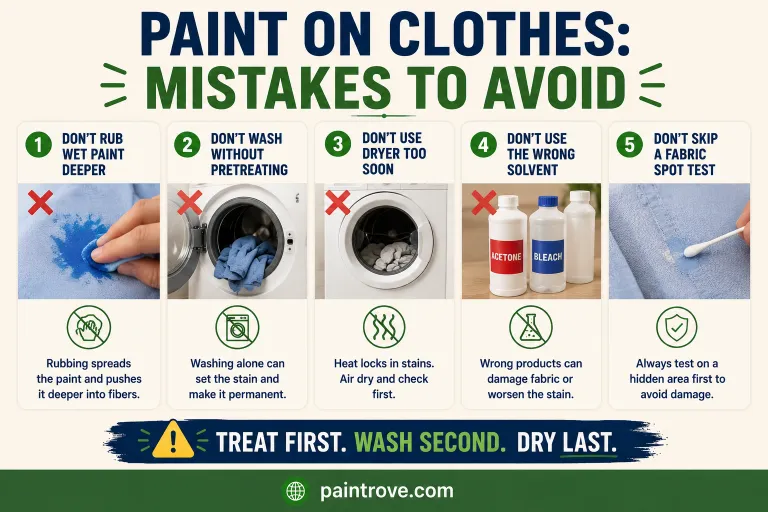
- Air dry and check before putting the item in the dryer. Heat sets stains permanently — if any trace of paint remains, do not use the dryer.
This method works for fresh latex, acrylic, tempera, and finger paint.
How to Get Acrylic Paint Out of Clothes
Acrylic paint is one of the most common culprits on clothing. It’s water-based when wet but becomes water-resistant once it dries — because it contains a synthetic polymer (essentially liquid plastic) that cures into a flexible film.
While still wet: Flush with warm water from the back of the fabric, apply dish soap or liquid laundry detergent, scrub gently, and machine wash.
Once dried:
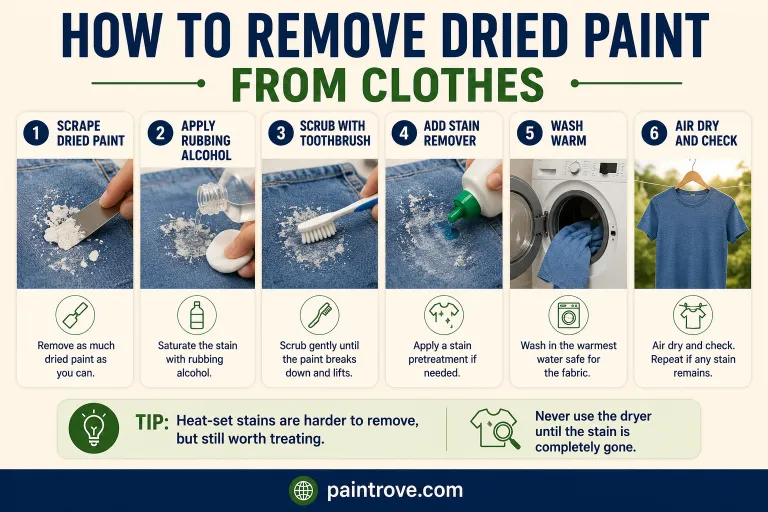
- Scrape off as much dried paint as you can with a stiff brush or dull knife.
- Dampen the stained area with warm water.
- Saturate the stain with rubbing alcohol (isopropyl alcohol). The alcohol breaks down the polymer binder in the acrylic paint.
- Scrub with an old toothbrush. You’ll see the paint begin to crumble and lift.
- Add more alcohol as needed while scrubbing.
- Rinse thoroughly, then machine wash as usual.
Rubbing alcohol is highly effective on dried acrylic paint but can fade some fabric dyes. Always test on a hidden area of the garment first — an inside seam or hem works well.
How to Get Latex Paint Out of Clothes
Latex paint is the standard for interior and exterior wall painting. It’s water-based, and when wet it rinses out easily. When dry, rubbing alcohol or a warm water soak can still break it down.
Fresh latex paint: Rinse immediately with warm water from the back of the stain. Apply dish soap, scrub, and rinse until the paint is gone, then machine wash.
Dried latex paint:
- Scrape off any raised, dried paint with a spoon or blunt knife.
- Soak the stained area in rubbing alcohol for 10–15 minutes.
- Blot and scrub with a clean cloth or toothbrush to lift the paint from the fibers.
- Rinse with warm water.
- Apply a stain pretreatment product if any residue remains.
- Machine wash in the warmest water safe for the fabric.
How to Get Oil-Based Paint Out of Clothes
Oil-based paint is the most difficult to remove from fabric. It does not dissolve in water — you need a solvent. Common options include turpentine, mineral spirits, or paint thinner.
Important: Always test the solvent on an inconspicuous area first. Some solvents can discolor or damage certain fabrics, especially synthetics. Also, rinse any flammable solvent thoroughly from the garment before placing it in the washer or dryer.
Steps:
- Blot the stain from the back of the fabric with a clean, dry cloth to absorb as much wet paint as possible.
- Apply turpentine or mineral spirits to the stain with a clean cloth. Blot — don’t rub — to lift the paint without spreading it.
- Rinse the treated area with warm water.
- Apply dish soap or liquid laundry detergent and rub it into the stain.
- Soak the garment in hot, soapy water overnight.
- Rinse thoroughly and machine wash as usual.
- Do not place in the dryer until the stain is completely gone.
If any oil paint remains after washing, repeat the process. Do not put the garment in the dryer with an active stain — heat will permanently set it.
How to Get Spray Paint Out of Clothes
Spray paint is usually acrylic- or polyvinyl acetate-based with a gas propellant. It bonds quickly to fabric and can be one of the trickier stains to treat because it often covers a large area.
Steps:
- Allow the spray paint to dry completely. Attempting to wipe wet spray paint spreads it further.
- Once dry, scrape off any raised paint with a stiff brush or blunt edge.
- Apply rubbing alcohol or non-acetone nail polish remover to the stain.
- Dab with a clean paper towel or white cloth to lift the paint from the fibers.
- Apply liquid laundry detergent directly to the stain and let it sit for 10–15 minutes.
- Machine wash without rinsing off the detergent — leaving it in place gives an extra cleaning boost in the wash cycle.
- Air dry and inspect before drying with heat.
How to Get Dried Paint Out of Clothes (Without Rubbing Alcohol)
If you don’t have rubbing alcohol on hand, there are still effective options for removing dry paint from clothes at home.
Dish soap and warm water: Apply a generous amount of dish soap directly to the dried stain. Work it in with your fingers or a soft toothbrush, then rinse with warm water. Repeat several times before machine washing. This works best on water-based paints that haven’t been heat-set.
Hairspray: Hairspray contains alcohol, which can break down dried acrylic and latex paint. Spray it directly onto the stain, let it sit for a minute, then scrub with a toothbrush and rinse. Note that hairspray can pull color from some dyes — spot test first.
Nail polish remover (acetone): Acetone is effective on dried paint but should be used carefully. It can strip color from fabric and is not safe on acetate, triacetate, or modacrylic fabrics. Apply with a cotton ball and blot the stain, then rinse thoroughly.
Baking soda paste: Mix baking soda with a small amount of water to form a thick paste. Apply it directly to the dried paint stain and let it sit for several minutes. The paste helps draw the paint out of the fabric fibers. Scrub gently, rinse, and machine wash. This is a gentler option and works better on lighter stains.
White vinegar soak: A solution of white vinegar and warm water can help soften dried water-based paint. Soak the garment for 30 minutes, then scrub the stain and wash as usual. Vinegar is a mild solution compared to detergent-based pretreatments, but it can work on fresh or lightly set stains.
How to Get Paint Out of Clothes After Washing
If paint has already been through a wash cycle — and especially if it went through the dryer — removal becomes significantly harder. Heat from the dryer cures the paint’s binder into the fabric permanently in many cases. However, it’s still worth attempting.
Steps:
- Scrape off any raised, dried paint with a stiff brush or blunt knife.
- Apply rubbing alcohol generously to the stain and let it soak for 10–15 minutes.
- Scrub vigorously with an old toothbrush.
- Apply a commercial stain remover or OxiClean Max Force directly to the area and let it sit for up to an hour.
- Machine wash on the warmest setting the fabric tolerates.
- Air dry and inspect. Repeat if necessary.
For paint stains that have been washed and dried multiple times, full removal may not be possible — but the steps above are still the best approach to attempt it.
How to Get Paint Out of Jeans
Denim is particularly challenging because its tight weave can trap paint quickly. The key is to act before the paint fully cures into the fibers.
For fresh paint on jeans: Scrape off the excess and flush from the back with warm water immediately. Apply dish soap and scrub with a soft toothbrush, then rinse and wash as usual.
For dried paint on jeans:
- Scrape off as much dried paint as possible.
- Apply rubbing alcohol or a commercial stain pretreatment and let it sit for 10–15 minutes.
- Use a toothbrush to scrub the stain in circular motions.
- Apply liquid laundry detergent directly to the area and work it in before placing the jeans in the washer.
- Wash in warm water and air dry to check the result before machine drying.
How to Get Wall Paint Out of Clothes
Most wall paint used in home painting projects is latex or water-based acrylic, which means the methods for those paint types apply directly. The main challenge with wall paint is that it often gets onto clothing without the wearer noticing immediately, giving it time to dry.
If you find dried wall paint on your clothes:
- Scrape off any dried film with a blunt edge.
- Dampen the area and apply rubbing alcohol.
- Scrub with a toothbrush until the paint begins to break down.
- Rinse, apply laundry detergent, and machine wash.
Benjamin Moore, Sherwin-Williams, and most major paint brands produce water-based latex and acrylic formulas as their standard interior paints. If you used an exterior or specialty finish, check the can label — some exterior paints contain additional resins that can make them harder to remove.
Can You Get Paint Out of Clothes in the Washing Machine?
The washing machine alone is rarely sufficient for removing paint stains — especially dried ones. Paint requires mechanical scrubbing and a solvent (water, alcohol, or turpentine depending on paint type) to break down the binder before washing.
For best results:
- Pre-treat the stain first using the appropriate method for the paint type.
- Apply a liquid laundry detergent or stain remover directly to the area and let it sit.
- Then machine wash on the warmest setting the care label allows.
Skipping the pretreatment step and going straight to the washer typically leaves a visible stain, and putting a stained item in the dryer afterward sets the stain permanently.
Removing Paint from Delicate Fabrics
Standard stain removal methods can damage delicate fabrics like silk, wool, or items labeled dry clean only. For these materials:
- Do not use rubbing alcohol, acetone, or turpentine without testing first on a hidden seam.
- Take dry-clean-only garments to a professional dry cleaner and inform them of the paint type — they have solvent-based treatments better suited to these fabrics.
- For wool, use a gentle wool-safe detergent and cold water only. Avoid hot water, which causes wool to shrink and felt.
- For silk, a paste of baking soda and cold water applied gently is a lower-risk option before attempting anything stronger.
Quick-Reference: Paint Type and Removal Method
| Paint Type | Wet Stain | Dried Stain |
|---|---|---|
| Latex / Wall paint | Warm water + dish soap | Rubbing alcohol + toothbrush |
| Acrylic | Warm water + dish soap | Rubbing alcohol + toothbrush |
| Tempera | Cold water rinse | Warm water + dish soap |
| Oil-based | Turpentine, blot from back | Turpentine + overnight soak |
| Spray paint | Let dry, then rubbing alcohol | Rubbing alcohol or nail polish remover |
| Fabric paint | Warm water + detergent | Rubbing alcohol |
FAQs
Does vinegar remove paint stains from clothes?
White vinegar can soften and help lift dried water-based paint, particularly when used as a soak. It works best on lightly set stains and is a gentler option. For heavy or set-in stains, rubbing alcohol or a dedicated stain pretreatment performs better.
Does baking soda remove paint from clothes?
A baking soda and water paste can help draw dried paint out of fabric fibers when applied directly to the stain. It’s more effective on fresh or lightly set water-based stains than on old, heat-set stains.
Will rubbing alcohol damage fabric colors?
Rubbing alcohol can fade some fabric dyes. Always test on an inconspicuous area — an inside seam or hem — before applying to the visible stain area.
What if the paint stain has been in the dryer?
Heat from the dryer helps set stains, making them harder to remove. Attempt treatment with rubbing alcohol and a commercial stain remover like OxiClean Max Force, scrub vigorously, and machine wash. Complete removal isn’t guaranteed on heat-set stains, but the method is still worth trying.
Can I use acetone (nail polish remover) on clothes?
Acetone is effective on dried paint but can strip color from fabric and damage acetate, triacetate, or modacrylic materials. Use non-acetone nail polish remover on synthetic fabrics, and always spot test first.
Is acrylic paint permanent on clothes?
Once fully dried and heat-set, acrylic paint can become permanent on fabric. Catching the stain before it dries or before it goes through the dryer significantly improves removal success.
How do you get paint out of clothes without ruining them?
Always test any solvent on a hidden area first. Use gentle blotting and scrubbing rather than rubbing aggressively. Rinse thoroughly after any solvent treatment before machine washing. Air dry after washing — never use the dryer until the stain is completely gone.