Can You Paint Vinyl Siding? Here’s What You Must Know First
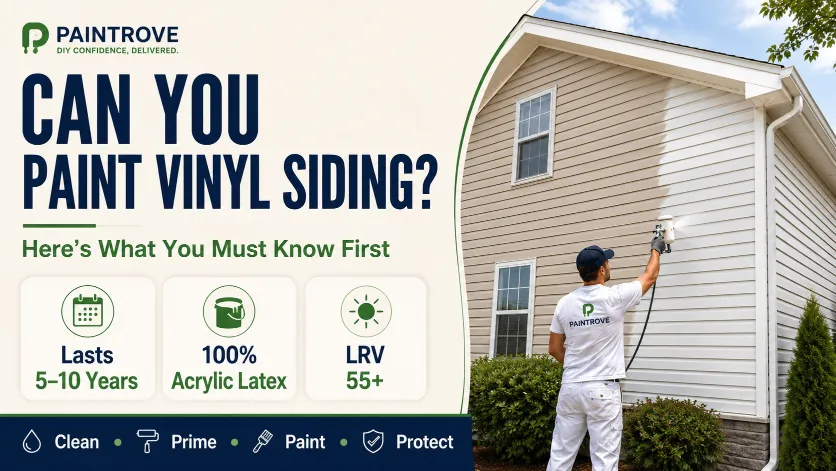
Can You Paint Vinyl Siding? Yes, you can paint vinyl siding — and done correctly, the finish lasts 5 to 10 years with proper prep and the right paint. Painting vinyl siding costs roughly 60% less than replacing it and can add years of life to siding that is faded or outdated but otherwise structurally sound.
The rules are specific: use 100% acrylic latex exterior paint, stay at or lighter than the original color’s Light Reflective Value (LRV), clean and prime thoroughly, and never paint in direct sun or temperatures below 50°F. Ignore any one of those rules, and the paint peels, warps, or fails within a season.
Pros and Cons of Painting Vinyl Siding
Before committing to the project, weigh the full picture.
Pros
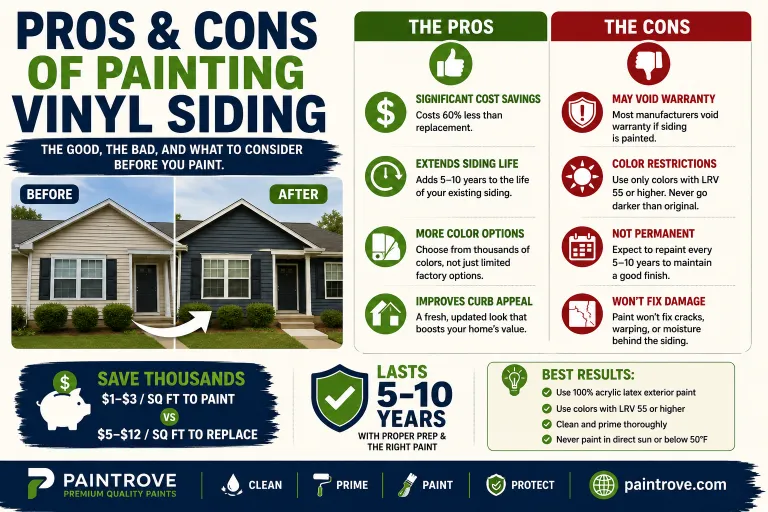
Significant cost savings. Painting vinyl siding costs $1 to $3 per square foot for a professional, versus $5 to $12 per square foot for full replacement with new siding. On an average home with 1,500 square feet of siding, that is the difference between a $1,500–$4,500 paint job and a $7,500–$18,000 replacement.
Extends the life of existing siding. Unpainted vinyl siding typically lasts 20–25 years. A quality paint job can extend that lifespan by an additional 5–10 years, buying time before full replacement is necessary.
More color options. Vinyl siding comes in a limited factory color range. Paint opens up the full spectrum of colors from Sherwin-Williams, Benjamin Moore, Behr, and Valspar — including options not available as manufactured siding colors.
Improves curb appeal. Faded, chalky, or outdated siding color significantly impacts first impressions. A fresh coat of paint can transform a home’s exterior more dramatically and affordably than almost any other exterior update.
Cons
May void the manufacturer’s warranty. Most vinyl siding manufacturers — CertainTeed, Mastic, James Hardie — include clauses that void the warranty if the siding is painted. Check your warranty before painting.
Color restrictions. You cannot paint vinyl siding any color you choose. Dark colors absorb heat, which causes the vinyl panels to expand beyond their design tolerance and warp. The rule: only paint with colors that have an LRV (Light Reflective Value) of 55 or higher, and never paint the siding a color darker than the original.
Not permanent. Painted vinyl siding needs repainting every 5–10 years. Factor this maintenance commitment into the decision — over 20 years, you will repaint 2–4 times.
Cannot fix structural problems. Paint masks cosmetic issues. It does not fix cracked panels, warped siding, or water infiltration behind the boards. If your siding has structural damage, replace it — paint will not hold on a compromised surface.
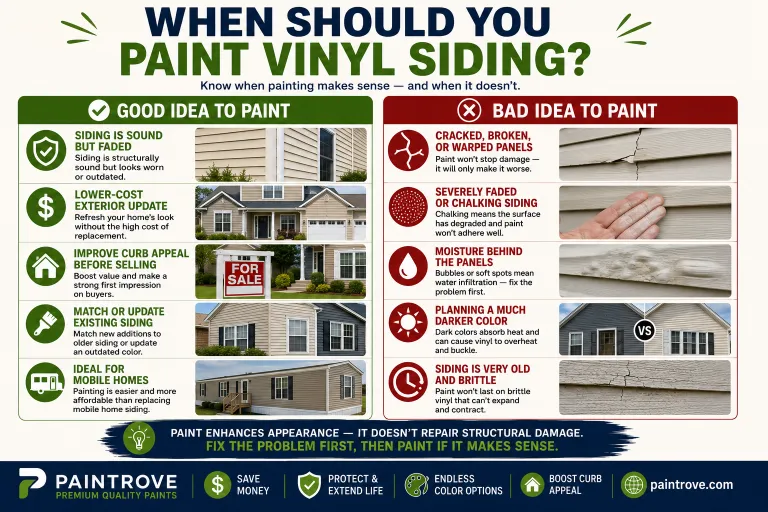
When Is It a Bad Idea to Paint Vinyl Siding?
Some situations make painting the wrong call regardless of technique or product choice.
Do not paint vinyl siding if:
- Panels are cracked, broken, or warped — paint accelerates, not prevents, further damage on failing panels
- The siding is severely faded and chalking (releasing a chalky powder when rubbed) — this indicates the surface has degraded and paint adhesion will be poor even with thorough prep
- There is evidence of moisture behind the panels — any bubbling or soft spots suggest water infiltration that must be repaired before painting
- You want to paint it significantly darker than the original color — dark colors cause vinyl to overheat and buckle in summer sun
- The siding is over 20–25 years old and showing signs of brittleness — old, brittle vinyl cannot expand and contract with the paint film without cracking the bond
Paint makes sense when:
- The siding is structurally sound but faded or outdated in color
- You want to update the home’s exterior without the cost of full replacement
- You are preparing a home to sell and need to improve curb appeal quickly and affordably
- You want to match new siding additions to existing older siding
- You are on a mobile home where siding replacement is more complicated and costly
What Paint to Use on Vinyl Siding
The paint matters as much as the prep work. The wrong paint fails regardless of how well you prepared the surface.
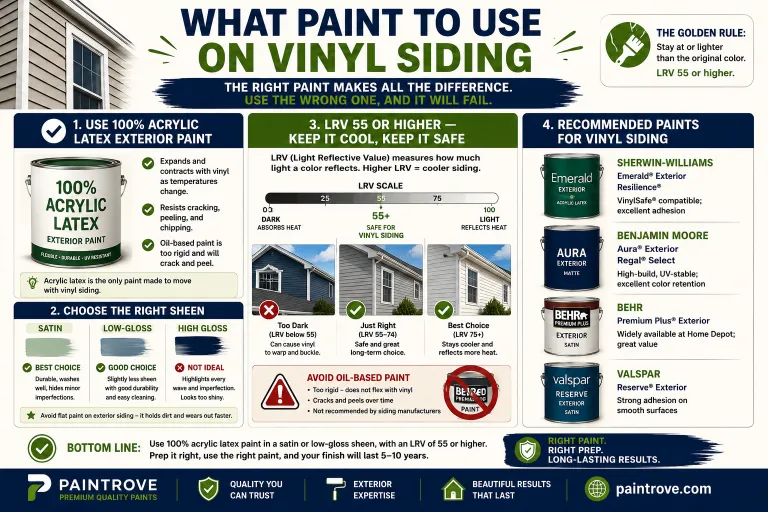
100% acrylic latex exterior paint is the correct choice for vinyl siding. Acrylic paint expands and contracts with the vinyl as temperatures change — a critical property because vinyl moves significantly with temperature swings. Oil-based paint is rigid and does not flex with the siding, which causes cracking and peeling.
VinylSafe® technology: Sherwin-Williams developed VinylSafe as a specific formulation for painting vinyl — it uses lighter pigments in darker shades to reduce heat absorption, allowing a wider range of colors than standard paint while staying within safe temperature limits. Benjamin Moore Regal Select and Aura Exterior are also well-regarded for vinyl siding.
LRV 55 or higher: Check the Light Reflective Value (LRV) of any color before applying it. LRV measures how much light a color reflects — a higher number means lighter, more reflective. Dark colors (LRV below 55) absorb heat and cause vinyl to warp. Sherwin-Williams, Benjamin Moore, and Behr list LRV on every color chip and on their websites.
Sheen: Use a satin or low-gloss finish. Satin provides enough sheen to shed water and resist dirt without highlighting every surface imperfection. Flat paint on exterior siding holds dirt and degrades faster. High gloss on siding looks plasticky and amplifies every wave in the panel.
Recommended Products for Painting Vinyl Siding
| Brand | Product | Notes |
|---|---|---|
| Sherwin-Williams | Emerald Exterior, Resilience | VinylSafe compatible; excellent adhesion |
| Benjamin Moore | Aura Exterior, Regal Select | High-build, UV-stable; color retention |
| Behr | Premium Plus Exterior | Widely available at Home Depot; good value |
| Valspar | Reserve Exterior | Strong adhesion on smooth surfaces |
| PPG Paints | Timeless Exterior | Good coverage, flexible film |
How to Paint Vinyl Siding: Step by Step
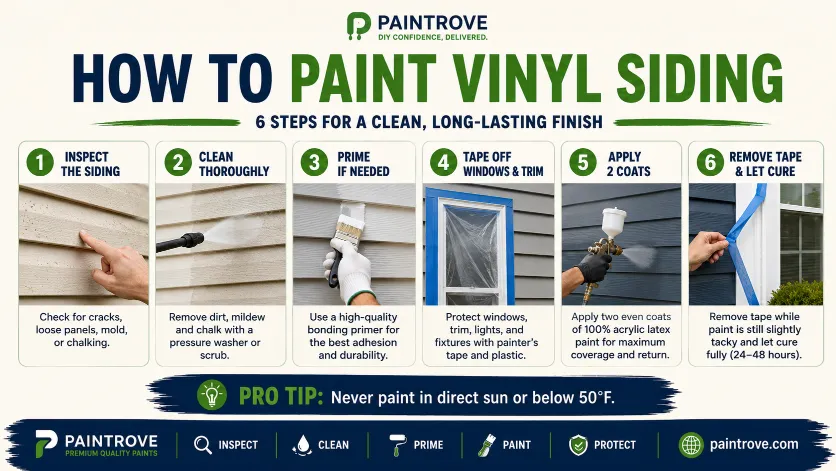
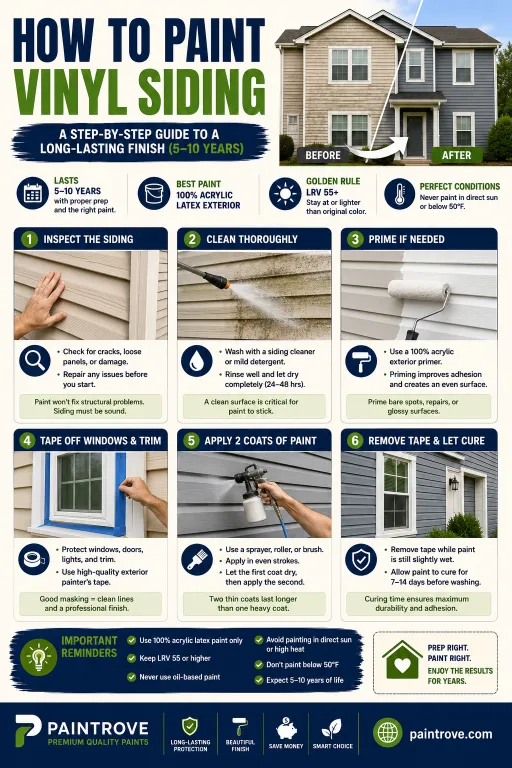
Step 1 — Inspect the Siding
Walk the full exterior and check every panel. Mark damaged, cracked, or warped sections with painter’s tape. Replace any panels that are structurally compromised before painting. Check all caulking around windows, doors, and trim — replace any caulking that is cracked or pulling away.
Check the existing siding for chalking by rubbing your hand across the surface. If a white, powdery residue comes off, the surface is chalking and needs extra cleaning and possibly a bonding primer before paint will adhere.
Step 2 — Clean the Vinyl Siding Thoroughly
Cleaning is the most important preparation step for vinyl siding. Paint applied over dirt, mildew, or chalk will fail — the paint bonds to the contamination, not the siding.
Power washing is the most effective cleaning method. Use a garden hose or pressure washer on a low-to-medium setting (under 1,500 PSI) — high pressure can crack or force water behind vinyl panels. Wash from top to bottom, working with the overlap of the panels.
For mildew: Use a cleaning solution of 1 part bleach to 3 parts water, or a commercial vinyl siding cleaner. Apply with a soft brush, let it sit for a few minutes, and rinse thoroughly. Mildew behind the paint film will continue growing and push the paint off the surface.
For heavy chalk: Use a TSP (trisodium phosphate) solution after power washing. TSP cuts through residual chalking and prepares the surface for primer adhesion.
Let the siding dry completely — at least 24 to 48 hours after washing — before applying any primer or paint.
Step 3 — Prime the Vinyl Siding
Primer is mandatory in two situations: the siding is heavily faded or chalking, or you are making a significant color change. For siding in good condition being repainted a similar color, a self-priming 100% acrylic exterior paint can be applied directly.
Use a bonding exterior primer formulated for slick surfaces — KILZ Adhesion, Zinsser Bulls Eye 1-2-3, or Sherwin-Williams Loxon Exterior Masonry Primer are all appropriate for vinyl. Apply primer with a paint sprayer or roller. Let it dry fully — at least 2–4 hours for latex primer — before painting.
Step 4 — Tape Off and Protect Adjacent Surfaces
Apply painter’s tape to all trim, window frames, door casings, and shutters where the siding meets a different surface. Lay plastic sheeting over any plantings, HVAC units, or surfaces you do not want painted.
Step 5 — Apply the Paint
Paint sprayer: The most efficient method for vinyl siding. An airless sprayer or HVLP sprayer applies paint evenly across the flat panels and reaches into the grooves between panels that a roller misses. Use an appropriate tip size for exterior acrylic (typically 0.015–0.017 inch orifice). Work from top to bottom in horizontal passes, overlapping each pass by 50%. Back-brush or back-roll if necessary to work paint into seams.
Roller: Use a 3/8-inch or 1/2-inch nap roller for smooth or lightly textured vinyl siding. Work in manageable sections (one panel length at a time) and maintain a wet edge to avoid lap marks. A microfiber roller cover gives a smoother finish than standard fabric.
Brush: Use a 3–4 inch flat brush for trim pieces and a 2.5-inch angled brush for cutting in around windows and doors. A brush alone is impractical for full siding coverage but necessary for detailed areas a sprayer or roller cannot reach.
Timing: Paint in the morning when temperatures are rising and surfaces are in the shade. Avoid painting in direct sunlight — paint applied in direct sun dries too fast, causing lap marks, brush drag, and uneven finish. Do not paint if rain is expected within 4 hours.
Two coats: Two coats of paint on vinyl siding is standard. Apply the second coat after the first has dried fully — minimum 2–4 hours for 100% acrylic latex.
Step 6 — Remove Tape and Clean Up
Pull painter’s tape while the final coat is slightly wet — not fully dry — at a 45-degree angle for the cleanest edge. Touch up any bleed spots with a small brush. Allow the paint to cure fully before washing or pressure washing the siding — at least 30 days.
Can You Paint Vinyl Siding a Darker Color?
This is the most common and most important question about vinyl siding color. The short answer: paint vinyl siding a lighter color or the same color, not a significantly darker one.
Vinyl expands and contracts with temperature. Dark colors absorb more heat, driving the surface temperature of the panel significantly higher than the air temperature on a sunny day. Standard vinyl siding is engineered to handle temperatures up to approximately 160–165°F — dark-colored siding in direct summer sun can reach this threshold, causing panels to buckle, warp, and pull away from their fasteners.
The rule: Only paint vinyl siding with colors that have an LRV of 55 or higher. Do not paint a lighter-colored siding dark gray, charcoal, dark navy, or black with a standard paint — these colors absorb enough heat to cause warping.
The exception: Sherwin-Williams VinylSafe paints, Benjamin Moore Aura Exterior, and a few other VinylSafe-formulated products use specially engineered pigments in their darker shades that reduce heat absorption. Some darker colors in these lines are safe for vinyl — check the manufacturer’s VinylSafe designation on the specific color before purchasing.
Can You Paint Vinyl Siding Black?
Technically, you can — but only with a VinylSafe or equivalent product in a very specific dark shade that has been engineered to reduce solar heat gain. Standard black paint on vinyl siding will cause warping on sun-exposed walls.
If you want black or near-black vinyl siding, look for products in the Sherwin-Williams VinylSafe line that are designated safe for vinyl in darker shades. These products use infrared-reflective pigments that absorb less heat than standard dark pigments while appearing visually dark.
Even with VinylSafe products, north-facing or heavily shaded walls handle dark colors better than south or west-facing walls, which receive peak afternoon sun.
Can You Paint Vinyl Siding White?
Yes — white is one of the safest and most compatible colors for vinyl siding. White has an LRV near 100, reflecting nearly all light and heat. It poses no warping risk, adheres well over any existing vinyl color, and is available in the full range of 100% acrylic exterior paints.
White is also one of the most effective choices for covering faded or discolored siding — its high opacity covers the original color with fewer coats than most other shades.
Can You Paint Vinyl Siding on a Mobile Home?
Yes — and it is one of the most practical applications of vinyl siding painting. Mobile home siding is typically thinner than standard residential vinyl siding, which makes it even more important to use light colors and avoid dark shades. The same principles apply: 100% acrylic exterior paint, LRV 55 or higher, thorough cleaning, and two coats.
The thinner panels on mobile homes are also more vulnerable to pressure damage during power washing — keep the pressure washer on a low setting and maintain distance from the surface.
Can You Paint Vinyl Siding in Winter?
Do not paint vinyl siding in temperatures below 50°F (10°C), and do not paint if temperatures will drop below 50°F within 48 hours of application. Cold temperatures prevent acrylic latex paint from forming a proper film — the paint stays tacky, applies unevenly, and adhesion is permanently compromised.
The safest painting window for vinyl siding is 55°F to 85°F, with the surface temperature also within this range. On a sunny winter day when air temperatures reach 55°F, the south-facing wall of a house can still be cold — check the surface temperature with an infrared thermometer before painting.
Can You Paint Faded Vinyl Siding?
Yes — faded vinyl siding is actually the most common reason homeowners choose to paint. Sun exposure degrades the color pigments in vinyl over time, leaving siding looking chalky, washed out, or discolored.
For faded or chalking siding:
- Clean with TSP and rinse thoroughly
- Test adhesion by applying a small patch of paint and peeling it off after 24 hours — if it pulls cleanly away, prime first
- Apply a bonding primer before your topcoat for better adhesion on degraded surfaces
- Apply two full coats of 100% acrylic exterior paint
20-year-old vinyl siding: Old siding that is faded but structurally sound can be painted successfully. The prep work is more involved — chalking is more likely, and the surface may be more porous and less consistent than newer siding — but the result can add years of useful life.
How Long Does Paint Last on Vinyl Siding?
| Prep and Product Quality | Paint Lifespan |
|---|---|
| Excellent (full prep, premium paint) | 8–12 years |
| Good (standard prep, quality paint) | 5–8 years |
| Moderate (partial prep, mid-grade paint) | 3–5 years |
| Poor (minimal prep, standard paint) | 1–3 years |
The primary factors that shorten lifespan: dark colors, south and west-facing walls in high-sun climates, high-humidity environments, inadequate surface prep, and paint applied in poor conditions (cold, direct sun, or rain).
Regular maintenance extends lifespan. Annual washing of the painted siding to remove mildew and dirt can add 2–3 years to a paint job by preventing the moisture and biological growth that degrades paint adhesion from the surface side.
What Does It Cost to Paint Vinyl Siding?
DIY cost: Paint for vinyl siding runs $35–$80 per gallon for premium 100% acrylic exterior. A standard 1,500 sq ft home requires approximately 5–8 gallons for two coats, depending on surface porosity and application method. Total DIY cost: $200–$700 for paint and supplies.
Professional cost: Professional exterior painters charge $1 to $3 per square foot for painting vinyl siding, including labor and materials. For a 1,500 sq ft siding surface, total professional cost ranges from $1,500 to $4,500, depending on region, complexity, and prep required.
Vs. replacement: New vinyl siding installation costs $5 to $12 per square foot installed, or $7,500 to $18,000 for a typical home. Painting extends the life of existing siding for roughly one-fifth to one-tenth the cost of replacement — a practical choice when the siding is structurally sound.
FAQs
Can you paint vinyl siding yourself?
Yes. Painting vinyl siding is a manageable DIY project for a homeowner with basic painting experience, the right equipment (or a rented sprayer), and a full weekend. The prep — cleaning, drying, and priming — is the most labor-intensive part. Total DIY time for an average home exterior: 2–3 full days.
Can you paint vinyl siding without primer?
In most cases, you can skip primer on siding in good condition being painted a similar color using a self-priming 100% acrylic paint. Primer is required when the siding is heavily faded, chalking, or being painted significantly lighter than the original color.
Can you paint vinyl siding with a roller?
Yes. Use a 3/8-inch nap roller for smooth panels and a 1/2-inch nap for textured or vinyl shake siding. Work in panel-length horizontal sections and maintain a wet edge to prevent lap marks. A roller is slower than a sprayer but produces good results and requires less masking.
Can you paint vinyl siding with a brush?
A brush alone is not practical for full siding coverage — it is too slow and leaves more visible brush marks. Use a brush for trim, corners, and cutting in around windows and doors, paired with a roller or sprayer for the field of the siding.
Can you paint vinyl siding with a sprayer?
Yes — a sprayer is the preferred method for efficiency and evenness. An airless sprayer covers large areas quickly and applies paint more uniformly than a roller. Mask everything thoroughly — shutters, trim, windows, plants, driveways — before spraying.
Can you paint vinyl siding trim?
Yes — vinyl trim pieces (window surrounds, corner posts, J-channel) can be painted the same way as the siding panels. The same color rules apply. Use a brush for trim detail work and a small roller or mini-sprayer for larger trim sections.
Can you paint vinyl siding a lighter color?
Yes — painting vinyl siding a lighter color than the original is always safe from a heat and warping standpoint. Light colors reflect heat rather than absorbing it, which is ideal for vinyl.
How do you remove dried paint from vinyl siding?
For fresh dried paint: scrub with warm soapy water. For older dried paint: use a commercial paint remover formulated for vinyl siding, or a small amount of mineral spirits on a cloth. Test in an inconspicuous area first. Avoid abrasive scrubbing that can scratch the siding surface.
The Bottom Line
Painting vinyl siding is a legitimate, cost-effective way to update a home’s exterior — at roughly 60% of the cost of replacement. The results last 5–10 years with proper prep and the right paint.
The rules are non-negotiable: 100% acrylic latex paint only, LRV 55 or higher (no dark colors without VinylSafe products), thorough cleaning and drying before any paint goes on, and two coats minimum. Get those right and the finish holds up through years of weather, UV exposure, and seasonal temperature swings.
Paint when the siding is structurally sound and the goal is a cosmetic refresh. Replace when panels are cracked, warped, or water-damaged — paint cannot fix structural problems.
Related Articles:
- How to Paint a Room: 7 Proven Steps to a Perfect Finish
- How to Paint a Ceiling: 4 Steps to a Streak-Free Finish
- How Long Does Paint Last? Shelf Life, Storage & When to Toss It
- How Long Does Paint Take to Dry? Every Surface, Every Paint Type
- Can You Paint Over Wallpaper? Pros, Cons & Step-by-Step Guide