What Colors Make Purple? Every Mix and Shade
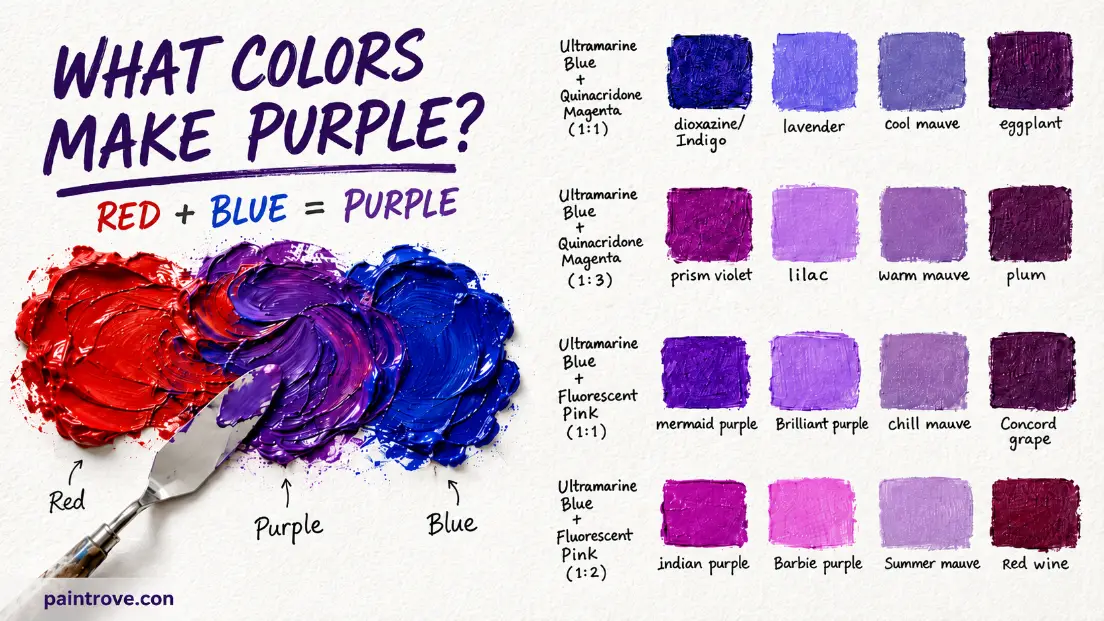
Red and blue make purple. Mix equal parts red (#FF0000) and blue (#0000FF) paint and you get a classic purple around #800080. For a cleaner, brighter purple, use magenta and blue instead. Add white for lavender, or a touch of black for deep plum.
[IMAGE: red-blue-purple-mixing-result]
That is the whole answer in one line: red + blue = purple. But the purple you actually get depends heavily on which red and which blue you pick, and that is where most beginners get frustrated with dull, muddy results. This guide covers every mix, every major shade, and how to fix a purple that went wrong.
Why Red and Blue Make Purple
Purple is a secondary color on the traditional color wheel. Secondary colors are made by mixing two of the three primary colors: red, yellow, and blue.
- Red + yellow = orange
- Yellow + blue = green
- Red + blue = purple
Purple sits between red and blue on the wheel because it is literally made of both. Lean the mix toward red and you slide toward red-violet and magenta. Lean toward blue and you slide toward violet and indigo.
For the full step-by-step paint mix with ratios and troubleshooting, see our dedicated guide to red and blue mixed.
The Basic Mix: Ratios That Work
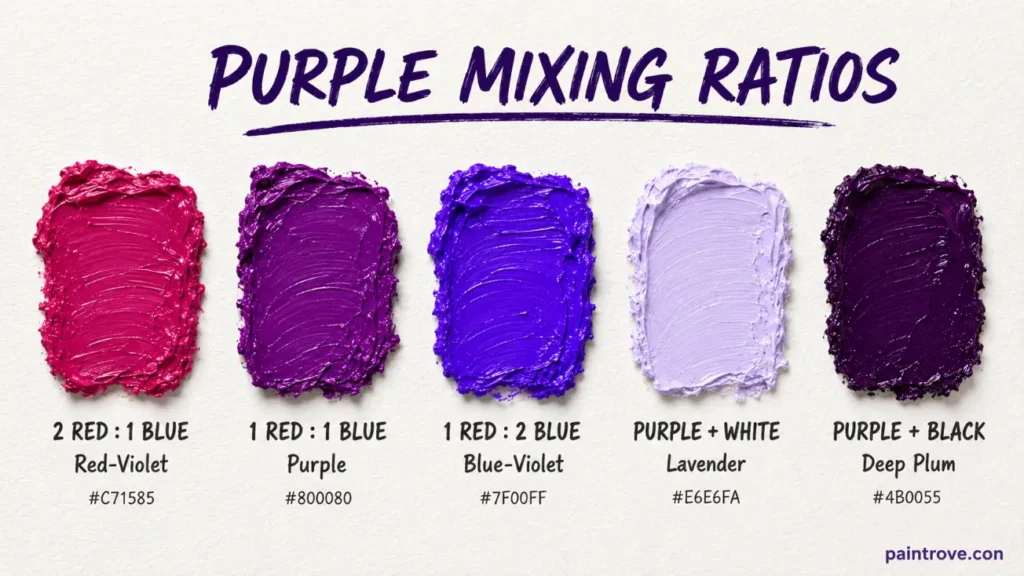
Start with a simple 1:1 ratio of red and blue paint. Then adjust:
| Ratio (red : blue) | Result | Approx hex |
|---|---|---|
| 1 : 1 | Balanced purple | #800080 |
| 2 : 1 | Red-violet | #8B2FA0 → #C71585 |
| 1 : 2 | Blue-violet | #5A2D9E → #7F00FF |
| 1 : 1 + white | Lavender | #E6E6FA |
| 1 : 1 + touch of black | Deep plum | #4B0055 |
Always add the darker color to the lighter one in small amounts. Blue overpowers red quickly, so if you pour red into blue you will chase the mix around the palette wasting paint.
The Secret to Bright Purple: Pigments Matter
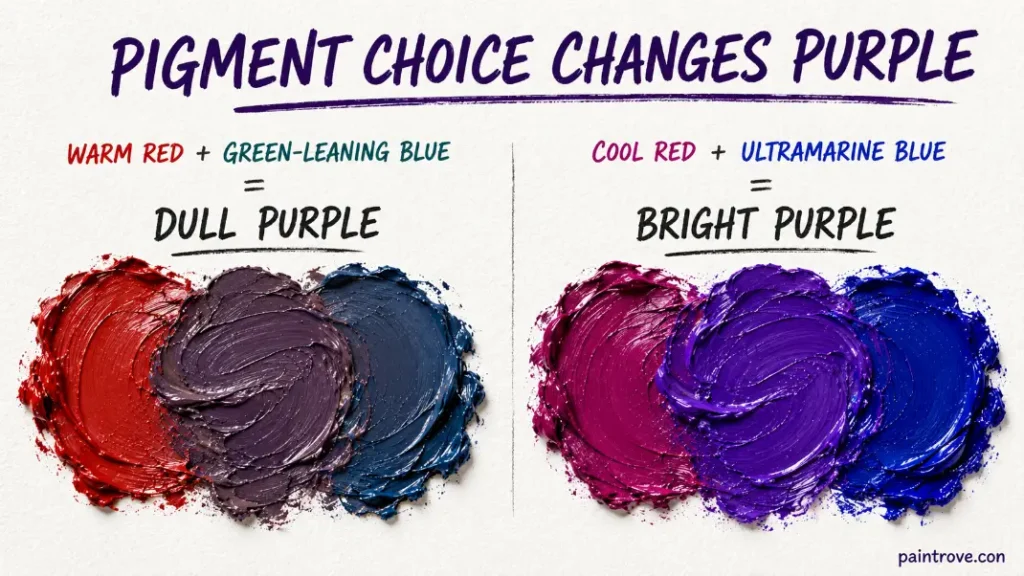
Here is the part most guides skip. Mix a warm red like cadmium red with ultramarine blue and you will get a dull, brownish purple. Not because you did anything wrong, but because cadmium red contains a hint of yellow, and yellow is purple’s complement. Even a trace of it muddies the mix.
For clean, vivid purples, use:
- A cool, blue-leaning red: quinacridone magenta, permanent rose, or alizarin crimson
- A warm, red-leaning blue: ultramarine blue
Avoid for bright purples:
- Warm reds: cadmium red, vermilion, scarlet (they carry yellow)
- Green-leaning blues: phthalo blue, cerulean (they carry yellow too)
The brightest purple of all comes from magenta + blue, which is why printers use magenta as a primary. Magenta and cyan produce the electric purples that red and blue can only approximate.
Every Purple Shade and How to Mix It
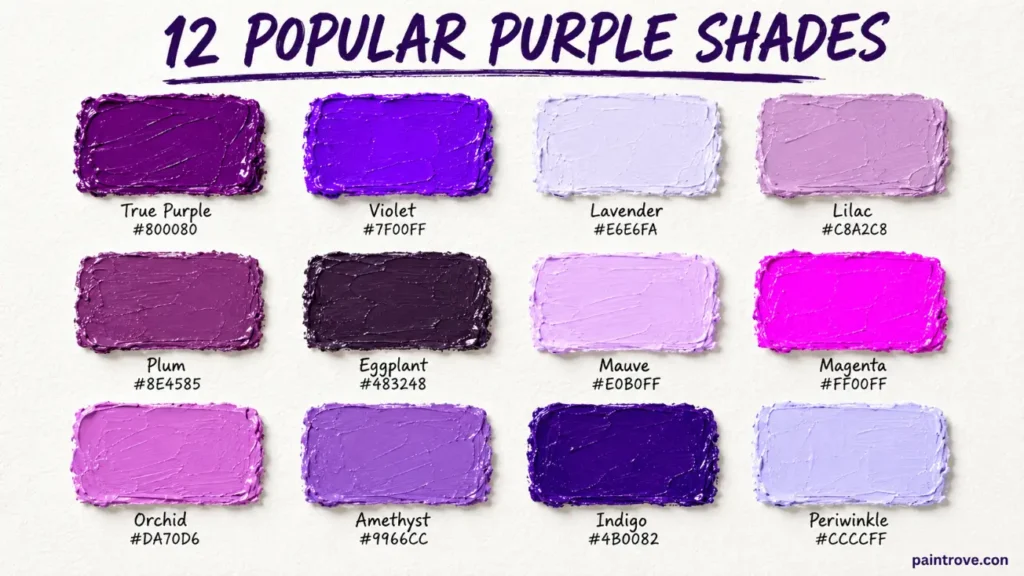
Purple is a family, not a single color. Here are the twelve shades people search for most, with hex codes and mixing directions.
| Shade | Hex | How to mix it |
|---|---|---|
| True purple | #800080 | Equal parts cool red + ultramarine blue |
| Violet | #7F00FF | 1 part red : 2 parts blue |
| Lavender | #E6E6FA | Purple + generous white |
| Lilac | #C8A2C8 | Purple + white + tiny touch of red |
| Plum | #8E4585 | Purple + a little red + a little black |
| Eggplant | #483248 | Purple + black + tiny touch of brown |
| Mauve | #E0B0FF | Purple + white + hint of gray |
| Magenta | #FF00FF | Cannot be mixed from red + blue; use pigment |
| Orchid | #DA70D6 | Magenta + white + touch of blue |
| Amethyst | #9966CC | Purple + white + extra blue |
| Indigo | #4B0082 | 1 part red : 3 parts blue |
| Periwinkle | #CCCCFF | Blue + white + small touch of purple |
Light Purples: Lavender, Lilac, and Mauve
Add white, and lots of it. Lavender needs far more white than beginners expect, often 4 or 5 parts white to 1 part purple. Lilac warms that up with a whisper of extra red. Mauve is lavender with the saturation knocked down, so add the tiniest amount of gray or a speck of yellow.
Dark Purples: Plum, Eggplant, and Indigo
Resist the urge to dump in black. Black deadens purple fast. Instead, darken with more blue for indigo tones, or add a small amount of black plus a touch of red to keep plum feeling warm. Eggplant is the darkest of the family and can take a little brown for that near-black kitchen-vegetable depth.
Bright Purples: Violet, Magenta, and Orchid
These are the shades red + blue struggles to reach. True magenta (#FF00FF) sits outside what those two primaries can produce in paint, so buy a magenta or quinacridone pigment. From there, orchid and bright violet are easy: magenta plus white, or magenta plus a little blue.
Purple on Screens: The RGB Version
Everything above describes paint. Screens work differently. In the RGB system, purple is made by combining red and blue light at full strength with no green:
- Purple/magenta on screen:
rgb(255, 0, 255)=#FF00FF - Softer web purple:
rgb(128, 0, 128)=#800080
So the “red + blue” rule conveniently holds in both systems, which makes purple one of the few colors where paint logic and screen logic agree. The difference is that light mixing (additive) gives you brighter results than pigment mixing (subtractive) ever can.
Fixing a Muddy Purple
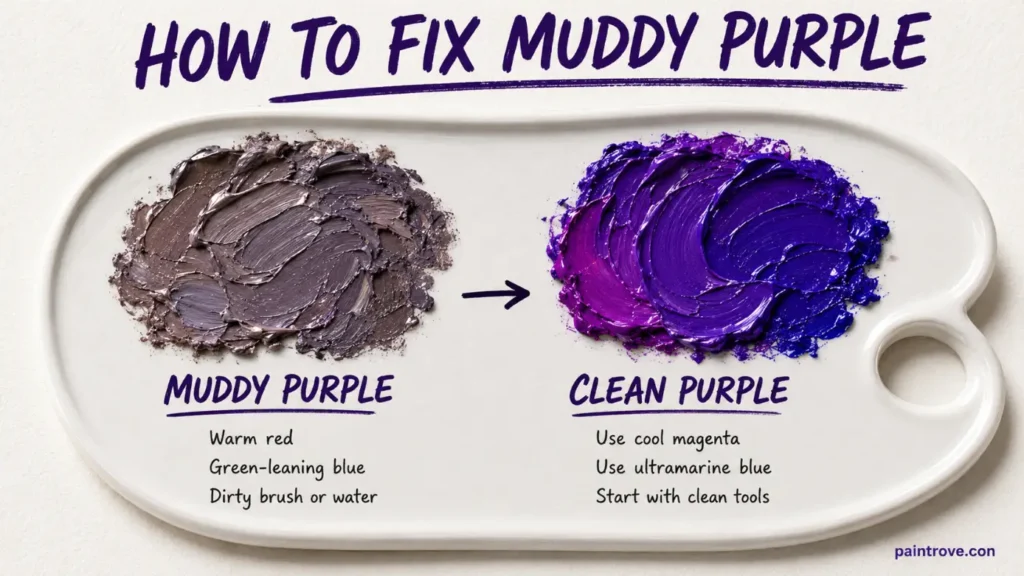
Mixed a purple that looks like gray-brown soup? One of three things happened.
Your red carries yellow. Cadmium red, scarlet, and most “fire engine” reds contain warm yellow undertones. Yellow + purple = mud, because they are complements. Fix: switch to magenta, quinacridone rose, or alizarin crimson.
Your blue carries yellow. Phthalo and cerulean lean green (blue + yellow). Same problem. Fix: switch to ultramarine.
Your brushes or water were dirty. A trace of leftover yellow or green in the bristles is enough to dull a purple. Rinse thoroughly between colors.
If the mud has already happened, do not fight it with more red and blue. Save it as a shadow color — muddy purple makes excellent shadows — and start the bright mix fresh with clean pigments.
Purple Mixes That Use Other Starting Colors
Red and blue is not the only road to purple. These come up constantly:
Pink + blue. Pink is just light red, so pink + blue gives a soft, pastel purple straight away. Great shortcut for lilac tones without measuring white.
Magenta + cyan. The printer’s method. Produces the cleanest, most saturated violets available in pigment.
Red + blue + white. The all-purpose pastel route. Mix your purple first, then add white gradually. Never mix white into red and blue separately before combining.
Can you make purple without red or blue at all? No. Purple always requires a red component and a blue component in some form. Pink, magenta, and crimson count as reds; cyan, indigo, and navy count as blues. But no combination of, say, yellow and green will ever get you there.
We will link every individual mix guide here as it goes live, so bookmark this page as your purple home base. <!– ADD PURPLE SPOKE LINKS AS PUBLISHED: /pink-and-blue-mixed/, /magenta-and-blue-mixed/, /purple-and-white-mixed/, /purple-and-black-mixed/ –>
Quick Answer Recap
- Purple = red + blue. Start 1:1 and adjust.
- Bright purple needs a cool red (magenta, quinacridone) and a warm blue (ultramarine).
- Lavender = purple + lots of white. Plum = purple + red + touch of black.
- Muddy purple means yellow snuck in. Check your red, your blue, and your brush water.
FAQs
What two colors make purple?
Red and blue make purple. Mix them in equal parts for a balanced purple around hex #800080. Use more red for red-violet, more blue for violet and indigo. For a brighter result, use magenta instead of red.
How do you make purple without blue?
You cannot make purple without a blue component. Purple is defined as the mix of red and blue. You can substitute blue-family colors like indigo, navy, or cyan, but some form of blue must be present alongside red or pink.
What colors make light purple or lavender?
Mix red and blue into purple first, then add white gradually. Lavender (#E6E6FA) usually needs 4 to 5 parts white per 1 part purple. For lilac, add a tiny touch of extra red to warm it up after the white.
What colors make dark purple?
Add more blue for indigo-leaning dark purples, or a small amount of black plus a touch of red for plum. For eggplant (#483248), combine purple with black and a hint of brown. Avoid using black alone, which deadens the color.
Why does my purple look muddy or brown?
Yellow got into the mix. Warm reds like cadmium red and green-leaning blues like phthalo both contain yellow undertones, and yellow is purple’s complement, which neutralizes it. Switch to magenta or alizarin crimson plus ultramarine blue for clean purples.
What is the best red and blue for mixing purple?
Use a cool, blue-leaning red like quinacridone magenta, permanent rose, or alizarin crimson, paired with ultramarine blue. This combination contains almost no yellow, so the purple stays vivid instead of turning gray-brown.
Do pink and blue make purple?
Yes. Pink is light red, so pink and blue produce a soft pastel purple or lilac directly. It is a handy shortcut when you want light purple without mixing a dark purple first and lightening it with white.
What colors make violet?
Violet is a blue-leaning purple. Mix roughly 1 part red to 2 parts blue, or add extra blue to an existing purple. On screens, violet is around hex #7F00FF. Using magenta instead of red gives an especially vivid violet.
Is purple a primary or secondary color?
Purple is a secondary color. Secondary colors are made by mixing two primary colors, and purple comes from red plus blue. The other secondaries are orange (red + yellow) and green (blue + yellow).
What is the hex code for purple?
Standard purple is #800080, which is red and blue at half strength with no green. Other common codes include violet #7F00FF, lavender #E6E6FA, plum #8E4585, indigo #4B0082, and magenta #FF00FF.
How do you make purple more vibrant?
Start from magenta rather than red, and pair it with ultramarine blue. Keep yellow completely out of the mix, including traces in dirty brushes. If a purple is already dull, remixing from clean pigments works better than trying to brighten the muddy batch.
What colors make purple with acrylic paint?
The same rule applies: red plus blue. With acrylics, quinacridone magenta plus ultramarine blue gives the cleanest result. Acrylics dry slightly darker, so mix your purple a touch lighter than the final shade you want.