How to Clean Paint Brushes Without Ruining Them

Cleaning paint brushes the right way means removing wet or dried paint from the bristles, reshaping them, and storing them correctly so they stay usable. But how to clean paint brushes properly depends on one thing: what type of paint was on the brush.
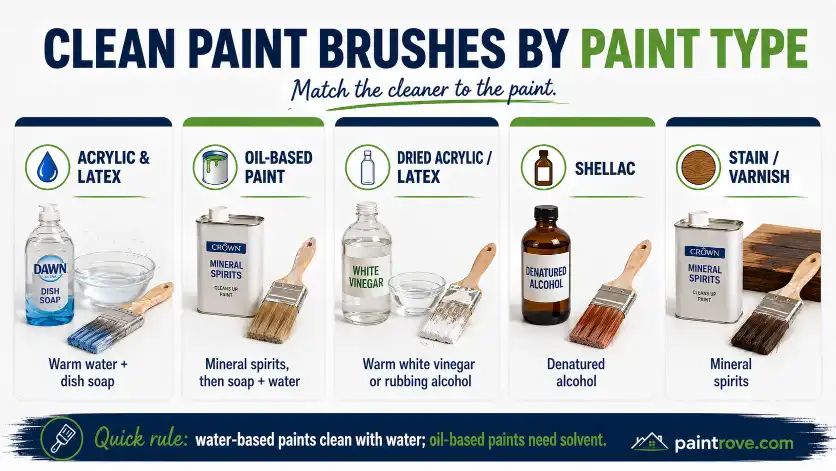
Water-based paints like acrylic and latex clean up with warm water and dish soap. Oil-based paints need mineral spirits or paint thinner. Dried paint, whether acrylic or oil-based, needs a soak before anything else will work. Get the process right, and a quality Purdy or Wooster brush lasts for years. Get it wrong once, and you may end up throwing it away.
What You Need Before You Start
Have these cleaning supplies ready before you pick up the brush. Cleaning is far easier when you are not hunting for supplies with wet paint on your hands.
For acrylic and latex paint:
- Warm water
- Dish liquid (Murphy Oil Soap also works well — it conditions bristles as it cleans)
- A clean cloth or paper towels
- A brush comb or 5-in-1 tool for working paint out of dense bristles
For oil-based paint:
- Mineral spirits or paint thinner (two containers)
- Turpentine (alternative to mineral spirits)
- Dish liquid for the final wash
- Newspaper or paper for wrapping brushes
- Protective gloves — solvents absorb through skin
For dried-on paint (any type):
- White vinegar (heated)
- Isopropyl alcohol (for dried acrylic)
- Denatured alcohol (for shellac)
- Brush comb or wire brush
- A container deep enough to submerge the bristles
For storage:
- Brush keepers or brush wrap
- A flat surface or hanging rack for drying
How to Clean Acrylic Paint Brushes
Acrylic paint is water-based but dries fast — faster than most people expect. Clean the brush within minutes of finishing, not at the end of the day.
Step 1 — Scrape excess paint. Wipe the brush on the rim of the paint can or bucket. Remove as much wet paint as you can before introducing water. Less paint in the bristles means faster cleaning.
Step 2 — Rinse under warm water. Hold the brush bristles-down under warm running water. Work the bristles with your fingers from the ferrule (the metal band) down to the tip. Paint releases from the outside first — keep working until no color runs off.
Step 3 — Add dish liquid. Put a small amount of dish liquid in your palm or a clean cloth. Work it into the bristles in a circular motion. Lather thoroughly, rinse, and repeat until the water runs completely clear.
Step 4 — Reshape and dry. Squeeze excess water gently. Reshape the bristles back to their original form with your fingers. Lay the brush flat on a clean cloth or hang it bristles-down to dry. Never dry a brush upright — water pools in the ferrule, loosens the glue, and the bristles splay permanently.
Between colors: Rinse briefly under water, blot on a clean cloth, and keep painting. A full clean between every color wastes time and water.

Cleaning Latex Paint Brushes
Latex paint cleans the same way as acrylic — warm water and dish soap while the paint is still wet. The same rules apply: scrape the excess, rinse under warm water, work in dish liquid until the water runs clear, reshape, and dry flat.
The difference is timing. Latex paint on a brush left overnight can be salvaged with vinegar. Leave it for a week and the bristles may be a permanent loss.
Cleaning latex brushes in the sink: This is fine for small amounts. For larger amounts — rolling a full room — wipe as much paint as possible off the roller or brush first and put it in the trash or an old newspaper. Washing large volumes of latex paint down the drain introduces microplastics into the water system. Scrape into a bin first, then do a final rinse.
How to clean Oil-Based Paint Brushes
Oil paint will not dissolve in water. You need a solvent first, then soap and water for the final clean.
Step 1 — Wipe off excess paint. Wipe the brush firmly on newspaper or a clean cloth. Remove as much paint as you can before using solvent. This extends how long your solvent stays usable.
Step 2 — Soak in mineral spirits. Pour mineral spirits into a container — about 1–2 inches deep. Submerge the bristles and swirl the brush for 10–30 seconds. Press the bristles against the container wall. Repeat until the solvent lifts no more color. Pour the used solvent into a second container (do not discard it — used mineral spirits can be recycled by letting the paint settle and reusing the clear solvent above it).
Step 3 — Rinse in a second container of clean mineral spirits. A second rinse in fresh solvent removes residual paint that the first container missed.
Step 4 — Wash with dish liquid and warm water. Once the solvent is clear, move to soap and water. Work dish liquid into the bristles until the water runs clean. This removes the remaining solvent and conditions the bristles.
Step 5 — Reshape and dry flat. Squeeze out the water, reshape the bristles, and dry flat or hanging bristles-down.
White spirit and mineral spirits are the same thing — white spirit is the UK/European name, mineral spirits is the North American name. Both work identically for cleaning oil-based paint brushes.

Cleaning Brushes with Mineral Spirits
Use mineral spirits for any oil-based paint, stain, or varnish. The process is the same:
- Pour mineral spirits into a container (never directly from the original container — contaminated solvent is hard to reuse)
- Dip and swirl the brush until paint releases from the bristles
- Spin the brush between your palms over the container to throw off the loosened paint
- Repeat with fresh solvent until the bristles come out clean
- Wash with dish soap and warm water as the final step
A brush comb helps here. Run it through the bristles from ferrule to tip after the solvent soak to pull out paint caught deep in the brush.
Using WD-40 on Paint Brushes
WD-40 can loosen dried oil-based paint from brush bristles. It works the same way mineral spirits does — the petroleum-based formula dissolves the paint binders. Spray WD-40 onto the bristles, work it in with your fingers, leave for a few minutes, then wash thoroughly with hot soapy water. It is not as effective as mineral spirits for heavy paint loads, but it works well for light residue and is useful if mineral spirits are not available.
Do not use WD-40 on delicate natural-hair brushes regularly — the petroleum content can affect the bristle quality over time.
Cleaning Paint Brushes with Vinegar
Vinegar works on dried water-based paint — acrylic, latex, and chalk paint. It does not work on oil-based paint.
For dried acrylic or latex paint:
- Pour white vinegar into a small pot and heat until warm (not boiling)
- Submerge the bristles and allow the brush to soak for 1–2 hours
- Work the bristles with a brush comb or your fingers — the softened paint should release
- Rinse with warm water and wash with dish liquid
- Reshape and dry flat
If the bristles are still stiff after two hours, carefully bring the vinegar to a gentle simmer and soak for another 15–20 minutes. The heat accelerates the breakdown of dried acrylic. Do not boil — boiling damages the bristles and the ferrule glue.
Vinegar is one of the most useful items in any paint cleanup basics kit. It is cheap, non-toxic, and works well for rescuing brushes that were forgotten overnight.
Reviving Stiff or Hard Paint Brushes
A stiff brush usually has dried paint in the bristles, often built up near the ferrule where cleaning rarely reaches. Here is how to bring it back.
For dried acrylic paint: Soak in warm white vinegar for 1–2 hours, or use isopropyl (rubbing) alcohol — soak for 5–10 minutes, then work the bristles. Rubbing alcohol dissolves dried acrylic faster than vinegar.
For dried oil-based paint: Soak in mineral spirits, paint thinner, or turpentine overnight. Wrap the brush head in newspaper and secure with a rubber band before setting it in the container — this stops the bristles from splaying during the soak.
For dried shellac: Use denatured alcohol. Shellac is not soluble in water or mineral spirits — denatured alcohol is the only solvent that works.
For dried chalk paint: Chalk paint is water-based and dissolves readily with warm water and dish liquid while wet. Dried chalk paint responds well to warm vinegar.
After any soak, use a brush comb or wire brush to work through the bristles from the ferrule toward the tip. Rinse thoroughly with warm water, wash with dish liquid, reshape, and dry.
When to give up: If paint has hardened deep into the ferrule and the bristles are permanently flared or matted, the brush cannot be fully restored. This happens with Purdy and Wooster brushes just as easily as cheap brushes — quality does not protect a brush from neglect.
Removing Dried Acrylic Paint from Brushes
Dried acrylic is plastic — it polymerizes as it dries and bonds tightly to bristles. The sooner you catch it, the easier the removal.
Method 1 — Isopropyl alcohol: Pour rubbing alcohol into a container. Submerge the bristles for 5–10 minutes. Work the bristles between your fingers or use a brush comb. Rinse with warm water and dish soap. This is the fastest method for dried-on acrylic.
Method 2 — Warm vinegar soak: As described above — 1–2 hours in warm white vinegar. Slower but uses household supplies most people already have.
Method 3 — Commercial brush cleaner: Products like Winsor & Newton Brush Cleaner, Master’s Brush Cleaner, or Liquitex Palette & Brush Cleaner are specifically formulated for acrylic paint. They work faster than vinegar and are gentler on bristles than alcohol. Work the cleaner into the bristles, let it sit for a few minutes, then rinse. These products also condition the bristles as they clean.
Cleaning Paint Brushes and Rollers
Rollers follow the same rules as brushes — the solvent or water method matches the paint type. The difference is scale.
For latex or acrylic rollers:
- Roll out as much paint as you can onto old newspaper before cleaning
- Fill a bucket or tub with warm water
- Work the roller sleeve with your hands in the water, squeezing paint out toward the edges
- Rinse until water runs clear
- Squeeze dry and store the sleeve standing upright
A 5-in-1 tool has a curved edge specifically designed to scrape roller covers — run it firmly along the roller before putting it in water to remove 80% of the paint before cleaning.
For oil-based paint rollers: Roll out excess paint onto newspaper. Use mineral spirits in a large tray — roll the sleeve through the solvent, squeeze, and repeat. Finish with a soap and water wash.
Storing a roller overnight: Wrap the sleeve tightly in plastic wrap or a plastic bag and store in the freezer. It will stay usable for 24–48 hours without cleaning. This is the same technique that works for paint brushes between coats — no washing needed for short breaks.
Paint Brush Cleaning: Quick Reference by Paint Type
| Paint Type | Cleaner (Wet) | Cleaner (Dried) |
|---|---|---|
| Acrylic / latex | Warm water + dish liquid | Warm vinegar or isopropyl alcohol |
| Oil-based paint | Mineral spirits + dish liquid | Mineral spirits soak overnight |
| Chalk paint | Warm water + dish liquid | Warm vinegar |
| Shellac | Denatured alcohol | Denatured alcohol |
| Polyurethane / varnish | Mineral spirits | Mineral spirits soak + brush comb |
| Stain | Mineral spirits | Mineral spirits soak |
| Primer (water-based) | Warm water + dish liquid | Warm vinegar |
| Primer (oil-based) | Mineral spirits | Mineral spirits soak |
| Enamel | Mineral spirits | Acetone + mineral spirits |
| Watercolor (art) | Cold water | Warm water + mild soap |
How to Dry and Store Brushes Properly
Cleaning is half the job. How you dry and store brushes determines whether they stay in shape.
Drying:
- Always dry brushes flat or hanging bristles-down — never upright
- Standing a wet brush in a jar lets water sit in the ferrule. Over time this loosens the bristle glue and causes splaying
- After reshaping, set the brush on a clean cloth or hang it using brush keepers designed for this purpose
Storage:
- Store fully dry brushes flat in a drawer or rolled in a brush wrap
- Brush keepers — protective sleeves that slip over the bristles — keep the shape intact during storage
- For long-term storage of expensive brushes, apply a small amount of hair conditioner or linseed oil to the bristles before storing, then wash clean before next use
Conditioning: After cleaning, a drop of hair conditioner or a brush-specific conditioner worked into the bristles keeps them soft and prevents the bristle tip from splitting. This matters most with natural-hair brushes (sable, hog) which dry out more readily than synthetic.
Using Paint Thinner on Brushes
Paint thinner and mineral spirits are functionally the same product for brush cleaning. Follow the same two-container method:
- Container 1 — initial soak and swirl to remove the bulk of the paint
- Container 2 — rinse in fresh thinner to remove residual paint
- Spin the brush to throw off remaining solvent
- Wash with dish liquid and warm water
Recycling paint thinner: Do not pour used paint thinner down the drain. Let the used solvent sit in a sealed container — the paint pigment will settle to the bottom over several days. Pour off the clear solvent on top into a clean container for reuse. The settled sludge at the bottom goes to a hazardous waste disposal facility. This cuts solvent costs significantly if you paint regularly.
Naturally Cleaning Paint Brushes at Home
Several natural methods clean brushes effectively without chemical solvents.
Vinegar: Works on dried water-based paint — the most useful natural option (see above).
Murphy Oil Soap: Works well for wet acrylic and latex paint and conditions natural bristles at the same time. Use it the same way as dish liquid.
Dish liquid and warm water: The standard for all water-based paints. Cheap, effective, no special equipment.
Hair conditioner: Used after cleaning to soften and condition bristles. Not a cleaner itself, but useful for brush preservation.
Natural methods do not work on oil-based paint. For those, mineral spirits are the practical minimum.

Caring for Miniature and Art Brushes
Small art brushes — the kind used for miniatures, fine art, or decorative painting — need gentler care than house painting brushes.
- Use cold or lukewarm water, not hot. Hot water can loosen the bristle binding on delicate sable brushes
- Never press the bristles hard against a surface — work from the side of the bristles, not the tip
- Use a gentle artist’s brush soap like Winsor & Newton Brush Cleaner or Master’s Brush Cleaner and work it in with your fingertip
- Rinse until fully clean, reshape to a fine point with your fingers, and dry flat
- Never soak art brushes — long soaks in any liquid loosen the ferrule and damage the bristle set
For Bob Ross-style fan brushes and thick bristle brushes used with heavy body acrylic or oil, the standard cleaning methods apply — the volume of paint just requires more time and more rinses.
Preventing Paint From Drying on Brushes
The easiest cleaning is no cleaning. A few habits eliminate most brush care problems.
Keep brushes wet during painting. Never set a loaded brush down on a surface. Rest it across the top of the paint can or bucket between uses. For breaks over 5 minutes, rinse briefly and wrap in a damp cloth.
Use plastic wrap for short breaks. Wrap the bristles tightly in plastic wrap between coats. The brush stays workable for hours without any cleaning.
Freeze overnight. Wrap the brush in plastic wrap or a bag and place it in the freezer. It will be ready to use the next morning — just let it warm up for 10 minutes before painting.
Clean immediately after painting. The single best habit. Cleaning a wet brush takes 2 minutes. Cleaning a dry brush takes 30.
FAQs
How do you clean paint brushes acrylic without ruining them?
Use warm water and dish liquid while the paint is still wet. Work from the ferrule toward the tip — not just the tip. Rinse until the water runs completely clear. Reshape and dry flat. For dried acrylic, soak in isopropyl alcohol for 5–10 minutes before washing.
How do you clean paint brushes that have dried and gone hard?
Soak in warm white vinegar for 1–2 hours for dried water-based paint. For dried oil paint, soak in mineral spirits overnight. Use a brush comb to work out the softened paint after soaking. Finish with soap and water.
How do you clean paint brushes with white spirit?
Same process as mineral spirits — they are the same product. Pour into a container, swirl the brush, press bristles against the wall of the container, and repeat until paint stops releasing. Follow with a soap and water wash.
Can you clean paint brushes in the sink?
Yes, for small amounts of water-based paint. Wipe off as much paint as possible first. For large amounts, scrape excess into a bin before rinsing — this limits paint going into the water system.
How long should you allow brushes to soak in vinegar?
1 to 2 hours for most dried acrylic and latex paint. Heat the vinegar to warm (not boiling) to speed the process. If bristles are still stiff after 2 hours, a brief simmering soak of 15–20 more minutes usually finishes the job.
How do you clean a roller and brush between colors?
For a quick color switch, rinse brushes briefly under water and blot on a clean cloth. For rollers, roll out excess paint onto newspaper. A full clean between every color is not necessary — a clean rinse is enough for a quick switch.
Conclusion: How to Clean Paint Brushes
Cleaning paint brushes comes down to three decisions: what solvent matches your paint type, how fast you act after painting, and how carefully you dry and store the brush afterward.
Water and dish liquid handles all water-based paints. Mineral spirits handles everything oil-based. Vinegar rescues brushes with dried-on acrylic. Act while the paint is wet and cleaning takes minutes. Let it dry and you are spending the next hour with a vinegar soak and a brush comb.
A good Purdy or Wooster brush costs $20–$40. Clean it properly and it lasts for years. Neglect it once and it is in the bin. The difference is two minutes at the end of every session.