Can You Paint Granite Countertops? Proven Easy Guide
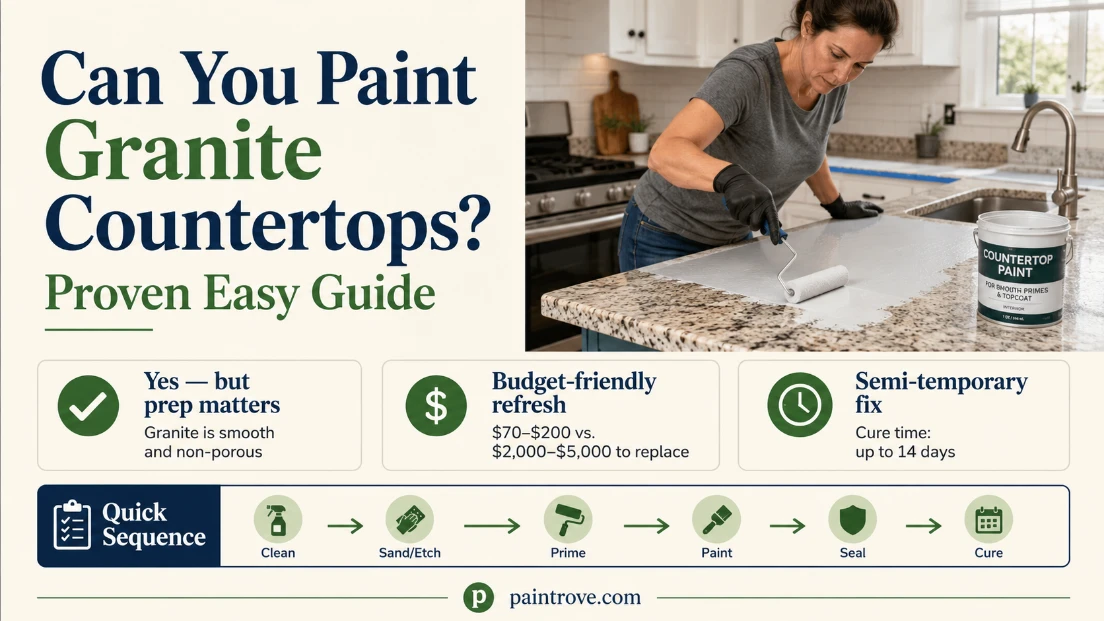
Can you paint granite countertops? Yes, you can, and it’s a budget-friendly way to update an outdated color without paying thousands for new stone. But here’s the honest part: granite is dense, smooth, and non-porous, so paint won’t stick unless you prep it carefully with sanding, a bonding primer, specialty paint, and a protective sealer.
Done right, a painted granite countertop can look fresh and even mimic marble. Done wrong, it chips and peels fast. And it’s worth knowing upfront that painting is a cosmetic, semi-temporary fix, not a forever solution.
This guide gives you the straight answer, the full step-by-step, the real pros and cons, and the alternatives worth considering first.
Quick Answer: Can You Paint Granite Countertops?
Here’s the fast version.
- Yes, you can paint granite countertops, but only with proper prep and the right products.
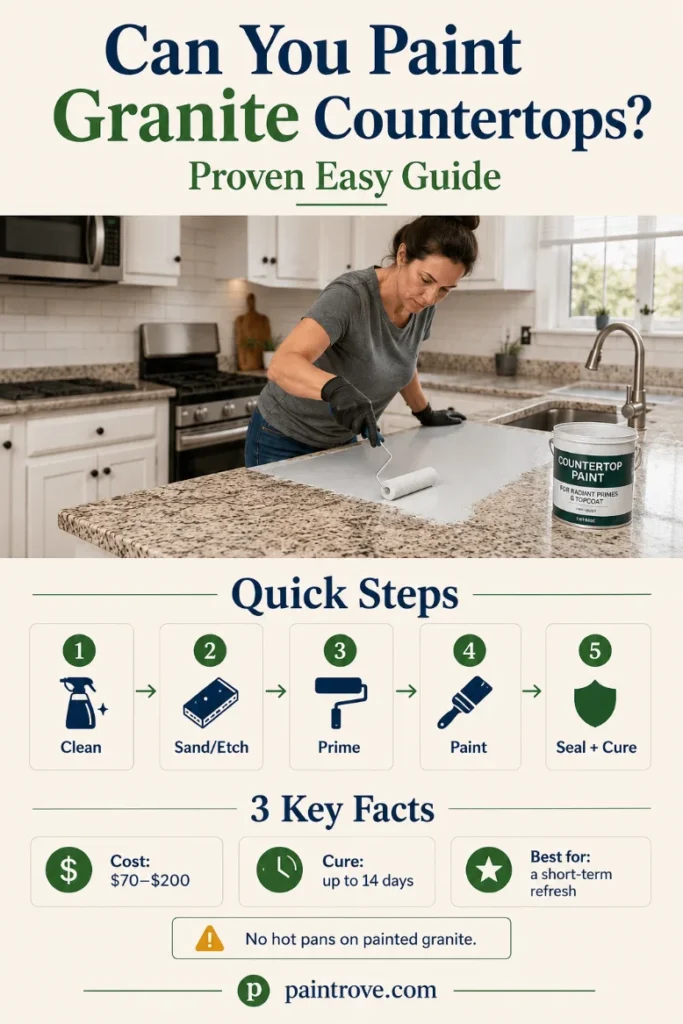
- The process: clean and degrease, sand or etch to rough up the surface, apply a bonding primer, add specialty countertop paint in thin coats, then seal with a durable topcoat.
- Cure time: up to 14 days before normal use.
- Cost: roughly $70 to $200 in supplies versus $2,000 to $5,000 to replace.
- The catch: painted granite isn’t heat-resistant, needs resealing, can chip over time, and may lower resale appeal.
Best for a short-term refresh on a tight budget. Read on for the full detail.
Can You Paint Granite Countertops? The Honest Answer
Yes, painting granite is possible, and plenty of homeowners do it to cover an outdated or unattractive color. A countertop paint kit or a custom mix of primer, paint, and sealer can completely change the look of a kitchen for a fraction of replacement cost.
But it’s not like painting a wall. Granite’s smooth, sealed surface fights paint adhesion, so the prep work is everything. And once painted, the counter loses granite’s best qualities, like heat and scratch resistance. You’ll need to baby it more, treating it closer to a laminate surface.
So the real answer is: yes, but go in with clear expectations. It’s a cosmetic update, not a permanent upgrade.
Why Granite Is Hard to Paint
Understanding the challenge helps you do the job right.
Granite is prized because it’s dense, polished, and sealed. That smooth, glossy finish is exactly what makes paint struggle to grip. Paint needs a little “tooth,” or texture, to bond. A slick granite surface gives it nothing to hold onto.
That’s why you can’t skip the prep. You have to degrease the stone, then physically or chemically roughen it, and prime it with a specialty bonding primer before any color goes on. Skip those steps and the paint will peel within weeks.
This is the same adhesion problem you face when painting over stained or sealed wood: a glossy surface needs deglossing and a bonding primer before paint will stick.
What You’ll Need
Gather these before you start.
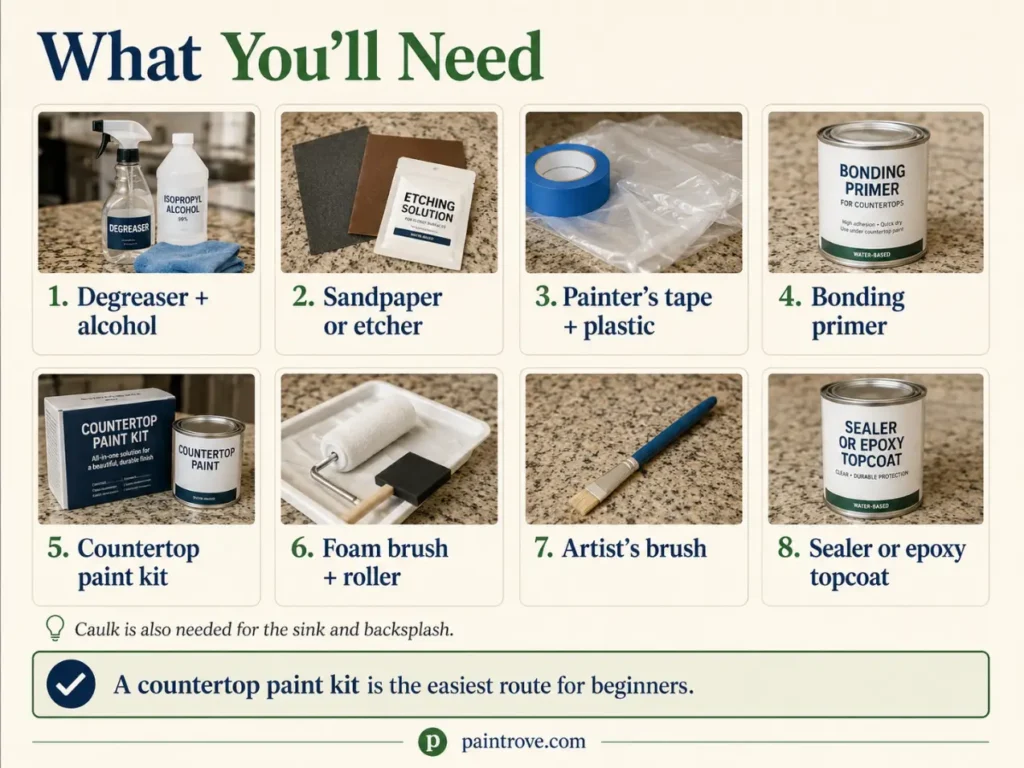
- Degreasing cleaner and rubbing alcohol
- A solvent like mineral spirits to remove caulk residue and oils (see our guide on mineral spirits vs paint thinner to choose one)
- Sandpaper or an electric sander (or a chemical etching product)
- Painter’s tape and plastic sheeting or newspaper
- A bonding primer made for slick surfaces
- Specialty countertop paint or a granite/marble paint kit
- Foam brushes and a small roller
- Thin artist’s brush (for veining)
- Caulk for the sink and backsplash
- A durable countertop sealer or epoxy topcoat
A granite countertop painting kit, like Giani Countertop Paint or Rust-Oleum Countertop Coating, bundles the primer, paint, and topcoat together and is the easiest route for beginners.
How to Paint Granite Countertops, Step by Step
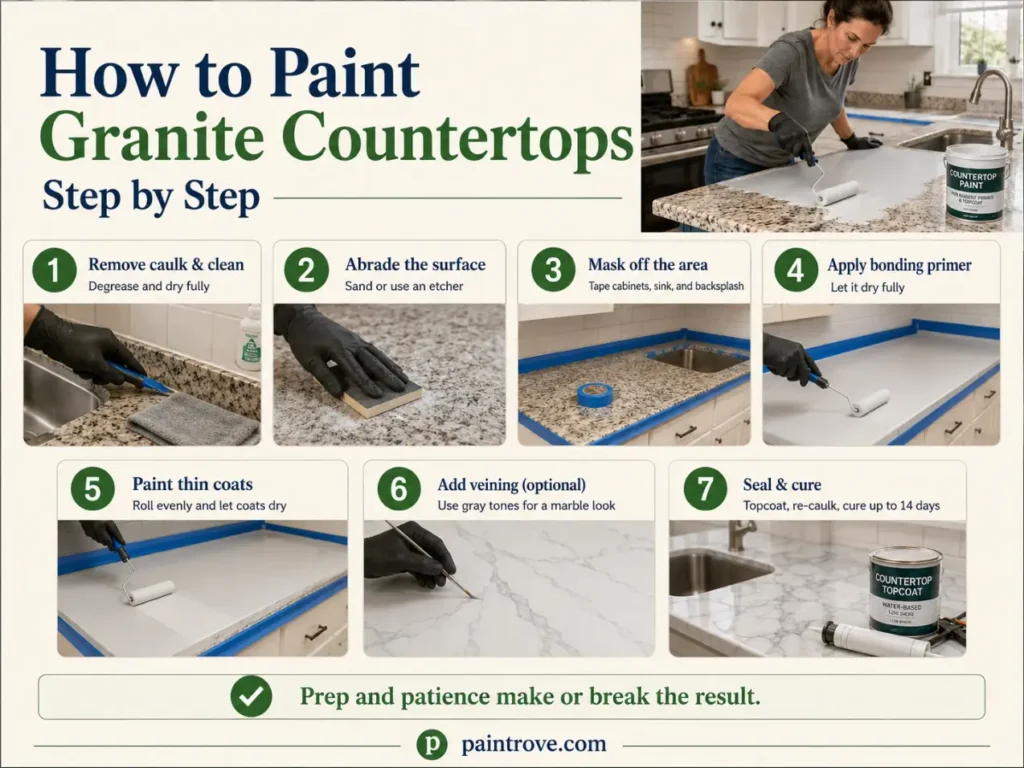
Follow these steps carefully. Patience in the prep stage makes or breaks the result.
Step 1: Remove caulk and clean
Remove any silicone caulk around the sink and backsplash, then clean up the residue with rubbing alcohol. Scrub the whole surface with a degreasing soap to strip oils and grime, then rinse with clean water and dry fully. Leftover residue ruins adhesion.
Step 2: Abrade the surface
Roughen the granite so primer can grip. Sand it with sandpaper or an electric sander, taking care not to miss any spots. Alternatively, use a chemical etching product, following the directions exactly. Wipe away all dust afterward.
Step 3: Mask off the area
Tape off the backsplash, cabinets, sink, and faucet with painter’s tape. Cover cabinets with plastic or newspaper to catch splatter. Generous masking saves a big cleanup later.
Step 4: Apply the bonding primer
Brush primer into tight areas with a foam brush, then roll the open areas in one direction. A bonding primer is essential on granite’s smooth surface. Let it dry fully, usually at least 8 hours, before the next step.
Step 5: Paint the color coats
Apply your countertop paint or mineral paint in thin, even layers, rolling in the same direction to avoid lap marks. Multiple thin coats beat one thick coat every time. Let each coat dry before the next, since rushing causes streaks and peeling. Our guide on how long to wait between coats of paint helps you time them.
Step 6: Add veining (optional)
For a marble or granite look, use a thin artist’s brush and a few shades of gray to paint veins freehand. Build depth with light and dark tones. Keep strokes loose and natural.
Step 7: Seal and cure
Apply a durable topcoat or epoxy sealer to protect against water, stains, and scratches. Re-caulk the sink and backsplash. Then let everything cure, up to 14 days, before using the counter normally.
Best Paint and Kits for Granite
Ordinary wall paint won’t survive on a countertop. It can’t stand up to water, food, heat, and daily wear. Use products made for the job.
- Countertop paint kits: Giani and Rust-Oleum Countertop Coating include everything (primer, paint, topcoat) and come in granite and marble looks. Best for beginners.
- Specialty countertop paint plus epoxy or polyurethane topcoat: for custom colors, mix your own system. Make sure the primer, paint, and topcoat are all compatible.
- Mineral paint: a durable option many kits include for the color layer.
These same kits and techniques work on other hard surfaces too. If you’re eyeing a backsplash or floor, our guide on painting tile covers that glossy-surface process.
How Long Does Painted Granite Last?
Be realistic here. With careful prep, quality products, and gentle use, a painted granite countertop can look good for a few years. In a low-traffic spot like a bathroom, it lasts longer.
In a busy kitchen, expect more wear. High-use areas around the sink and stove may show chips, scratches, or peeling sooner, especially without a tough sealer. Painted granite is a refresh you’ll likely redo or touch up down the road, not a one-and-done job.
The full cure also matters. Even though the paint feels dry in hours, it needs up to two weeks to harden completely. Treat the surface gently during that window.
Caring for Painted Granite Countertops
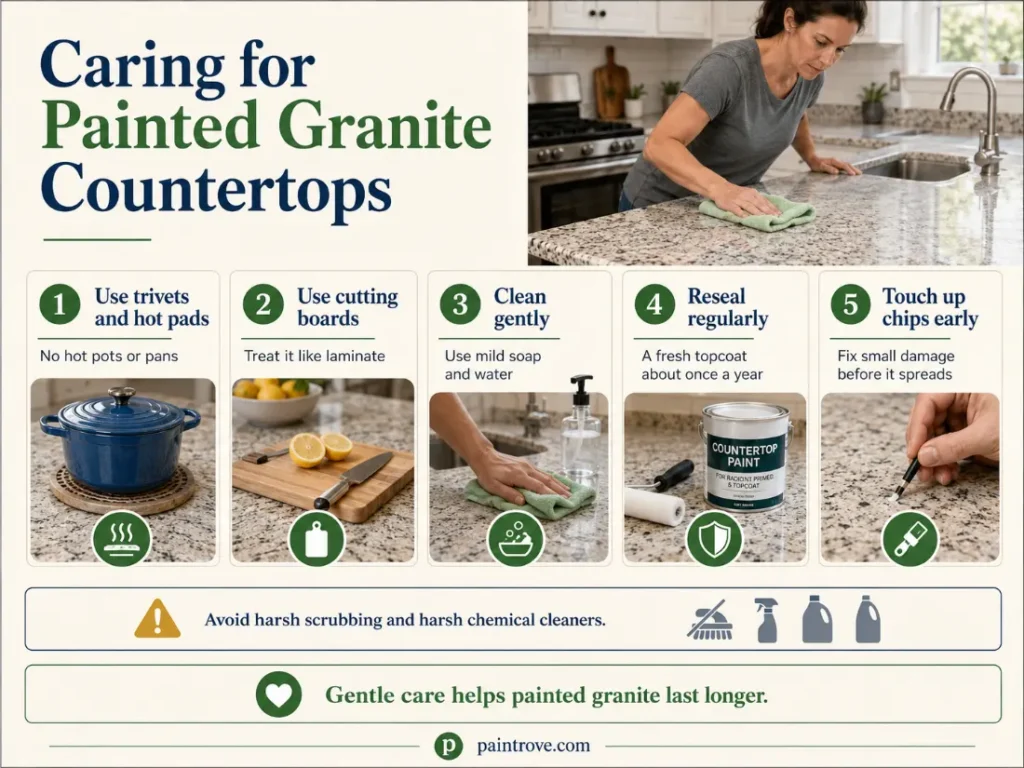
Painted granite needs more care than natural stone. Follow these rules to make it last.
- No hot pots or pans directly on the surface. Painted granite is not heat-resistant. Always use trivets and hot pads.
- Treat it like laminate. Use cutting boards, wipe spills quickly, and avoid harsh scrubbing.
- Clean gently. Use mild soap and water, not abrasive or harsh chemical cleaners that can dull or lift the finish.
- Reseal regularly. A fresh topcoat about once a year keeps it protected.
- Touch up early. Fix small chips before they spread.
Pros and Cons of Painting Granite
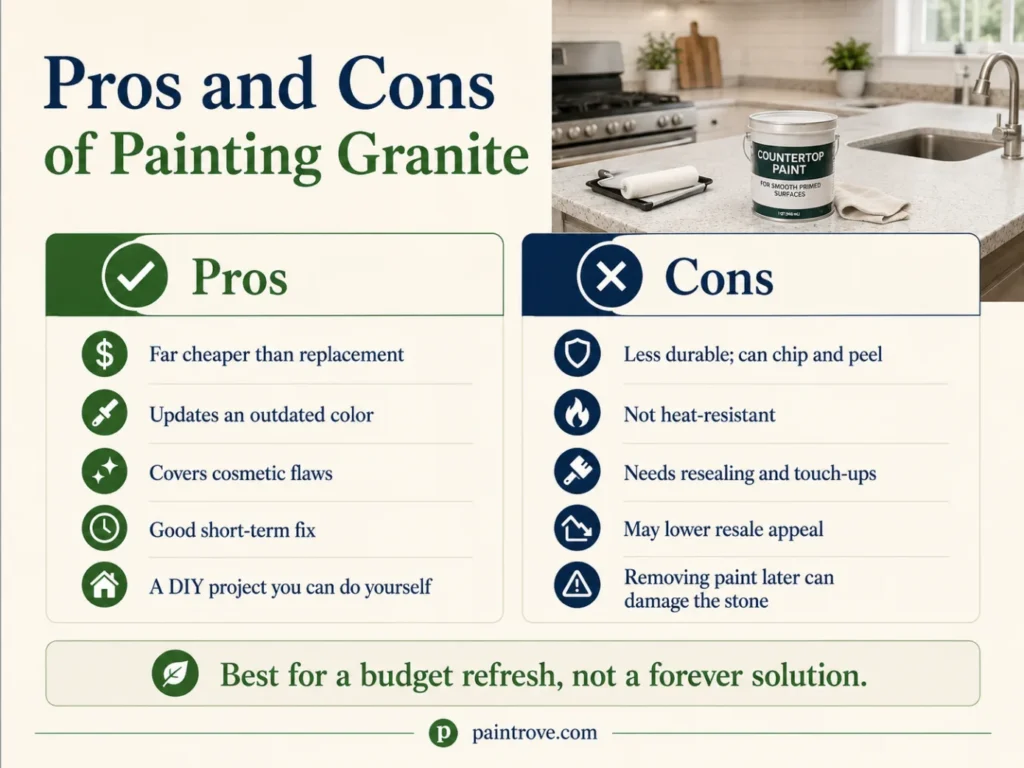
Here’s the honest trade-off at a glance.
| Pros | Cons |
|---|---|
| Far cheaper than replacement | Less durable; can chip and peel |
| Updates an outdated color | Not heat-resistant |
| Covers cosmetic flaws | Needs resealing and touch-ups |
| Good short-term fix before a remodel | May lower resale appeal |
| A DIY project you can do yourself | Removing paint later can damage the stone |
If you’re refreshing a rental, staging on a budget, or planning a bigger remodel later, the pros may win. If your granite is in good shape and you want lasting value, the cons are worth weighing.
Should You Paint Granite? Alternatives to Consider
Before you commit, consider these options that preserve your stone.
Polish and reseal. If your granite is just dull, a professional polish and fresh sealer can restore its natural shine for less hassle than painting.
Professional stone restoration. A stone specialist can refinish granite without paint, keeping its durability and home value intact.
Change the surroundings instead. Sometimes the granite isn’t the problem. Repainting the walls or cabinets, or swapping warm light bulbs for cooler ones, can make existing granite look far better. A soft white wall color often transforms how the stone reads.
Replace it. If you truly dislike the granite and plan to stay long-term, new countertops may be the better investment.
Mistakes to Avoid
Steer clear of these and your finish will last longer.
- Don’t skip the abrading step. Paint won’t grip smooth granite.
- Don’t use ordinary wall paint. Only countertop-rated products survive.
- Don’t rush the coats or the cure. Thin layers and full curing prevent peeling.
- Don’t set hot pans on it. Painted granite has no heat resistance.
- Don’t forget the sealer. Without a topcoat, the paint stains and scratches fast.
- Don’t expect granite-level durability. Treat the painted surface gently.
FAQs
Can you paint granite countertops yourself?
Yes, painting granite countertops is a doable DIY project. You’ll need to degrease the surface, sand or etch it for adhesion, apply a bonding primer, add specialty countertop paint in thin coats, and seal it with a durable topcoat. A countertop paint kit makes it easier for beginners by bundling the right products together.
What kind of paint do you use on granite countertops?
Use specialty countertop paint or a granite/marble paint kit, never ordinary wall paint. Kits from Giani or Rust-Oleum include a bonding primer, paint, and protective topcoat designed for countertops. For custom colors, pair a countertop-rated paint with an epoxy or polyurethane sealer, making sure all the products are compatible.
Does paint stick to granite?
Not on its own. Granite is smooth, dense, and non-porous, so paint needs help to bond. You must degrease the surface, then roughen it by sanding or chemical etching, and apply a bonding primer before painting. Skip these steps and the paint will quickly chip and peel.
How long does painted granite last?
With good prep and gentle use, painted granite can last a few years, longer in low-traffic spots like bathrooms. In busy kitchens, high-use areas may chip or peel sooner. It’s best viewed as a semi-temporary refresh that needs occasional touch-ups and resealing, not a permanent solution.
Can you put hot pans on painted granite countertops?
No. Painting removes granite’s natural heat resistance, so hot pots and pans can scorch or damage the painted surface. Always use trivets and hot pads, and treat painted granite more like a laminate countertop. A good sealer helps but won’t restore true heat resistance.
Does painting granite countertops lower home value?
It can. Many buyers value natural stone and may see painted granite as a downgrade, especially if it’s peeling. They might factor in the cost of restoring or replacing it. If resale is a priority, polishing and resealing the natural granite is usually a safer choice than painting.
Can you paint granite to look like marble?
Yes. Many people paint granite a white or light base color, then use a thin brush and gray paint to add marble-style veining freehand. After the veining dries, a clear epoxy or sealer topcoat locks it in. Kits often include everything needed for the marble look.
Is it cheaper to paint or replace granite countertops?
Painting is far cheaper upfront, often $70 to $200 in supplies versus $2,000 to $5,000 to replace. However, painted granite is less durable and may need redoing, while new stone lasts decades. Factor in longevity and resale value when deciding which is the better investment for you.
Final Thoughts
So, can you paint granite countertops? Yes, and it’s a smart budget move when you want to cover an outdated color without a costly replacement. The keys are thorough prep, a bonding primer, specialty countertop paint, a durable sealer, and patience through the long cure.
Just go in clear-eyed. Painted granite trades the stone’s heat resistance and durability for a fresh look, and it needs gentler care and occasional touch-ups. If your granite is sound and you want lasting value, polishing and resealing may serve you better. But for an affordable, satisfying refresh, a careful paint job can give your kitchen a whole new feel.