How Long to Wait Between Coats of Paint
Figuring out how long to wait between coats of paint is the difference between a smooth, professional finish and a streaky, peeling mess. The short answer: most water-based latex paints need 2 to 4 hours, while oil-based paints need a full 24 hours. But the exact timing depends on the paint, the room, and the surface.
Rushing the second coat is one of the most common painting mistakes. Paint too soon and you’ll drag, wrinkle, or lift the first coat. Wait the right amount, though, and the next coat bonds cleanly and looks flawless.
This guide gives you exact recoat times by paint type, the simple test that tells you when a coat is ready, and the conditions that speed things up or slow them down.
Quick Answer: Recoat Times by Paint Type
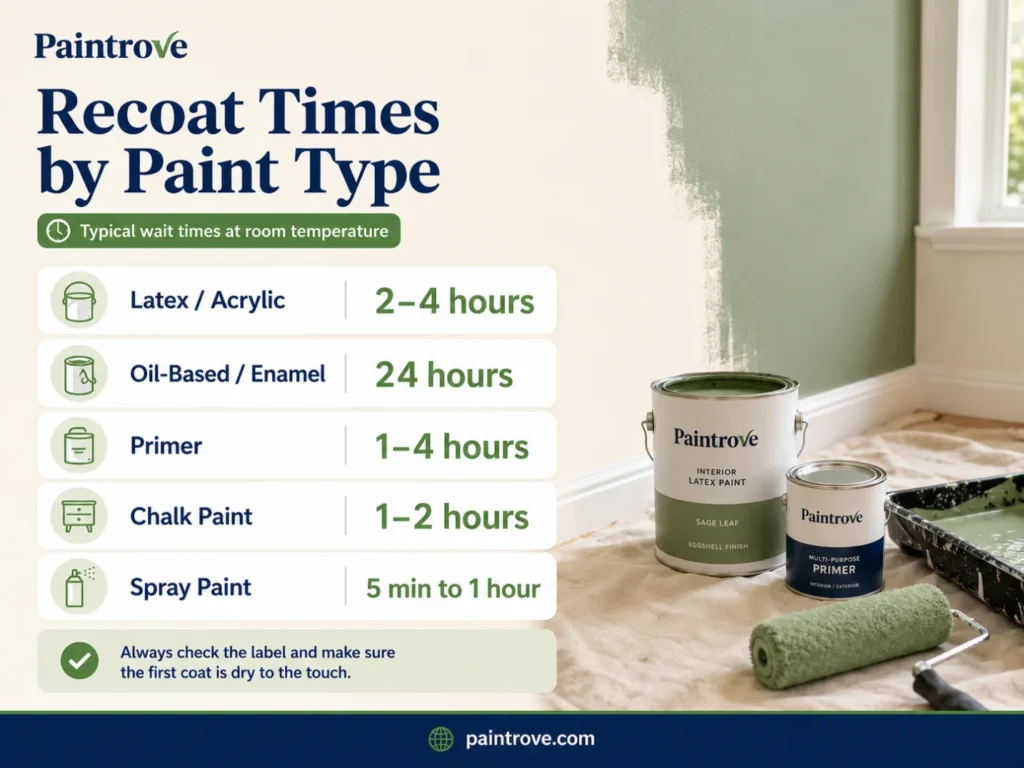
Here are the typical wait times between coats at room temperature with normal humidity.
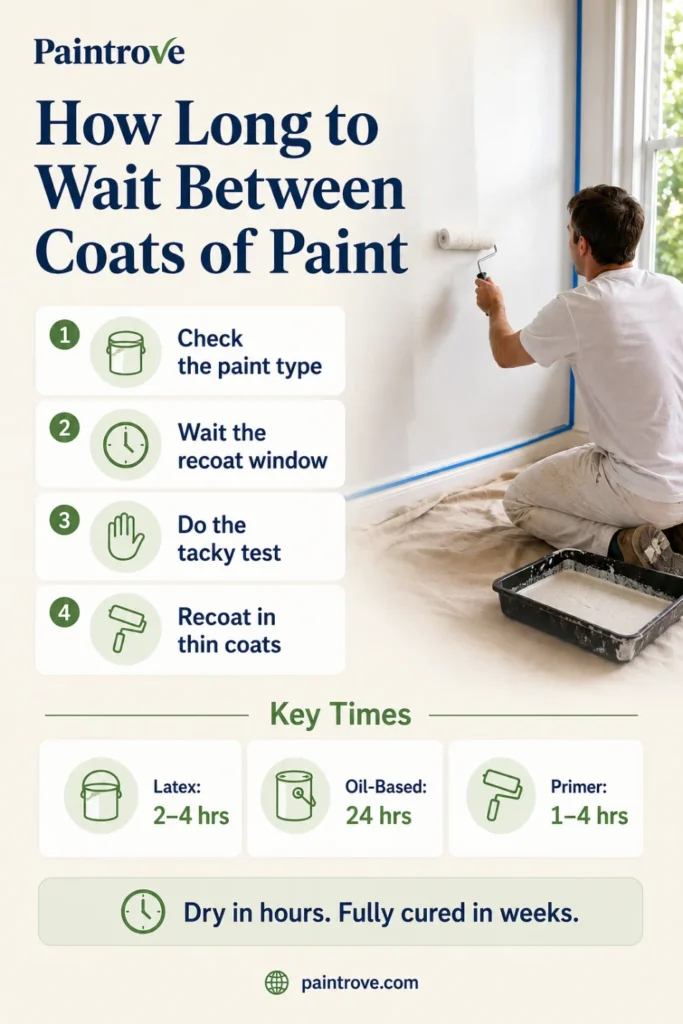
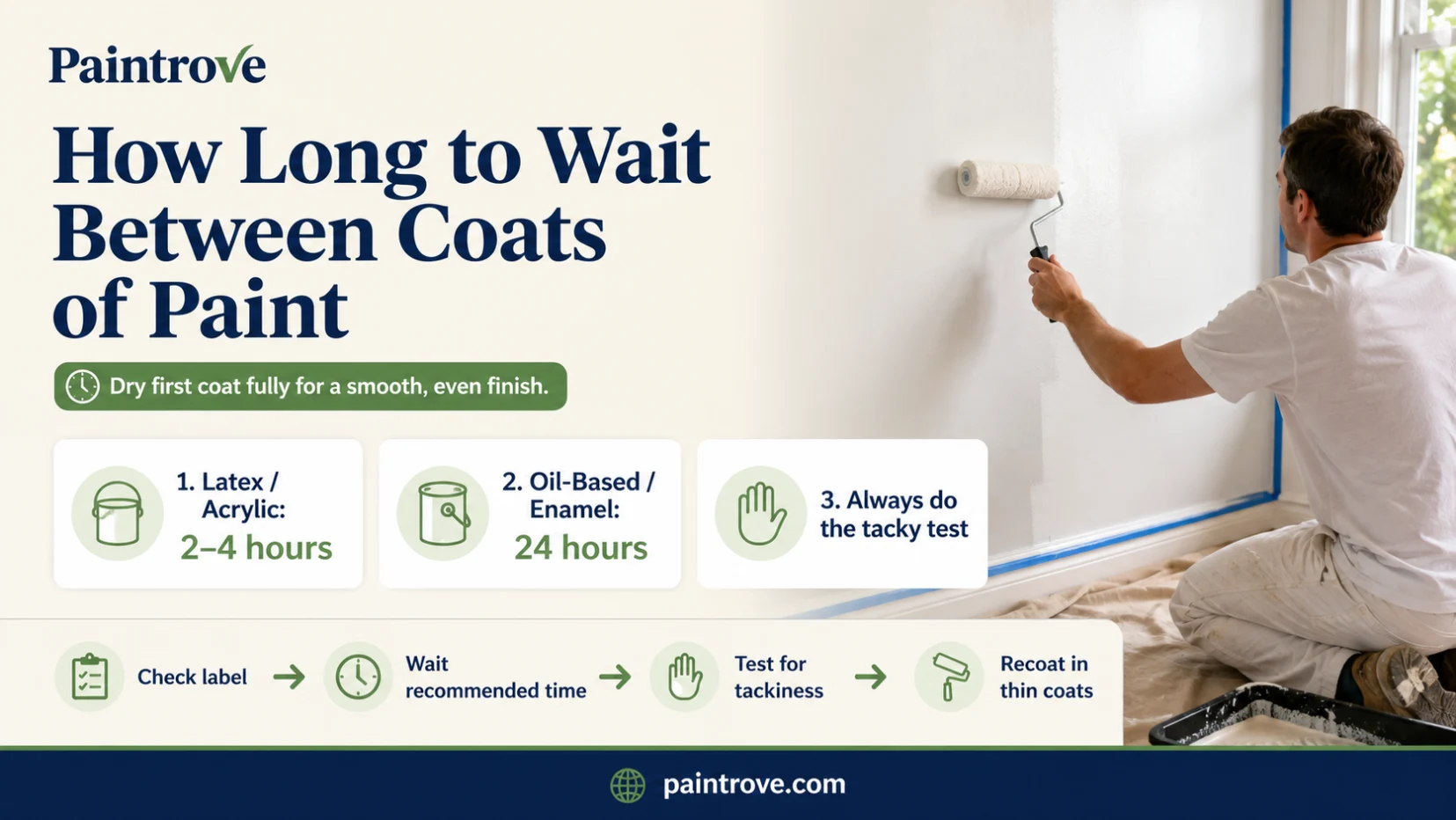
- Latex / acrylic (water-based): 2 to 4 hours
- Oil-based / enamel: 24 hours
- Primer: 1 to 4 hours (bonding and stain-blocking types take longer)
- Chalk paint: 1 to 2 hours
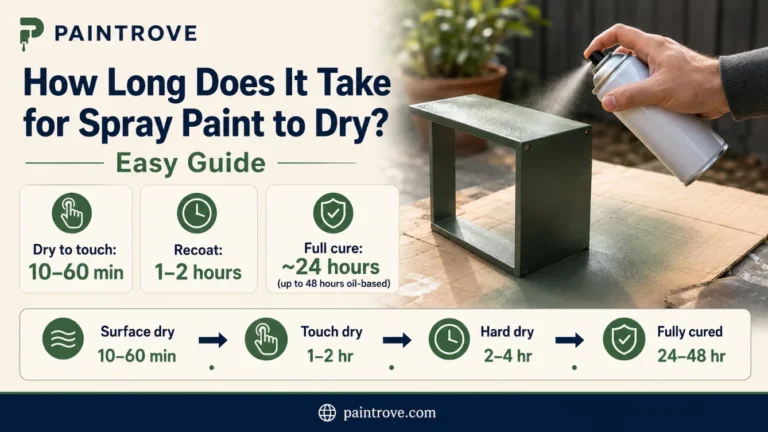
- Spray paint: 5 minutes to 1 hour to recoat
Always check the label, and always confirm the first coat is dry to the touch and no longer tacky before you recoat. Read on for the full detail.
How Long to Wait Between Coats of Paint by Type
The type of paint is the biggest factor in your wait time. Here’s the breakdown.
| Paint Type | Touch Dry | Recoat Wait | Full Cure |
|---|---|---|---|
| Latex / acrylic | 1–2 hours | 2–4 hours | 2–4 weeks |
| Oil-based / enamel | 6–8 hours | 24 hours | ~1 week |
| Latex primer | 30–60 min | 1–2 hours | — |
| Bonding / stain-blocking primer | 1 hour | 2–4 hours | — |
| Chalk paint | 30 min | 1–2 hours | — |
Latex and Acrylic Paint
Water-based latex is the most common choice for walls and ceilings. It’s touch dry in 1 to 2 hours and ready to recoat in 2 to 4 hours. In humid or cool rooms, stretch that to 4 to 6 hours for a more even result.
Oil-Based and Enamel Paint
Oil-based paints dry slowly and need a full 24 hours between coats. The slow dry is actually a feature, since it lets the paint level out into a smooth, glossy finish with fewer brush marks.
Primers
Most latex primers accept paint after about an hour. Bonding and stain-blocking primers need 2 to 4 hours to set up. Letting primer dry fully gives the topcoat something solid to grip.
Spray Paint
Spray paint recoats fastest of all, often within minutes. Because the timing is so different from brush-on paint, our guide on how long spray paint takes to dry breaks down the exact recoat windows for aerosols.
Drying vs. Curing: Know the Difference
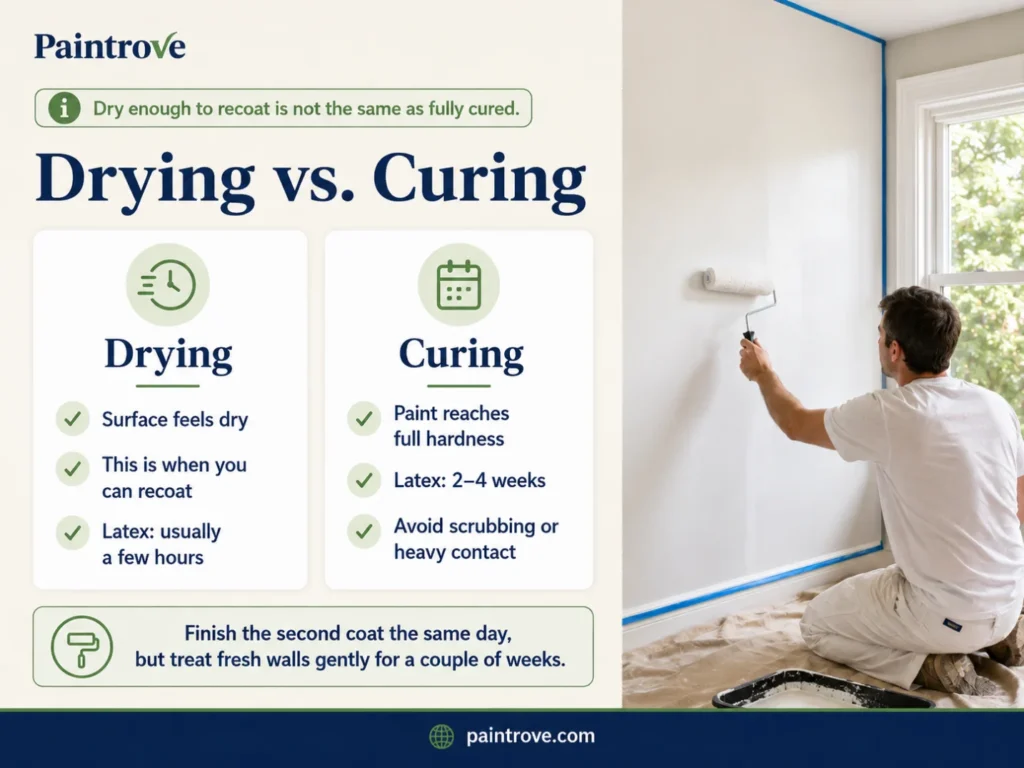
This trips up a lot of people. Drying and curing are not the same thing.
Drying is when the solvents or water evaporate and the surface feels dry. This is when you can recoat, usually within a few hours for latex.
Curing is when the paint reaches full hardness. Latex can take 2 to 4 weeks to fully cure, even though it feels dry in an hour.
So you can finish your second coat the same day, but treat the walls gently for a couple of weeks. Avoid scrubbing or leaning furniture against fresh paint until it cures. For the full picture on drying stages, see our guide on how long paint takes to dry.
How to Tell If the First Coat Is Ready (The Tacky Test)
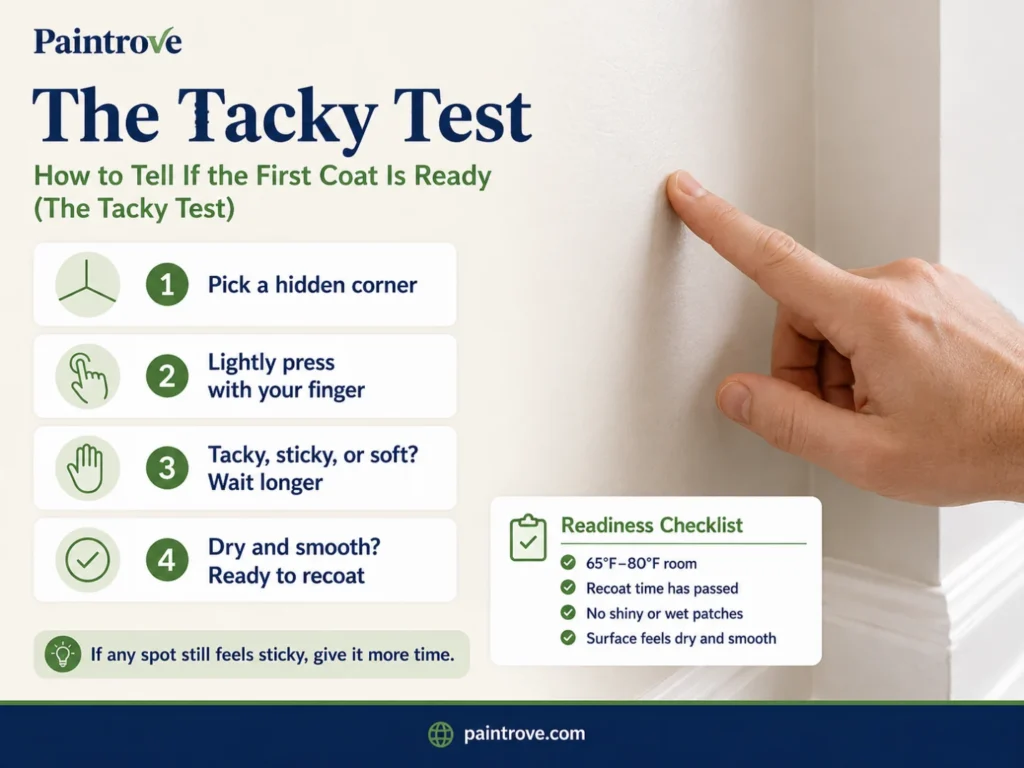
Forget watching the clock exactly. The surest way to know if a coat is ready is to test it.
Pick a spot in an out-of-the-way corner. Lightly press it with your finger.
- If it feels tacky, sticky, or soft, it’s not ready. Wait longer.
- If it feels dry and smooth with no tackiness, you’re good to recoat.
Your surface is ready when the room is 65°F to 80°F, the paint feels dry and smooth, the recommended recoat time has passed, and there are no shiny or wet patches left. When all four are true, grab your roller.
What Affects Recoat Time
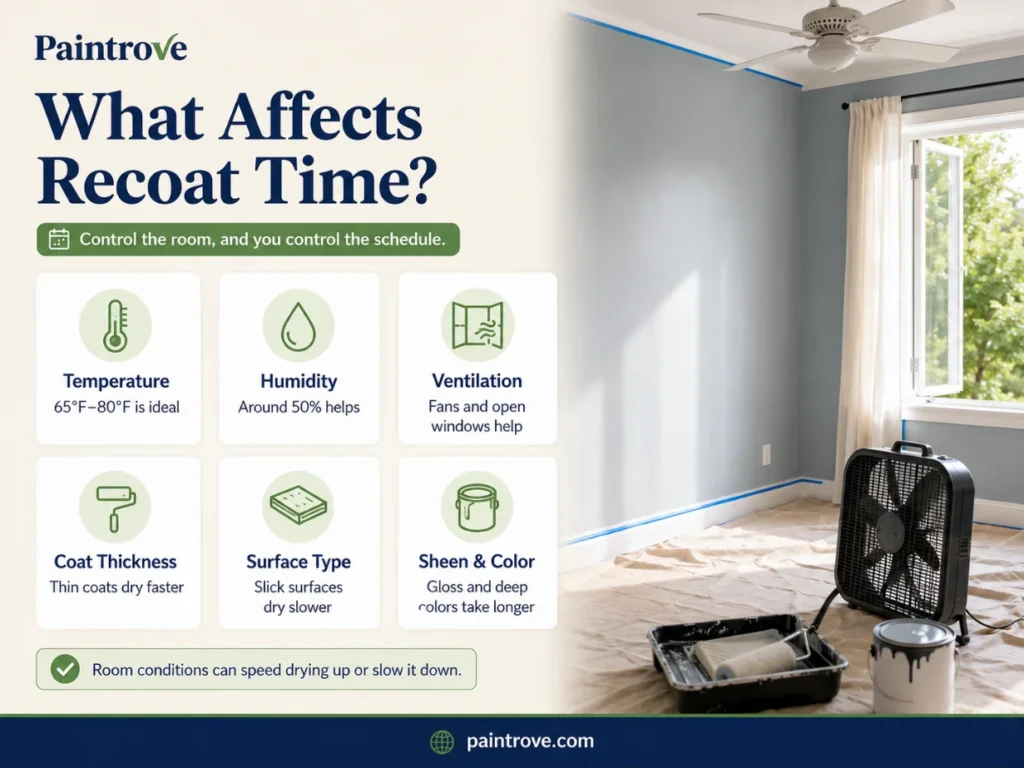
Several conditions speed up or slow down drying. Control these and you control your schedule.
Temperature. Aim for 50°F to 85°F, with 65°F to 80°F being ideal. Cold rooms slow drying. Too hot, and the paint can dry unevenly or crack.
Humidity. High humidity is the enemy. Moisture in the air keeps paint from setting, so bathrooms and kitchens take longer. Aim for around 50% humidity and use a dehumidifier if needed.
Ventilation. Moving air carries moisture away. Open windows or run a fan to help each coat dry evenly.
Coat thickness. Thin coats dry faster and look better. Thick coats trap moisture underneath, which leads to uneven sheen, longer waits, and peeling. Two thin coats always beat one heavy coat.
Surface type. Porous surfaces like bare drywall and raw wood absorb paint and dry faster. Slick, nonporous surfaces like metal or laminate hold paint on top and dry slower.
Sheen and color. Glossy and semi-gloss finishes take longer than matte or eggshell. Deep colors loaded with pigment, especially reds and yellows, also dry more slowly.
What Happens If You Recoat Too Soon?
Rushing is the most common DIY painting mistake, and it shows. If you apply the second coat before the first has dried, you can expect:
- Dragging and lifting, where the roller pulls the soft first coat off the wall
- Wrinkling or bubbling as the layers trap moisture
- Streaks and roller marks that won’t level out
- Uneven sheen with shiny and dull patches
- Poor adhesion that leads to peeling later
If you see the first coat starting to pull or wrinkle, stop. Let everything dry fully, then assess whether you need to sand the damaged area smooth before continuing. Recoating too soon is also a leading cause of paint that chips and peels off the wall down the road.
What Happens If You Wait Too Long?
Good news for most projects: with latex paint, waiting too long between coats usually isn’t a problem. Once it’s dry, you can add another coat hours, days, or even weeks later with no issue.
The exception is oil-based paint and some specialty finishes. If you wait well beyond the recoat window, the surface can cure too hard for the next coat to grip. In that case, a light scuff-sand gives the new coat something to bond to. When in doubt, check the manufacturer’s instructions for the maximum recoat time.
How to Speed Up Drying Between Coats
On a deadline? These tricks shorten the wait without hurting the finish.
- Apply thin coats. They dry faster and cover better. You can lay down three thin coats in the time one thick coat takes to dry.
- Lower the humidity. A dehumidifier makes a real difference, especially in damp rooms.
- Add airflow. Open windows and run a fan to move moist air out.
- Warm the room. Keep it in that 65°F to 80°F sweet spot.
- Choose a faster finish. Matte and eggshell recoat sooner than gloss.
You can use a fan or a gentle heater to help, but avoid blasting fresh paint with direct high heat or a hair dryer on a hot setting. That dries the surface too fast and can crack or bubble the finish.
How Many Coats Do You Need?
Most interior paint jobs need two coats over a primed surface. That gives even color and full coverage.
You may need a third coat when you’re going dark over light (or light over dark), using a vivid, high-pigment color like red or yellow, or covering a stained or patchy surface. Quality paint from brands like Sherwin-Williams, Benjamin Moore, or Behr often covers in fewer coats than budget paint. Planning your coats also helps you estimate your total time, which our guide on how to paint a room walks through start to finish.
Mistakes to Avoid
Steer clear of these and every coat will look its best.
- Don’t recoat while the first coat is tacky. Always do the finger test first.
- Don’t apply thick coats to save time. They dry slower and peel.
- Don’t ignore humidity. Damp rooms need extra drying time.
- Don’t blast fresh paint with high heat. Gentle airflow only.
- Don’t scrub or stress fresh paint. It’s dry in hours but cures over weeks.
- Don’t skip the label. Manufacturer recoat times beat any general rule.
FAQs
How long should you wait between coats of paint?
For water-based latex or acrylic paint, wait 2 to 4 hours between coats. Oil-based paints need a full 24 hours. Primers are usually ready in 1 to 4 hours depending on the type. Always confirm the first coat feels dry and no longer tacky, and check the paint can’s label for exact timing.
Can I apply a second coat of paint after 1 hour?
Usually not for wall paint. Most latex paints need at least 2 hours, and recoating after just 1 hour risks dragging and wrinkling the first coat. Some fast-dry and spray paints can recoat sooner, but always do the tacky test first. If the surface feels sticky, it isn’t ready.
What happens if you recoat paint too soon?
Recoating too soon can lift or drag the first coat, cause wrinkling and bubbling, leave streaks and roller marks, create uneven sheen, and lead to peeling later. If the first coat is still soft, the second coat can pull it right off the surface. Always let each coat dry fully before recoating.
What happens if you wait too long between coats of paint?
With latex paint, waiting too long is usually fine; you can recoat hours, days, or weeks later. With oil-based and some specialty paints, waiting well past the recoat window lets the surface harden, so the new coat may not grip. A light scuff-sand fixes that by giving the paint something to bond to.
How do you know when paint is dry enough to recoat?
Do the tacky test. Press a hidden spot lightly with your finger. If it feels dry and smooth with no stickiness, it’s ready. If it feels tacky or soft, wait longer. The surface should also have no shiny or wet patches, and the recommended recoat time should have passed.
Does humidity affect how long to wait between coats?
Yes, a lot. High humidity slows drying because moisture in the air keeps paint from setting. In damp rooms like bathrooms and kitchens, allow extra time between coats and consider running a dehumidifier or fan. Aiming for around 50% humidity helps each coat dry on schedule.
Can I use a heater or fan to speed up drying between coats?
Yes, gentle warmth and airflow help. A fan moves moist air away, and keeping the room around 65°F to 80°F speeds drying. Avoid direct high heat or a hot hair dryer, though, since drying the surface too fast can cause cracking, bubbling, or an uneven finish.
How many coats of paint do I need?
Most jobs need two coats over primer for even color and full coverage. You may need a third when going dark over light, using a high-pigment color like red or yellow, or covering stains. Higher-quality paints often cover in fewer coats than budget options, saving you time and material.
Final Thoughts
Knowing how long to wait between coats of paint keeps your project on track and your finish looking sharp. Plan on 2 to 4 hours for latex, 24 hours for oil-based, and 1 to 4 hours for primer, then always confirm with the tacky test before you recoat. Temperature, humidity, ventilation, and coat thickness all shift the timing, so adjust for your room.
Most of all, remember the difference between dry and cured: you can recoat in hours, but go easy on fresh paint for a couple of weeks. Take your time between coats, keep them thin, and you’ll end up with smooth, even walls that look professionally done.