How Long Does Oil Based Paint Take to Dry? Easy Guide
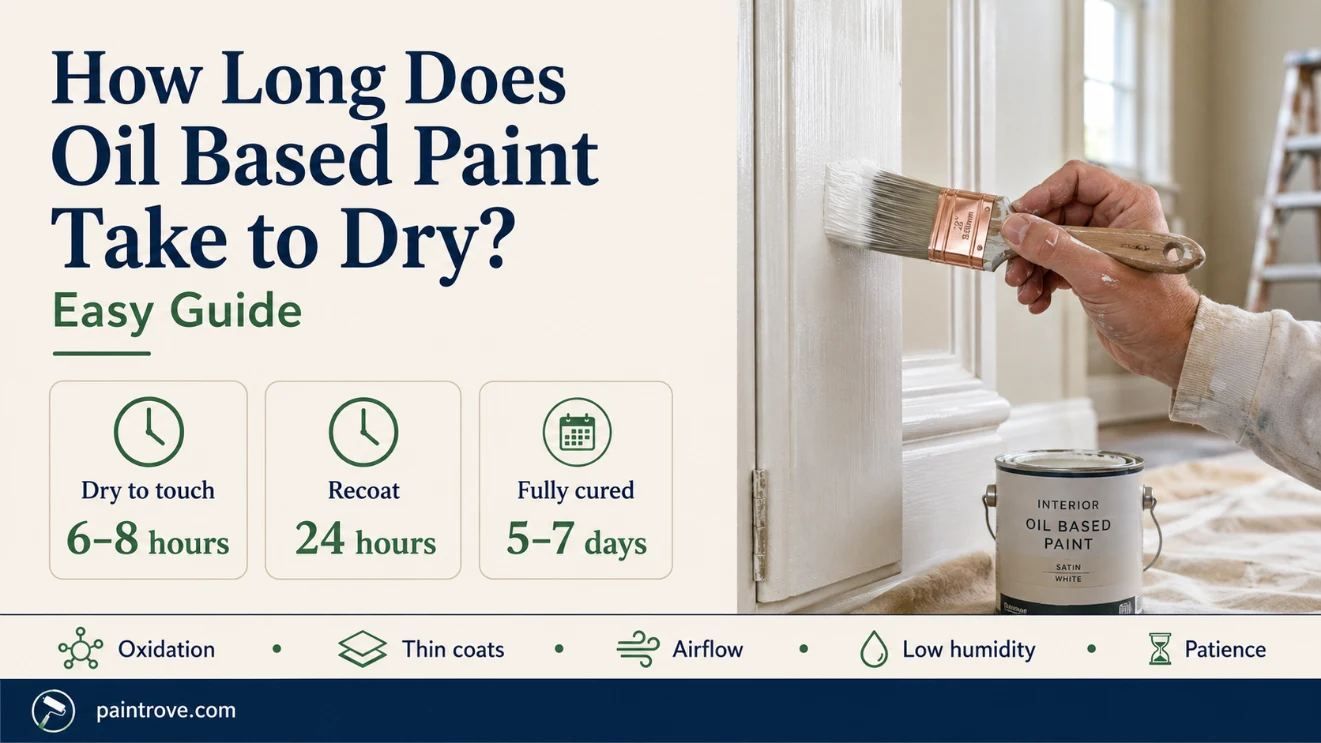
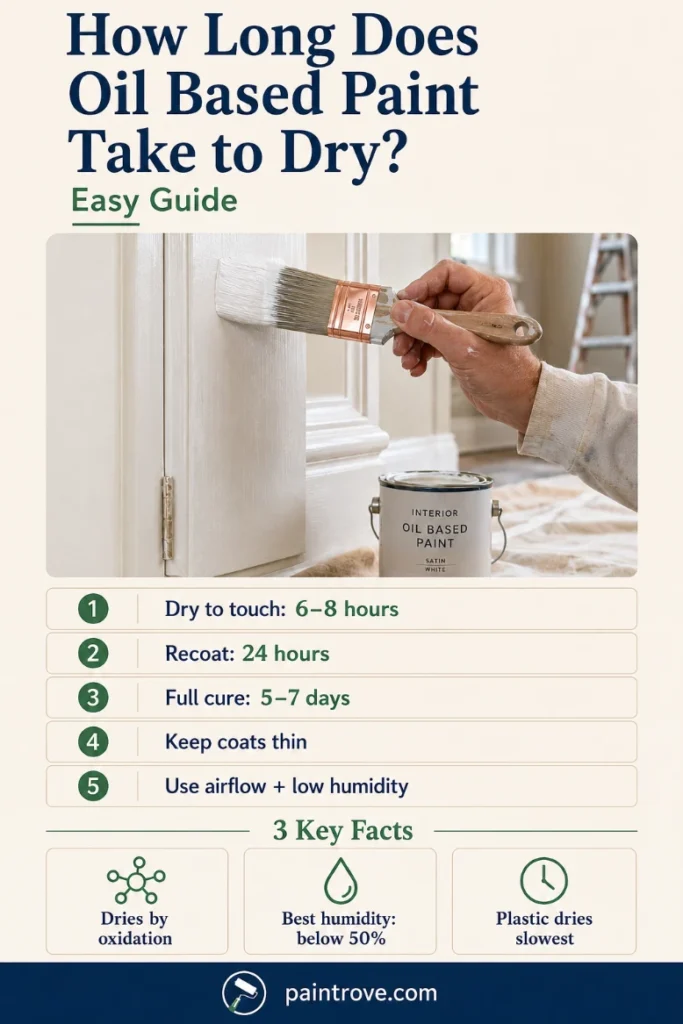
How long does oil based paint take to dry? Oil-based paint is dry to the touch in about 6 to 8 hours, ready to recoat in 24 hours, and fully cured in roughly 5 to 7 days. That’s noticeably slower than latex, because oil-based paint dries by a chemical reaction called oxidation rather than by simply evaporating.
That slower pace is actually a feature. It lets the paint level out into a smooth, tough, durable finish, which is why oil-based paint is popular for trim, doors, cabinets, and metal. The trade-off is patience: rush it and you’ll get a soft, tacky, or streaky result.
This guide breaks down oil-based paint dry times by surface, what affects them, how to speed things up safely, and what to do if your paint just won’t dry.
Quick Answer: Oil Based Paint Dry Times
Here are the typical numbers in ideal conditions (70–80°F, low humidity).
- Dry to touch: 6 to 8 hours
- Ready to recoat: 24 hours
- Hard dry (handle carefully): 24 to 48 hours
- Fully cured: about 5 to 7 days
- Ideal temperature: 40°F to 90°F
- Best humidity: below 50%
Always check the label. Note: artist’s oil paint on canvas is different and far slower (more on that below). Read on for the full detail.
Why Oil Based Paint Dries Slowly
Here’s the key difference from water-based paint. Latex and acrylic paints dry as their water evaporates, which happens fast. Oil-based paint dries through oxidation, a slow chemical reaction where the oils and alkyd resin react with oxygen in the air and harden.
Because it relies on oxygen rather than evaporation, oil-based paint dries from the top down. The surface can skin over while the layer underneath is still soft. That’s why thick coats are a problem and why good airflow (which brings oxygen) speeds things up.
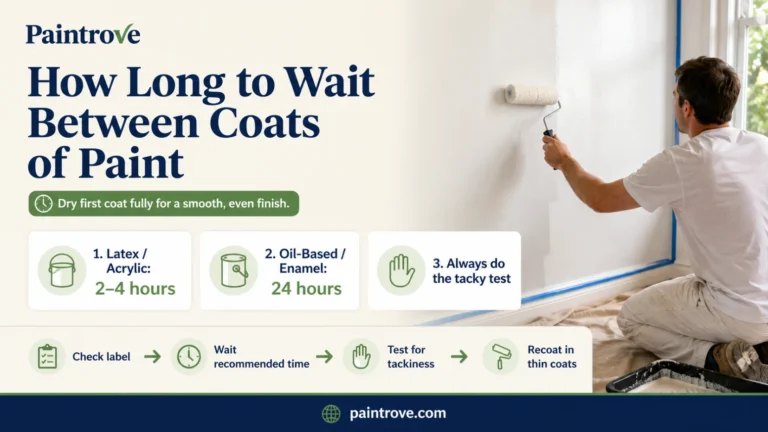
This same dry-versus-cure idea applies to every paint. Our guide on how long paint takes to dry covers the full picture across paint types.
Drying vs. Curing Oil Based Paint
Drying and curing aren’t the same thing, and the difference matters.
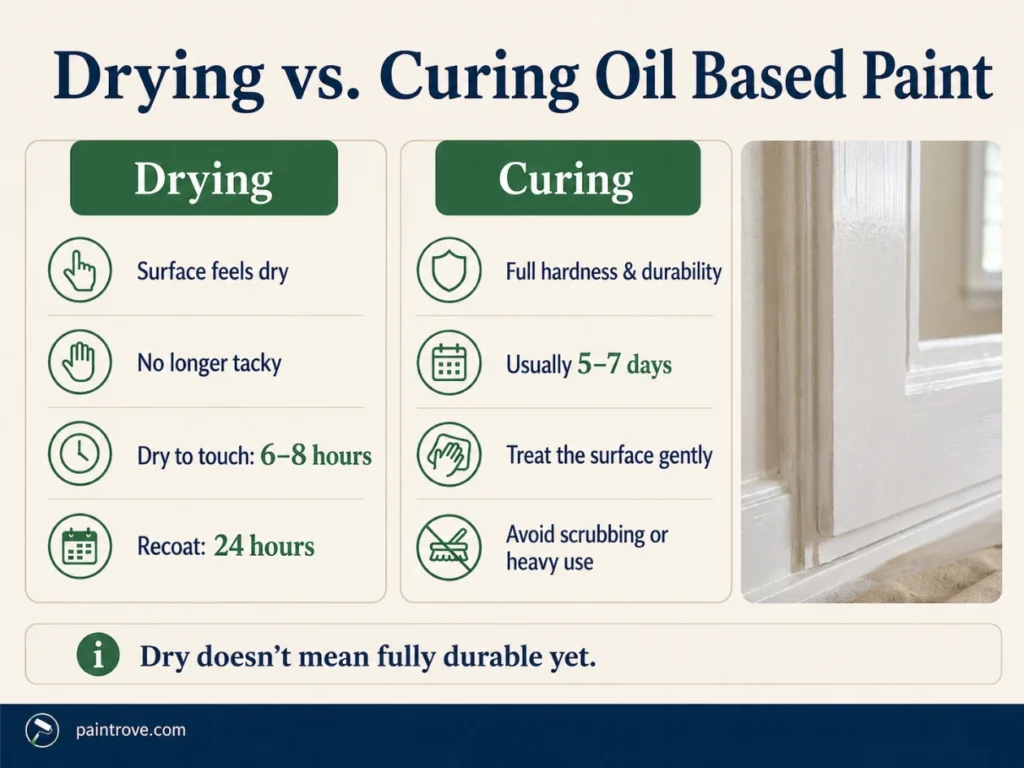
Drying is when the surface feels dry and no longer tacky. For oil-based paint, that’s 6 to 8 hours, and you can recoat at 24 hours.
Curing is when the paint reaches full hardness and durability. Interestingly, even though oil-based paint is slow to dry, it cures faster than latex, usually in about 5 to 7 days versus 2 to 4 weeks for latex.
Until it’s cured, treat the surface gently. Avoid scrubbing, heavy use, or leaning objects against it, even after it feels dry.
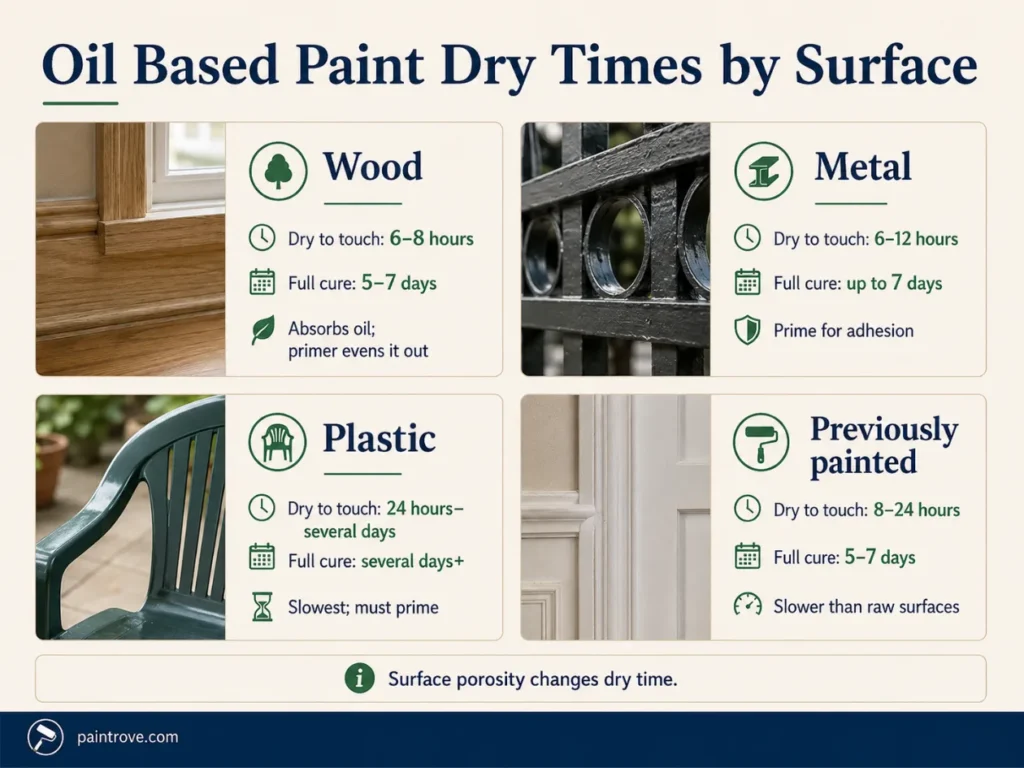
Oil Based Paint Dry Times by Surface
The material you’re painting changes the timing. Here’s how common surfaces compare.
| Surface | Dry to Touch | Full Cure | Notes |
|---|---|---|---|
| Wood (bare/porous) | 6–8 hours | 5–7 days | Absorbs oil; primer evens it out |
| Metal | 6–12 hours | up to 7 days | Non-porous; prime for adhesion |
| Plastic | 24 hours–several days | several days+ | Non-porous and slow; must prime |
| Previously painted | 8–24 hours | 5–7 days | Slower than raw, porous surfaces |
Oil Based Paint on Wood
Bare wood is porous and absorbs some of the oil, so the surface often dries in the typical 6 to 8 hours. Priming first gives a more even, predictable finish.
Oil Based Paint on Metal
Metal is non-porous, so paint sits on top and dries to the touch in about 6 to 12 hours, with full curing up to a week. A metal primer improves both adhesion and drying.
Oil Based Paint on Plastic
Plastic is the slowest. Because it doesn’t absorb anything, oil paint can take 24 hours to several days to dry. Always clean and prime plastic first for adhesion and a better result.
What Affects Oil Based Paint Drying Time
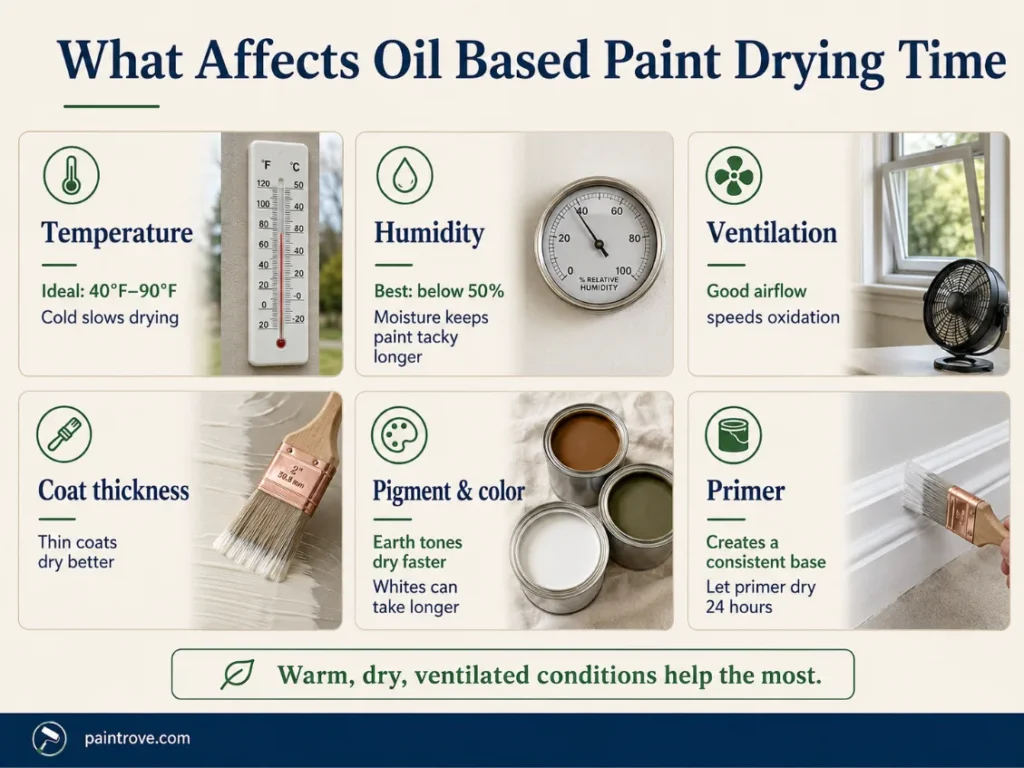
Several conditions speed up or slow down oxidation. Control these and you control your timeline.
Temperature. Oil-based paint has a wide ideal range of 40°F to 90°F. Warmth helps it oxidize, while cold dramatically slows drying. Extreme heat dries the surface too fast and traps soft paint underneath.
Humidity. Aim for below 50%. Moisture in the air keeps paint tacky longer and can leave an uneven finish.
Ventilation. This matters more than with latex. Because drying is oxygen-driven, good airflow from open windows or a fan speeds it up noticeably. Just keep dust away from the wet surface.
Coat thickness. Thin coats are essential. Thick layers skin over on top while staying soft inside, dramatically extending dry time. Two thin coats always beat one heavy coat.
Pigment and color. Some colors dry faster. Earth tones like browns, reds, and oranges (and paints with iron oxide) dry quicker, while whites and certain pigments take longer.
Primer. An oil-based primer creates a consistent base and improves both adhesion and predictable drying. Give the primer a full 24 hours before painting.
How to Make Oil Based Paint Dry Faster
Need to speed things up? These methods help without ruining the finish.
- Apply thin coats. The single most effective trick. Thin layers dry faster and more evenly.
- Increase airflow. Open windows and run a fan to feed oxygen and carry away fumes. This helps oil paint more than most.
- Lower the humidity. A dehumidifier in a damp space makes a real difference.
- Keep it warm. Aim for 70°F to 80°F for efficient oxidation.
- Thin the paint slightly. A little mineral spirits or the right medium can speed drying and improve flow. Our guide on mineral spirits vs paint thinner helps you choose and use the right solvent.
- Choose a fast-dry formula or one with driers (cobalt, manganese, or zirconium) if time is tight.
Avoid blasting fresh paint with direct heat from a heat gun or hair dryer. It changes the color and causes cracking and skinning.
Why Is My Oil Based Paint Still Tacky or Wet?
If your oil paint won’t dry, even after a day or more, one of these is usually the cause.
- Coats too thick. The surface skins over while the inside stays soft. This is the most common reason.
- Cold or humid conditions. Oil paint needs warmth and dry air to oxidize.
- Poor ventilation. Without airflow, drying stalls.
- Old or expired paint. Paint stored too long or past its shelf life may lose its ability to dry.
- Incompatible surface. Oil over fresh latex, or over a waxy, greasy, or glossy surface, can stay tacky.
The fix: move the item somewhere warm, dry, and well-ventilated, and give it more time. A fan and a dehumidifier help. If a coat was badly over-thick, you may need to scrape it back and redo it with thinner layers.
Oil Based vs. Latex Paint Drying Time
Wondering how oil compares to water-based paint? Here’s the quick contrast.
| Factor | Oil-Based | Latex/Acrylic |
|---|---|---|
| Dry to touch | 6–8 hours | 1–2 hours |
| Recoat | 24 hours | 4 hours |
| Full cure | 5–7 days | 2–4 weeks |
| Dries by | Oxidation | Evaporation |
| Finish | Smooth, hard, durable | Flexible, fast, easy cleanup |
Oil takes longer to dry but cures faster and leaves a harder, smoother finish. Latex is faster to dry and easier to clean up with water. One rule: don’t layer oil over fresh latex (or vice versa) without the right primer, since they don’t bond well. For recoat timing on any paint, see our guide on how long to wait between coats of paint.
A Note on Artist’s Oil Paint
If you’re an artist painting on canvas rather than a homeowner painting trim, your timeline is very different. Artist’s oil paint dries to the touch in about 1 to 3 days and can take 6 months to a year to fully dry before varnishing.
Mediums change everything here. Linseed oil and alkyd mediums speed drying, while walnut and poppyseed oils slow it. Remember the “fat over lean” rule: each layer should dry slower than the one beneath it to prevent cracking. The rest of this guide focuses on house paint, which dries far faster.
Mistakes to Avoid
Steer clear of these for a smooth, durable finish.
- Don’t apply thick coats. They skin over and stay soft underneath.
- Don’t recoat before 24 hours. Rushing causes a gloppy, uneven finish.
- Don’t paint in cold or humid conditions. Both stall oxidation.
- Don’t skip ventilation. Oil paint needs airflow to dry.
- Don’t use direct high heat to rush it. It cracks and discolors.
- Don’t layer oil and latex without the proper primer between them.
- Don’t scrub or stress the finish until it has cured for about a week.
FAQs
How long does oil based paint take to dry?
Oil-based paint is dry to the touch in about 6 to 8 hours and ready to recoat in 24 hours. Full curing, when the paint reaches maximum hardness, takes roughly 5 to 7 days. These times vary with temperature, humidity, coat thickness, and surface, so always check the label and confirm the surface is no longer tacky before recoating.
How long should oil based paint dry between coats?
Wait a full 24 hours between coats of oil-based paint. It dries more slowly than latex, so patience is key. Recoating too soon traps soft paint underneath and causes a gloppy, uneven, or wrinkled finish. In cool or humid conditions, you may need to wait even longer than 24 hours.
How long does oil based paint take to fully cure?
Oil-based paint fully cures in about 5 to 7 days, which is faster than latex despite the slower initial drying. Curing is when the paint hardens completely and reaches full durability. Until then, avoid scrubbing, heavy use, or placing objects against the surface, even though it feels dry within hours.
Why is my oil based paint still tacky after 24 hours?
Tacky oil paint after a day usually means the coat was too thick, the conditions are cold or humid, or there’s poor ventilation. Old or expired paint and incompatible surfaces can also cause it. Move the item somewhere warm, dry, and well-ventilated, add a fan, and give it more time. A badly thick coat may need to be redone.
Does oil based paint dry faster in heat or sunlight?
Warmth and moderate sunlight speed oil paint’s oxidation, which is helpful for exterior projects. But too much heat or direct sun dries the surface too fast, trapping soft paint underneath and causing cracking or uneven results. Aim for 70°F to 80°F with good airflow rather than blasting it with heat.
How can I make oil based paint dry faster?
Apply thin coats, increase airflow with open windows or a fan, lower humidity with a dehumidifier, and keep the room around 70°F to 80°F. Thinning slightly with mineral spirits or choosing a fast-dry formula with driers also helps. Avoid direct heat from a heat gun or hair dryer, which causes cracking and color changes.
Does oil based paint dry slower than latex?
Yes. Oil-based paint dries to the touch in 6 to 8 hours versus about 1 to 2 hours for latex, and it needs 24 hours to recoat versus 4 for latex. However, oil-based paint cures faster (5 to 7 days versus 2 to 4 weeks) and leaves a harder, smoother, more durable finish.
Can you speed up oil paint curing?
You can speed up drying, but not curing itself. Good ventilation, warmth, low humidity, and thin coats help the paint dry and begin curing sooner. There’s no safe way to force the chemical curing process faster, so the best approach is to create ideal conditions and give it the full 5 to 7 days.
Final Thoughts
So, how long does oil based paint take to dry? Plan on 6 to 8 hours to the touch, 24 hours before recoating, and about 5 to 7 days for a full cure. Because oil-based paint dries by oxidation rather than evaporation, airflow and warmth matter most, and thin coats are essential to avoid a soft, tacky finish.
Keep the room warm and well-ventilated, paint in thin layers, and respect the difference between dry and cured. Do that, and oil-based paint rewards your patience with the smooth, hard, long-lasting finish it’s famous for.