How Long Does Spray Paint Take to Dry? Easy Guide
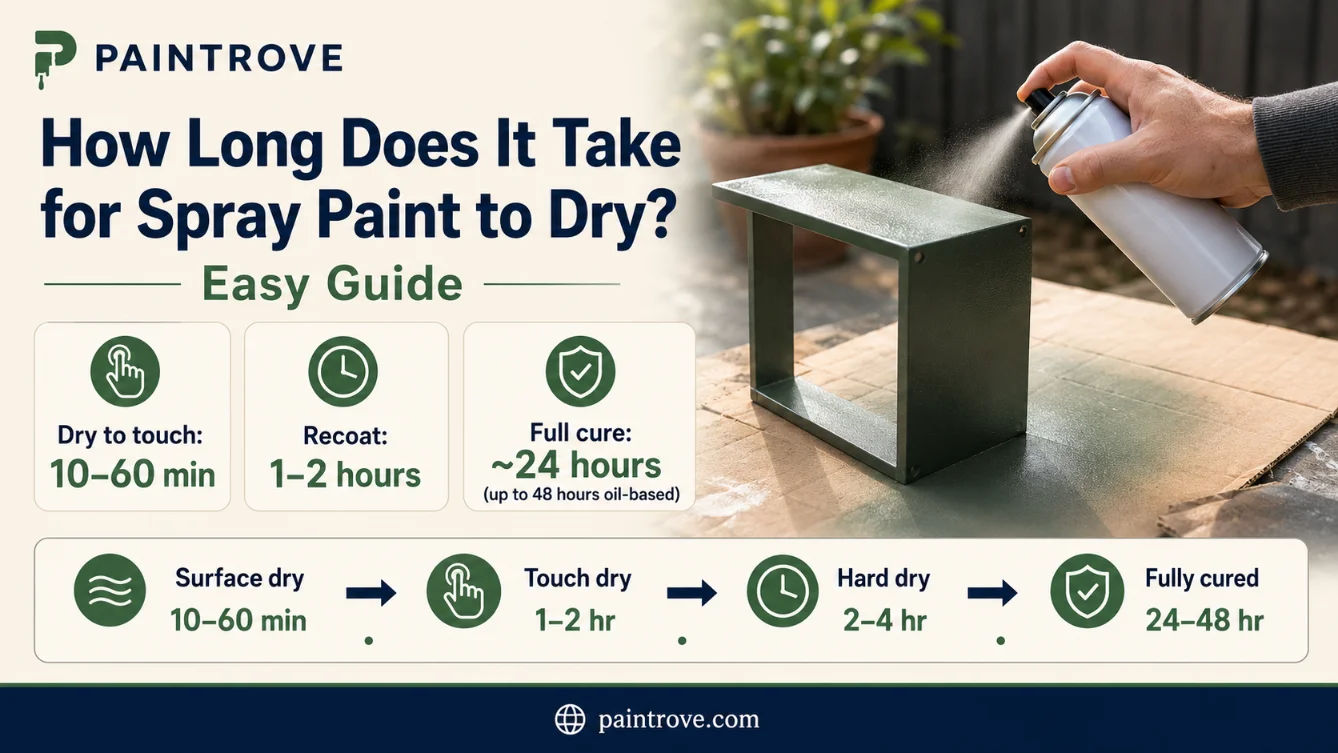
How Long Does Spray Paint Take to Dry depends on the paint type, the surface, and the weather, but here’s the quick answer: most spray paint feels dry to the touch in 10 to 60 minutes, is ready to recoat in 1 to 2 hours, and fully cures in about 24 hours. Oil-based and enamel formulas take longer, sometimes up to 48 hours to cure.
If you just finished spraying a project and you’re staring at it wondering when you can touch it, you’re in the right place. Touching too soon is the number one way to ruin a smooth finish. This guide breaks down real dry times by paint type and surface, explains the difference between dry and cured, and shows how to speed things up safely.
Let’s get your project done right.
Quick Answer: Spray Paint Dry Times at a Glance
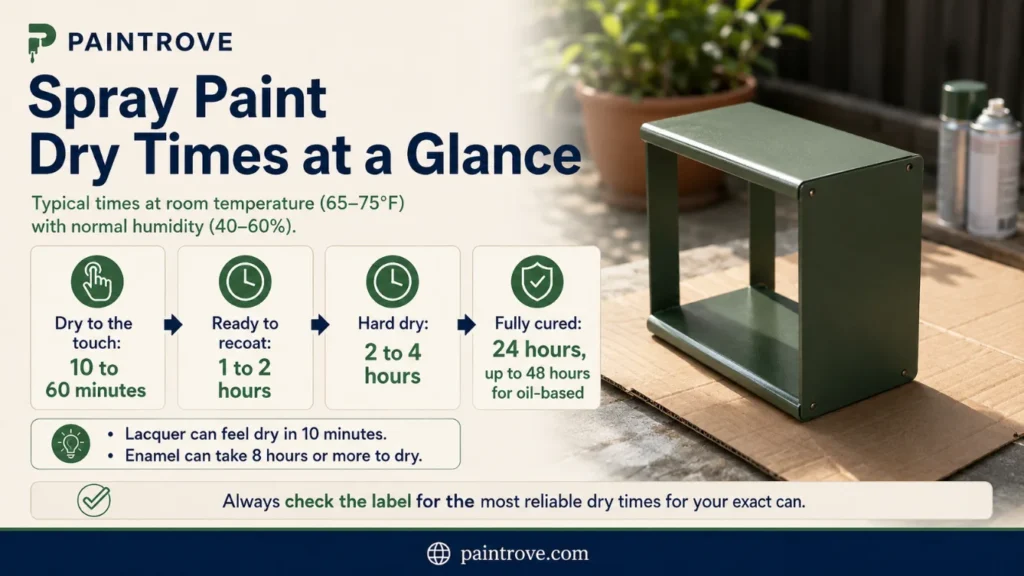
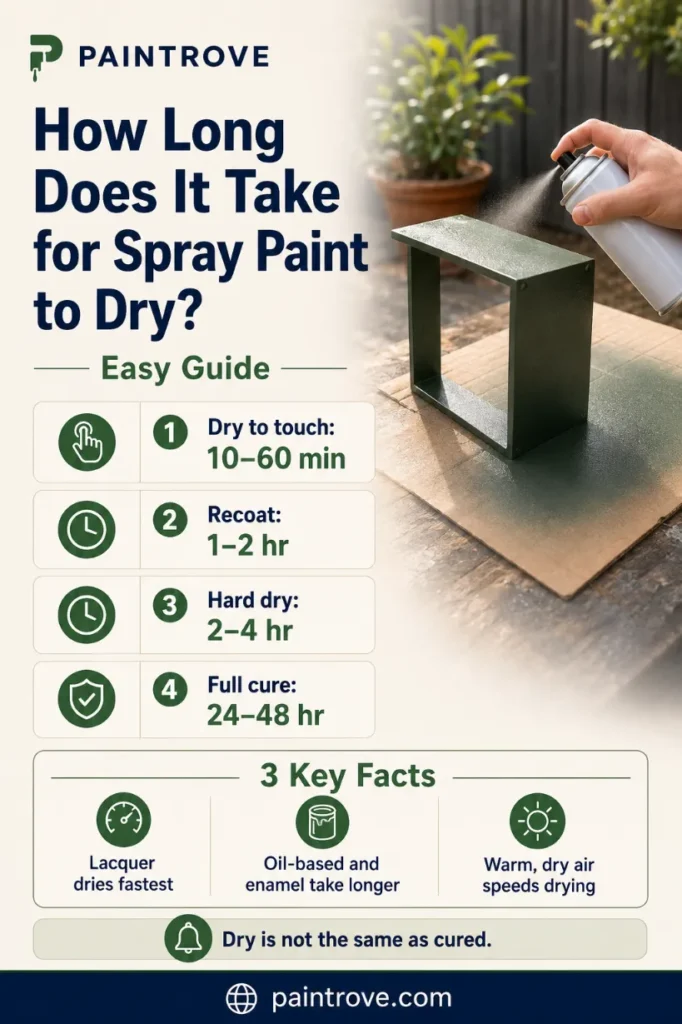
Short on time? Here are the typical numbers at room temperature (65–75°F) with normal humidity (40–60%).
- Dry to the touch: 10 to 60 minutes
- Ready to recoat: 1 to 2 hours
- Hard dry (handle carefully): 2 to 4 hours
- Fully cured (normal use): 24 hours, up to 48 hours for oil-based
Fast formulas like lacquer can feel dry in 10 minutes. Slow ones like enamel can take 8 hours or more to dry. Always check the label, since it gives the most reliable numbers for your exact can.
Drying Time vs. Curing Time: The Difference That Matters Most
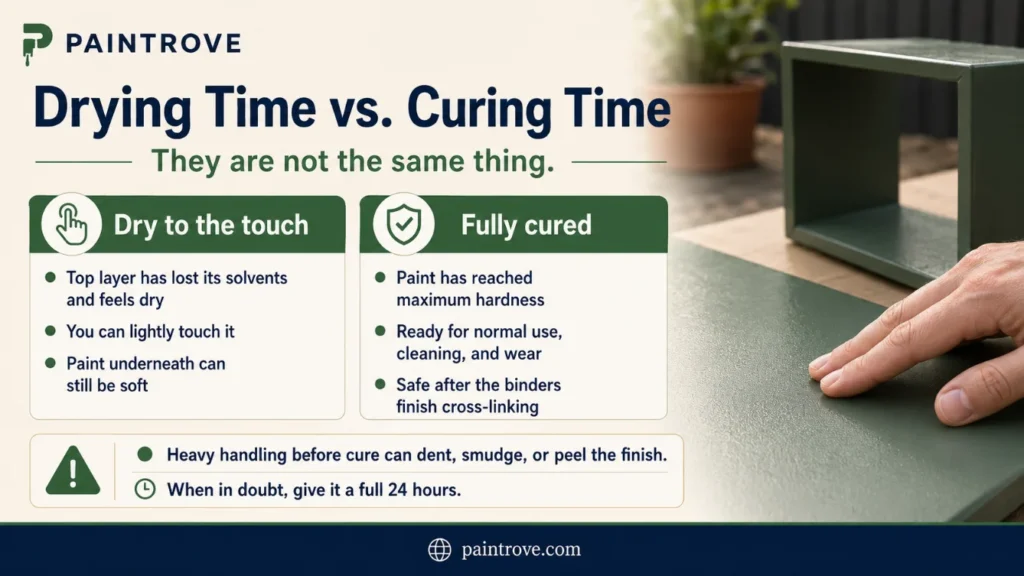
This is the part most people skip, and it causes the most ruined finishes. Drying and curing are not the same thing.
Dry to the touch means the top layer has lost its solvents and feels dry. You can lightly touch it without paint coming off. But the paint underneath can still be soft.
Fully cured means the paint has reached its maximum hardness. The binders have finished cross-linking, and the coating is ready for normal use, cleaning, and wear.
Here’s why it matters: you can often recoat after a few minutes, but stacking objects, scrubbing, or heavy handling before the paint cures will dent, smudge, or peel your finish. When in doubt, give it a full 24 hours.
This same dry-versus-cure gap applies to brush-on paint too. Our guide on how long paint takes to dry covers the bigger picture for walls and trim.
The 4 Stages of Spray Paint Drying
Spray paint dries in stages, not all at once. Knowing the stage you’re in tells you what’s safe to do.
- Surface dry. The outer skin feels dry, but it’s fragile. Do not touch yet.
- Touch dry. You can lightly touch it without leaving a mark. Still not safe to stack or use.
- Hard dry. The paint feels firm. You can handle the object carefully.
- Fully cured. The paint is at full strength. Safe for regular use.
Most spray paint reaches hard dry in 2 to 4 hours and full cure in about 24 hours. Oil-based paints can stretch the cure stage to 48 hours.
How Long Does It Take for Spray Paint to Dry by Paint Type
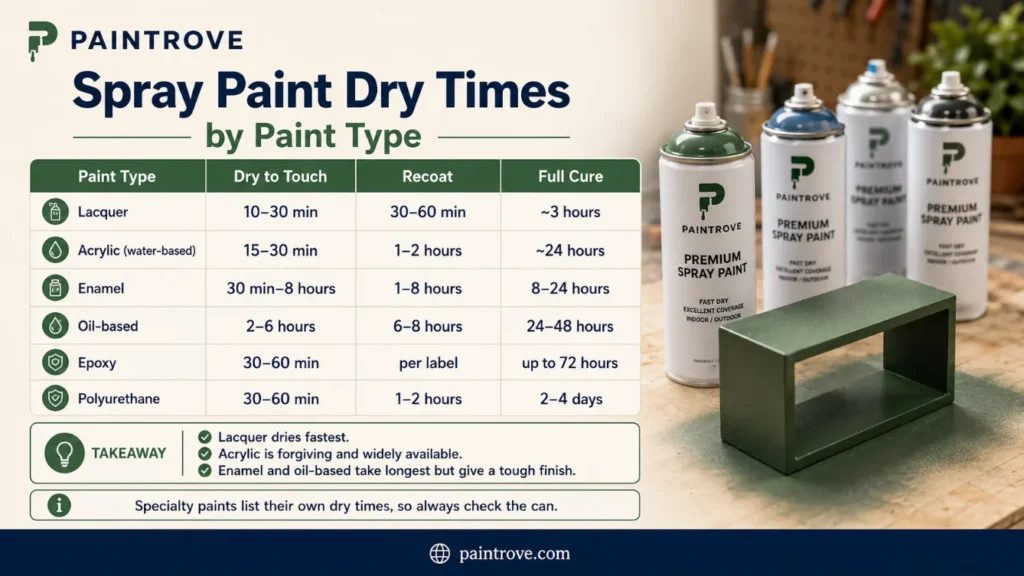
The paint formula matters most of all. Here’s a breakdown of common spray paint types and their typical dry times.
| Paint Type | Dry to Touch | Recoat | Full Cure |
|---|---|---|---|
| Lacquer | 10–30 min | 30–60 min | ~3 hours |
| Acrylic (water-based) | 15–30 min | 1–2 hours | ~24 hours |
| Enamel | 30 min–8 hours | 1–8 hours | 8–24 hours |
| Oil-based | 2–6 hours | 6–8 hours | 24–48 hours |
| Epoxy | 30–60 min | per label | up to 72 hours |
| Polyurethane | 30–60 min | 1–2 hours | 2–4 days |
A few takeaways:
- Lacquer dries fastest. It hardens as it dries, with no long cure stage.
- Acrylic is the most forgiving for beginners and the most widely available. Brands like Krylon and Rust-Oleum offer fast-drying acrylic cans.
- Enamel and oil-based take the longest but give a tough, durable finish.
- Specialty paints from makers like Montana Cans, Liquitex, and Dupli-Color list their own dry times, so check the can.
Spray Paint Dry Times by Surface
The material you’re painting changes the math. Porous surfaces soak up paint and dry faster. Smooth, non-porous surfaces hold solvents longer.
| Surface | Dry to Touch | Full Cure | Tip |
|---|---|---|---|
| Plastic | 10–30 min | 24–48 hours | Use a plastic primer for adhesion |
| Metal | 15–30 min | 24–48 hours | Prime to prevent rust and speed drying |
| Glass | 15–30 min | ~24 hours | Handle gently; very smooth surface |
| Cardboard | ~30 min or less | a few hours | Light and absorbent |
| Wood | 1–2 hours | 24–72 hours | Sand and prime; porous surface |
| Concrete | 30–60 min | ~48 hours | Porous texture absorbs solvent |
| Fabric | dry-ish in 1 hour | 24–48 hours | Use fabric-specific spray paint |
Spray Paint on Wood
Wood is porous, so it pulls paint in and usually feels dry to the touch in 1 to 2 hours. Full cure can take up to 72 hours. Sand lightly and prime first for a smoother finish and faster, more even drying.
Spray Paint on Metal
Metal is smooth and non-porous, so paint sits on top and needs 15 to 30 minutes to feel dry, with full curing in 24 to 48 hours. A metal-specific primer improves adhesion and helps it dry.
Spray Paint on Plastic
Plastic dries fast on the surface, often in 10 to 30 minutes, but give it 24 to 48 hours to fully cure before regular use. Clean it well and use a plastic primer, since plastic is hard for paint to grip.
What Affects Spray Paint Drying Time
Several conditions speed up or slow down drying. Control these and you control your dry time.
Temperature. Warm is better. Aim for 60°F to 85°F. Cold air thickens the paint and stretches drying into hours or even days. Never spray below freezing (32°F), where paint can freeze. Too hot, though, and the paint can dry too fast and crack.
Humidity. Dry air helps; moist air hurts. The sweet spot is 40% to 50% humidity. Above 85%, solvents can’t evaporate, leaving a tacky finish or a cloudy “blushing” effect.
Coat thickness. Thin coats dry fast and even. Thick coats trap solvents underneath, so the top skins over while the layer below stays soft and sticky.
Air circulation. Moving air carries solvents away. Good ventilation or a gentle fan speeds drying. Stagnant air slows it down.
Surface and prep. Porous, well-prepped surfaces dry faster than smooth, dirty ones. A quick clean, light sand, and primer pay off.
How to Make Spray Paint Dry Faster
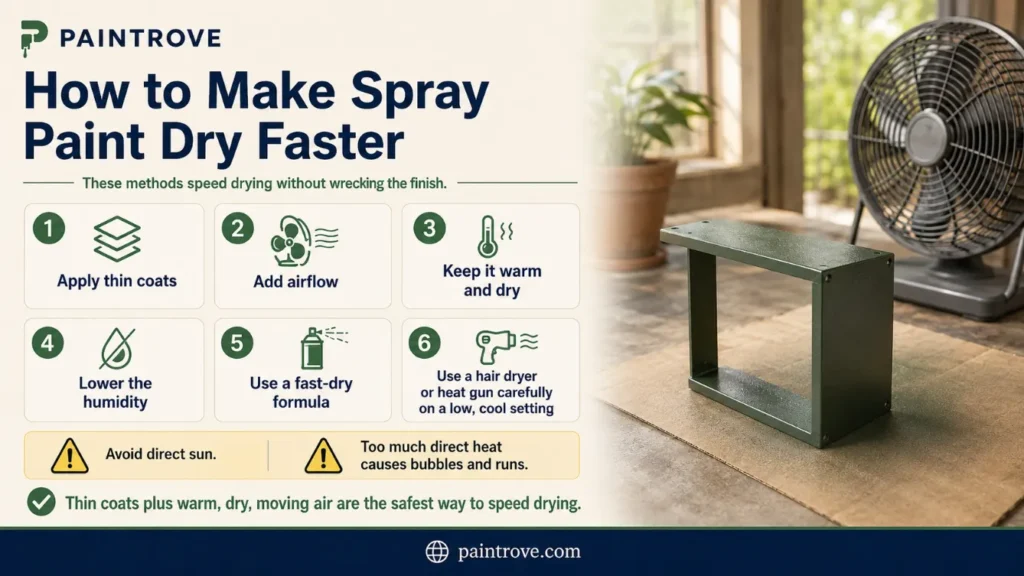
On a deadline? These methods speed drying without wrecking the finish.
- Apply thin coats. This is the single most effective trick. Several light coats dry faster and more evenly than one heavy coat, and they prevent drips.
- Add airflow. Set up a fan near the project, aimed past it rather than straight at it, so you boost circulation without blowing dust onto wet paint.
- Keep it warm and dry. A warm room around 70°F with low humidity dries paint quickly. A space heater can help in cold weather.
- Lower the humidity. Run a dehumidifier or move the project to a drier spot.
- Use a fast-dry formula. If time is tight, choose a quick-drying acrylic or lacquer spray paint.
- Take it outside on a nice day. Moderate temperature, low humidity, and a light breeze are ideal. Avoid direct sun, which dries the surface unevenly and can cause cracking.
A hair dryer or heat gun on a low, cool setting can nudge things along, but keep it moving and at a distance. Too much direct heat causes bubbles and runs.
Common Drying Problems and How to Fix Them
Even careful painters hit snags. Here are the usual ones and what to do.
Paint stays sticky or tacky. Usually caused by thick coats, high humidity, or cold air. Move the item somewhere warm and dry with airflow and give it more time. A badly over-thick coat may need to be sanded and redone.
Wrinkled or cracked finish. This comes from recoating too soon or too much heat. Let it cure fully, then sand smooth and repaint with thin coats.
Cloudy or “blushing” finish. Trapped moisture from high humidity, common with lacquer. Wait for drier conditions, then apply a fresh light coat.
Drips and runs. Too much paint at once. Let it dry fully, sand the drip flat, and recoat lightly.
Mistakes to Avoid When Spray Painting
A few simple slip-ups cause most finish problems. Steer clear of these.
- Don’t touch it too soon. Surface dry is not cured. Wait for the right stage before handling.
- Don’t spray thick coats. They stay tacky and drip. Thin and even wins.
- Don’t recoat too early. Rushing the next coat ruins adhesion and can wrinkle the finish.
- Don’t use direct high heat or full sun. It causes runs, bubbles, and cracks.
- Don’t paint in cold or very humid conditions. Both stretch dry time and ruin finishes.
- Don’t skip surface prep. Clean, sand, and prime for faster drying and better adhesion.
If you do get overspray where it shouldn’t be, our guides on removing paint from carpet and getting paint out of clothes walk you through the cleanup. And to keep leftover cans usable for touch-ups, see how long paint lasts.
FAQs
How long does it take for spray paint to dry?
Most spray paint feels dry to the touch in 10 to 60 minutes, is ready to recoat in 1 to 2 hours, and fully cures in about 24 hours. Fast formulas like lacquer dry in as little as 10 minutes, while oil-based and enamel paints can take up to 48 hours to cure. Always check the can’s label.
How long spray paint dry between coats?
For most acrylic and enamel spray paints, wait about 15 to 30 minutes between thin coats, or 1 to 2 hours to be safe. Recoating too soon can wrinkle or lift the finish. The label gives the exact recoat window for your product, so follow it when you can.
Does spray paint dry faster in heat or cold?
Spray paint dries faster in warm, dry conditions, ideally 60°F to 85°F. Cold air thickens the paint and slows drying, sometimes by hours or days. Never spray below freezing. Too much heat or direct sun, though, can dry the surface too fast and cause cracking.
How long does spray paint take to dry on metal?
On metal, spray paint usually feels dry to the touch in 15 to 30 minutes and fully cures in 24 to 48 hours. Metal is smooth and non-porous, so paint sits on the surface. Using a metal-specific primer improves adhesion and helps the paint dry and last longer.
How long does spray paint take to dry on plastic?
Spray paint dries to the touch on plastic in about 10 to 30 minutes, but it needs 24 to 48 hours to fully cure before regular use. Plastic is smooth and hard to grip, so clean it well and use a plastic primer for the best adhesion and even drying.
Why is my spray paint still tacky after hours?
Tacky spray paint is usually caused by coats that were too thick, high humidity, or cold temperatures. The solvents can’t escape, so the paint stays soft. Move the item to a warm, dry, well-ventilated spot and give it more time. A very over-thick coat may need sanding and a redo.
Can you speed up spray paint drying?
Yes. Apply thin coats, add gentle airflow with a fan, keep the area warm (around 70°F) and dry, lower humidity with a dehumidifier, and choose a fast-dry formula. A hair dryer or heat gun on a low cool setting can help if kept moving and at a distance. Avoid direct high heat.
How long until spray paint is fully cured?
Most spray paint fully cures in about 24 hours, though oil-based and some specialty paints can take 48 to 72 hours. Curing means the paint has reached full hardness and is safe for normal use, cleaning, and wear. Wait for full cure before stacking or heavily handling painted items.
Final Thoughts
So, how long does it take for spray paint to dry? Plan on 10 to 60 minutes for a dry-to-touch surface, 1 to 2 hours before recoating, and a full 24 hours before normal use, with oil-based and enamel paints needing more. The biggest levers are paint type, surface, temperature, humidity, and how thin you spray.
Work in thin coats, keep the air warm, dry, and moving, and respect the difference between dry and cured. Do that, and your spray paint project will come out smooth, durable, and looking exactly how you pictured it.
Related Painting Guides
- How Long Does Paint Take to Dry
- How Long Does Paint Last
- How to Get Paint Out of Carpet
- How to Get Acrylic Paint Out of Clothes
- How to Get Paint Out of Clothes
- How to Clean Paint Brushes
- How to Paint a Room
- How to Paint a Ceiling
- How to Fix Chipped Paint on a Wall
- Can You Paint Over Wallpaper
- Can You Paint Vinyl Siding
- Can You Paint Tile
- Can You Use Exterior Paint Inside
- Can You Paint Pressure Treated Wood