How to Paint Aluminum Siding: Proven Easy Steps
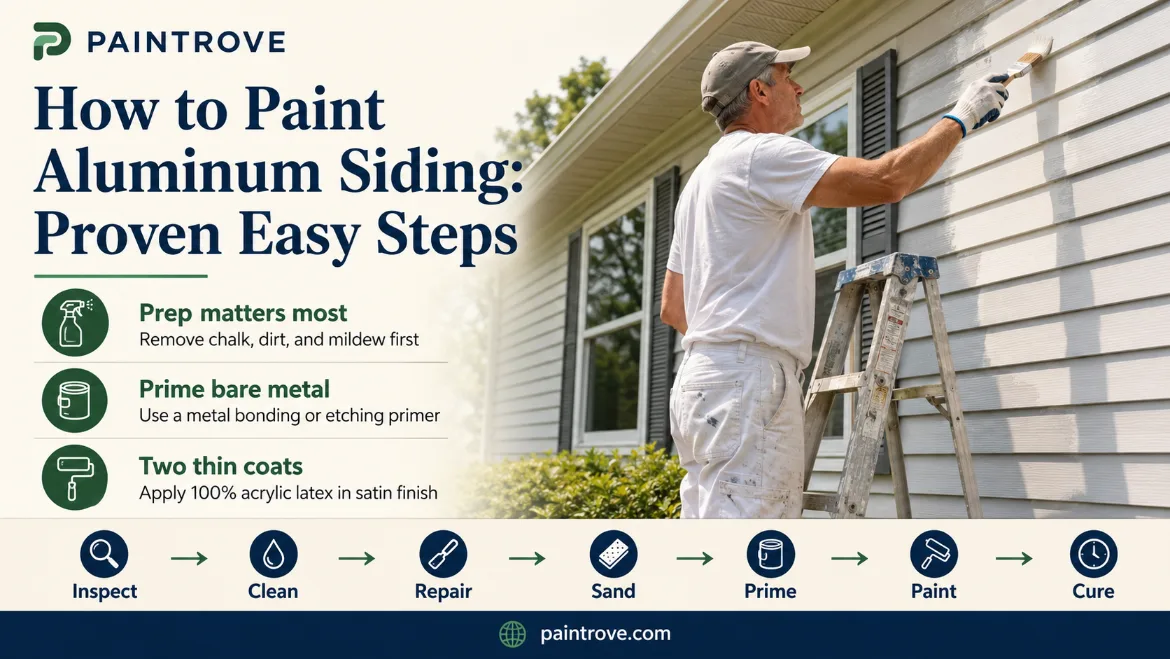
Learning how to paint aluminum siding can refresh your home’s whole exterior for a fraction of the cost of new siding. The good news: aluminum takes paint better than almost any other siding material. The key is prep. Clean off the chalky residue, prime any bare metal, and roll or spray on two thin coats of quality acrylic latex.
Aluminum siding fades, chalks, and shows bare spots after years of sun and rain. Instead of replacing it for $10,000 or more, a careful paint job can add another 10 to 15 years of life and curb appeal.
This guide walks you through every step, from inspecting and cleaning to priming and painting, plus the best paint to use and how to make it last.
Quick Answer: How to Paint Aluminum Siding
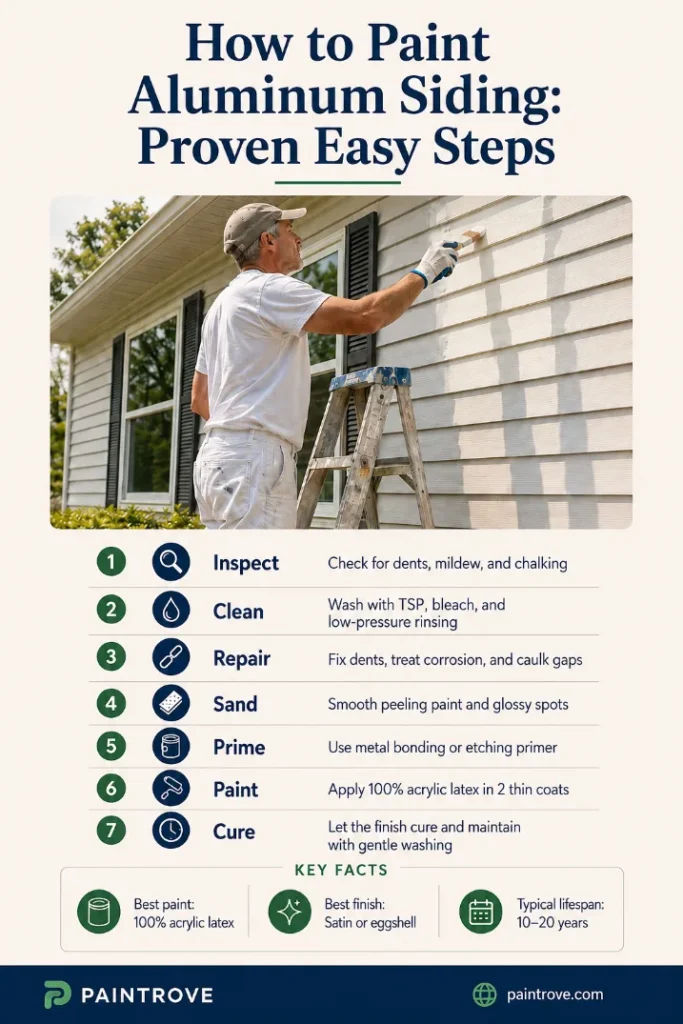
Short on time? Here’s the process in seven steps.
- Inspect the siding for dents, mildew, and chalking (rub it with a dark cloth to check).
- Test for lead if your home predates 1978.
- Clean with a TSP-and-bleach solution and a downward-angled power wash to remove chalk and grime.
- Repair and scrape dents and peeling paint, then lightly sand glossy or rough spots.
- Prime bare metal with a metal bonding or etching primer. Let it cure (about 4 hours).
- Paint two thin coats of 100% acrylic latex in a satin finish, working in the direction of the siding.
- Let it cure and maintain it with occasional washing.
Read on for the full detail on each step.
Can You Paint Aluminum Siding?
Yes, you can absolutely paint aluminum siding, and it’s one of the easiest siding types to repaint. Aluminum holds paint well, doesn’t rot or crack, and the prep is often simpler than wood.
When the original factory finish wears down, it fades and develops a chalky film, with bare metal sometimes peeking through. That’s the perfect time to repaint. A fresh coat restores the look and adds a protective layer against the weather.
Painting is also far cheaper than replacing. Expect to pay roughly $1.50 to $3.50 per square foot to paint, versus $10,000 to $25,000 to install new siding. As long as your siding is structurally sound, painting is the smart, budget-friendly choice.
Why Aluminum Siding Needs Special Prep
Aluminum has two quirks that shape the whole job: chalking and a slick surface.
Chalking is the powdery residue that forms as the old paint breaks down in the sun. If you don’t wash it off completely, new paint won’t stick to it and will peel. Rub the siding with a dark cloth. If it comes away dusty and light-colored, you have chalking to clean.
A smooth, slick surface means paint needs help gripping, especially on any bare metal. That’s why priming exposed aluminum is essential. Skip these steps and even the best paint fails fast.
Get the prep right and aluminum rewards you with a smooth, long-lasting finish.
Tools and Materials You’ll Need
Gather these before you start.
- Lead test kit (for homes built before 1978)
- TSP (trisodium phosphate) and household bleach
- Power washer with a low-pressure tip, or a garden hose and scrub brush
- Paint scraper and 80 to 120-grit sandpaper
- Metal bonding or etching primer
- 100% acrylic latex exterior paint (satin or low-gloss)
- Airless sprayer, or rollers and brushes (3-inch siding brush, 2-inch angled sash brush)
- Painter’s tape and plastic sheeting
- Ladder, gloves, goggles, and a mask
- Caulk for gaps around windows and doors
- Drop cloths to protect plants
For latex paint, choose nylon or polyester brush bristles. Natural bristles soak up water from latex and go limp.
How to Paint Aluminum Siding, Step by Step
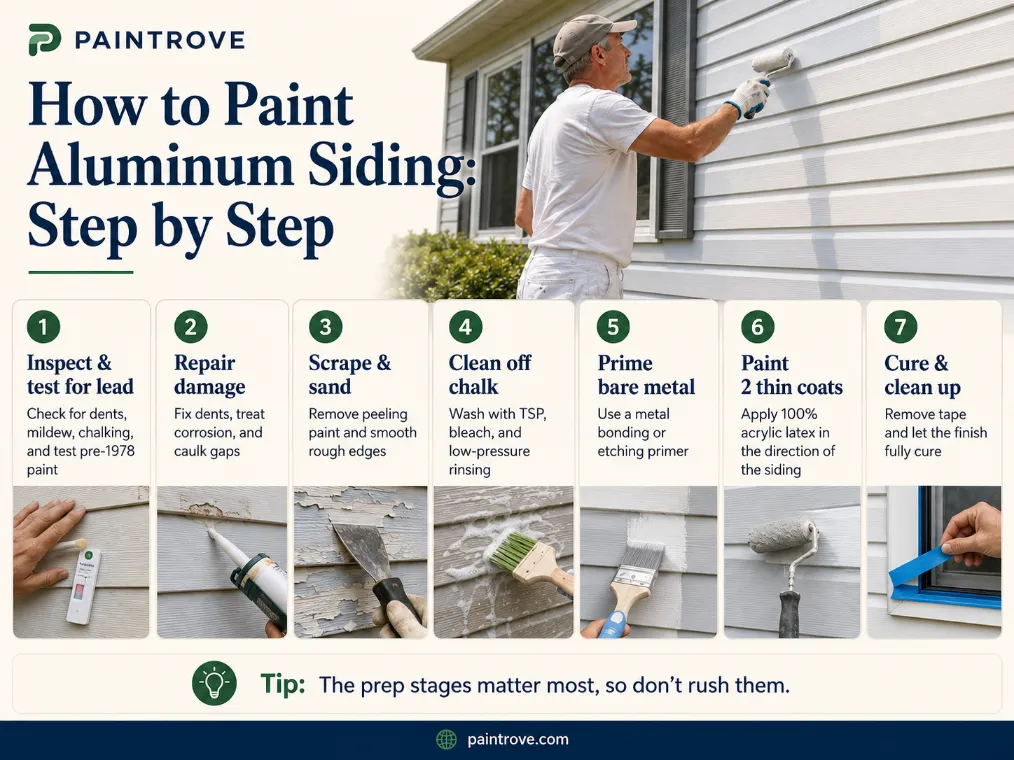
Follow these steps in order. The prep stages matter most, so don’t rush them.
Step 1: Inspect and test for lead
Walk the whole exterior. Look for dents, loose panels, scratches, mildew (dark streaks), and chalking. If your home was built before 1978, test the old paint with a lead kit. If lead is present, stop and call a licensed lead abatement specialist before doing any sanding or scraping.
Step 2: Repair damage
Fix small dents with filler and treat any corrosion or rust before painting. Bob Vila’s method for badly damaged panels is to cut out the section with tin snips and patch it with a piece 3 inches larger, sealed with silicone caulk. Re-caulk gaps around windows and doors with exterior caulk.
Step 3: Remove peeling paint and sand
Scrape off all flaking and peeling paint with a paint scraper. Sand the edges of those spots smooth with 80 to 120-grit paper so they blend in. A light sanding of glossy areas also gives the primer something to grip. Don’t scrub too aggressively, which can scratch the aluminum.
Step 4: Clean off chalk and grime
This is the most important step. Mix a cleaning solution of TSP, a little bleach, and water (about 1/4 cup TSP per gallon). Wear gloves and goggles, since TSP is caustic. Scrub the siding, or power wash on a low-pressure setting.
Always angle the spray straight at the siding or slightly downward. Never spray upward, which forces water behind the panels. Work in sections from the bottom up, then rinse. Let the siding dry completely, which can take three to four days after washing.
Step 5: Prime bare metal
Apply a metal bonding or etching primer to any bare metal, corroded spots, or the entire surface if the old paint is failing. Brush or spray it on in the direction of the siding. Let it cure for at least 4 hours, or per the label. If one coat looks blotchy on old, thirsty siding, add a second.
Step 6: Paint two thin coats
Use 100% acrylic latex exterior paint. It flexes as the metal expands and contracts, so it resists cracking and fading. A satin or low-gloss finish hides surface irregularities best.
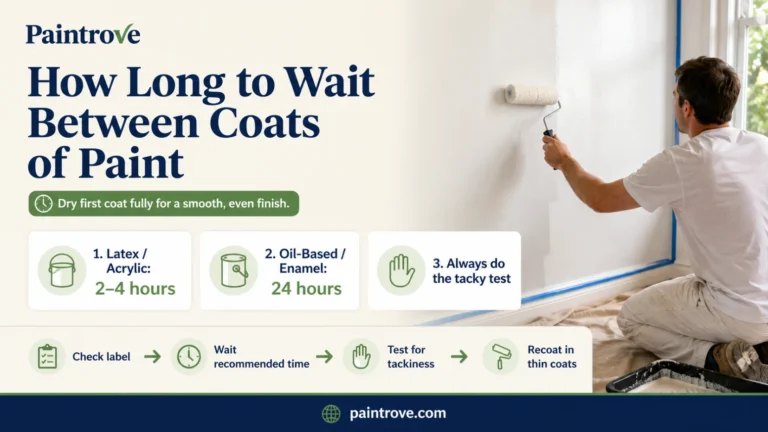
Apply with an airless sprayer for the smoothest finish, or a roller and brush for smaller areas and trim. Work in the direction of the siding, watch for drips, and apply two thin coats rather than one thick one. Let the first coat dry before the second.
Step 7: Cure and clean up
Remove tape and plastic promptly so they don’t stick. Let the paint cure fully before any rain exposure. Then keep up the finish with an occasional gentle wash.
Best Paint for Aluminum Siding
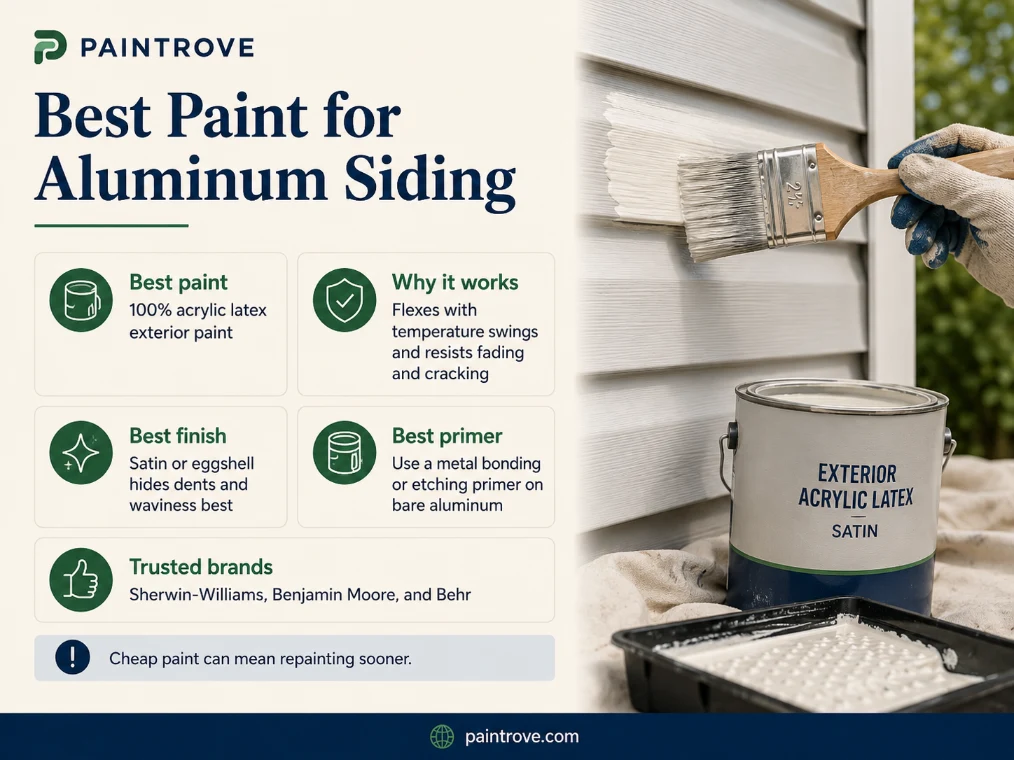
The best paint for aluminum siding is 100% acrylic latex exterior paint. You don’t need expensive solvent-based metal paint. Water-based acrylic latex flexes with temperature swings, resists fading and cracking, and lets you use a brush or roller.
Choose a premium product from a trusted brand like Sherwin-Williams, Benjamin Moore, or Behr. There’s no sense saving a few dollars on cheap paint if it means repainting in a few years.
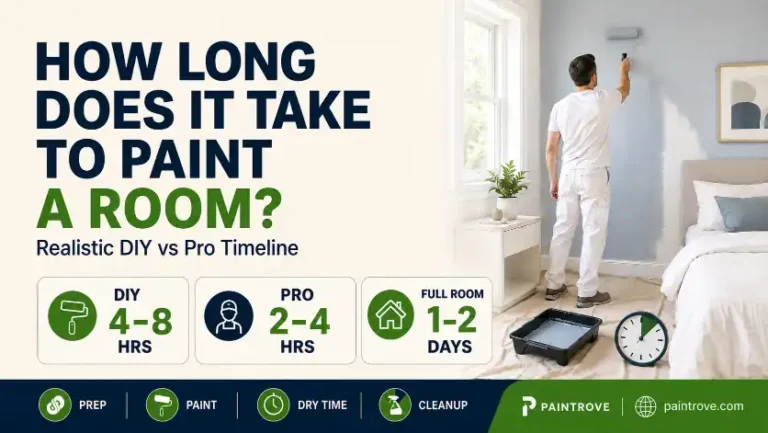
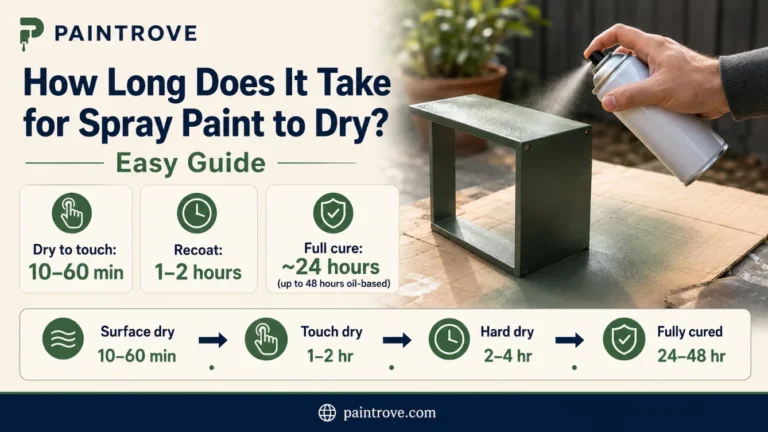
For the finish, go with satin or eggshell. Lower-gloss finishes hide small dents and waviness far better than glossy paint, which highlights every flaw. For the primer, use one made for metal or bare aluminum, not a generic wall primer. Since exterior paint timing matters, our guide on how long paint takes to dry helps you plan your coats around the weather.
Best Colors for Aluminum Siding
A new color is half the fun. Popular choices include:
- Neutrals like gray, beige, and taupe (timeless and versatile)
- Earth tones like olive green and terracotta (blend with nature)
- Bold tones like navy blue and charcoal (modern curb appeal)
- Trim contrast in white or black to make the main color pop
Lighter colors also reflect heat and hide chalk-related fading better over time. Whatever you pick, a satin sheen keeps it looking even.
Brush, Roller, or Sprayer: Which Should You Use?
You can paint aluminum siding three ways, and many jobs combine them.
Sprayer. An airless sprayer gives the smoothest, fastest finish and preserves the siding’s flat look. It’s the pro favorite for large areas, but it requires masking everything nearby and some practice to avoid drips.
Roller. A roller covers broad sections well and is easy for beginners. Back-roll to work the paint into the surface evenly.
Brush. Brushes handle cutting in around windows, trim, and tight spots. A 3-inch siding brush covers flat areas; a 2-inch angled sash brush handles edges.
For most DIYers, a roller for the panels plus a brush for the details gives great results without spray equipment.
How Long Does Painted Aluminum Siding Last?
Done right, a quality paint job on aluminum siding lasts a long time. Most homeowners get 10 to 20 years, and a well-maintained finish can last even longer. Experts recommend repainting roughly every 6 to 10 years to keep the protection fresh.
What makes it last? Thorough prep (especially removing all chalk), priming bare metal, quality acrylic latex paint, and two thin coats. Skimp on any of those and you’ll be back on the ladder much sooner.
Painting Aluminum Siding vs. Replacing It
Wondering whether to paint or replace? Here’s the trade-off.
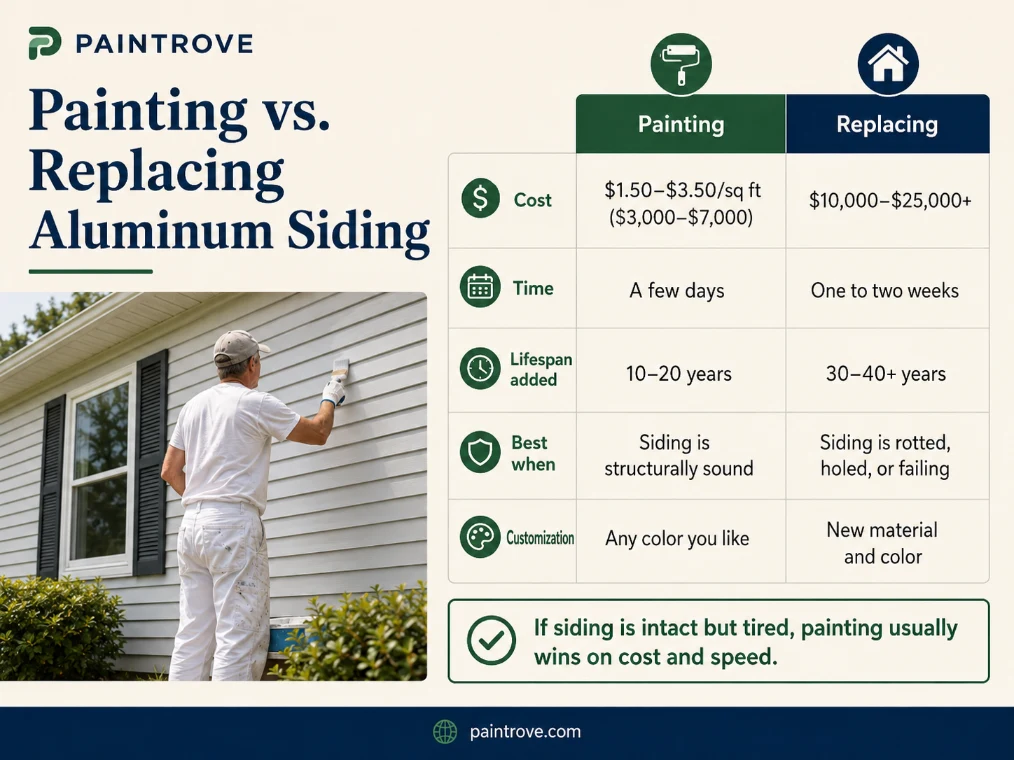
| Factor | Painting | Replacing |
|---|---|---|
| Cost | $1.50–$3.50/sq ft ($3,000–$7,000) | $10,000–$25,000+ |
| Time | A few days | One to two weeks |
| Lifespan added | 10–20 years | 30–40+ years |
| Best when | Siding is structurally sound | Siding is rotted, holed, or failing |
| Customization | Any color you like | New material and color |
If your aluminum siding is intact and just looks tired, painting wins on cost and speed. If it’s badly damaged, dented beyond repair, or failing, replacement may be the better long-term move.
DIY vs. Hiring a Professional
DIY saves money, mostly the labor cost. It’s doable if you’re comfortable on a ladder and willing to put in the prep work. Expect it to take several days and a lot of scrubbing.
Hiring a pro costs more but gets you a smooth, even finish, the right equipment, and no ladder risk on a two-story home. Pros also handle the cleaning, repairs, and spraying that make the biggest difference.
DIY suits a single-story home in good shape. For tall walls, extensive chalking, or a flawless sprayed finish, a professional is often worth it.
Mistakes to Avoid
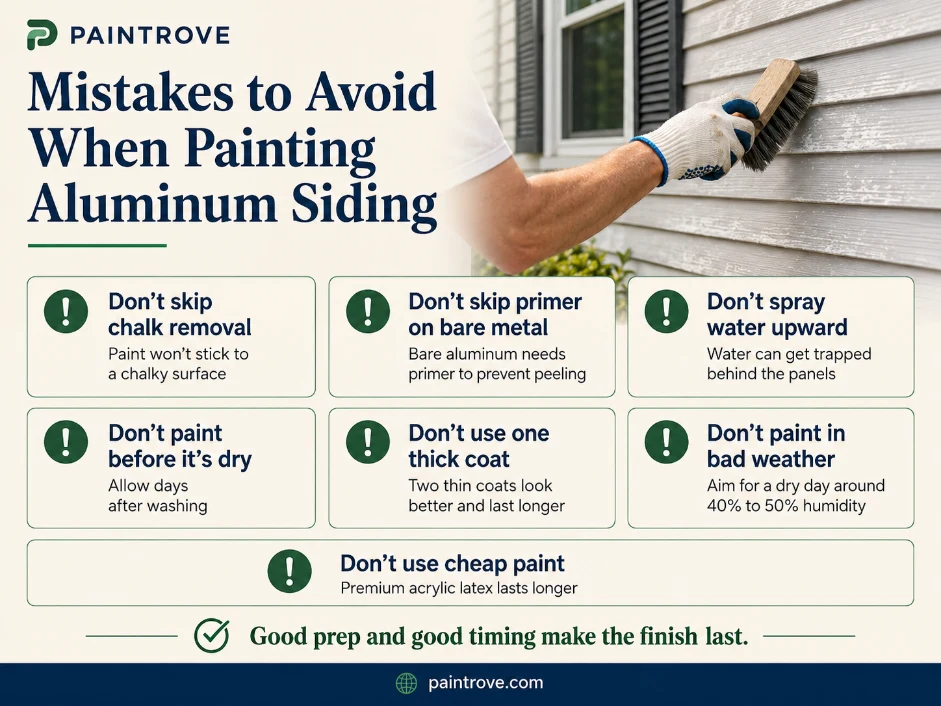
Steer clear of these and your finish will last.
- Don’t skip the chalk removal. Paint won’t stick to a chalky surface.
- Don’t paint over bare metal without primer. It will peel.
- Don’t spray water upward. It gets trapped behind the panels.
- Don’t paint before the siding is fully dry. Allow days after washing.
- Don’t use one thick coat. Two thin coats look better and last longer.
- Don’t paint in bad weather. Aim for a dry day around 40% to 50% humidity, not too hot.
- Don’t use cheap paint. Premium acrylic latex pays off in years of durability.
FAQs
Can you paint aluminum siding?
Yes, aluminum siding paints very well and is one of the easiest siding types to repaint. After cleaning off chalk, repairing damage, and priming bare metal, you apply two thin coats of acrylic latex paint. A proper job can last 10 to 20 years and costs far less than replacing the siding.
Do you need to prime aluminum siding before painting?
You need to prime any bare metal, corroded, or pitted areas with a metal bonding or etching primer so the paint adheres and won’t peel. If the existing paint is fully intact and just needs a refresh, you may be able to skip priming. When in doubt, prime, since it’s insurance against future peeling.
What is the best paint for aluminum siding?
The best paint for aluminum siding is 100% acrylic latex exterior paint. It flexes as the metal expands and contracts, resisting cracks and fading, and it can be brushed, rolled, or sprayed. Choose a premium product from a brand like Sherwin-Williams, Behr, or Benjamin Moore, and pick a satin or eggshell finish.
How do you clean aluminum siding before painting?
Mix a solution of TSP, a little bleach, and water (about 1/4 cup TSP per gallon) and scrub the siding, or power wash on low pressure. This removes chalk, dirt, and mildew. Always angle the spray straight or downward to avoid forcing water behind the panels, then rinse and let it dry for several days.
What happens if you don’t remove chalking before painting?
If you paint over chalking, the new paint bonds to the loose powdery residue instead of the siding. That causes the fresh coat to peel and flake within months. Removing all chalk with a TSP wash or power wash is the single most important step for a durable aluminum siding paint job.
How long does painted aluminum siding last?
A quality paint job on aluminum siding typically lasts 10 to 20 years, and longer with good maintenance. The key factors are thorough cleaning, priming bare metal, and using premium acrylic latex paint. Most experts suggest repainting every 6 to 10 years to keep the protective finish in good shape.
Can you paint aluminum siding with a sprayer?
Yes, an airless sprayer is the preferred method for the smoothest, fastest finish and it preserves the siding’s flat look. You’ll need to mask off windows, doors, and landscaping first. Many DIYers use a roller for the flat panels and a brush for cutting in around trim if they don’t have a sprayer.
How much does it cost to paint aluminum siding?
Painting aluminum siding costs about $1.50 to $3.50 per square foot. For a 2,000 square foot home, that’s roughly $3,000 to $7,000, depending on the siding’s condition and whether you DIY or hire a pro. That’s far cheaper than full replacement, which can run $10,000 to $25,000 or more.
Final Thoughts
Now that you know how to paint aluminum siding, that faded, chalky exterior doesn’t have to mean a costly replacement. The whole job comes down to prep: inspect and repair, test for lead on older homes, wash off every bit of chalk, and prime any bare metal before you paint. Then two thin coats of quality acrylic latex in a satin finish do the rest.
Take your time on the cleaning and priming, work in the direction of the siding, and pick a premium paint. Do that, and your aluminum siding will look like new and stay protected for a decade or more.