Can You Paint a Toilet? Proven Easy DIY Guide
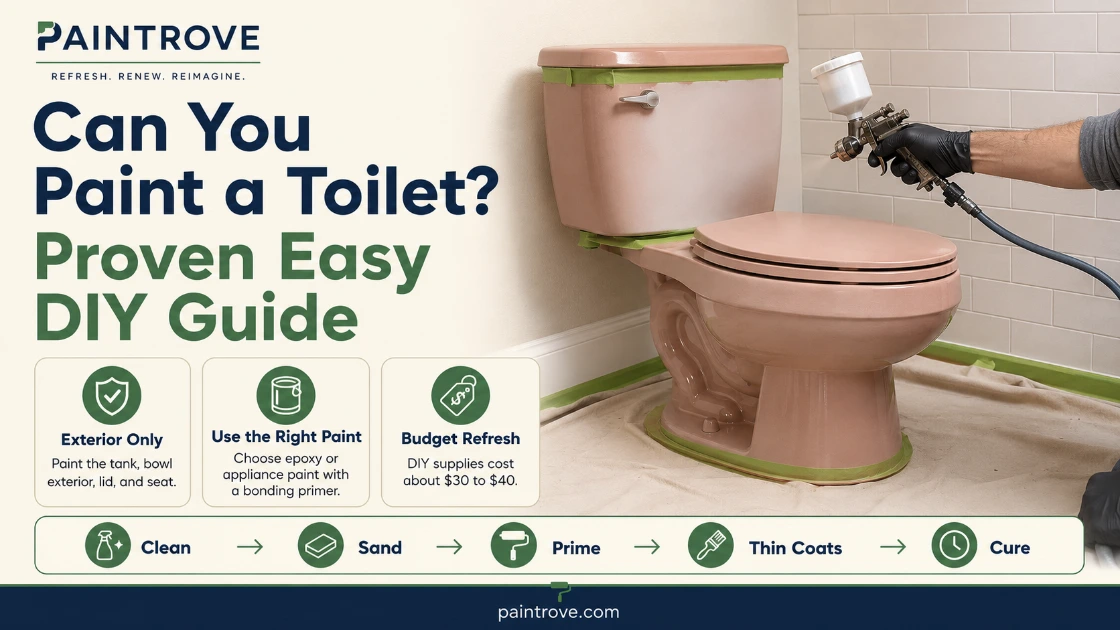
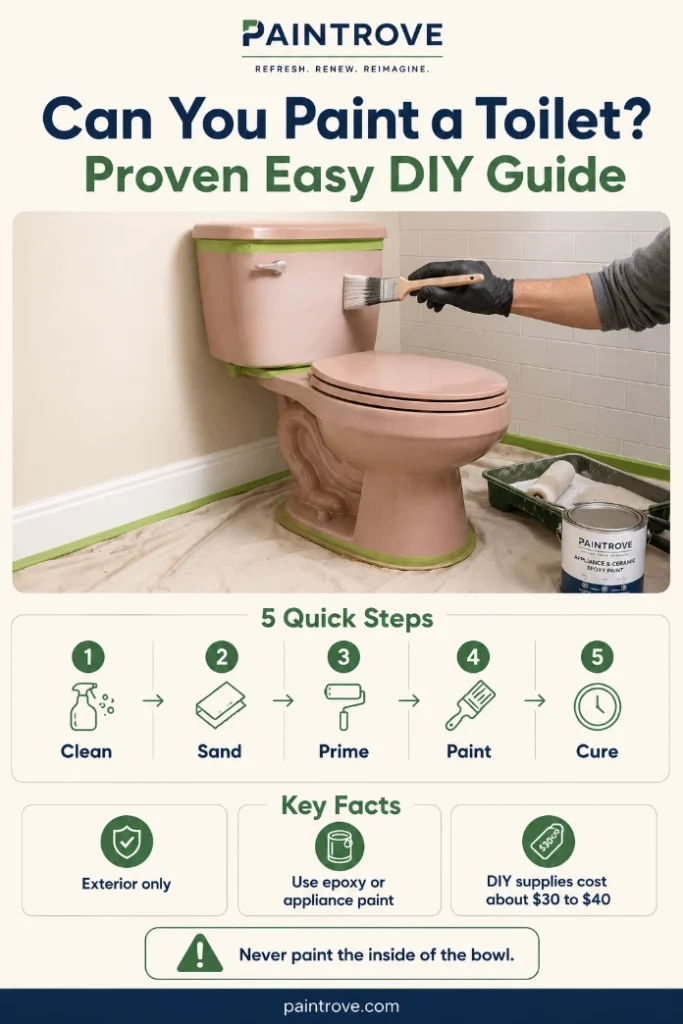
Can you paint a toilet? Yes, you can paint the outside of a toilet, and it’s a budget-friendly way to update an outdated color without buying a new one. The catch: you can only paint the exterior surfaces. Never paint the inside of the bowl, where water and waste would quickly ruin the finish and cause clogs.
Maybe you’ve got a dated pink, avocado, or “spaceship gray” toilet that clashes with your bathroom. Replacing it costs hundreds plus installation. A careful paint job costs around $30 to $40 in supplies and a weekend of work.
This guide covers exactly how to do it: the prep that makes paint stick to slick ceramic, the right paint to use, which parts you can and can’t paint, and how long it lasts.
Quick Answer: Can You Paint a Toilet?
Here’s the fast version.
- Yes, you can paint a toilet’s exterior: the tank, the outside of the bowl, the lid, and the seat.
- Never paint the inside of the bowl. Paint there peels fast and can cause blockages.
- The process: clean thoroughly, sand to dull the shine, prime with an epoxy or appliance primer, then apply epoxy or appliance spray paint in thin coats.
- Cure time: up to 24 hours to handle, longer for full durability.
- Cost: roughly $30 to $40 in supplies versus $150+ for a new toilet plus installation.
It’s a real DIY project, but very doable. Read on for the full detail.
Can You Paint a Toilet? The Honest Answer
Yes, you can paint a toilet, and plenty of DIYers do it to cover an ugly or outdated color. With the right prep and products, a painted toilet can look clean and fresh and last a few years.
But set your expectations. A toilet’s factory finish is a hard glaze fired in a high-temperature kiln. No home paint matches that durability. Painted surfaces can chip or peel over time, especially with heavy scrubbing or harsh chemicals.
So it’s a cosmetic update, not a permanent re-glaze. For a budget refresh or a rental fix, it’s a smart choice. If you want factory-grade hardness, professional re-glazing or replacement is the route.
What Parts of a Toilet Can You Paint?
Knowing what to paint (and what to leave alone) is the most important rule here.
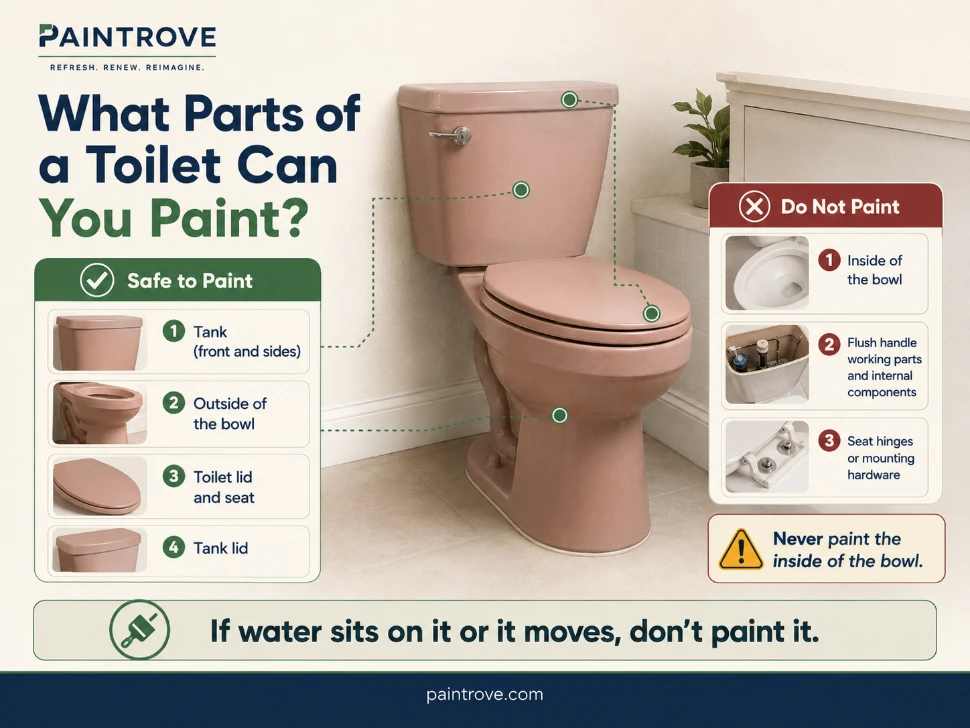
Safe to paint:
- The tank (front and sides)
- The outside of the bowl
- The toilet lid and seat
- The tank lid
Do not paint:
- The inside of the bowl. Paint can’t survive constant water, cleaning, and waste, and flaking paint can cause clogs.
- The flush handle’s working parts, flapper, or any moving internal components.
- The seat hinges or mounting hardware (remove or mask these instead).
When in doubt, if water sits on it or it moves, don’t paint it.
Why Toilets Are Hard to Paint
Toilets are made of vitreous china or porcelain, prized for being smooth, glossy, and nearly waterproof. That sealed surface is exactly why paint struggles to grip it.
Paint needs a little texture, or “tooth,” to bond. A slick ceramic toilet gives it nothing to hold onto. That’s why you can’t skip cleaning, sanding, and priming. Without those steps, the paint will peel within weeks.
This is the same adhesion challenge you face when painting glossy tile or refinishing granite countertops: a smooth, non-porous surface needs roughing up and a bonding primer before paint will stick.
Tools and Materials You’ll Need
Gather these before you start.
- TSP (trisodium phosphate) cleaner and bleach
- A scrub brush and rags
- 120-grit sandpaper or a sanding block
- A mask, gloves, and goggles
- Painter’s tape and drop cloths or newspaper
- Epoxy or appliance bonding primer (spray)
- Epoxy or appliance-grade spray paint
- Optional clear polyurethane or sealer topcoat
- Screwdriver (to remove the seat and lid)
A foam roller and brush work for the tank and bowl, but spray paint gives the smoothest, most factory-like finish on a toilet.
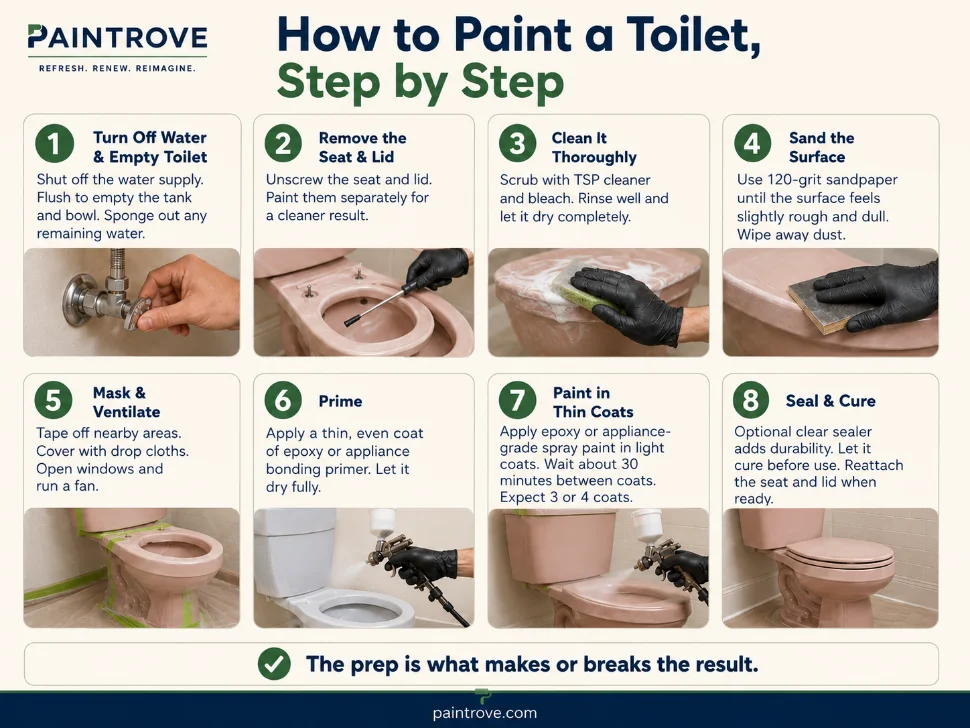
How to Paint a Toilet, Step by Step
Follow these steps carefully. The prep is what makes or breaks the result.
Step 1: Turn off the water and empty the toilet
Shut off the water supply valve, flush to empty the tank and bowl, and sponge out any remaining water. A dry surface is essential. For the best finish, some people remove the tank or even the whole toilet, but you can paint it in place with careful masking.
Step 2: Remove the seat and lid
Unscrew the toilet seat and lid (usually a flip-tab and plastic screws or a flat-head screwdriver). Painting them separately in a ventilated spot gives a cleaner result and protects the rest of the toilet.
Step 3: Clean it thoroughly
Paint will not stick to dirt, grime, or soap film. Scrub every surface with a TSP cleaner and disinfect with bleach. Get into all the nooks. Rinse well and let it dry completely. Make sure no cleaning chemicals remain, since residue causes peeling.
Step 4: Sand the surface
Sand all the surfaces you’ll paint with 120-grit sandpaper until they feel slightly rough and dull, not glossy. This gives the primer something to grip. Wear a mask so you don’t inhale the dust. Wipe away all sanding dust with a damp cloth and let it dry.
Step 5: Mask and ventilate
Tape off the floor, walls, hinges, and any parts you’re not painting. Cover the area with drop cloths. Open windows and run a fan. Spray paint fumes are strong, so good ventilation is a must. Paint the removed seat and lid outside or in a garage.
Step 6: Prime
Apply a thin, even coat of epoxy or appliance bonding primer designed for slick surfaces. Hold the can 6 to 10 inches away and use light passes to avoid drips. Let it dry fully per the label.
Step 7: Paint in thin coats
Apply epoxy or appliance-grade spray paint in light, even coats. Keep the can moving and 6 to 10 inches back. Don’t spray too close or too heavy, or you’ll get drips and bubbles. Wait about 30 minutes between coats, and expect to need three or four coats for full, even coverage. Our guide on how long spray paint takes to dry helps you time the coats.
Step 8: Seal and cure
For extra durability, finish with a clear polyurethane or sealer once the paint is dry. Then let everything cure. Most spray paint is dry to handle in about an hour and fully cured in 24 hours, but give it longer before heavy use. Reattach the seat and lid, turn the water back on, and you’re done.
Best Paint for a Toilet
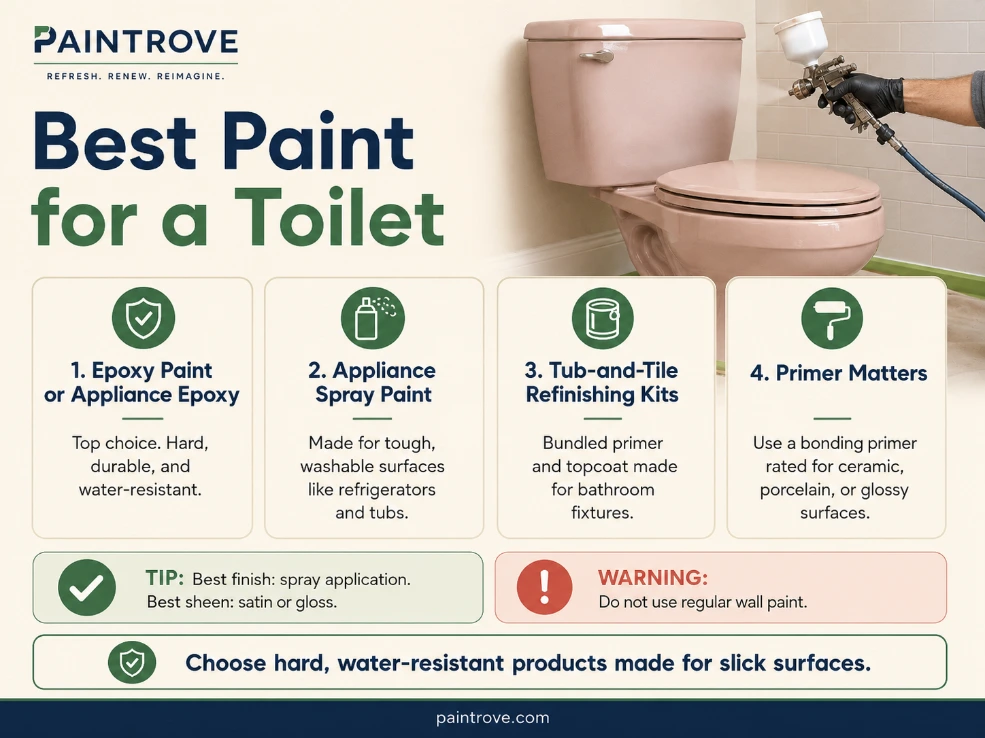
Ordinary wall paint won’t survive on a toilet. You need something hard, water-resistant, and made for slick surfaces.
- Epoxy paint or appliance epoxy: the top choice. It forms a hard, durable, water-resistant finish similar to the toilet’s original glaze. Rust-Oleum and Krylon both make appliance epoxy sprays.
- Appliance spray paint: formulated for tough, washable surfaces like refrigerators and tubs, it works well on toilets too.
- Toilet or tub-and-tile refinishing kits: these bundle a bonding primer and durable topcoat made for bathroom fixtures.
For the primer, always use one rated for ceramic, porcelain, or glossy surfaces. A spray application gives the smoothest, most professional look. A satin or gloss finish matches a toilet’s original sheen.
How Long Does a Painted Toilet Last?
Be realistic. With thorough prep and quality epoxy paint, a painted toilet can look good for a few years. The tank and lid, which see little wear, last longest. The seat and high-touch areas show wear soonest.
What shortens its life? Harsh scrubbing, abrasive cleaners, and neat bleach all lift paint over time. Clean a painted toilet gently with mild, non-abrasive cleaners to protect the finish.
Think of it as a refresh you may touch up or redo down the road, not a permanent solution. Even so, for the cost, it’s a satisfying upgrade.
Caring for a Painted Toilet
Treat a painted toilet more gently than a glazed one to make it last.
- Clean with mild, non-abrasive cleaners, not harsh chemicals or neat bleach.
- Skip abrasive pads that can scratch the paint.
- Wipe up spills and splashes promptly.
- Touch up small chips early before they spread.
- Avoid resting heavy objects on painted surfaces.
Should You Paint a Toilet? Alternatives to Consider
Before you commit, weigh these options.
Professional re-glazing. A refinishing service sprays a durable coating on the fixture. It costs more than DIY but lasts longer and looks more factory-like.
Replace the toilet. New basic toilets are surprisingly affordable, often $100 to $250, and a new one solves color, function, and water-efficiency all at once. If yours is old or running, replacement may be the better value.
Find a matching used toilet. For vintage colors like pink or avocado, architectural salvage yards and online listings sometimes have a match.
Paint just the seat. If only the seat looks worn, painting or replacing that one part is the cheapest, easiest fix.
Mistakes to Avoid
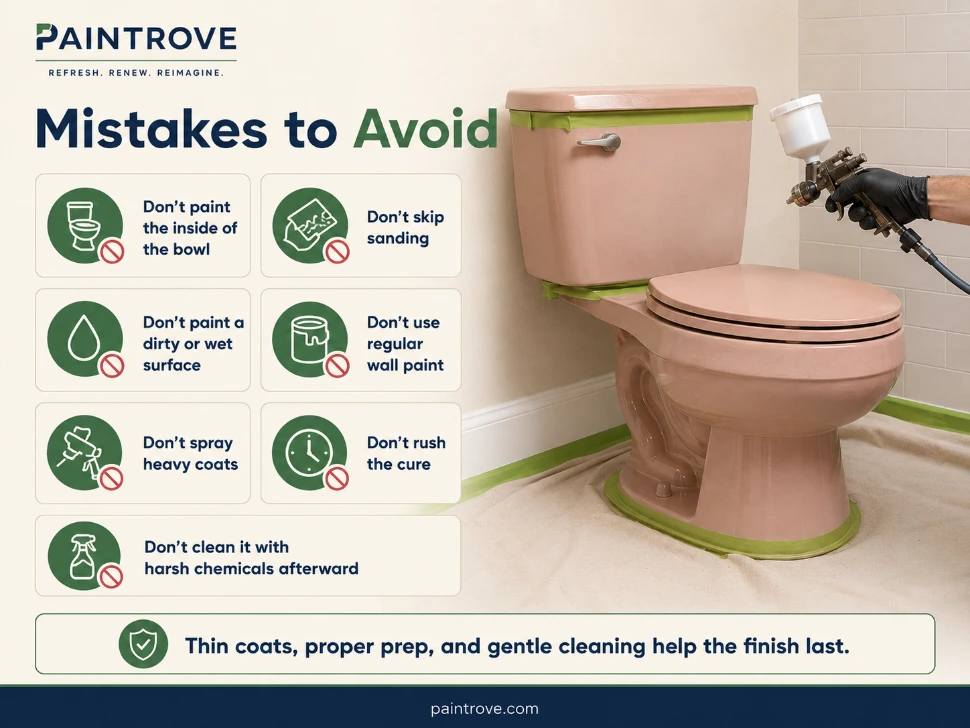
Steer clear of these and your finish will last.
- Don’t paint the inside of the bowl. It peels and can cause clogs.
- Don’t skip the sanding. Paint won’t grip glossy ceramic.
- Don’t paint a dirty or wet surface. Clean, rinse, and dry first.
- Don’t use regular wall paint. Only epoxy or appliance paint holds up.
- Don’t spray heavy coats. Thin layers prevent drips and bubbles.
- Don’t rush the cure. Let it harden before use and before scrubbing.
- Don’t clean it with harsh chemicals afterward. They strip the paint.
FAQs
Can you paint a toilet bowl?
You can paint the outside of a toilet bowl, but never the inside. The interior is constantly exposed to water, waste, and cleaning, which makes paint peel quickly, and flaking paint can cause clogs. Clean, sand, prime, and paint only the exterior surfaces with epoxy or appliance paint for a lasting finish.
What kind of paint do you use on a toilet?
Use epoxy paint or appliance-grade spray paint, never ordinary wall paint. Epoxy forms a hard, water-resistant finish similar to a toilet’s original glaze. Brands like Rust-Oleum and Krylon make appliance epoxy sprays. Pair it with a bonding primer made for ceramic or glossy surfaces, and consider a clear sealer on top.
Do you have to sand a toilet before painting?
Yes. Toilets are smooth and glossy, so paint won’t grip without sanding. Use 120-grit sandpaper to dull the surface until it feels slightly rough. This gives the primer something to bond to. Wear a mask to avoid breathing the dust, then wipe the surface clean before priming.
Can you spray paint a toilet?
Yes, spray paint gives the smoothest, most factory-like finish on a toilet. Use an epoxy or appliance spray paint, hold the can 6 to 10 inches away, and apply several thin coats rather than one heavy coat. Spray in a well-ventilated area, since the fumes are strong, and mask off everything nearby.
How long does a painted toilet last?
With good prep and epoxy paint, a painted toilet can look good for a few years. Low-wear parts like the tank last longest, while the seat and high-touch areas wear soonest. Gentle cleaning with mild, non-abrasive products extends the life. It’s a semi-temporary refresh, not a permanent re-glaze.
Can you paint a toilet seat?
Yes, and it’s one of the easiest parts to paint. Remove the seat with a screwdriver, clean and sand it, then spray it with epoxy or appliance paint in a ventilated area. Apply thin coats, let it dry fully (about 24 hours), and reattach it. It’s a cheap way to revive a stained or worn seat.
Is it cheaper to paint or replace a toilet?
Painting is cheaper upfront, around $30 to $40 in supplies versus $100 to $250 for a new toilet plus installation. However, paint is less durable and may need redoing, while a new toilet lasts decades and can improve water efficiency. For a quick cosmetic update, painting wins; for a long-term fix, replacement is often better.
Can you paint the inside of a toilet tank?
It’s not recommended. The inside of the tank holds water constantly, so paint there will peel and can interfere with the flush mechanism and moving parts. Stick to painting the outside of the tank. Keep paint away from the flapper, fill valve, and any working components.
Final Thoughts
So, can you paint a toilet? Yes, you can give the exterior a whole new color with the right prep and the right paint. Clean it thoroughly, sand off the gloss, prime with a bonding primer, and spray on thin coats of epoxy or appliance paint. Just remember the golden rule: paint only the outside, never the inside of the bowl.
Go in knowing it’s a cosmetic refresh, not a factory re-glaze, and treat the finish gently afterward. For around $30 in supplies, a painted toilet can take a dated bathroom from drab to fresh, and that’s a hard deal to beat.