What Is Flat Paint? A Proven Simple Finish Guide

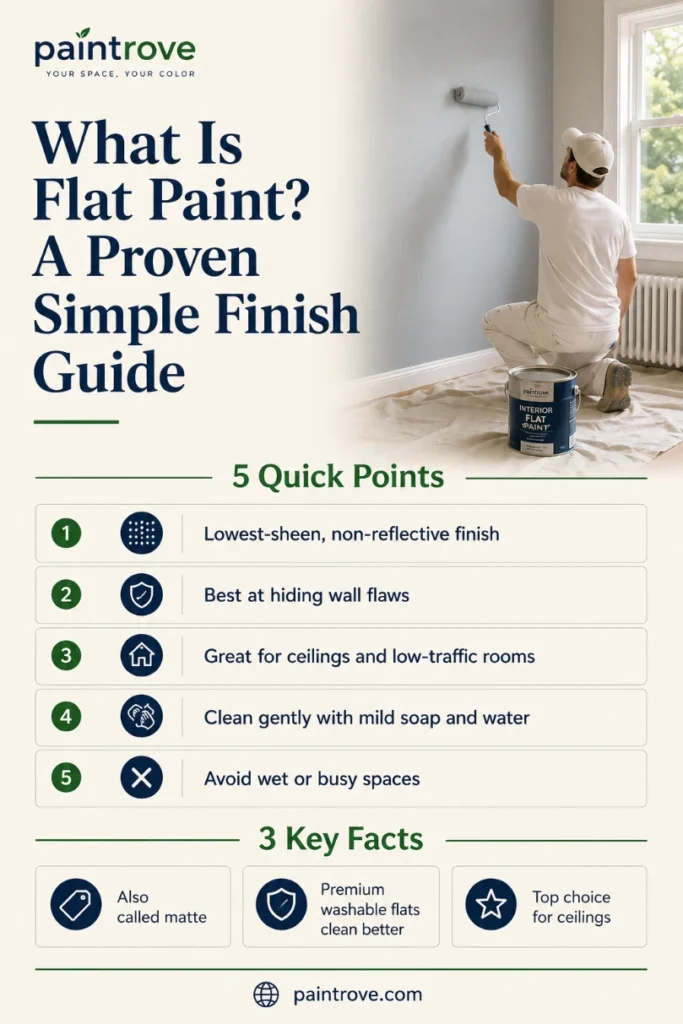
What Is Flat Paint? Flat paint is a paint finish with little to no shine, giving walls a smooth, velvety, non-reflective look. It’s the lowest-sheen option on the finish scale, which makes it the champion at hiding wall imperfections but also the least durable and hardest to clean. If you’ve heard the term “matte paint,” that’s essentially the same thing.
So what makes flat paint flat? It comes down to the recipe. Flat paint has a high ratio of pigment to binder, so light scatters instead of bouncing back as shine.
This guide explains exactly what flat paint is, how it compares to eggshell, satin, and gloss, its real pros and cons, and which rooms it works best in.
Quick Answer: What Is Flat Paint?
Here’s the fast version.
- Flat paint is the lowest-sheen, non-reflective paint finish, also called matte.
- Best at: hiding bumps, patches, and surface flaws, plus excellent coverage in fewer coats.
- Weakest at: durability and cleaning, since it’s porous and shows scuffs.
- Best rooms: ceilings, low-traffic adult bedrooms, formal living and dining rooms, and textured or older walls.
- Avoid in: kitchens, bathrooms, hallways, and kids’ rooms (high-traffic, high-moisture).
- Modern note: premium washable flats now clean far better than old formulas.
Read on for the full breakdown.
What Is Flat Paint Finish?
Flat paint finish has the least sheen of any paint, meaning it reflects almost no light. The result is a soft, chalky, matte surface with a rich, uniform look.
The science is simple. Paint is made of pigment, binder, solvent, and additives. Flat paint contains more pigment and a special flatting agent, and less binder, than glossier finishes. That high pigment load scatters light in all directions instead of reflecting it, so you see color without shine.
Because light doesn’t bounce off the surface, flat paint doesn’t highlight the high and low points of a wall. That’s the secret to its flaw-hiding superpower.
Flat Paint vs. Matte Paint: Are They the Same?
Mostly, yes. Many paint brands use “flat” and “matte” to mean the same low-sheen finish, and the terms are often interchangeable.
Where brands do separate them, matte sits a hair above flat. Matte can carry a tiny bit more sheen and pigment, which gives it slightly better durability and a touch easier cleaning, while flat is the most completely shine-free option. Think of flat as the deepest, most non-reflective end of the matte family.
For most homeowners, the practical takeaway is the same: both hide imperfections beautifully and both need gentle care.
The Paint Sheen Scale
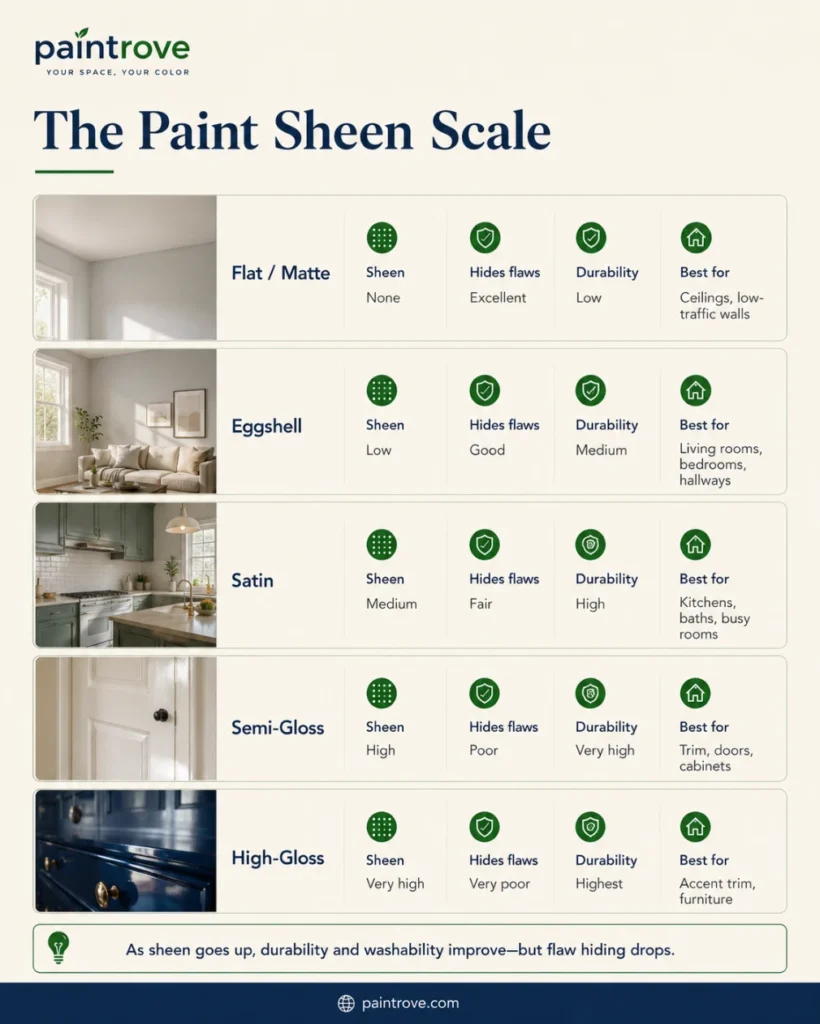
Flat paint sits at one end of the sheen spectrum. Here’s how all the common finishes compare, from least to most shiny.
| Finish | Sheen | Hides Flaws | Durability | Best For |
|---|---|---|---|---|
| Flat / Matte | None | Excellent | Low | Ceilings, low-traffic walls |
| Eggshell | Low | Good | Medium | Living rooms, bedrooms, hallways |
| Satin | Medium | Fair | High | Kitchens, baths, busy rooms |
| Semi-Gloss | High | Poor | Very high | Trim, doors, cabinets |
| High-Gloss | Very high | Very poor | Highest | Accent trim, furniture |
The pattern is clear: as sheen goes up, durability and washability improve, but the finish hides flaws less and less. Flat trades toughness for the best looks on imperfect walls.
Pros of Flat Paint
Flat paint has real strengths that keep it popular.
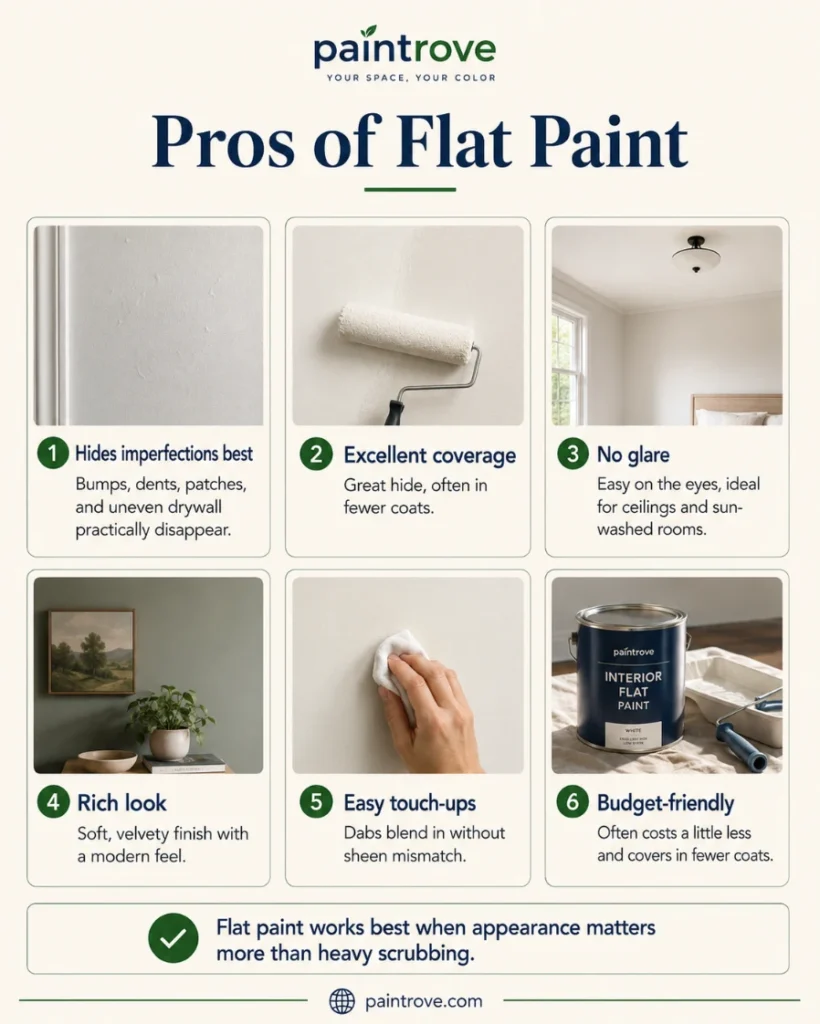
- Hides imperfections best. Bumps, dents, patches, and uneven drywall practically disappear under flat paint.
- Excellent coverage. Its high pigment content means great hide, often in fewer coats than glossier paints.
- No glare. The non-reflective surface is easy on the eyes, ideal for ceilings and sun-washed rooms.
- Rich, sophisticated look. Flat gives a deep, velvety, modern finish that’s on-trend with Scandinavian and minimalist styles.
- Easy touch-ups. You can dab leftover paint over a scuff without roller marks flashing, since there’s no sheen to mismatch.
- Budget-friendly. It often costs a little less and covers in fewer coats.
That easy touch-up trait is why builders and painters love flat paint on new construction.
Cons of Flat Paint
The trade-offs are just as real.
- Least durable. Flat paint scuffs, marks, and wears faster than higher sheens.
- Hard to clean. Its porous surface can stain, and scrubbing may cause burnishing (shiny spots) or lift color.
- Not for moisture. It struggles in humid or splash-prone rooms.
- Shows wear sooner. In busy areas, flat walls can look shabby in just a few years.
- Attracts dust. The matte texture can hold onto dust more than glossier finishes.
The good news: modern premium flats have closed much of this gap, which we’ll cover below.
Best Rooms to Use Flat Paint
Flat paint shines (so to speak) in the right spaces. Use it on:
- Ceilings. The number-one use. Flat hides imperfections and eliminates glare for a clean, uniform look.
- Low-traffic adult bedrooms. Quiet rooms where walls won’t take much abuse.
- Formal living and dining rooms. Elegant spaces that see gentle use.
- Textured or older walls. Flat masks cracks, patches, and bumpy drywall.
- Exterior siding. Flat hides little dings and bumps on the outside of a house, too.
Where to avoid flat paint: kitchens, bathrooms, mudrooms, hallways, kids’ rooms, and trim. Those high-traffic, high-moisture, high-touch areas need a more washable finish like satin or semi-gloss.
A common pro approach is to use flat or eggshell on walls and a higher sheen on trim and doors for contrast and durability. Our guide on how to paint a room walks through combining finishes the right way.

How Durable Is Flat Paint Over Time?
Traditionally, flat paint was the least durable finish, prone to staining and tough to clean without marking it. That reputation was well earned with older formulas.
Today, though, technology has changed the game. Premium washable flats like Sherwin-Williams Duration Home, Sherwin-Williams Emerald, Behr Premium Plus Ultra Flat, and Benjamin Moore Regal Select Flat are formulated to resist stains and stand up to gentle cleaning while keeping that shine-free look.
The key is to buy a quality flat, not a basic builder-grade one. You can’t simply tint a cheap flat paint and expect it to scrub clean. With a premium product, flat finishes are far more practical than they used to be, even in moderately used rooms.
How to Clean Flat Paint Walls
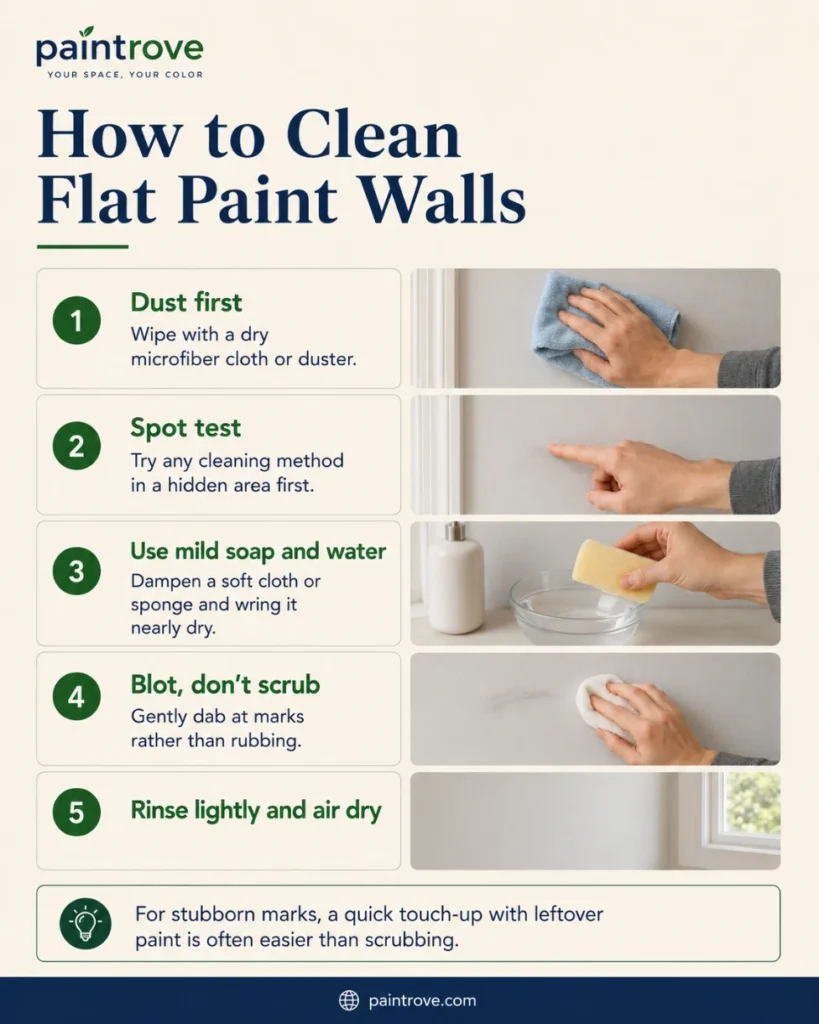
Flat paint needs a gentle touch. Follow these steps to clean without damage.
- Dust first. Wipe the wall with a dry microfiber cloth or duster.
- Spot test. Try any cleaning method in a hidden area first.
- Use mild soap and water. Dampen a soft cloth or sponge with water and a little dish soap. Wring it nearly dry.
- Blot, don’t scrub. Gently dab at marks rather than rubbing, which can burnish the surface.
- Rinse lightly and air dry.
For stubborn marks, a quick touch-up with leftover paint is often easier than scrubbing, and flat paint touches up seamlessly. Save your leftover paint for this; our guide on how long paint lasts explains how to store it.
Mistakes to Avoid With Flat Paint
Steer clear of these and you’ll get the most from a flat finish.
- Don’t use it in high-traffic or wet rooms. Choose satin or semi-gloss there instead.
- Don’t buy bargain flat paint if durability matters. Spring for a washable premium flat.
- Don’t scrub hard. Gentle blotting prevents shiny burnish marks.
- Don’t use flat on trim, doors, or cabinets. Those need a tougher, glossier finish.
- Don’t skip wall prep. Flat hides flaws, but a clean, sound surface still lasts longer.
FAQs
What is flat paint used for?
Flat paint is best for ceilings, low-traffic adult bedrooms, formal living and dining rooms, textured or older walls, and exterior siding. Its non-reflective finish hides imperfections and eliminates glare. It’s not ideal for high-traffic or high-moisture areas like kitchens, bathrooms, hallways, and kids’ rooms, where a more washable finish works better.
Is flat paint the same as matte paint?
Mostly yes. Many brands use “flat” and “matte” interchangeably for the lowest-sheen finish. Where they’re distinguished, matte has a tiny bit more sheen and durability than flat, while flat is the most completely non-reflective. For practical purposes, both hide wall imperfections well and both need gentle cleaning.
What is the difference between flat and eggshell paint?
Flat paint has no sheen and hides imperfections best, but it’s less durable and harder to clean. Eggshell has a subtle low sheen, cleans more easily, and lasts longer, though it shows wall flaws a bit more. Eggshell is a popular choice for living areas, while flat is favored for ceilings and low-traffic rooms.
Is flat paint hard to clean?
Traditionally, yes. Flat paint is porous, so it can stain and may burnish (develop shiny spots) when scrubbed. However, premium washable flat paints clean far better than older formulas. Clean any flat paint gently with mild soap, a soft cloth, and a blotting motion rather than hard scrubbing.
Why do builders use flat paint?
Builders favor flat paint because it’s affordable, covers well in fewer coats, hides drywall imperfections, and touches up easily without roller marks showing. When walls get scuffed or modified after move-in, a quick dab of leftover flat paint blends in seamlessly, which saves builders and painters time and labor.
Does flat paint hide wall imperfections?
Yes, flat paint is the best finish for hiding wall imperfections. Because it reflects almost no light, it doesn’t highlight bumps, dents, patches, or uneven texture the way glossier finishes do. This makes it an excellent choice for older homes, textured walls, and ceilings where a flawless, uniform look matters.
Can you use flat paint in a bathroom?
It’s generally not recommended. Bathrooms have high humidity and moisture that flat paint doesn’t resist well, and they need frequent cleaning that flat paint can’t handle as easily. A satin or semi-gloss finish is a better choice for bathrooms. If you love the matte look, choose a premium moisture-resistant flat as a compromise.
Is flat paint good for ceilings?
Yes, flat paint is the top choice for ceilings. Its non-reflective finish eliminates glare and hides imperfections, giving a smooth, uniform appearance. Since ceilings don’t get touched or cleaned often, flat paint’s lower durability isn’t a drawback there, making it ideal for that application.
Final Thoughts
So, what is flat paint? It’s the lowest-sheen, most non-reflective finish you can buy, prized for hiding wall imperfections and delivering rich, even color with great coverage. The trade-off is durability: flat paint marks and stains more easily than glossier finishes, though modern premium washable flats have closed much of that gap.
Use flat paint where it excels (ceilings, low-traffic rooms, and textured or older walls) and reach for a higher sheen in busy, wet, or high-touch spaces. Match the finish to the room, choose a quality product, and flat paint will give your walls a sophisticated, flawless look.