What Color Do Brown and Green Make When Mixed?
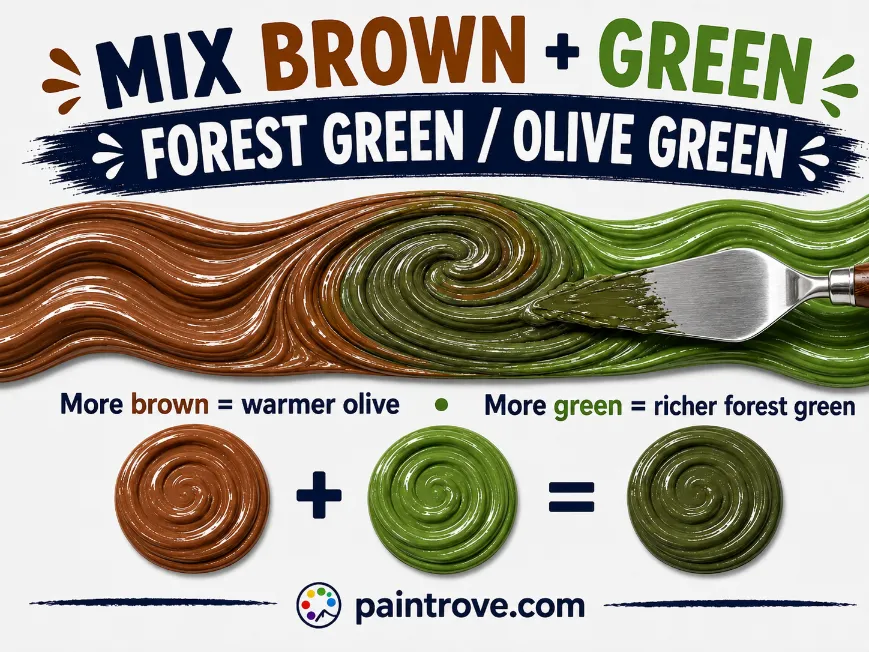
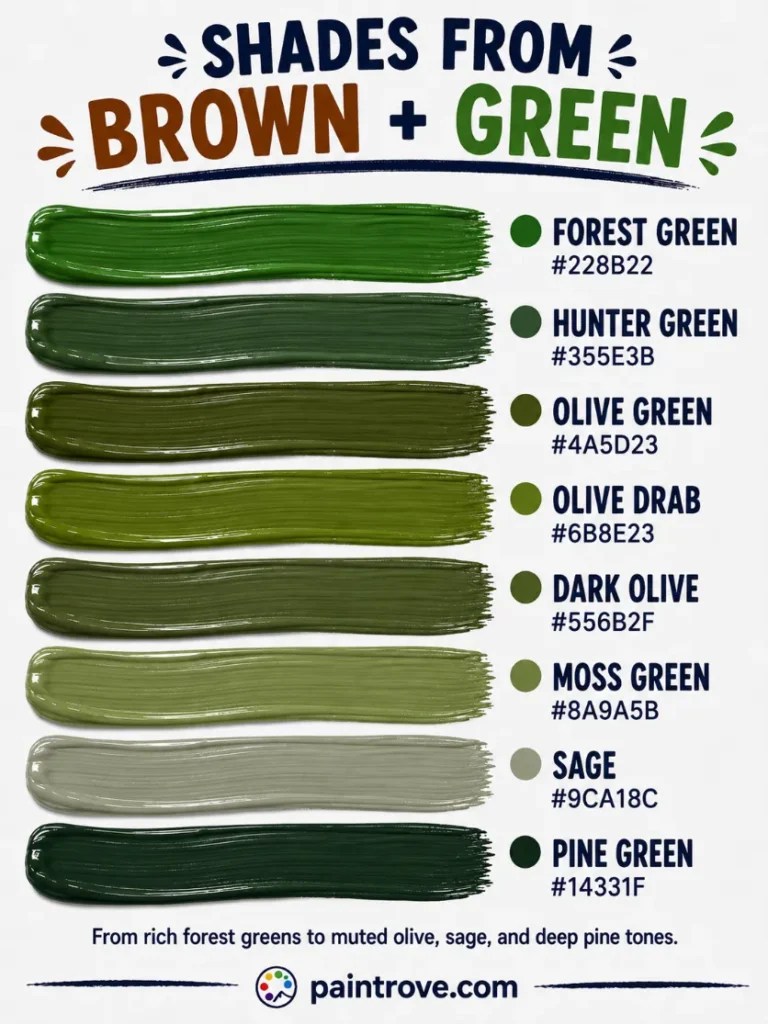
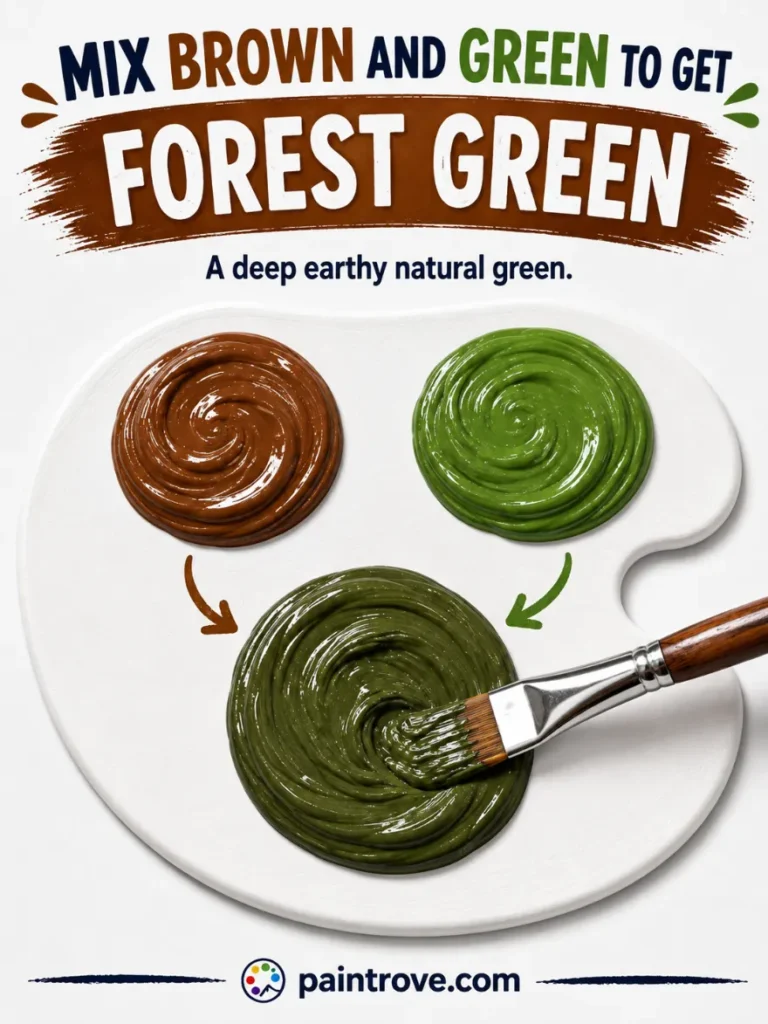
What Color Do Brown and Green Make? Quick answer: Brown and green make a deep, earthy forest green or olive, at around hex #4A5D23. Adding brown to green darkens and mutes it into a natural, muted dark green. Leaning toward green gives a richer forest green; leaning toward brown gives a browner, more olive result.
Brown and green is the mix that unlocks the greens of nature. Bright tube greens often look artificial, but brown tones them down into the deep, believable forest, olive, and moss greens that real foliage, trees, and landscapes are made of.
This guide covers why the mix works, the exact ratios with hex codes, the pigments that give the best natural greens, the full shade range, and how the result behaves in light and print.
Why Do Brown and Green Make Forest Green?
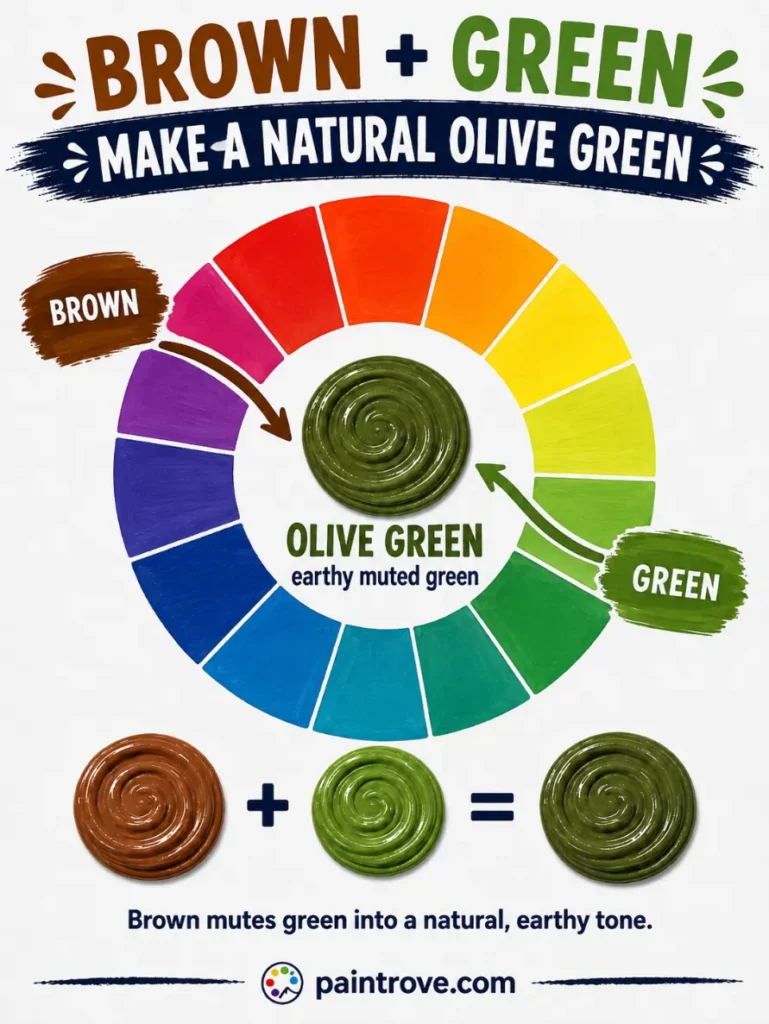
Brown and green make forest green because brown mutes and darkens the green while its red content subtly neutralizes the green’s brightness, producing a deep, earthy, natural dark green.
Here is the color math. Green is a secondary color made from blue and yellow, as covered in what blue and yellow make. Brown contains all three primaries, red, yellow, and blue. So the mix looks like this:
Green + Brown = (Blue + Yellow) + (Red + Yellow + Blue) = Blue + Blue + Yellow + Yellow + Red
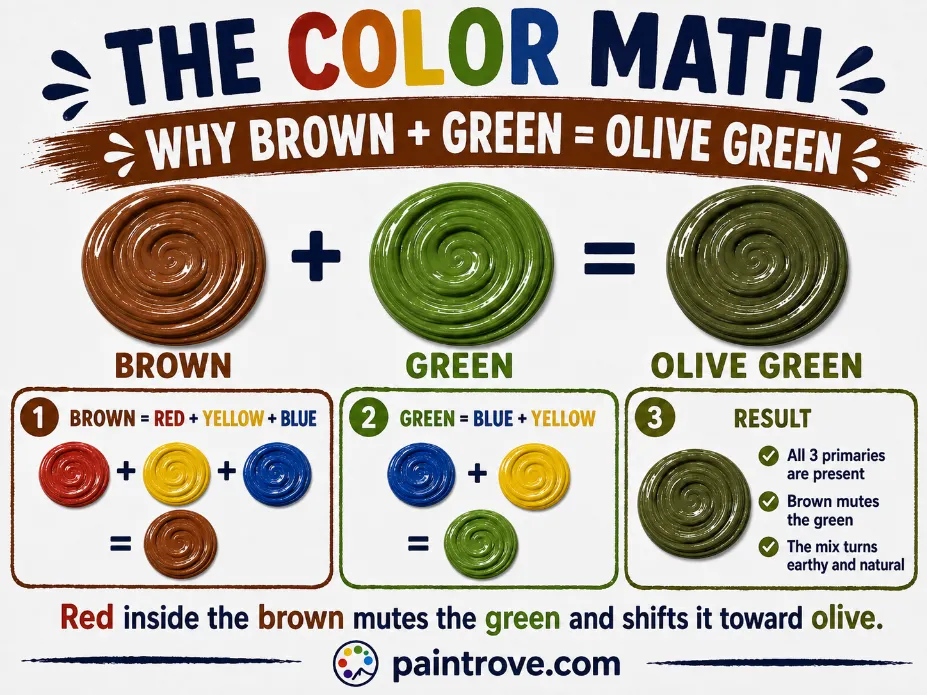
Reducing that, the mix is essentially a double dose of green plus a little red. Since red is the complement of green, that small amount of red mutes the green, draining its brightness and pulling it toward a natural, earthy tone, while the brown’s darkness deepens it.
The result is forest green, olive, or moss, depending on the balance. This is exactly why brown is the artist’s secret for realistic greens: it does what black cannot, darkening green while keeping it warm and alive rather than flat.
Because the mix keeps green dominant, you always land in the green family, never in true brown. More brown simply makes a browner, more olive green; it never fully crosses over.
what color does green and brown make? The Full Range
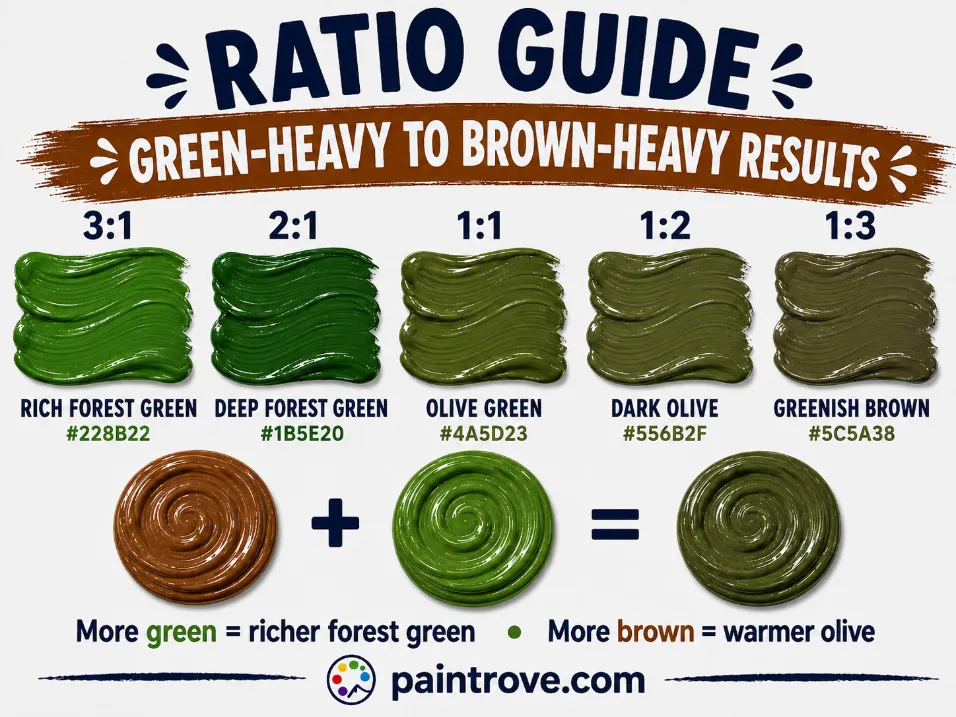
Brown and green produce a family of deep, muted, natural greens rather than a single color. The exact shade depends on the ratio and the specific brown and green you use:
| Result | Hex code | When you get it |
|---|---|---|
| Forest green | Hex #228B22 | Green-heavy mix |
| Olive green | Hex #4A5D23 | Balanced mix |
| Hunter green | Hex #355E3B | Green-heavy mix, deep |
| Moss green | Hex #8A9A5B | Balanced mix, lighter |
| Olive drab | Hex #6B8E23 | Yellow-green plus brown |
| Dark olive | Hex #556B2F | Brown-heavy mix |
| Khaki | Hex #C3B091 | Brown-heavy mix plus white |
| Sage | Hex #9CA18C | Muted green plus brown plus white |
Brown and Green Mixing Ratios and Hex Codes
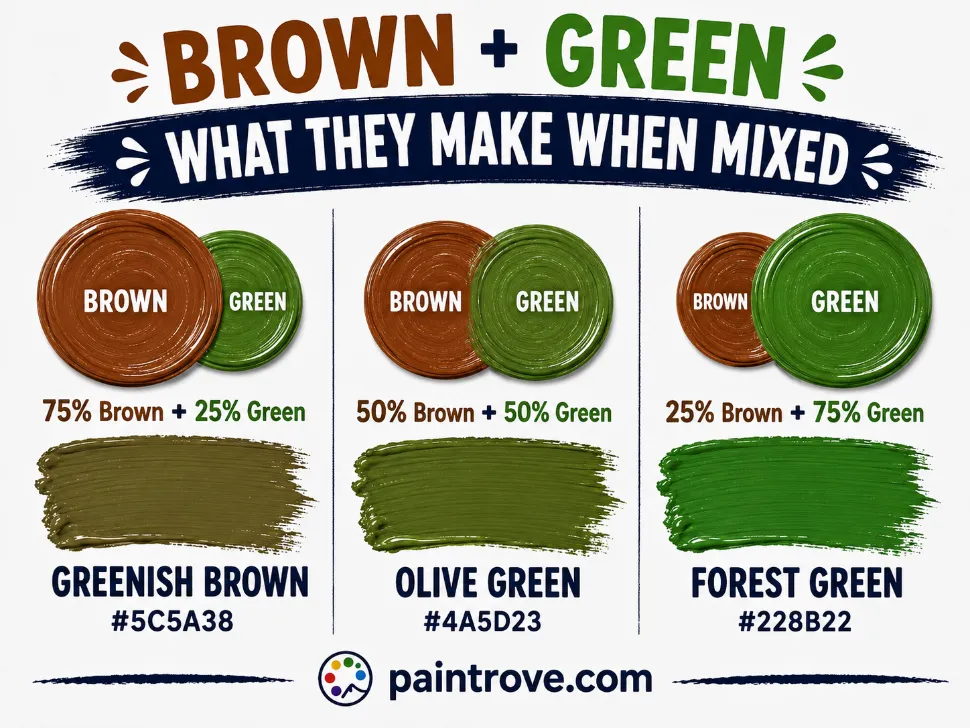
The ratio decides how deep and how earthy your green turns out. Here is the working chart with hex targets in plain text:
| Ratio (Green : Brown) | Resulting shade | Hex code |
|---|---|---|
| 3 : 1 | Rich forest green | Hex #228B22 |
| 2 : 1 | Deep forest green | Hex #1B5E20 |
| 1 : 1 | Olive green | Hex #4A5D23 |
| 1 : 2 | Dark olive / brown-green | Hex #556B2F |
| 1 : 3 | Greenish brown | Hex #5C5A38 |
| 1 : 1 plus white | Sage / moss | Hex #9CA18C |
| 1 : 1 plus black | Deep pine green | Hex #14331F |
| 1 : 1 with yellow-green | Olive drab | Hex #6B8E23 |
Practical notes:
- Start with green and add brown gradually, bit by bit. This gives the most control over exactly how muted and deep the green becomes.
- Mix thoroughly before judging. A half-mixed blend looks streaky and darker than the finished color.
- Test on white paper and let it dry. Deep greens are hard to read in a pile, and acrylics dry slightly darker.
Which Brown and Green Pigments Should You Use?
The undertones of your brown and green steer the exact natural green:
| Green used | Brown used | Resulting green |
|---|---|---|
| Sap green | Burnt umber | Rich, natural forest green |
| Phthalo green | Burnt sienna | Deep green with warmth |
| Yellow-green | Raw umber | Classic olive drab |
| Bright green | Raw umber | Muted, earthy mid-green |
| Blue-green | Warm brown | Deep pine, cool forest |
The most useful pairing to know is sap green with burnt umber, a combination painters rely on for realistic foliage and landscape greens. Sap green is already a natural, slightly muted green, and burnt umber deepens it into believable forest and tree tones.
A warm brown like burnt sienna adds warmth for sunlit foliage, while raw umber gives cooler, more olive results. If you want to brighten a mix that has gone too muddy, add a little yellow rather than white, which restores the fresh, sunlit quality without washing the green out.
Every Natural Green Shade You Can Make
Between ratio, pigment choice, and additions of white, black, or yellow, brown and green cover the deep, natural green family. The reference table:
| Shade | Hex code | How to mix it |
|---|---|---|
| Forest green | Hex #228B22 | Green-heavy mix |
| Hunter green | Hex #355E3B | Green-heavy mix, deep |
| Olive green | Hex #4A5D23 | Balanced mix |
| Olive drab | Hex #6B8E23 | Yellow-green plus brown |
| Dark olive | Hex #556B2F | Brown-heavy mix |
| Moss green | Hex #8A9A5B | Balanced mix plus a little white |
| Pine green | Hex #14331F | Mix plus black |
| Sage | Hex #9CA18C | Muted mix plus white |
| Khaki | Hex #C3B091 | Brown-heavy mix plus white |
| Fern green | Hex #4F7942 | Green-heavy mix, mid-tone |
| Army green | Hex #4B5320 | Yellow-green plus brown, muted |
| Bottle green | Hex #006A4E | Blue-green plus brown |
How Do You Make Forest Green from Brown and Green?
Start with a green base and add brown gradually until the green deepens and mutes into a rich, natural dark green around hex #228B22. Use a green-heavy ratio, roughly two or three parts green to one part brown, and reach for sap green with burnt umber for the most believable result.
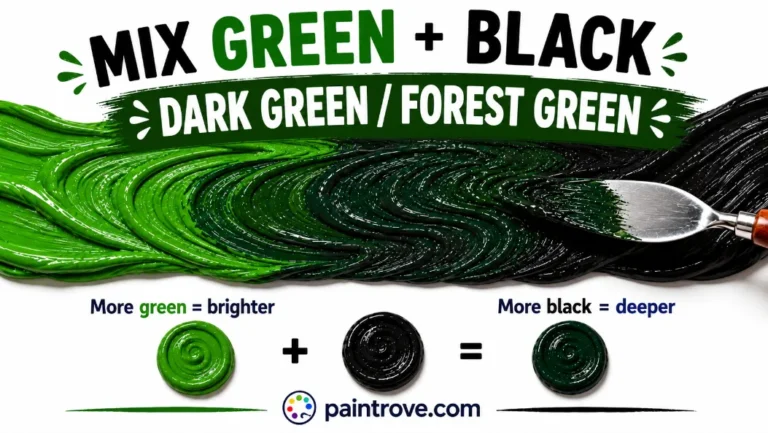
This is the single best way to mix realistic tree and foliage greens, far better than darkening green with black. It connects to the darks covered in green and black mixed.
How Do You Make Olive Green from Brown and Green?
Use a more balanced mix, or lean slightly toward brown, especially with a yellow-green base. The extra brown pulls the green toward the warm, muted olive and olive-drab tones of military and heritage palettes. This overlaps with the olive tones from orange and green mixed and yellow and green mixed.
How Do You Make Sage or Moss?
Add white to a brown-green mix to lift it into soft sage and moss tones, the muted gray-greens popular in modern design. Keep the mix balanced and add white gradually. This connects directly to the sage family covered in green and gray mixed and the lighter greens of green and white mixed.
What Do Brown and Green Make in Light and Print?
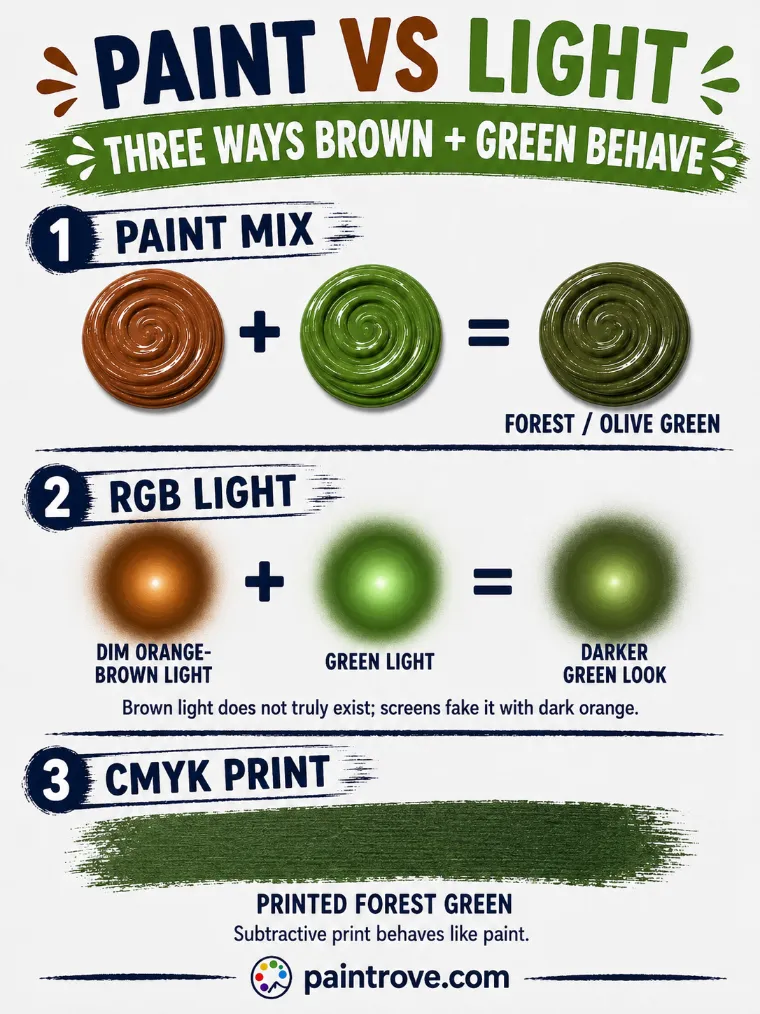
In light, there is no brown to mix, because brown light does not exist. Brown only appears as a dark, dull orange seen in context, and light can only add brightness. Screens use the RGB model, so a dark natural green is simply green displayed at lower brightness with reduced saturation, which reads as forest or olive green, reached by adjusting values rather than adding brown pigment.
In printing, using the CMYK color model, brown and green behave like paint since both are subtractive, producing deep forest and olive greens ideal for natural and outdoor imagery.
| System | Type | Brown + Green makes | Result |
|---|---|---|---|
| RYB (paint) | Subtractive | Forest green, olive | Hex #4A5D23 |
| RGB (light and screens) | Additive | Darker green (no true brown) | Varies |
| CMYK (printing) | Subtractive | Forest green, same as paint | Hex #4A5D23 |
Troubleshooting green and brown mixed
The mix is muddy or grayish. Too much brown, or the red in the brown over-muted the green. Add a little more green, or a touch of yellow, to restore the fresh green quality.
The mix is too dark. Add more green or a little yellow to lighten and brighten it. To lighten without dulling, use yellow rather than white.
The green is barely different from the brown. Brown took over. Green needs to dominate to stay in the green family. Add more green.
It looks flat. If you darkened further with black, that is likely the cause. Brown itself keeps green alive; black flattens it. Rebuild using brown as the darkener.
It dried darker. Standard acrylic behavior. Mix a step lighter than your target.
Forest and Olive Green in Art, Fashion, and Design
The deep natural greens from brown and green are among the most useful colors in landscape art and nature-led design.
In Art
Brown and green is one of the most important mixes in landscape painting, because it produces the realistic greens that tube colors cannot. Real foliage, trees, grass, and distant hills are muted, earthy greens, never the bright green straight from the tube, and adding brown is how painters knock that artificial brightness down into believable nature tones.
Using brown rather than black to darken green keeps the color warm and alive, which is essential for convincing foliage. This is one of the first lessons landscape painters learn, and mixing your own forest and olive greens gives total control over the season, light, and mood of a scene.
In Fashion
Forest green, olive, and khaki are among fashion’s most enduring colors, the backbone of military, utility, and heritage styles that never go out of fashion. Olive and khaki flatter a wide range of skin tones and pair effortlessly with tan, cream, black, and burnt orange. Deep forest green reads as rich and sophisticated, a warmer alternative to navy or black in autumn and winter wardrobes.
In Interiors and Branding
Forest green, olive, and sage are cornerstone interior colors for natural, grounded, sophisticated schemes, working beautifully with wood, brass, cream, and brown leather. Deep green paired with brown is a classic, cozy combination drawn straight from nature.
In branding, forest and olive greens signal nature, sustainability, quality, and reliability, appearing across outdoor, organic, and heritage identities that want to feel natural and established.
Quick Reference: Brown + Green Cheat Sheet
| Question | Answer |
|---|---|
| Brown + green in paint | Forest green or olive (hex #4A5D23) |
| Brown + green in light | Darker green; brown light does not exist |
| More green | Rich forest green |
| More brown | Olive, greenish brown |
| Plus white | Sage, moss |
| Plus black | Deep pine green |
| Yellow-green base | Olive drab |
| To brighten | Add yellow, not white |
| Best pigments | Sap green + burnt umber |
| Color type | Deep muted natural green, a shade of green |
FAQs: what color does green and brown make
What color does brown and green make when mixed?
Brown and green make a deep, earthy forest green or olive, at around hex #4A5D23. Adding brown darkens and mutes the green into a natural dark green. More green gives a richer forest green; more brown gives a browner, more olive result.
How do you make forest green?
Start with a green base and add brown gradually, using roughly two to three parts green to one part brown. Sap green with burnt umber gives the most realistic forest green at around hex #228B22. Using brown to darken keeps the green warmer and more natural than using black.
How do you make olive green?
Mix green and brown in a more balanced ratio, or lean slightly toward brown, especially with a yellow-green base. The brown pulls the green toward warm, muted olive at around hex #4A5D23. Adding a touch of yellow brightens it toward olive drab.
Why is brown better than black for darkening green?
Brown darkens green while keeping it warm and alive, because brown contains warm colors that harmonize with green. Black only darkens and desaturates, leaving a flat, lifeless dark. This is why landscape painters use brown, not black, for realistic foliage.
Why did my brown and green mix turn muddy?
Too much brown, or the red in the brown over-muted the green. Add more green or a touch of yellow to restore the fresh green quality. A little yellow revives a muddy green better than white.
Can you mix brown and green in light?
No. Brown light does not exist, because brown is a dark, dull orange and light only adds brightness. On a screen, a dark green is simply green shown darker and less saturated, which reads as forest or olive green.
What is the difference between forest green and olive?
Both come from brown and green. Forest green is a rich, deep, blue-leaning dark green at hex #228B22. Olive is a warmer, more yellow-brown green at hex #4A5D23. Forest green has more green dominance; olive carries more brown and yellow.
Are brown and green a good color combination?
Side by side, brown and green is one of nature’s most calming, grounded pairings, a classic in interiors and fashion. Mixed, they produce the realistic forest and olive greens essential to landscape art. Both uses come straight from the natural world.
Brown and green make forest green, olive, moss, and the whole family of realistic natural greens. It is the essential mix for believable foliage, and brown does what black cannot: it darkens green while keeping it warm and alive.