Mineral Spirits vs Paint Thinner: What’s the Difference?
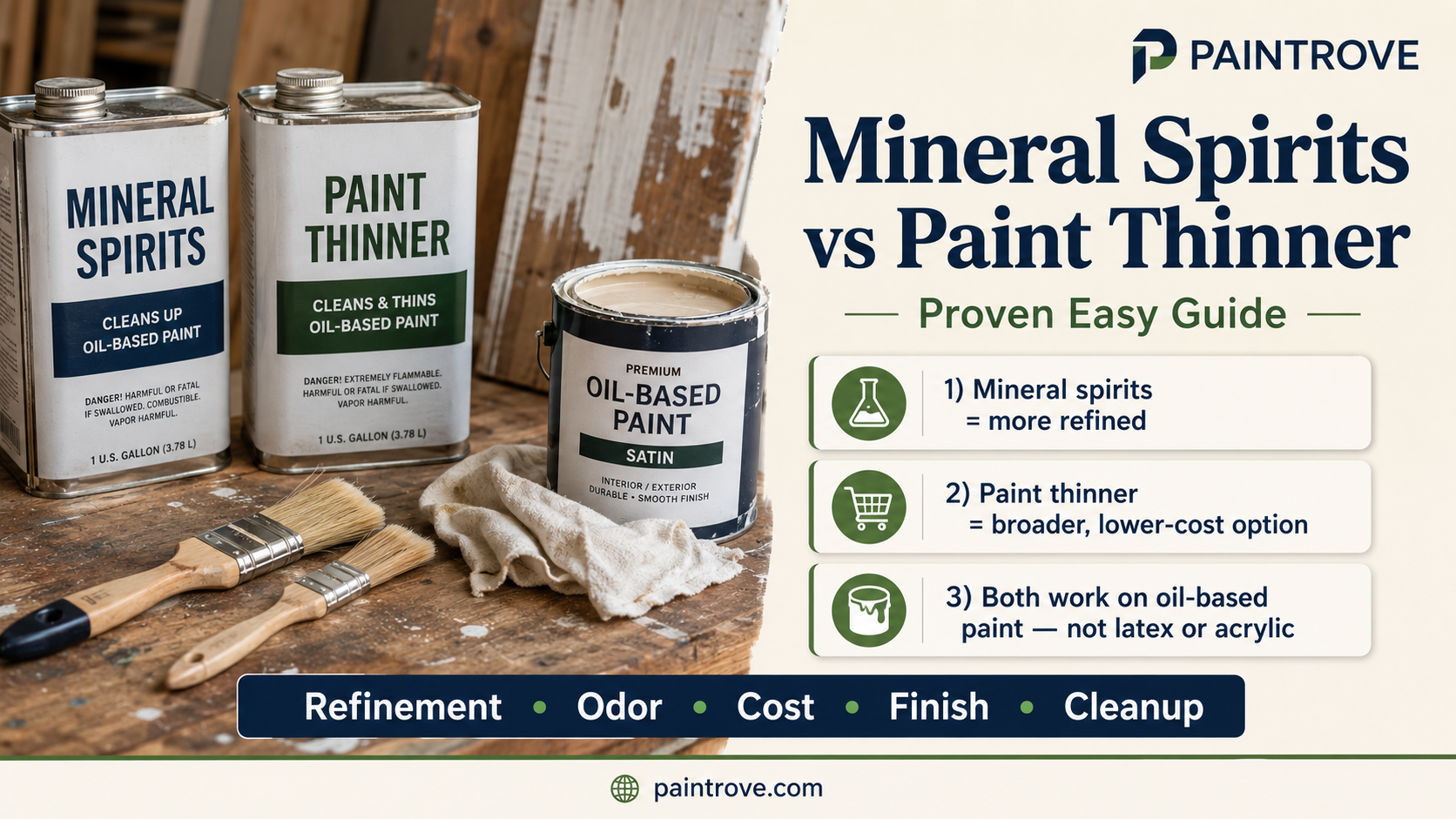
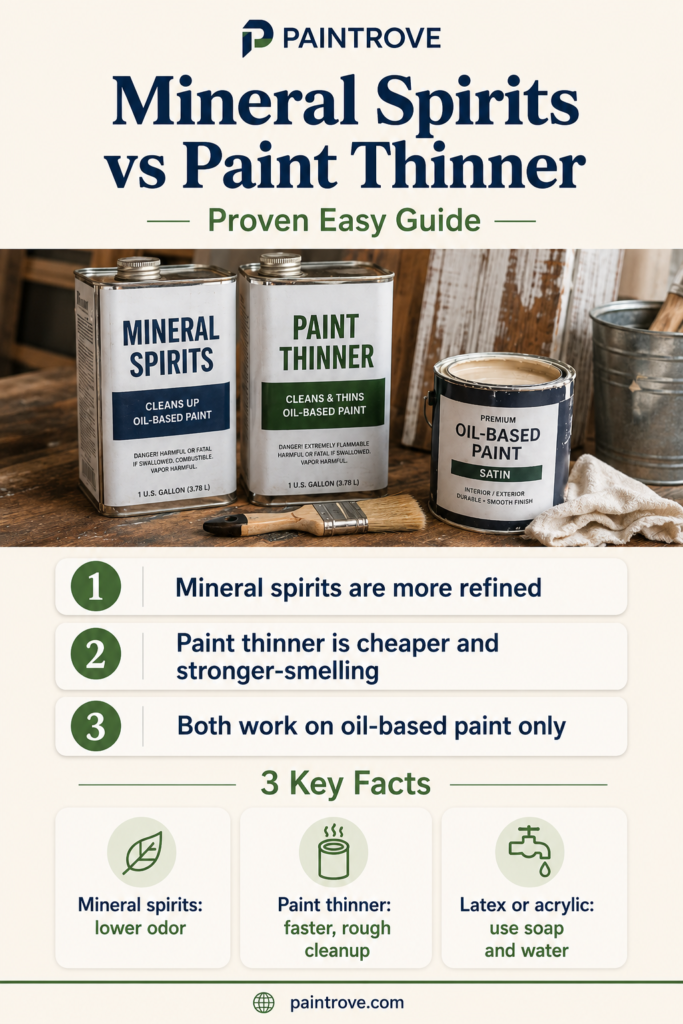
The mineral spirits vs paint thinner question trips up a lot of DIYers, and here’s the simple truth: mineral spirits are a type of paint thinner, just a more refined one. “Paint thinner” is the broad category for any solvent that thins oil-based paint. Mineral spirits are one specific, cleaner-burning member of that family.
So they do many of the same jobs. The differences come down to refinement, odor, toxicity, cost, and finish quality. Pick the wrong one and you’ll get a smellier workspace or a slightly rougher finish, but neither will ruin your project.
This guide breaks down exactly how they differ, what each does best, and which one you should buy for your next job.
Quick Answer: Mineral Spirits vs Paint Thinner
Here’s the fast version.
- Mineral spirits are a heavily refined petroleum solvent. Milder odor, fewer fumes, less toxic, smoother finish, costs more. Best for indoor work, fine finishes, and final cleanup.
- Paint thinner is a generic term for solvents that thin oil-based paint. The kind sold simply as “paint thinner” is usually a less-refined blend. Stronger odor, more fumes, cheaper, cleans tough residue fast. Best for outdoor or heavy-duty jobs on a budget.
- Both thin oil-based paint, stain, and varnish, and clean brushes and tools. Neither works on latex or acrylic (water-based) paint.
- Rule of thumb: want lower odor and a finer finish, choose mineral spirits. Want to save money on rough cleanup, choose paint thinner.
Read on for the full breakdown.
Mineral Spirits vs Paint Thinner: What’s the Real Difference?
The confusion starts with the labels. “Paint thinner” describes what a product does. “Mineral spirits” describes what a product is.
Paint thinner is a functional category. It includes turpentine, acetone, naphtha, and yes, mineral spirits. So every mineral spirit is technically a paint thinner, but not every paint thinner is mineral spirits.
Here’s the tricky part: when you see a can labeled simply “Paint Thinner” on the store shelf, it’s usually mineral spirits in a less refined form, often blended with other solvents. That blend is cheaper, smellier, and more volatile than pure mineral spirits. That’s the real-world comparison most people are making, so that’s what we’ll focus on below.
What Are Mineral Spirits?
Mineral spirits are a petroleum distillate, refined from the same crude oil that gives us gasoline and kerosene. The refining process strips out sulfur, aromatic compounds, and many of the harshest fumes.
The result is a clear, oily solvent that thins oil-based paints and cleans tools with less odor and lower toxicity than raw paint thinner. You’ll also see it called white spirit or Stoddard solvent.
There’s also odorless mineral spirits, refined even further to remove the strongest volatile organic compounds (VOCs). It still has a faint kerosene-like smell, but it’s the go-to for indoor projects around kids and pets.
What Is Paint Thinner?
Paint thinner is the umbrella term for any solvent used to thin oil-based paint or clean up after it. Under that umbrella you’ll find turpentine, acetone, naphtha, and mineral spirits.
The product sold under the plain name “paint thinner” is typically a less-refined, mineral-spirits-based blend. Because it skips some of the refining, it keeps more impurities and VOCs like toluene and benzene. That makes it cheaper to produce, but stronger smelling and more irritating to breathe.
The upside: that extra harshness gives it slightly stronger solvency, so it can cut through tougher, stickier residue a bit faster.
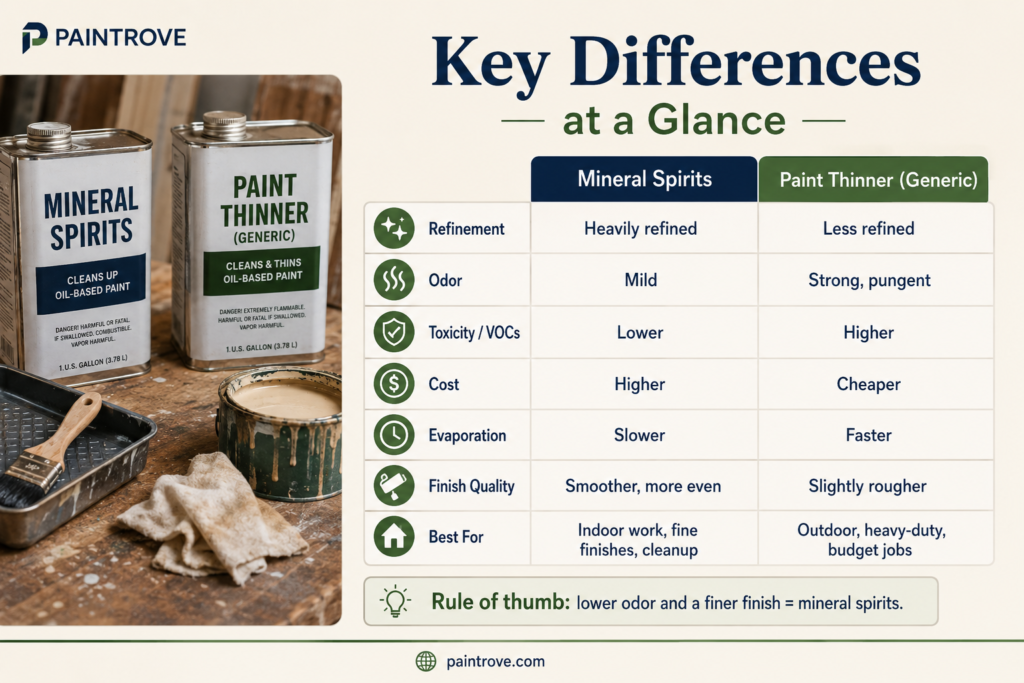
Key Differences at a Glance
Here’s the side-by-side comparison.
| Feature | Mineral Spirits | Paint Thinner (generic) |
|---|---|---|
| Refinement | Heavily refined | Less refined |
| Odor | Mild (odorless version available) | Strong, pungent |
| Toxicity / VOCs | Lower | Higher |
| Cost | Higher (often 40–50% more) | Cheaper |
| Evaporation | Slower | Faster |
| Finish quality | Smoother, more even | Slightly rougher |
| Solvency strength | Effective, gentler | Stronger, faster on residue |
| Best for | Indoor work, fine finishes, cleanup | Outdoor, heavy-duty, budget jobs |
Odor and Toxicity
This is the biggest practical difference. Mineral spirits are refined to cut VOCs and sulfur, so they smell milder and release fewer harmful fumes. Generic paint thinner keeps more of those toxic compounds, so the smell is stronger and ventilation matters more. For indoor work, odorless mineral spirits are the safest, most comfortable choice.
Cost
Paint thinner is the budget pick. Mineral spirits cost more (often 40 to 50 percent more) because the extra refining takes more energy. That said, most projects use only a few ounces, so the dollar difference is usually small unless you’re buying in bulk for big jobs.
Finish Quality and Evaporation
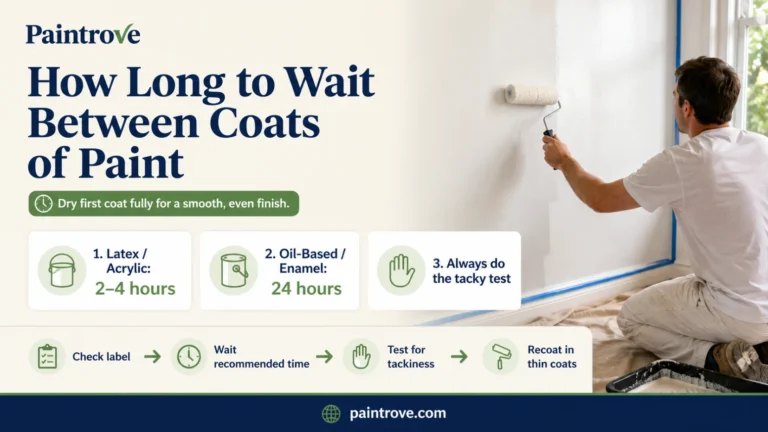
Mineral spirits evaporate more slowly. That keeps your brush workable longer and lets thinned paint level out into a smoother, more even finish. Paint thinner flashes off faster, which can leave a slightly rougher surface. If you want to understand how solvent choice plays into drying, our guide on how long paint takes to dry covers the bigger picture.
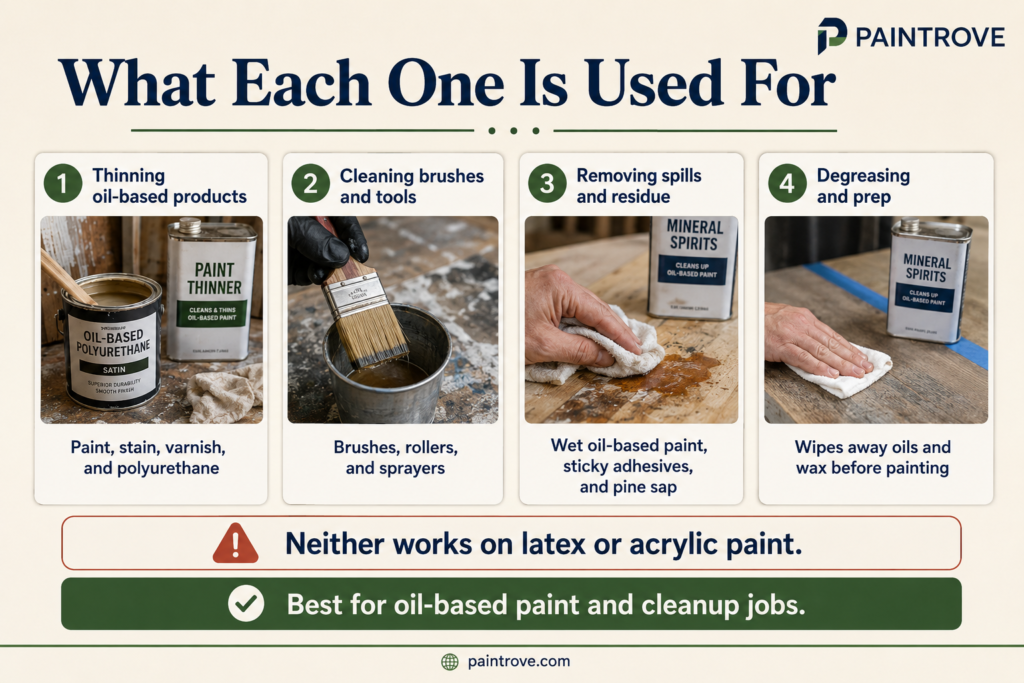
What Each One Is Used For
Both solvents handle the same core jobs. Here’s where they shine.
Thinning oil-based products. Both thin oil-based paint, stain, varnish, and polyurethane to the right consistency for brushing or spraying.
Cleaning brushes and tools. Both dissolve wet oil-based paint from brushes, rollers, and sprayers. Mineral spirits are gentler on bristles and leave less residue, which is why many painters use them for final cleanup. Our full walkthrough on cleaning paint brushes the right way shows the technique step by step.
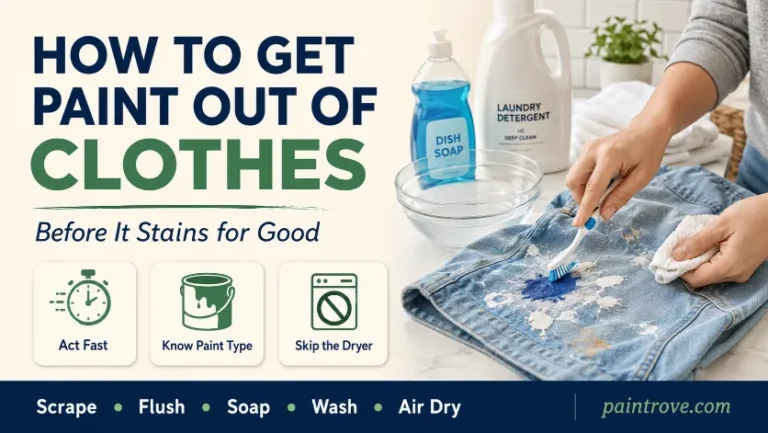
Removing spills and residue. Both lift wet oil-based paint from surfaces. Mineral spirits also remove sticky adhesives, price-tag goo, and pine sap. If oil paint lands somewhere it shouldn’t, our guides on getting paint out of carpet and removing paint from clothes walk through using these solvents safely on each material.
Degreasing and prep. Mineral spirits make a great pre-paint cleaner, wiping away oils and wax so new paint or primer bonds well. That’s a key step when painting over stained or waxed wood.
One firm limit: neither solvent works on water-based paint. For latex or acrylic, you clean up with soap and water. So if you’re dealing with craft-paint spills, see how to get acrylic paint out of clothes instead, since solvents won’t help there.
When to Use Mineral Spirits vs Paint Thinner
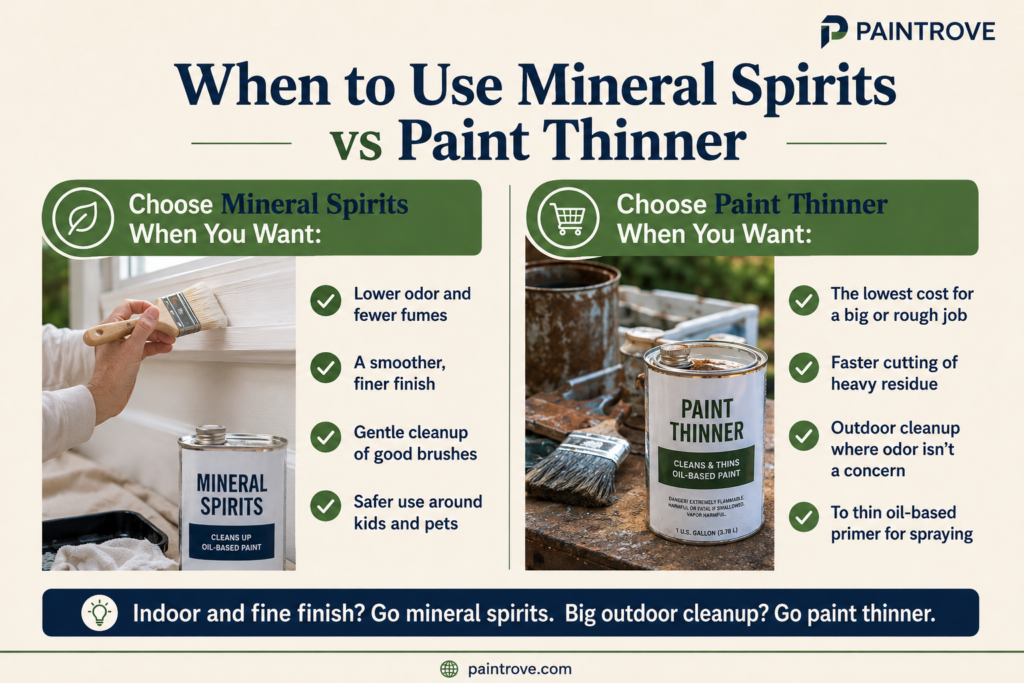
Still deciding? Use this simple logic.
Choose mineral spirits when you want:
- Lower odor and fewer fumes (especially odorless, indoors)
- A smoother, finer finish on fine furniture or trim
- Gentle, residue-free cleanup of good brushes
- Safer use around kids and pets
Choose paint thinner when you want:
- The lowest cost for a big or rough job
- Faster, stronger cutting of heavy or sticky residue
- Outdoor cleanup where odor isn’t a concern
- To thin oil-based primer for a clean spray pattern
For most weekend DIYers doing indoor work, mineral spirits (or odorless mineral spirits) are worth the small extra cost. For large outdoor jobs and heavy cleanup, paint thinner saves money.
Other Solvents Worth Knowing
Paint thinner is a big family. A few cousins are handy to know.
Turpentine. Distilled from pine resin, not petroleum. It has stronger solvency than mineral spirits and can even remove some dried paint, but it’s more irritating. Artists like it for fine oil painting.
Acetone. A fast, aggressive solvent. It’s one of the few that dissolves dried oil paint, and it’s great for lacquers and sticky adhesives. Too harsh for delicate finishes and it flashes off very fast.
Naphtha (VM&P naphtha). Even more refined than mineral spirits, with faster drying. A favorite for dewaxing and degreasing wood before finishing.
Lacquer thinner. A strong blend made specifically for thinning and cleaning lacquers, not general oil paint.
Bio-based options. Citrus-based (d-limonene) and soy-based solvents offer a lower-petroleum alternative with a different, often gentler, hazard profile.
Can You Substitute One for the Other?
Yes, in most cases. Because mineral spirits and standard paint thinner are chemically similar, you can usually swap them for thinning oil-based paint or cleaning tools.
The catch is the trade-offs. Use paint thinner in place of mineral spirits and you’ll get more odor and fumes. Use mineral spirits in place of paint thinner and you’ll spend a little more for a cleaner result.
What you can’t do is substitute either one for water when cleaning up latex or acrylic paint. And for removing fully dried, cured oil paint, you’ll usually need acetone, since mineral spirits and standard thinner work best on wet paint.
Safety, Storage, and Disposal
Both solvents are flammable and release fumes, so treat them with respect.
Ventilation and skin. Work in a well-ventilated space, wear gloves, and avoid prolonged skin contact. Use respiratory protection with strong-smelling paint thinner.
Fire safety. Keep both away from heat, sparks, and open flames. Store them in their original or a tight-lidded metal container in a cool spot, out of reach of children and pets.
Rag warning. Solvent-soaked rags can spontaneously combust as they dry. Lay them flat outdoors to dry fully, or store them in a sealed metal container, before disposal. Never wad them up in a trash can.
Disposal. The EPA classifies both as hazardous waste. Never pour them down a drain or onto the ground. Take used solvent to a local hazardous-waste facility. You can often reuse mineral spirits: let the paint settle out, then pour the clear solvent into a clean jar.
While you’re organizing your supplies, it’s worth checking what else is on the shelf. Our guide on how long paint lasts helps you decide what to keep and what to toss.
Mistakes to Avoid
Steer clear of these and you’ll stay safe and get better results.
- Don’t use either on water-based paint. Latex and acrylic clean up with soap and water.
- Don’t expect them to remove dried oil paint. Reach for acetone or turpentine instead.
- Don’t work without ventilation. Fumes build up fast indoors.
- Don’t pour leftovers down the drain. That’s both illegal in many places and bad for pipes and the environment.
- Don’t leave oily rags in a pile. Dry them flat to prevent fires.
- Don’t overpay if you don’t need to. For rough outdoor cleanup, basic paint thinner is fine.
FAQs
Is mineral spirits the same as paint thinner?
Not exactly. Mineral spirits are a specific, refined petroleum solvent, while paint thinner is a general category that includes mineral spirits, turpentine, acetone, and naphtha. Every mineral spirit is a paint thinner, but not every paint thinner is mineral spirits. The product labeled plain “paint thinner” is usually a less-refined version of mineral spirits.
Can I use paint thinner instead of mineral spirits?
Yes, for most jobs like thinning oil-based paint or cleaning brushes, you can swap paint thinner for mineral spirits. The trade-off is more odor, more fumes, and a slightly rougher finish. For indoor work or fine furniture, mineral spirits give a cleaner, more comfortable result, so the small extra cost is often worth it.
Which is less toxic, mineral spirits or paint thinner?
Mineral spirits are less toxic. They’re refined to remove much of the sulfur, aromatic compounds, and VOCs that generic paint thinner keeps. Odorless mineral spirits go a step further and remove the strongest fumes, making them the safest choice for indoor projects and homes with kids or pets.
Does mineral spirits or paint thinner smell less?
Mineral spirits smell less. The refining process cuts the strong, pungent odor that raw paint thinner gives off. Odorless mineral spirits have the faintest smell of all, though a slight kerosene-like scent can remain. Generic paint thinner has the strongest odor and needs the most ventilation.
Can you use mineral spirits or paint thinner on latex paint?
No. Both are designed for oil-based paint, stain, and varnish only. For latex or acrylic (water-based) paint, clean up with warm water and dish soap instead. Using a petroleum solvent on water-based paint won’t work and just wastes the product.
Will mineral spirits remove dried paint?
Mineral spirits work best on wet oil-based paint and aren’t great at removing fully dried, cured paint. For dried oil paint, acetone or turpentine has the stronger solvency needed to break it down. Always test a small hidden area first, since strong solvents can affect some surfaces.
Is mineral spirits or paint thinner cheaper?
Paint thinner is cheaper, often 40 to 50 percent less than mineral spirits, because it’s less refined and takes less energy to produce. However, most projects use only a few ounces, so the price gap usually doesn’t add up to much unless you’re buying large quantities for big jobs.
How do you dispose of mineral spirits and paint thinner?
Both are hazardous waste, so never pour them down a drain or onto the ground. Let used solvent sit so the paint settles, reuse the clear liquid if you can, and take the rest to a local hazardous-waste facility. Store it in a sealed container until you can drop it off.
Final Thoughts
When it comes to mineral spirits vs paint thinner, remember that mineral spirits are simply the more refined option within the broader paint-thinner family. They cost a bit more but reward you with less odor, lower toxicity, and a smoother finish, which makes them ideal for indoor work and fine projects. Generic paint thinner is the budget-friendly workhorse for outdoor and heavy-duty cleanup.
Either way, both thin oil-based paint and clean your tools, neither touches water-based paint, and both deserve careful handling, good ventilation, and proper disposal. Match the solvent to the job, and your next painting project will go smoothly from first coat to final cleanup.