How to Remove Paint From Concrete: 6 Proven Easy Ways
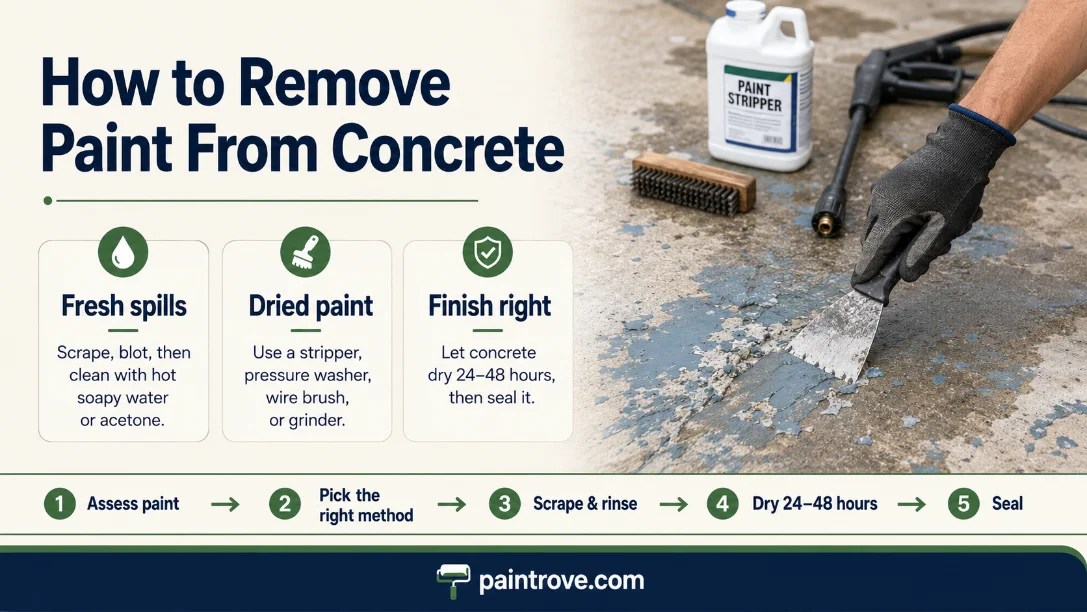
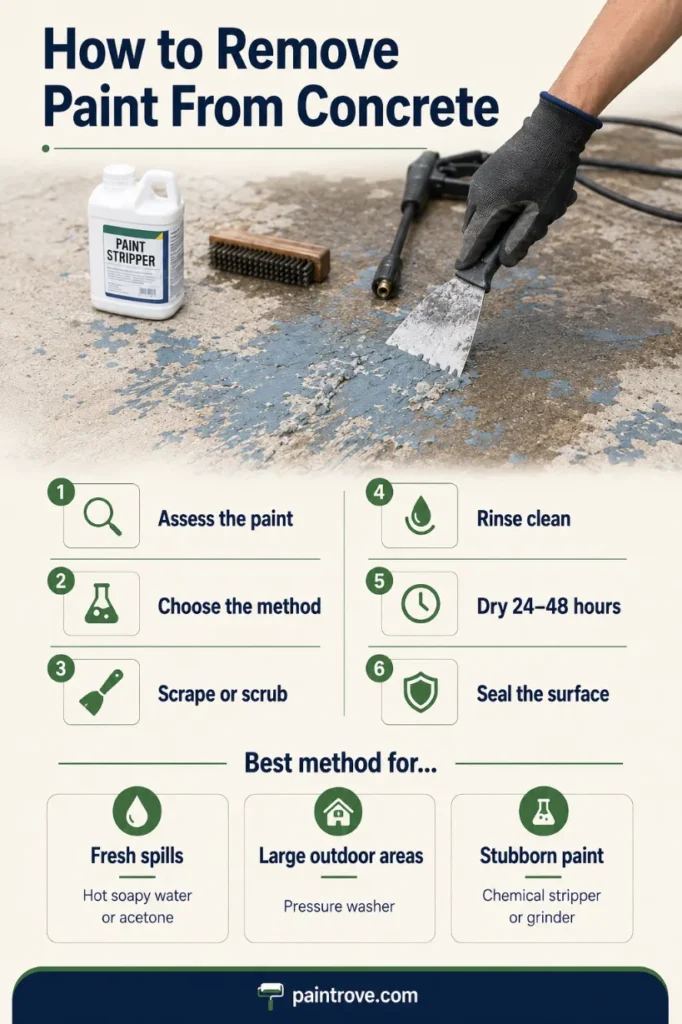
Learning how to remove paint from concrete saves a stained garage floor, driveway, or patio from looking rough for years. The challenge is that concrete is porous, so paint sinks into the surface and grips hard. The fix depends on how much paint you’re dealing with: a chemical stripper for stubborn layers, a pressure washer for large outdoor areas, or a wire brush and grinder for heavy-duty jobs.
Whether you just spilled a can or you’re staring at decades-old floor paint, there’s a method that works. Some need nothing more than soap and hot water. Others call for a rented grinder.
This guide covers all six proven methods, when to use each, and how to seal the concrete so it never happens again.
Quick Answer: How to Remove Paint From Concrete
Short on time? Here’s the fast version.
- For fresh spills: scrape up the excess with a plastic scraper, blot with paper towels, then clean with acetone or hot soapy water.
- For dried paint, pick a method:
- Chemical stripper for stubborn or layered paint.
- Pressure washer for driveways and patios.
- Wire cup brush on a drill for old paint on unsealed concrete.
- Concrete grinder for large or heavily painted areas.
- Abrasive blasting for big professional jobs.
- Heated vinegar or soapy water for light, fresh stains.
- Scrape and rinse away the loosened paint and residue.
- Let the concrete dry for 24 to 48 hours.
- Seal it to protect against future stains.
Read on for the full step-by-step on each method.
What’s the Best Way to Remove Paint From Concrete?
There’s no single best way to remove paint from concrete. The right choice depends on three things: how much paint there is, whether it’s fresh or dried, and where the concrete is.
- Chemical strippers are best for stubborn, layered, or localized paint.
- Pressure washing suits large outdoor surfaces like driveways and patios.
- Wire brushing handles old dried paint on small, unsealed areas.
- Grinding and blasting are the heavy hitters for large or thick jobs.
- Natural methods like vinegar and soap work for light, fresh stains.
Many jobs combine methods. You might strip the bulk, then pressure wash and wire-brush the last traces.
First, Identify the Paint and Surface
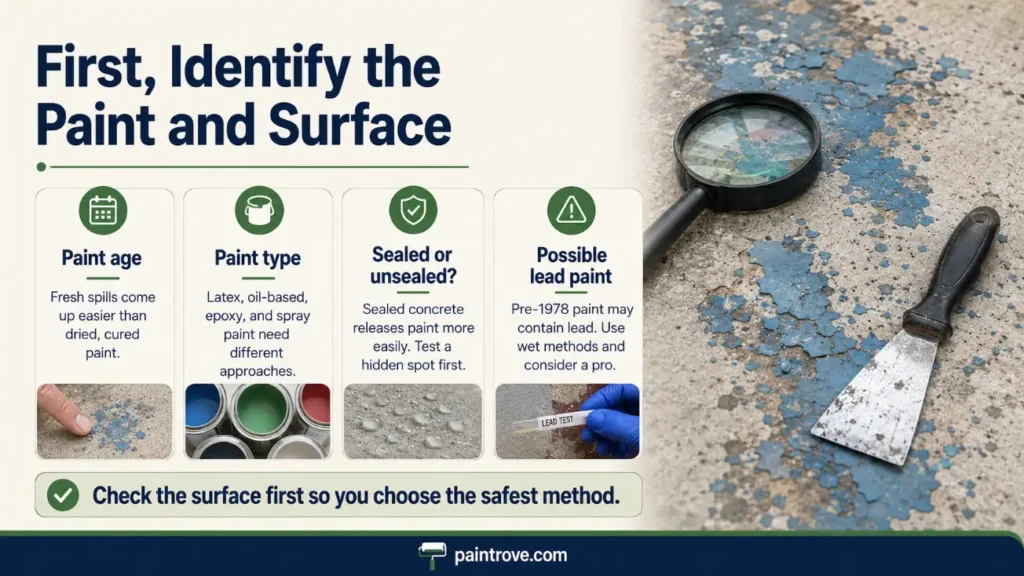
Before you start, take a minute to assess what you’re working with.
How old is the paint? Fresh spills wipe up far more easily than dried, cured paint that’s soaked into the pores.
What type of paint is it? Latex, oil-based, epoxy, and spray paint all behave differently. Solvent-based strippers tackle most, but heavy epoxy may need grinding.
Is the concrete sealed? Sealed concrete has a shine and releases paint more easily. Mechanical methods like wire brushing can dull that sheen, so test a hidden spot first.
Could it contain lead? Old paint, especially pre-1978, may contain lead. Avoid dry grinding or sanding it, use wet methods, and consider a pro.
The same stripping logic applies to wood surfaces too. If your project also involves painted trim or furniture nearby, our guide on removing paint from wood covers those steps.
How to Remove Fresh Paint Spills From Concrete
Caught it early? You’re in luck. Fresh paint hasn’t soaked in yet.
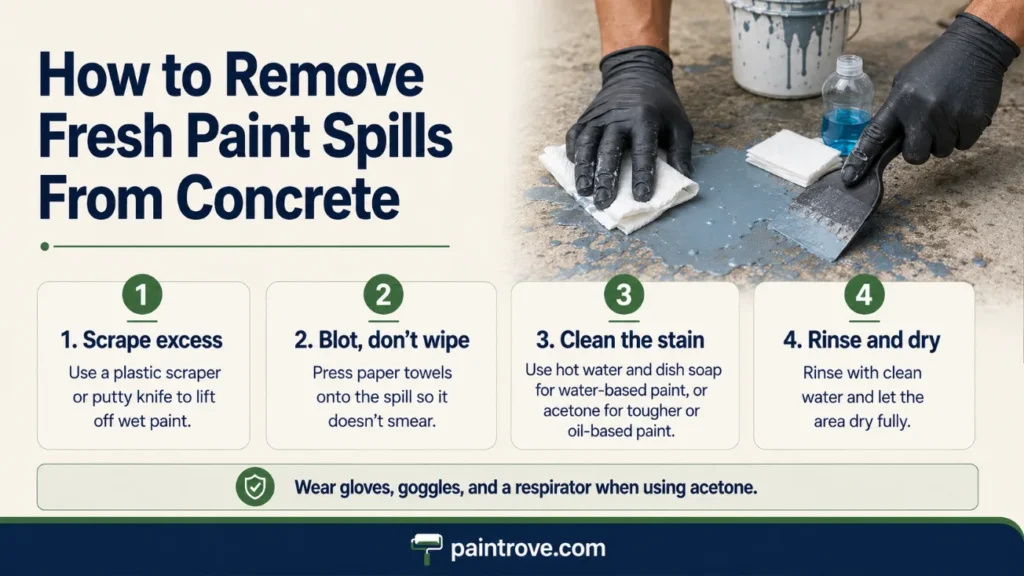
- Scrape up the excess. Use a plastic scraper or putty knife to lift off as much wet paint as you can without spreading it.
- Blot the rest. Press paper towels onto the spill to soak up more. Don’t wipe, which smears it.
- Clean the stain. For water-based paint, scrub with hot water and a little Dawn dish soap. For tougher or oil-based paint, apply acetone in a ventilated area, let it sit five minutes, then scrub away.
- Rinse and dry. Rinse the area with clean water and let it dry.
Wear gloves, goggles, and a respirator when using acetone. If the paint landed on nearby surfaces too, our guides on getting paint out of carpet walk through those materials.
Method 1: Chemical Paint Stripper
Chemical strippers break the bond between paint and concrete so it lifts away. They’re the go-to for stubborn, multi-layer, or localized paint. Choose a product matched to your paint type. Modern options range from caustic liquids to eco-friendly citrus gels like Citristrip, plus heavier removers such as Klean-Strip and Goof Off.
- Work in a ventilated area and wear gloves, goggles, and a respirator.
- Apply a thick layer of stripper with a brush, broom, or squeegee.
- For tough jobs, cover it with plastic film and leave it overnight so it soaks in.
- Wait the full time on the label until the paint bubbles and softens.
- Scrape off the paint with a putty knife or wire brush.
- Pressure wash or scrub the residue, then rinse thoroughly so nothing is left behind.
A caution: strippers can discolor or pit concrete if left on too long, so test a small area first. To clean up oily residue or tools afterward, our comparison of mineral spirits vs paint thinner helps you pick the right solvent.
Method 2: Pressure Washing
A pressure washer blasts paint and grime off with high-pressure water. It’s best for large outdoor surfaces like driveways, patios, and sidewalks.
- Use a washer rated at least 3000 PSI with a flow of 4+ gallons per minute. Anything weaker just cleans the surface without lifting paint.
- Wear eye and ear protection.
- Hold the nozzle back and keep it moving to avoid gouging the concrete.
- Work in sections, using hot or soapy water for better results.
- Let the concrete dry fully before sealing.
Pressure washing is greener than chemicals and removes dirt too, but it’s less effective on well-bonded paint and can crack or chip concrete if you get too aggressive.
Method 3: Wire Brush or Wire Cup Brush
For old, dried paint on a small area of unsealed concrete, a wire brush is cheap and surprisingly effective. A wire cup brush attached to a drill grinds away the top layer along with the paint.
- Fit a wire cup brush onto your drill.
- Work it over the stained area in sections, letting the bristles grind off the paint.
- Follow up with hot soapy water and a stiff brush to clean the residue.
This method won’t lift every speck, but it makes a big difference on garage floors. Skip it on sealed concrete, since it dulls the shine where it touches.
Method 4: Concrete Grinding
For large or heavily painted surfaces, a concrete grinder is the workhorse. It uses a rotating abrasive disc to grind off paint and a thin layer of concrete. You can rent one for roughly $100 to $200 a day.
- Wear a respirator and eye protection. Grinding creates fine dust.
- Attach the grinder to a vacuum if possible to control dust.
- Work steadily across the surface, keeping the machine moving.
- Sweep and clean up thoroughly afterward.
Grinding is fast and powerful, but it removes part of the concrete surface, so it’s best for floors you plan to coat or refinish.
Method 5: Abrasive Blasting
Abrasive blasting (including dustless and soda blasting) shoots fine media at the surface to strip paint fast. It’s mostly a professional, large-scale option for warehouse floors, big driveways, or thick industrial coatings.
Because it needs special equipment and skill, most homeowners hire this out. If you have a huge area or layers of stubborn paint, a concrete restoration company with blasting gear is often the most efficient route.
Method 6: Natural Removers (Vinegar and Soap)
Prefer to skip harsh chemicals? Natural methods work for light or fresh stains, though they’re slower and less reliable on cured paint.
Heated vinegar. Microwave white vinegar until hot, sponge it onto the paint, and let it sit 15 minutes. If the paint softens or bubbles, scrape it up. Reheat and repeat as needed. Be honest with your expectations, though: vinegar often fails on fully dried paint and works best on fresh spills.
Dawn soap and hot water. For fresh, light stains, scrub with hot water and dish soap. A stiff brush and some elbow grease lift a surprising amount.
TSP. Trisodium phosphate, a strong concrete cleaner, can help loosen paint and clean the surface before other methods.
These are gentle on you and the environment, but thick, set-in paint usually needs a stripper, washer, or grinder.
Which Method Should You Choose?
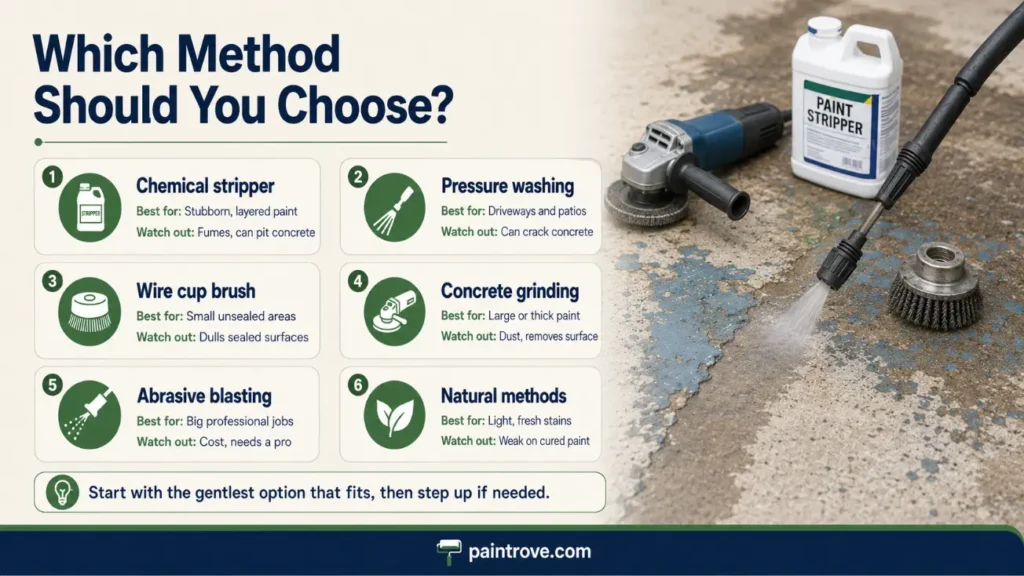
Use this quick reference to match the method to your job.
| Method | Best For | Effort | Watch Out For |
|---|---|---|---|
| Chemical stripper | Stubborn, layered paint | Medium | Fumes, can pit concrete |
| Pressure washing | Driveways, patios | Medium | Can crack concrete |
| Wire cup brush | Small unsealed areas | High | Dulls sealed surfaces |
| Concrete grinding | Large or thick paint | Medium | Dust, removes surface |
| Abrasive blasting | Big professional jobs | Low (hired) | Cost, needs a pro |
| Natural (vinegar/soap) | Light, fresh stains | High | Weak on cured paint |
When in doubt, start with the gentlest method that fits and step up from there.
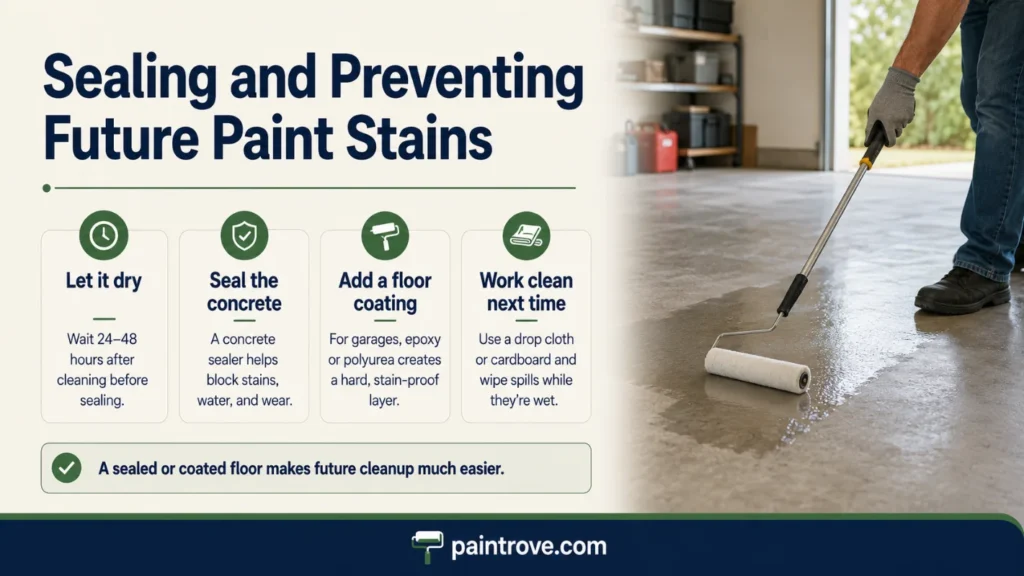
Sealing and Preventing Future Paint Stains
Once the paint is gone and the concrete is clean and dry, protect your work.
Seal the concrete. A concrete sealer guards against future stains, water, and wear. Let the surface dry 24 to 48 hours after cleaning before sealing.
Add a floor coating. For garages, an epoxy or polyurea floor coating from a brand like Rust-Oleum or Behr creates a hard, stain-proof layer. After that, spilled paint wipes up before it ever reaches the concrete.
Work clean next time. Lay down a drop cloth or cardboard before painting near concrete, and wipe up spills while they’re still wet.
A sealed or coated floor turns the next paint accident into a two-minute cleanup instead of a weekend project.
Mistakes to Avoid
Steer clear of these and you’ll protect both the concrete and yourself.
- Don’t skip safety gear. Strippers, acetone, and grinding dust all need gloves, goggles, and a respirator.
- Don’t leave stripper on too long. It can discolor or pit the concrete.
- Don’t over-pressure the washer. Too much PSI cracks and chips the surface.
- Don’t dry-grind possible lead paint. Use wet methods and consider a pro.
- Don’t seal damp concrete. Trapped moisture ruins the seal. Let it dry fully.
- Don’t expect vinegar to strip cured paint. Use it only on fresh, light stains.
FAQs
What is the easiest way to remove paint from concrete?
For small areas, a chemical paint stripper is usually the easiest way to remove paint from concrete. You brush it on thick, let it soften the paint, then scrape and rinse it away. For large outdoor surfaces, a pressure washer is easier. For fresh spills, hot water and dish soap often do the trick.
Does vinegar remove paint from concrete?
Vinegar can soften light or fresh paint, but it’s unreliable on dried, cured paint. Heat white vinegar, apply it, and let it sit 15 minutes before scraping. Many people find it doesn’t bubble or lift old paint even after several tries, so it works best as a gentle option for fresh spills rather than set-in stains.
How do you remove dried paint from concrete without chemicals?
Use mechanical methods. A wire cup brush on a drill grinds dried paint off small, unsealed areas. A pressure washer handles larger outdoor surfaces. For heavy jobs, a rented concrete grinder removes paint and a thin layer of concrete. Hot water, dish soap, and a stiff brush help with lighter stains.
Will a pressure washer remove paint from concrete?
A pressure washer can remove paint from concrete if it’s powerful enough, at least 3000 PSI with a high flow rate. It works best on driveways and patios. Keep the nozzle moving and back from the surface to avoid cracking the concrete. It’s less effective on well-bonded paint than a stripper or grinder.
Does acetone remove paint from concrete?
Yes, acetone dissolves many paints and works well on fresh spills and small spots. Apply it in a ventilated area, let it sit about five minutes, then scrub it away. Always wear gloves, goggles, and a respirator, and keep it away from flames since acetone is highly flammable.
How do you get spray paint off concrete?
For spray paint, try a chemical graffiti or paint remover, or apply acetone to small areas and scrub. For larger areas, a pressure washer or wire brush works. Because spray paint sits thin on the surface, it often comes off more easily than thick floor paint. Test a small area first.
Can you remove paint from concrete without damaging it?
Yes, if you choose the right method and go gently. Chemical strippers and soft pressure washing are least likely to harm the surface, while aggressive grinding and high-pressure washing can damage it. Always test a hidden area first, follow product directions, and step up from gentle to stronger methods only as needed.
Should you seal concrete after removing paint?
Yes. Sealing protects clean concrete from future stains, moisture, and wear. Let the surface dry 24 to 48 hours after cleaning, then apply a concrete sealer or, for garages, an epoxy or polyurea floor coating. A sealed surface makes the next spill far easier to wipe up.
Final Thoughts
Now that you know how to remove paint from concrete, that stained floor or driveway doesn’t have to stay that way. Start by checking whether the paint is fresh or dried and how much there is. Fresh spills clean up with a scraper and soapy water, while dried paint calls for a chemical stripper, pressure washer, wire brush, or grinder depending on the size of the job.
Always test a small spot, wear your safety gear, and start with the gentlest method that fits. Once the paint is gone, seal the concrete so the next spill never stands a chance. With the right approach, your concrete can look clean and fresh again.