What Color Do Orange and Yellow Make When Mixed?
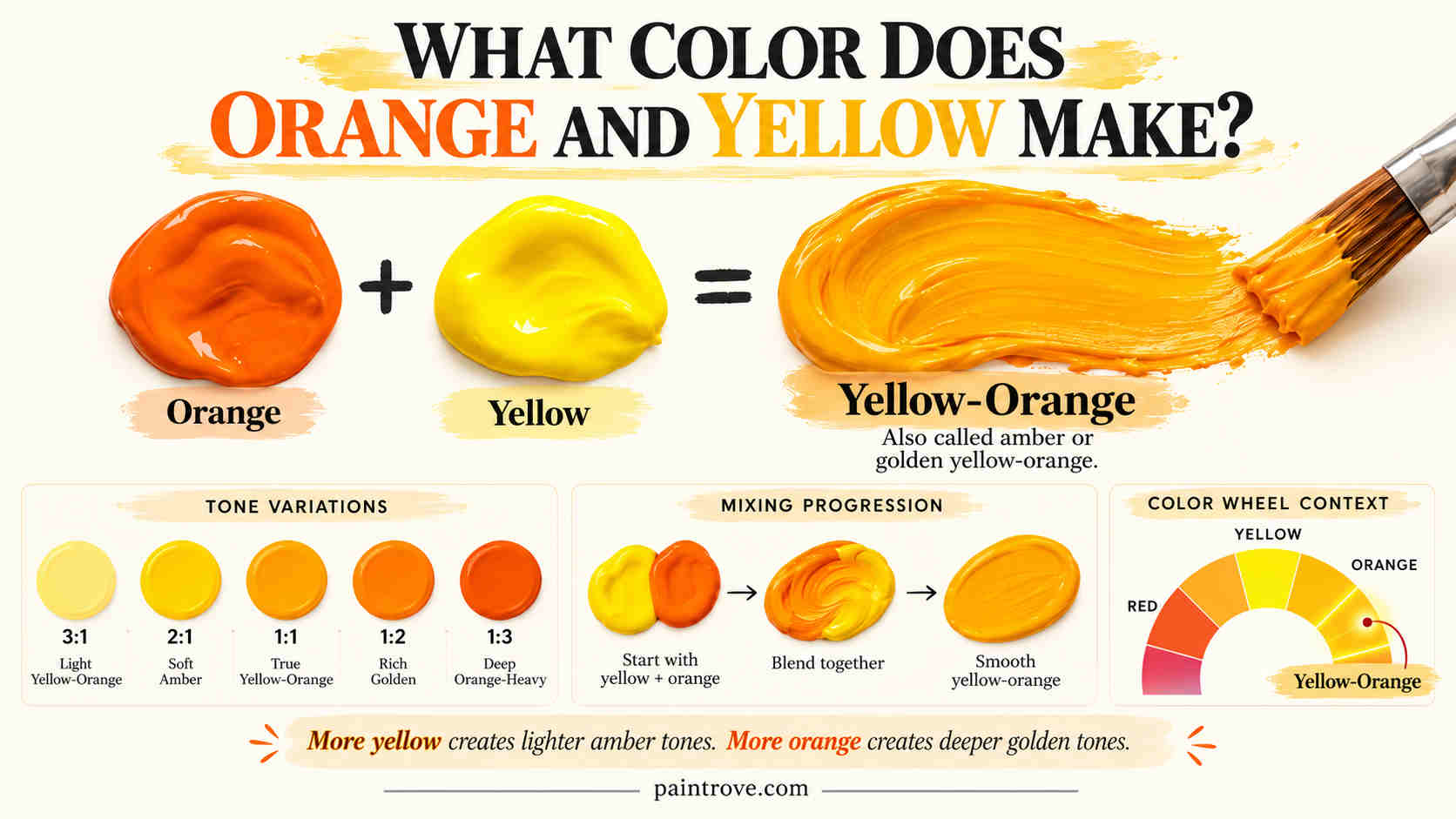
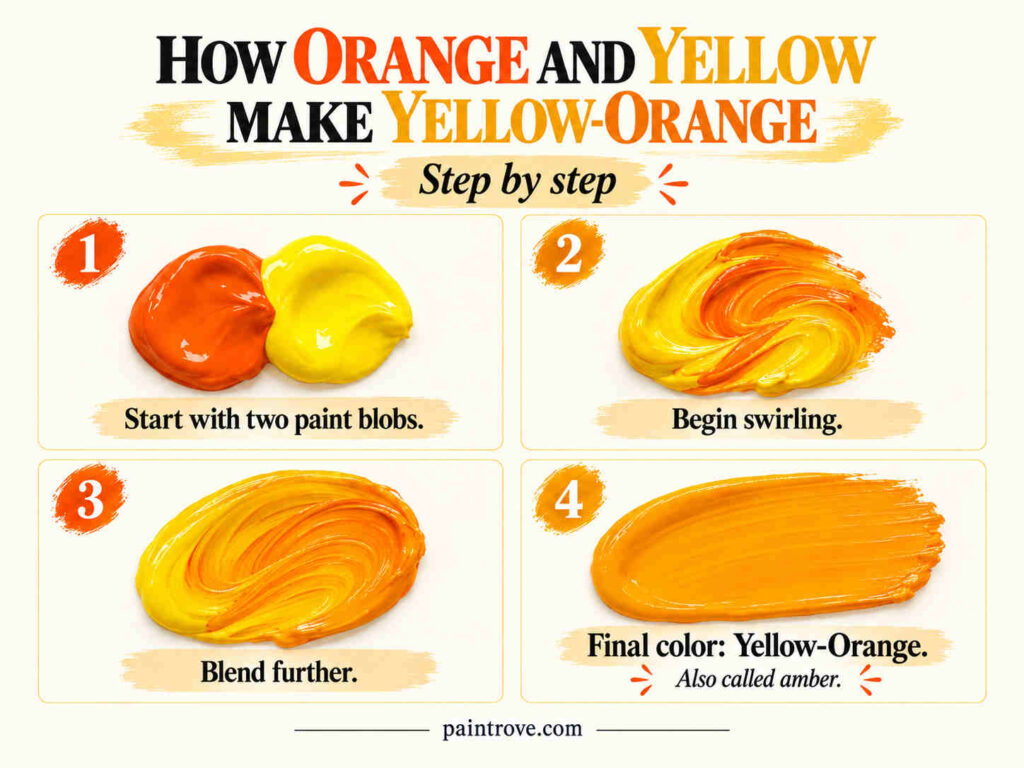
What Color Do Orange and Yellow? Orange and yellow make amber, a warm golden hue also called yellow-orange. It sits roughly at Hex #FFBF00, midway between the two colors on the wheel. Because orange already contains yellow, adding more yellow does not create a new color so much as pull orange back toward gold.
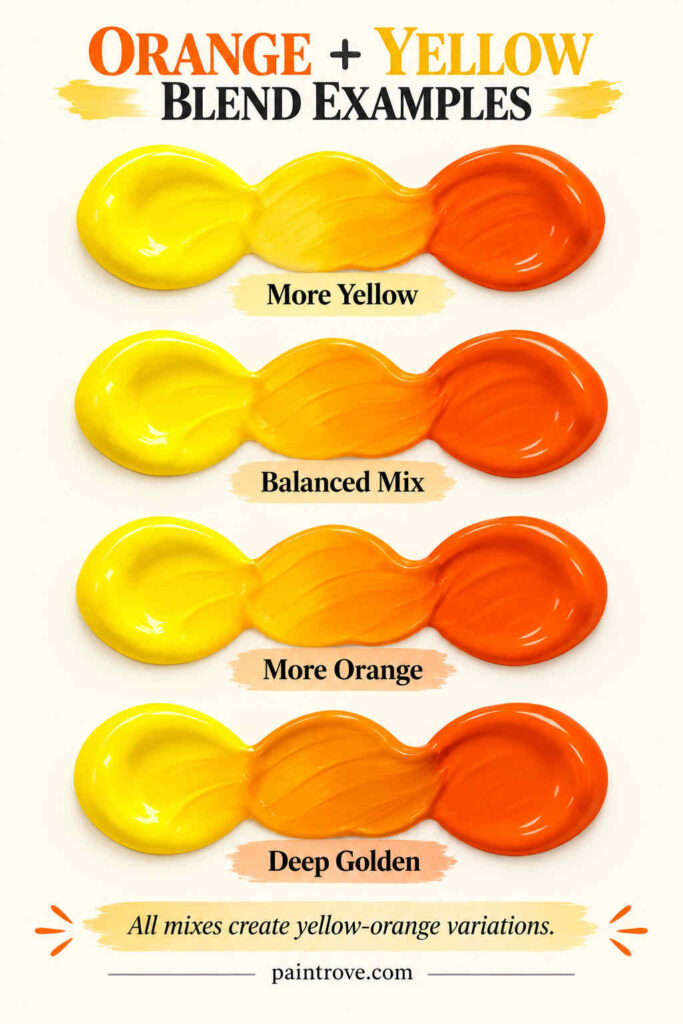
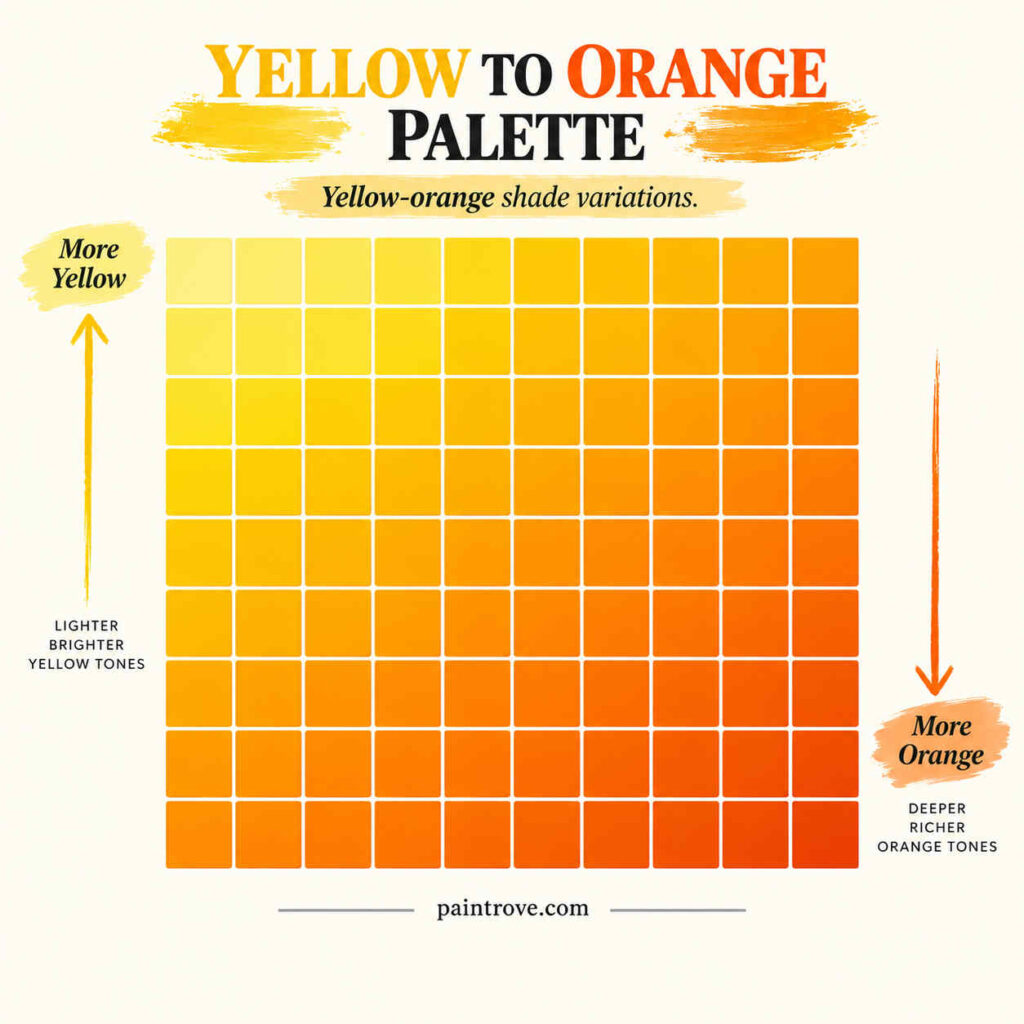
The exact result depends on your ratio. A yellow-heavy mix gives a bright golden yellow. An orange-heavy mix gives a deeper amber close to marigold. Nothing you do with these two will produce a dull or muddy color, because they sit next to each other on the wheel and reinforce rather than cancel each other.
The order of the names makes no difference: yellow and orange make the same amber, whichever way round you ask it. Only the ratio changes the result.
This guide covers the ratios, how amber differs from plain yellow, how to mix it without orange paint, and where the result actually gets used.
What color does orange and yellow make?
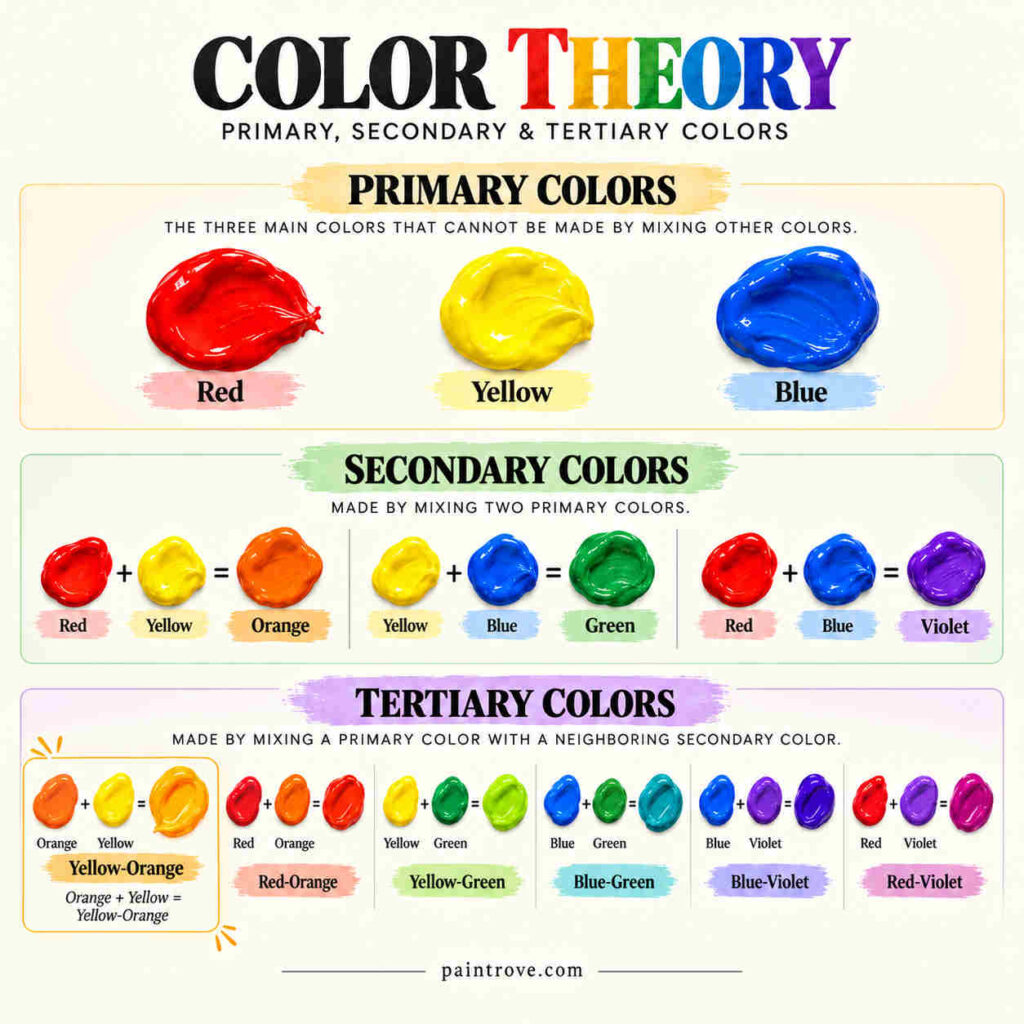
Amber, also known as yellow-orange. It is a tertiary color, meaning it comes from mixing a primary with a neighbouring secondary.
Yellow is a primary color. Orange is a secondary color, made from red and yellow. Combine a primary with the secondary beside it and you land on a tertiary sitting between them, which is why orange and yellow make a color that reads as both at once. The six tertiaries on the traditional wheel are yellow-orange, red-orange, red-purple, blue-purple, blue-green and yellow-green.
Searches for this mix run in both directions, and the answer is identical either way. Yellow and orange make amber, and orange and yellow make amber. Because orange is already two-thirds of the way to yellow in pigment terms, though, the mix behaves asymmetrically. Even a small amount of orange shifts yellow noticeably, while a large amount of yellow is needed to visibly lighten orange. Orange simply has more tinting strength here, since it carries red.
If you want the full picture of how orange itself is built before mixing anything into it, the guide to what colors make orange covers the red and yellow foundation this mix sits on top of.
Why orange and yellow make a warm color rather than a dull one
Orange and yellow are analogous colors, meaning they are neighbours on the color wheel. Analogous mixes stay clean.
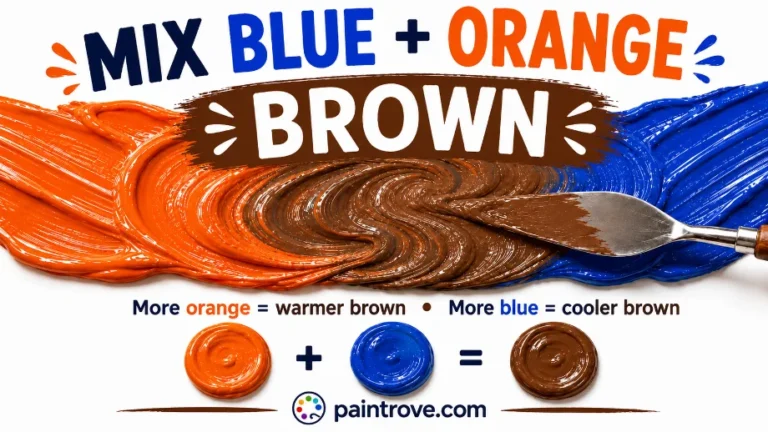
This matters more than it sounds. When you combine colors sitting opposite each other, each one cancels part of the other and the result loses saturation, drifting toward brown or grey. That is what happens when blue and orange are mixed, and the mechanism behind it is explained in the guide to complementary colors.
Orange and yellow have no such conflict. There is no blue in either one to neutralize the mix, so orange plus yellow produces a color that stays bright and high in chroma no matter what proportion you use. This makes it one of the most forgiving mixes in painting. Beginners who struggle to mix a clean purple or green can usually mix a good amber on the first attempt.
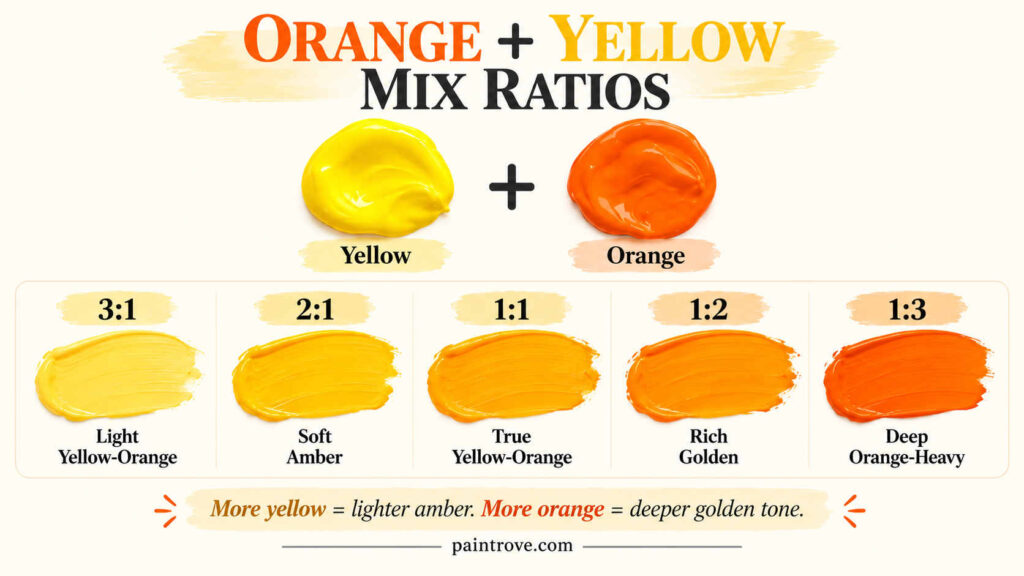
Orange and yellow mixing ratios
Every ratio below is a starting point, not a formula. Pigment strength varies by brand, so add gradually and test on scrap before committing.
| Approximate ratio (orange : yellow) | Result | Roughly matches |
|---|---|---|
| 1 : 6 | Barely warmed yellow | Golden yellow, Hex #FFDF00 |
| 1 : 4 | Warm sunny yellow | Saffron, Hex #F4C430 |
| 1 : 3 | Light amber | Amber, Hex #FFBF00 |
| 1 : 2 | True yellow-orange | Yellow-orange, Hex #FFAE42 |
| 1 : 1 | Rich golden orange | Marigold, Hex #EAA221 |
| 2 : 1 | Deep amber, orange-dominant | Tangerine, Hex #F28500 |
| 4 : 1 | Orange with a golden cast | Orange, Hex #FFA500 |
Yellow plus orange at roughly three to one is the ratio most people are actually looking for when they picture amber. Yellow plus orange at one to one is already well into golden orange territory.
The practical rule: add orange into yellow, never yellow into orange. Orange contains red, and red has far more tinting strength than yellow. Starting with a pool of yellow and touching orange into it gives you fine control. Doing it the other way round means using a great deal of yellow before anything visibly shifts, and wasting paint in the process.
Amber vs yellow: what is the difference?
The amber vs yellow comparison trips people up because both read as bright and warm, but they are different hues, not two shades of the same one.
| Yellow | Amber | |
|---|---|---|
| Position on wheel | Primary hue | Between yellow and orange |
| Typical hex | #FFFF00 | #FFBF00 |
| RGB | 255, 255, 0 | 255, 191, 0 |
| Red content | None beyond the hue itself | Contains red via orange |
| Temperature | Warm, but the coolest warm | Distinctly warmer |
| Reads as | Bright, sharp, high-visibility | Golden, glowing, mellow |
The difference in RGB is instructive. Pure yellow is full red and full green light. Amber drops the green channel to around 191, which is what introduces the orange character. Take green lower still and you arrive at orange itself at 255, 165, 0.
In practical terms, yellow advances and grabs attention while amber recedes slightly and feels richer. This is why traffic signals and hazard lights use amber rather than yellow, and why amber reads as warm lamplight where yellow reads as daylight.
Amber, gold, marigold and yellow-orange compared
These names overlap heavily and get used interchangeably. Here is roughly where each sits.
| Name | Approximate hex | Character |
|---|---|---|
| Golden yellow | #FFDF00 | Yellow with the faintest warmth |
| Saffron | #F4C430 | Slightly muted warm yellow |
| Amber | #FFBF00 | The classic yellow-orange midpoint |
| Yellow-orange | #FFAE42 | The formal tertiary name, slightly oranger |
| Gold | #FFD700 | Yellower and more metallic in feel |
| Marigold | #EAA221 | Deeper, slightly earthy amber |
| Goldenrod | #DAA520 | Muted, brownish gold |
| Mustard | #FFDB58 | Yellow dulled toward brown, not a pure mix |
| Honey | #EB9605 | Deep amber leaning orange |
Only the first five come directly from orange plus yellow at different ratios. Goldenrod and mustard need something extra, usually a touch of brown or its complement, to knock the saturation down. The brown and yellow mixture is the more reliable route to a true mustard or golden tan.
How to mix amber without orange paint
You do not need an orange tube. Since orange is red plus yellow, you can build amber from two primaries.
- Start with a generous amount of a warm yellow such as Cadmium Yellow Medium or Hansa Yellow Deep.
- Add a warm red such as Cadmium Red Light in very small touches. Warm is essential here, since a cool red like Alizarin Crimson carries blue bias and will dull the mix.
- Stop as soon as the yellow turns golden. Amber needs far less red than orange does, roughly one part red to six or eight parts yellow as a starting point.
- Adjust with more yellow if it tips too far toward orange.
This route often gives a cleaner result than mixing a premixed orange into yellow, because you control exactly how much red enters. Some commercial oranges are pigment blends that carry unexpected undertones.
A single-pigment shortcut also exists. Indian Yellow, Yellow Ochre and the diarylide yellows are already amber-leaning straight from the tube, and Cadmium Yellow Deep sits close to yellow-orange with no mixing at all.
Shades you can build from orange plus yellow
Once you have a base amber, four adjustments cover most of what you would want:
| Want | Add | Result |
|---|---|---|
| Lighter, pastel amber | Titanium white | Peach-gold, near Hex #FFE5B4 |
| Deeper, richer amber | More orange, then a touch of red | Honey to burnt gold |
| Muted, antique gold | A trace of blue or violet | Goldenrod to old gold |
| Darker without dulling | Burnt umber or raw sienna | Bronze, caramel |
Avoid black. It reads green or blue in most brands and will drag amber toward olive rather than deepening it. The full range of what happens when you push an orange-family color toward black is covered in orange and black mixed, which shows why an earth pigment is almost always the better choice.
Common problems when orange and yellow make the wrong shade
The mix looks like plain orange. You used too much orange, which is the usual outcome given its strength. Add yellow in quantity, since it takes a lot to shift the balance back.
The mix looks like plain yellow. Not enough orange. Add it in tiny increments; a brushtip is often enough.
The result is dull or slightly greenish. Your yellow is cool. Lemon Yellow and Cadmium Lemon lean green and carry blue bias, which quietly neutralizes the warmth. Switch to a warm yellow. If you want to see the same bias working in the opposite direction, the yellow and green mixture shows what happens when a cool yellow is pushed further that way.
The color went chalky. Too much white too fast. White reduces saturation as well as darkness, so amber tinted heavily loses its glow. Rebuild from a stronger base and add white sparingly.
It dried different from the wet mix. Normal. Acrylic dries darker, watercolor dries lighter. Test a swatch and let it dry fully before matching.
Orange and yellow in RGB, hex and CMYK
Digital color reaches amber by a different route than paint, so the two should not be confused.
- Paint (subtractive RYB). Orange and yellow make amber by combining pigments that each absorb part of the spectrum.
- Screens (additive RGB). Amber is 255, 191, 0. Full red light, high green light, no blue. There is no orange or yellow channel involved.
- Print (CMYK). Amber comes from yellow ink with a moderate magenta overlay, roughly 0, 25, 100, 0.
Amber is one of several hues formally defined for automotive signal lamps under SAE and ECE standards, which specify a range of orange-yellow coordinates rather than a single value. That is a useful reminder that amber describes a band of color, not one fixed point, which is exactly why your mixed version can look right at several different ratios.
A monitor can also display saturated ambers no pigment can physically reach, so treat any hex code as a target rather than a value your paint will land on.
Using amber and yellow-orange in art, decor and design
In painting, amber does a great deal of quiet work. It is the natural color of warm light, so it appears in sunsets, candlelit interiors, autumn foliage and the lit side of skin tones. Because it stays saturated at every ratio, it also functions as a transition color, letting you move a passage from yellow into orange without a visible seam. Glazed thinly over a warm underpainting it produces a glow that is difficult to achieve with a single opaque color.
In interiors, amber is warmer and considerably more liveable than pure yellow, which can overwhelm a room at scale. Honey, caramel and antique gold work as wall colors where a bright yellow would not. Amber pairs naturally with deep blues and teals for contrast, and with terracotta, cream and warm wood for a softer scheme. It also flatters warm artificial light, so it holds up well in rooms used mainly in the evening.
In design and branding, amber signals warmth, quality and caution simultaneously, depending on context. It is standard for warning states in interface design, sitting between green and red, and common in food, whisky, honey and craft packaging where it suggests richness. Softer golden versions read as premium; brighter ones read as energetic.
FAQs
What color do orange and yellow make when mixed?
Amber, also called yellow-orange. It is a tertiary color sitting between yellow and orange on the wheel, roughly Hex #FFBF00. Adding more yellow gives a lighter golden yellow, while adding more orange gives a deeper marigold or tangerine tone. The mix stays bright at every ratio.
What color does yellow and orange make?
The same as orange and yellow: amber. Mixing order does not change the hue, only your control over it. Starting with yellow and adding orange gives finer control, because orange contains red and shifts a yellow base quickly, while yellow needs to be added in quantity to move an orange base.
Is amber the same as yellow-orange?
Effectively yes. Yellow-orange is the formal color-theory name for the tertiary between yellow and orange, while amber is the common name for the same region, borrowed from the fossilized resin. Amber is sometimes used slightly more loosely to cover a band of yellow-orange to orange-brown hues.
What is the best ratio of orange and yellow?
Roughly one part orange to three parts yellow gives a classic amber. One to two gives a stronger yellow-orange, and one to six barely warms the yellow. Always add orange into yellow rather than the reverse, since orange contains red and has much greater tinting strength.
Can orange and yellow make brown?
Not on their own. Brown needs a third element, usually blue or a complement, to neutralize the mix. Orange and yellow are analogous colors with no opposing content, so they stay clean. Adding a touch of blue or violet to amber will move it toward bronze and eventually brown.
What does orange and yellow make in light rather than paint?
On a screen, amber is 255, 191, 0 in RGB, built from red and green light with no blue. Orange and yellow do not exist as channels in additive color, so the digital route to the same hue has nothing in common with mixing pigment.
How do you make amber lighter without losing the glow?
Add more yellow rather than white. Yellow raises the value while keeping saturation, so highlights stay luminous. White lightens but also mutes, which is why heavily tinted amber looks chalky. Use white only when you specifically want a soft, opaque peach-gold.
Why does my orange and yellow mix look dull?
Almost always a cool yellow. Lemon Yellow and Cadmium Lemon lean green and carry a blue bias that neutralizes warmth. Switch to a warm yellow such as Cadmium Yellow Medium. A dirty brush carrying traces of blue or green pigment produces the same effect.
What colors go with amber?
Deep blue and teal give the strongest contrast, since blue is amber’s rough complement. Cream, warm grey and terracotta create a softer analogous scheme. Charcoal and navy make amber read as a rich accent, while pairing it with pure yellow tends to flatten both.
Do orange and yellow make gold?
They make something close. Gold as a hue sits near Hex #FFD700, slightly yellower than standard amber, so a yellow-heavy mix will land in the right region. True metallic gold cannot be mixed, since its appearance depends on reflectivity rather than hue, and requires a metallic pigment.
Orange and yellow at a glance
| If you want | Do this |
|---|---|
| Standard amber | One part orange to three parts yellow |
| Brighter, more golden | Increase the yellow |
| Deeper, richer | Increase the orange, then a touch of warm red |
| Lighter without dulling | Add yellow, not white |
| Muted or antique gold | A trace of blue, violet or burnt umber |
| Amber without orange paint | Warm yellow plus a small touch of warm red |
The short answer to what color does orange and yellow make is amber, and the mix is forgiving because the two are neighbours on the wheel with nothing to cancel out. The three things worth remembering: add orange into yellow rather than the reverse, use a warm yellow if you want the result to glow, and reach for an earth pigment rather than black when you need to deepen it.