what does purple and yellow make When Mixed?
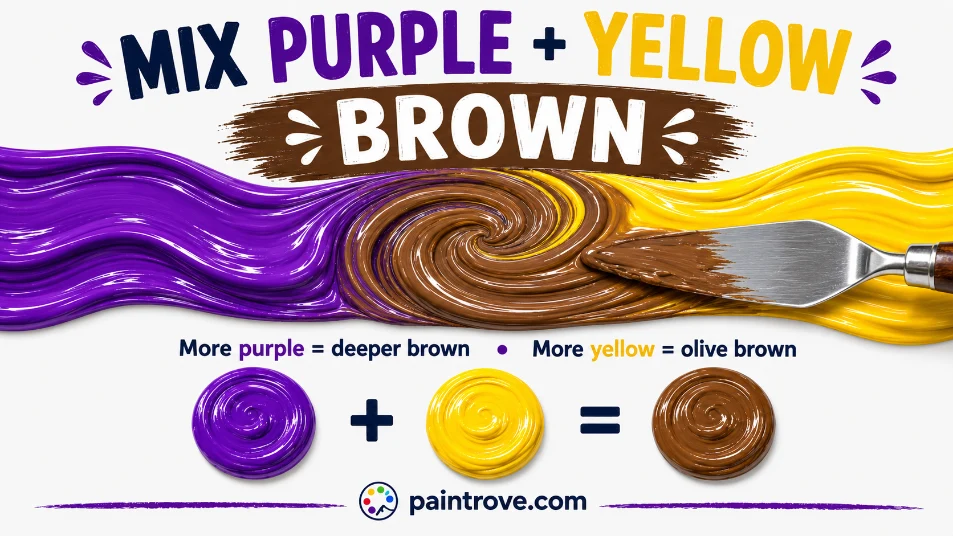
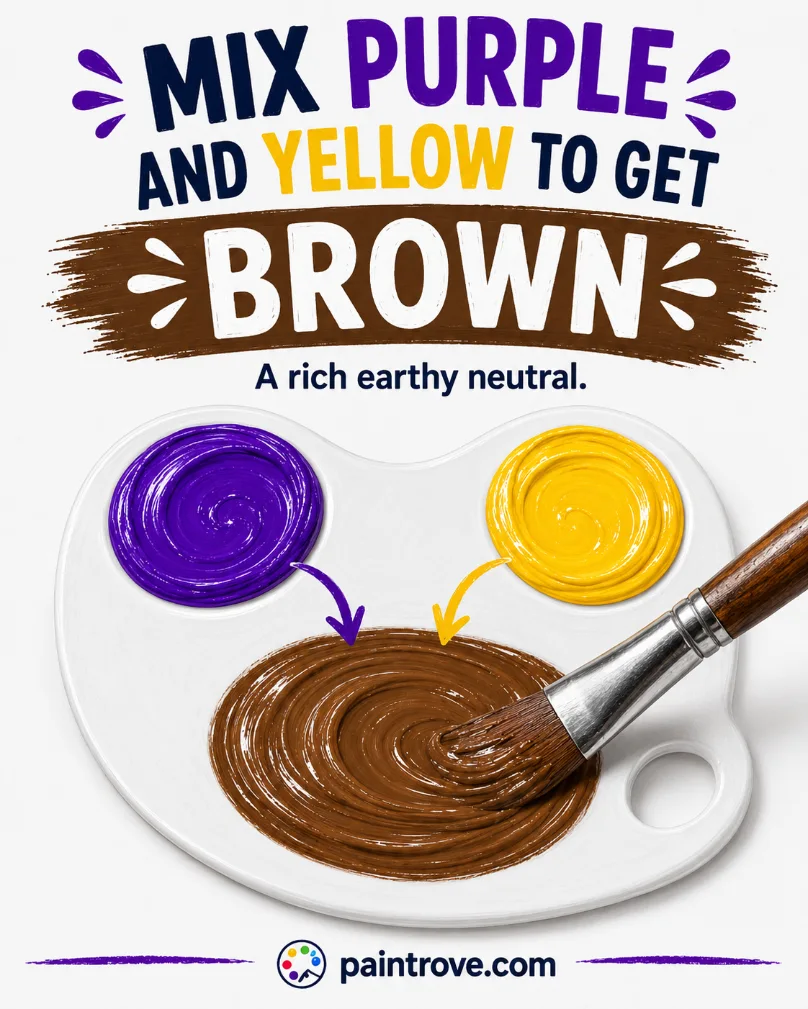
What Color Do Purple and Yellow Make? Mix purple and yellow together and you get a muddy brown, gray, or dusty mauve. A balanced mix lands on a neutral brownish tone around hex #8B7D6B, leaning toward purple gives a grayer, mauve-tinted result, and leaning toward yellow gives a lighter, sandier brown. These are not the bright colors the two vivid parents might suggest. They are soft, muted neutrals.
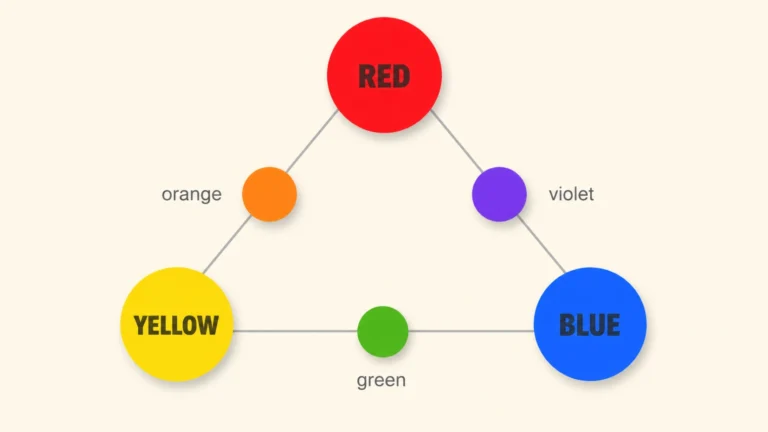
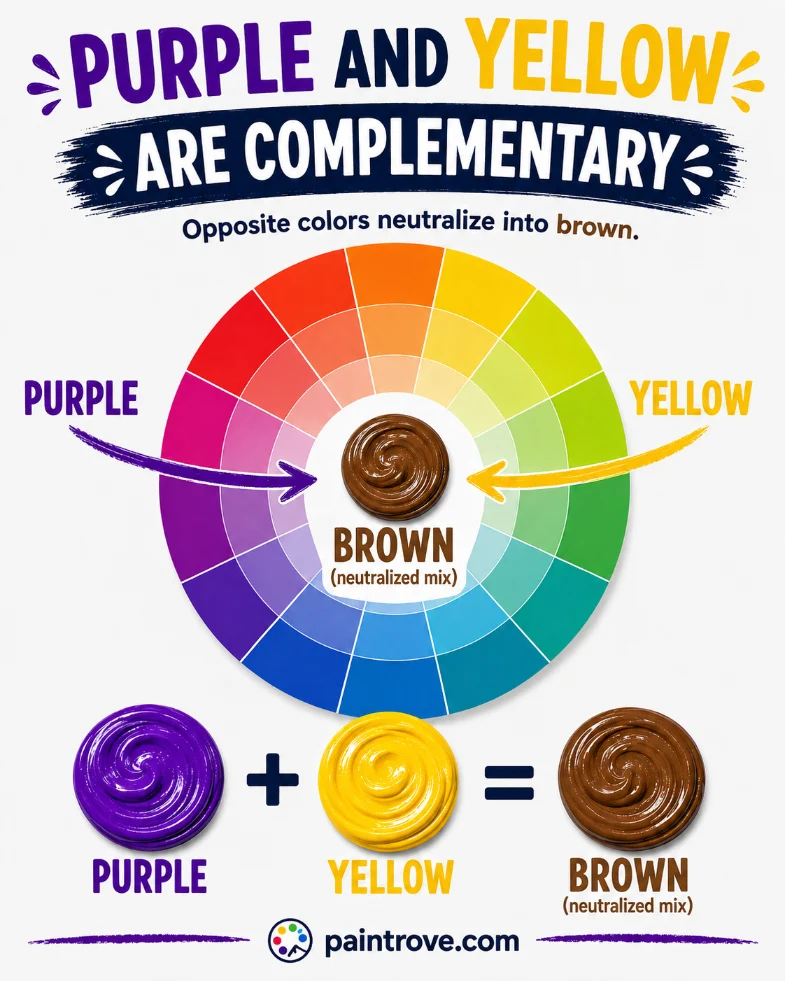
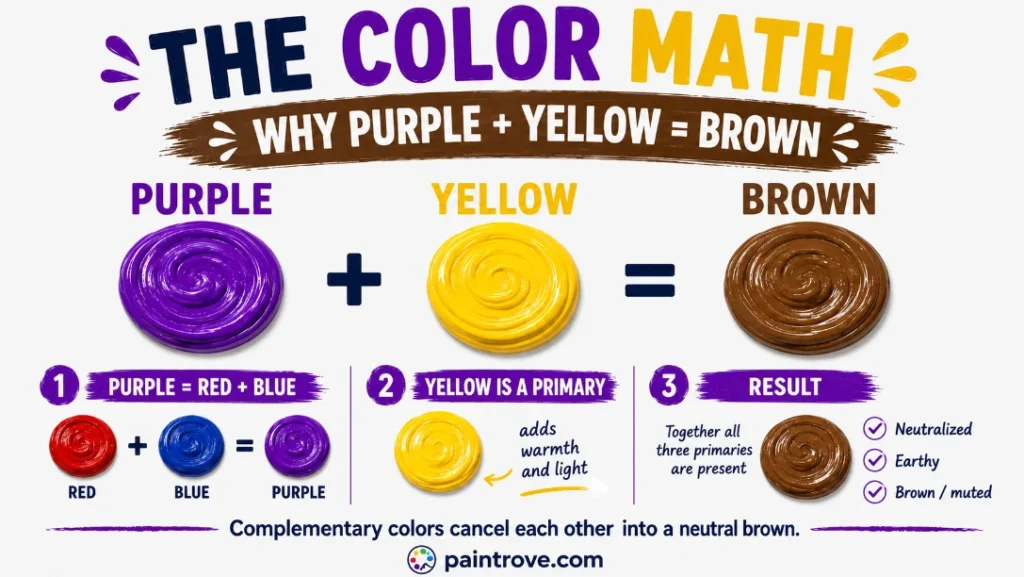
The reason is that purple and yellow are complementary colors, sitting directly opposite each other on the color wheel. When complementary colors mix, they cancel each other out into brown or gray.
This guide explains exactly why it happens, the ratios and hex codes for every neutral you can pull from the mix, how your pigments steer the result warm or cool, and one important correction: despite what some sources claim, purple and yellow paint do not make chartreuse or any bright color. In pigment, they make mud.
Why Purple and Yellow Make Brown
The key idea: purple and yellow are complementary opposites, and complements neutralize each other.
On the color wheel, yellow sits directly opposite purple. Colors in that relationship are complementary colors, and mixing any complementary pair collapses both toward brown or gray.
There is a simpler way to see it. Purple is a secondary color made from red and blue, as covered in what red and blue make. So when you add yellow to purple, you are combining all three primary colors at once:
Yellow + Purple = Yellow + (Red + Blue) = Red + Yellow + Blue = Brown
Mixing all three primaries always makes brown, which is the basis of every brown recipe in our full guide to how to make brown. Purple and yellow is one of the three classic complementary routes to brown, alongside red and green and blue and orange.
One thing sets this pair apart, though. Because purple is dark and yellow is very light, the two are far apart in value, which makes their mix trickier to balance than the other complementary browns. Get the ratio slightly off and you land on gray or mauve rather than a clean brown, which is exactly why this mix is so often described as muddy.
A Correction: Purple and Yellow Do Not Make Green
It is worth clearing up a common piece of misinformation. Some sources claim purple and yellow make chartreuse or a bright greenish-yellow. This is wrong for paint. That confusion comes from mixing up the color systems.
In paint (the RYB subtractive model), purple and yellow are complementary and make muddy brown or gray. Full stop.
The only situation where anything green-ish appears is a specific edge case in light or with certain digital blends, and even then it is not a reliable chartreuse. If you want chartreuse, mix yellow and green, as covered in yellow and green mixed, not yellow and purple. Anyone telling you purple and yellow paint makes a bright green has confused the models. On the palette, you will get mud every time, and that mud is genuinely useful.
Purple and Yellow Mixing Ratios and Hex Codes
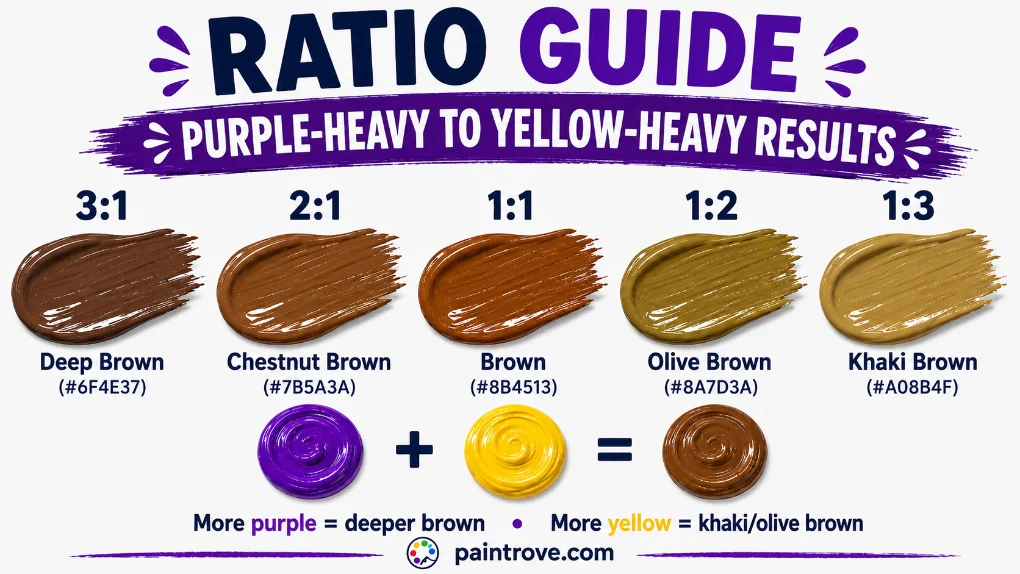
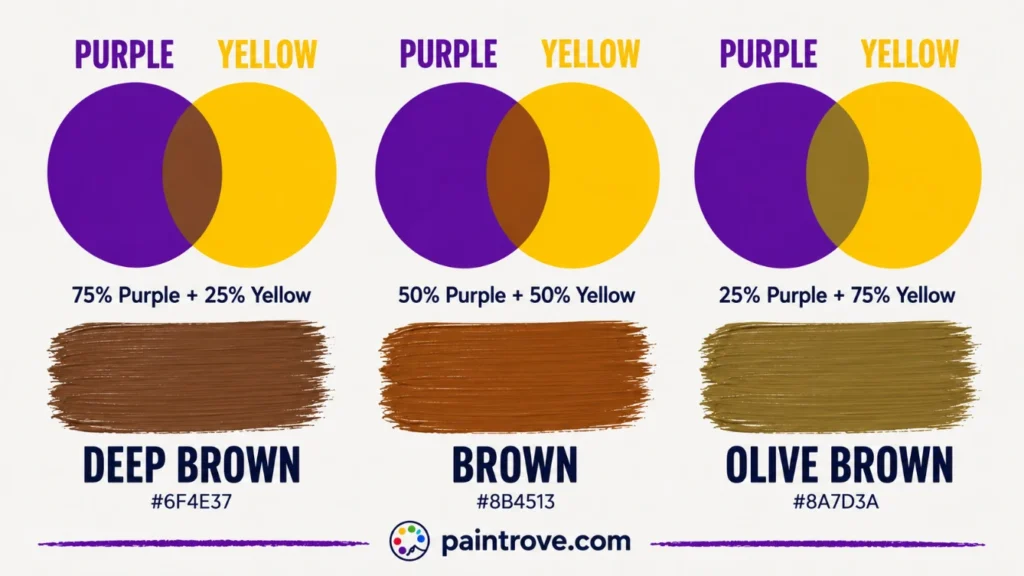
The ratio decides whether you land on brown, gray, or mauve. Here is the working chart with hex targets in plain text:
| Ratio (Purple : Yellow) | Resulting shade | Hex code |
|---|---|---|
| 1 : 3 | Sandy light brown | Hex #C2A878 |
| 1 : 2 | Warm muted brown | Hex #A18A5C |
| 1 : 1 | Neutral brown | Hex #8B7D6B |
| 2 : 1 | Grayish mauve-brown | Hex #7A6A6E |
| 3 : 1 | Dusty mauve-gray | Hex #6E5F68 |
| 1 : 1 plus white | Soft greige | Hex #C8BEB0 |
| 1 : 1 plus black | Deep taupe | Hex #4E4038 |
| 1 : 1 (near-equal) | Muddy gray | Hex #837D74 |
Practical notes:
- Because purple is strong and dark, add purple to yellow in small amounts. It is easy to overshoot into gray.
- Mix thoroughly before judging. A half-mixed complementary pair looks streaky and darker than the finished blend.
- Test on white paper and let it dry. These subtle neutrals are hard to read in a pile and shift as they dry, usually cooler.
How Undertones Steer the Result
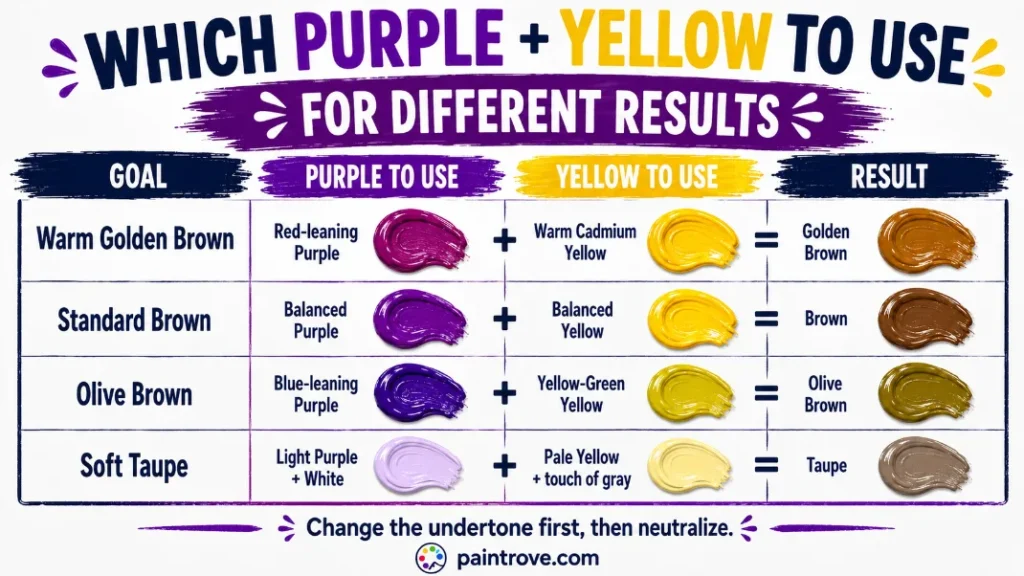
This is where control comes from. The bias of your purple and yellow decides the character of the neutral:
| Purple used | Yellow used | Resulting neutral |
|---|---|---|
| Warm red-purple | Warm cadmium yellow | Warm brown with a peach hint |
| Cool blue-purple | Cool lemon yellow | Cool brown with a green-gray hint |
| Bright dioxazine purple | Warm yellow | Rich, balanced brown |
| Light lavender | Lemon yellow | Sandy, pale grayscale-brown |
| Deep purple | Muted yellow ochre | Deep, earthy taupe |
The pattern, noted across mixing guides: warm purples and yellows lean the mud toward a reddish or peachy brown, while cool purples and yellows lean it toward a greenish gray.
A bright purple gives a richer brown; a pale lavender gives a lighter, sandier, more grayscale result. If your neutral keeps coming out lifeless, look at whether your two colors are fighting each other with opposing biases.
Every Neutral You Can Make from Purple and Yellow
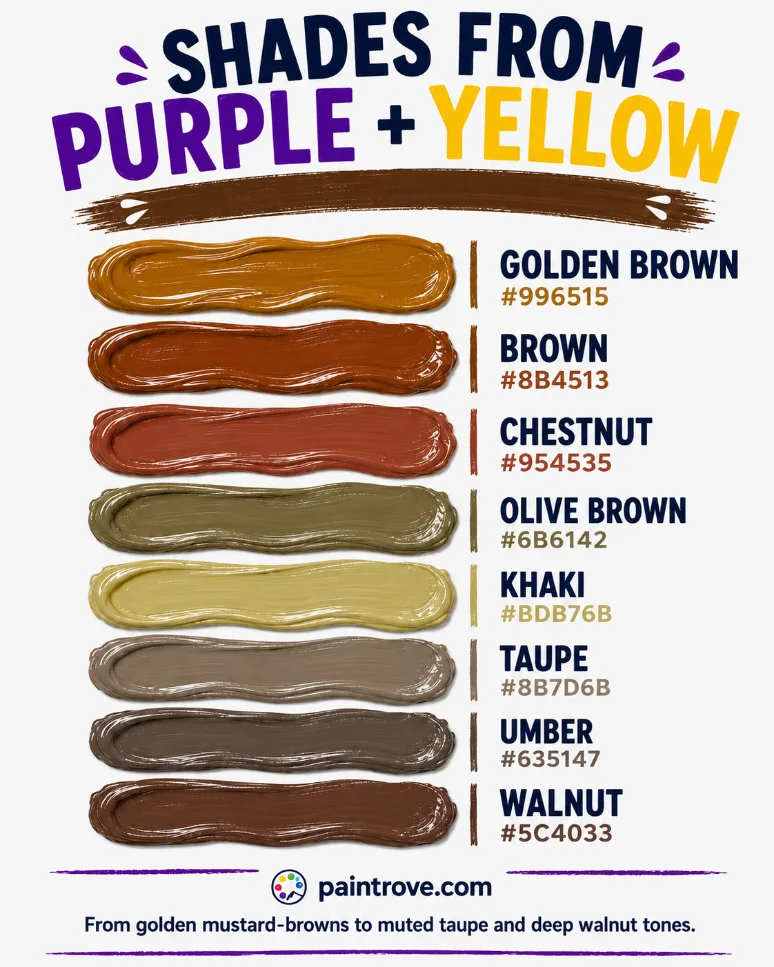
Between ratio, pigment choice, and additions of white or black, purple and yellow cover a soft band of browns, grays, and mauves. The reference table:
| Shade | Hex code | How to mix it |
|---|---|---|
| Neutral brown | Hex #8B7D6B | Equal parts purple and yellow |
| Sandy brown | Hex #C2A878 | Yellow-heavy mix |
| Warm taupe | Hex #A18A5C | Yellow-heavy mix, warm pigments |
| Mauve-brown | Hex #7A6A6E | Purple-heavy mix |
| Dusty mauve | Hex #9E8291 | Purple-heavy mix plus a little white |
| Muddy gray | Hex #837D74 | Near-equal balanced mix |
| Greige | Hex #C8BEB0 | Balanced mix plus white |
| Taupe | Hex #483C32 | Balanced mix plus black |
| Deep taupe | Hex #4E4038 | Balanced mix plus more black |
| Mushroom | Hex #A89A8E | Balanced mix plus white, warm lean |
| Khaki-brown | Hex #A29A73 | Cool mix, yellow-leaning |
| Puce | Hex #722F37 | Red-purple heavy mix, deep |
Lighter Versions (Tints)
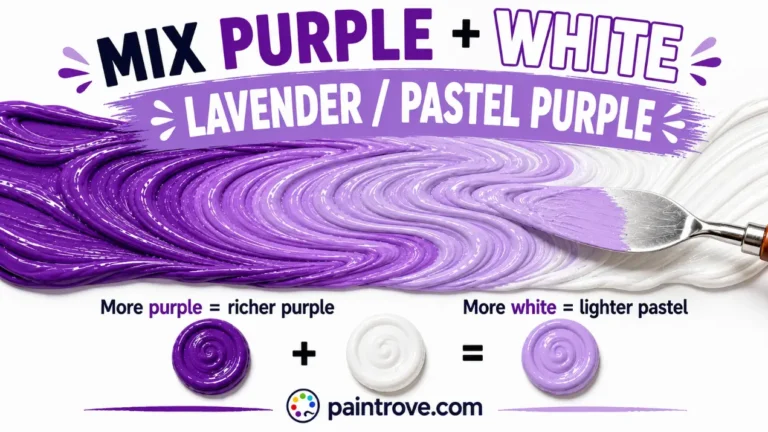
Add white to move the mix into greige, mushroom, and soft mauve-gray, the quiet backdrop neutrals of modern interiors. To lighten while keeping warmth, add yellow instead of white, since white alone can make the neutral chalky and cold. The full lightening route is covered in brown and white mixed.
Darker Versions (Shades)
A small amount of black deepens the mix into taupe and deep mauve-brown. Go gently; black overwhelms these subtle neutrals fast. Adding more purple is a good alternative route to depth, keeping the mix richer.
Toward Mauve
Leaning purple-heavy and adding a touch of white produces dusty mauve, one of the most useful muted colors in the family. This connects to the softer mauves from green and purple mixed and the pink-purples of pink and purple mixed.
Purple and Yellow in Light
Everything above describes paint. In light, using the RGB model, the answer changes completely.
In the additive system, yellow light is made from red and green, and purple light is made from red and blue. Combine them and you have red, green, and blue all present, which adds up toward white or a pale, light neutral, not brown. Complementary colors in light always combine toward white, which is the definition of complementary in the additive model.
| System | Type | Purple + Yellow makes | Result |
|---|---|---|---|
| RYB (paint) | Subtractive | Muddy brown, gray, or mauve | Hex #8B7D6B |
| RGB (light and screens) | Additive | White or pale neutral | Hex #FFFFFF |
| CMYK (printing) | Subtractive | Muddy brown | Varies |
Printing, covered in our guide to the CMYK color model, behaves like paint since it is subtractive, producing muddy neutrals from the combined inks.
Troubleshooting Purple and Yellow Mixes
The mix is a dead, flat gray. You hit a near-perfect complementary cancel. Add a little of one parent back, usually yellow, to give the neutral warmth and direction.
The mix is muddy and murky rather than a clean brown. This pair is prone to it because the parents are so far apart in value. Simplify your pigments, and accept that purple and yellow rarely gives the cleanest brown. Red and green or blue and orange are easier routes to a clean brown.
The mix is too gray. Purple, being dark and strong, took over. Add more yellow to warm and lighten it toward brown.
The mix looks green-gray. Both parents lean cool. Switch to a warmer purple or warmer yellow if you want a warmer neutral.
It dried duller. Standard acrylic behavior. Mix a step warmer and lighter than your target.
Mixing Purple and Yellow in Different Mediums
Because this pair is prone to mud, the medium matters more than usual.
Acrylics and oils let you balance the strong purple against the light yellow on the palette, which is the only reliable way to steer between brown, gray, and mauve. Oils give the most working time to fine-tune. Both dry slightly darker, so mix a touch lighter and warmer.
Watercolor actually handles this pair gracefully: rather than pre-mixing to mud, many painters drop purple and yellow washes together on wet paper, letting them neutralize softly in the overlap. This produces luminous, granulating grays and browns far livelier than a flat palette mix, which is why complementary washes are a favorite trick for natural shadows.
Gouache and digital stay predictable, with digital making it easy to dial the exact ratio and undo any overshoot into dead gray.
Whichever medium you use, remember this pair is the least forgiving of the three complementary browns, so for a clean chocolate brown, the routes in blue and orange mixed and red and green mixed are easier to control.
Purple and Yellow in Art, Fashion, and Design
Here is the paradox this pair shares with all complements: purple and yellow mix into humble mud, but placed side by side they create one of the most striking contrasts in all of design.
In Art
Painters value purple-yellow neutrals precisely because they are muted. A gray or brown mixed from complements sits harmoniously in a painting because it contains the colors around it, which is why experienced painters build their neutrals from complementary pairs rather than reaching for tube gray.
Purple and yellow specifically is a favorite for mixing natural shadow tones and muted backgrounds. Used unmixed, the pair is electric: purple and yellow is the highest-contrast complementary combination involving yellow, which is why it appears in everything from van Gogh’s canvases to warning signs.
In Fashion
Purple and yellow together is a bold, high-energy statement, used deliberately when a look needs to command attention, and it carries strong associations, from sports teams to Mardi Gras. Softened, the pairing becomes more wearable as lavender with soft gold.
The muted offspring of the mix, taupe, greige, and dusty mauve, are quiet wardrobe staples in their own right, the reliable neutrals of tailoring and knitwear.
In Interiors and Branding
The neutrals born from purple and yellow, greige, mushroom, and taupe, are among the most popular backdrop colors in modern interiors, precisely because they are soft, warm, and endlessly compatible.
Used unmixed, purple and gold reads as regal and luxurious, a classic pairing in heraldry and premium design. In branding, the high-contrast version signals energy and creativity, while the muted neutrals signal calm sophistication.
Quick Reference: Purple + Yellow Cheat Sheet
| Question | Answer |
|---|---|
| Purple + yellow in paint | Muddy brown, gray, or mauve (hex #8B7D6B) |
| Purple + yellow in light | White or pale neutral |
| Why | They are complements; together they contain all three primaries |
| Do they make green? | No, that is a color-model mistake |
| More yellow | Sandy, warm brown |
| More purple | Grayish mauve-brown |
| Plus white | Greige, mushroom |
| Plus black | Taupe, deep mauve-brown |
| Fix a gray mix | Add yellow for warmth |
| Cleaner brown alternative | Red and green, or blue and orange |
FAQs: what does purple and yellow make
what color does purple and yellow make when mixed?
A muddy brown, gray, or dusty mauve. Purple and yellow are complementary colors, and because purple contains red and blue, mixing it with yellow combines all three primaries, which neutralizes into a muted brown or gray rather than a bright new color.
Do purple and yellow make green?
No. This is a common myth caused by confusing color systems. In paint, purple and yellow are complementary and make brown or gray. For green or chartreuse, mix yellow with blue or with green, not with purple.
Why is the purple and yellow mix so muddy?
Because purple is dark and yellow is light, the two are far apart in value, which makes their mix harder to balance than other complementary browns. A slight imbalance tips it into gray or mauve. For a cleaner brown, red and green or blue and orange are easier.
How do you make mauve from purple and yellow?
Use a purple-heavy mix and add a touch of white. The dominant purple plus the muting effect of a little yellow, lightened with white, produces dusty mauve. Starting with a bright purple gives the best mauve.
Do purple and yellow make brown or gray?
Both are possible. A balanced or yellow-leaning mix gives brown; a near-perfectly balanced complementary mix gives gray; a purple-heavy mix gives mauve-gray. The ratio and the undertones decide which.
Are purple and yellow a good color combination?
Side by side, they form one of the boldest complementary contrasts in design, striking and high-energy, used in art, sports, and signage. Mixed, they produce useful muted neutrals. Both come from the same complementary relationship.
What is the best complementary pair for mixing brown?
Red and green or blue and orange generally give cleaner, richer browns than purple and yellow, because their parents are closer in value. Purple and yellow is better suited to grays and dusty mauves than to clean chocolate browns.
Purple and yellow make muddy brown, gray, and mauve, not the bright color the vivid parents suggest and definitely not green. The mud is useful, though: these complementary neutrals are some of the most natural and versatile colors an artist can mix.