What Color Does Brown and Yellow Make When Mixed?
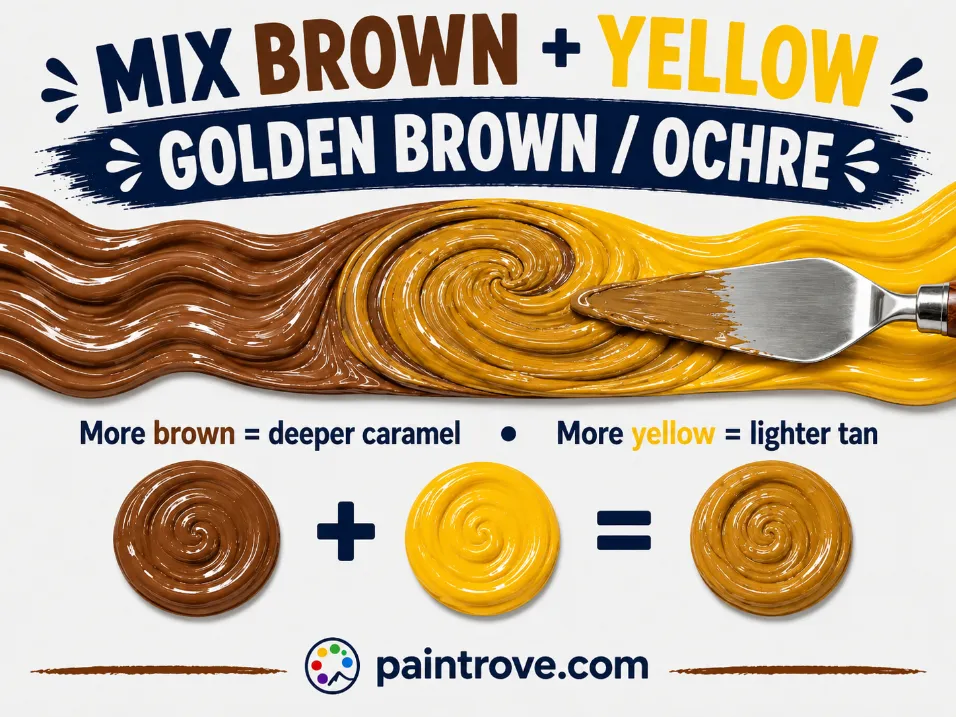
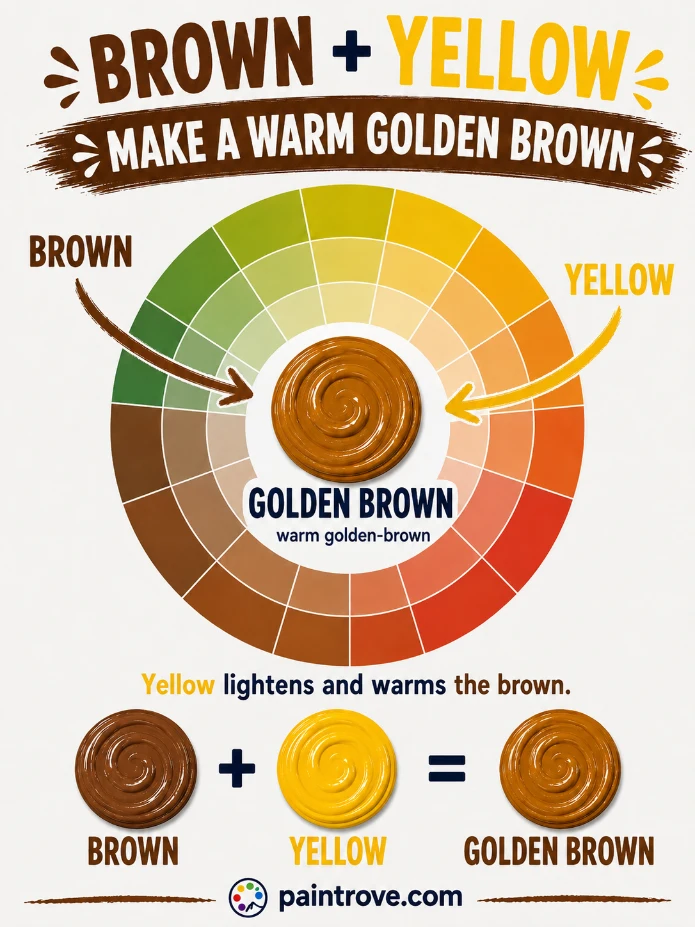
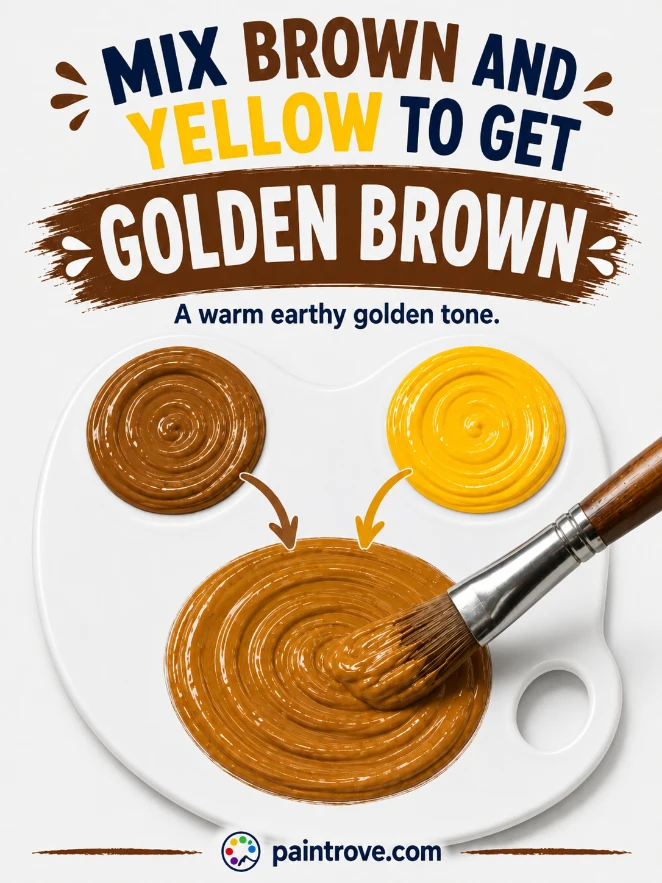
What Color Does Brown and Yellow Make? Brown and yellow make mustard, a warm golden-brown, at around hex #C9A227. Adding yellow to brown lightens and warms it, producing earthy golden tones like mustard, ochre, golden tan, and honey. The more yellow you add, the brighter and more golden the result; the more brown, the deeper and earthier.
Brown and yellow is one of the easiest and most rewarding mixes on the palette, because yellow simply lifts brown toward the warm, glowing colors of autumn: mustard, ochre, camel, and tan. There is no risk of mud here, only a question of how golden or how earthy you want the result.
This guide covers why the mix works, the exact ratios with hex codes, the pigments that give the cleanest golden brown, the full range of shades, and how the answer changes in light.
Why Do Brown and Yellow Make Mustard?
Brown and yellow make mustard because yellow is already one of brown’s building blocks, so adding more yellow simply strengthens the warm, golden side of the brown.
Here is the reasoning. Brown is a dark, desaturated version of orange, and it contains all three primary colors, red, yellow, and blue, as explained in how to make brown. Yellow is a primary color on its own. So the mix looks like this:
Brown + Yellow = (Red + Yellow + Blue) + Yellow = Red + Yellow + Yellow + Blue
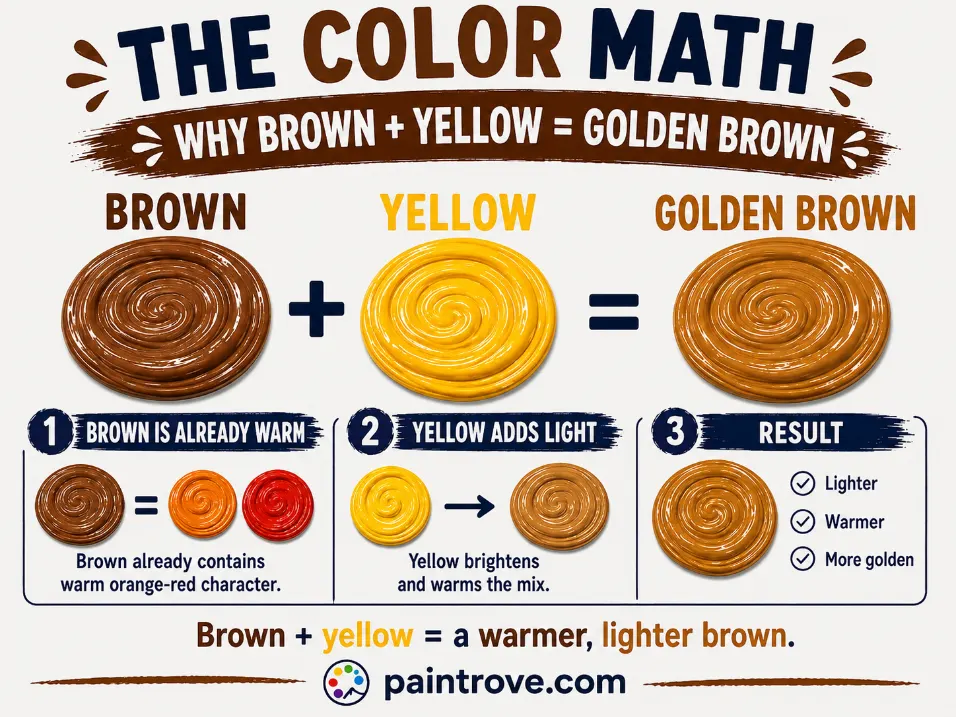
The extra yellow tips the balance of the brown toward its yellow component. Because yellow is a light, warm, bright color, adding it both lightens the brown and warms it, pulling the mix toward gold. Since brown is fundamentally dark orange, brightening its yellow side naturally produces the mustard, ochre, and golden-tan family. This is why the result is not a new hue but a lighter, warmer, more golden brown.
This makes brown and yellow the reverse of darkening a color. Where black would deepen brown, and blue would cool it, yellow lifts and warms it, which is exactly what you want for sunlit wood, autumn leaves, and golden fields.
What Colors Do Brown and Yellow Make? The Full Range
Brown and yellow produce a family of warm, earthy golds rather than a single color. The exact shade depends on the ratio and the type of yellow and brown you use:
| Result | Hex code | When you get it |
|---|---|---|
| Mustard | Hex #C9A227 | Balanced mix, warm brown |
| Ochre | Hex #CC7722 | Brown-heavy mix, red-brown base |
| Golden tan | Hex #D2B48C | Yellow-heavy mix |
| Honey | Hex #EBA937 | Yellow-heavy mix, bright yellow |
| Camel | Hex #C19A6B | Balanced mix plus a little white |
| Khaki | Hex #C3B091 | Yellow plus a cooler or grayer brown |
| Olive-brown | Hex #808000 | Yellow plus a green-leaning brown |
| Caramel | Hex #AF6E4D | Brown-heavy mix, warm |
| Amber | Hex #FFBF00 | Very yellow-heavy mix |
Brown and Yellow Mixing Ratios and Hex Codes
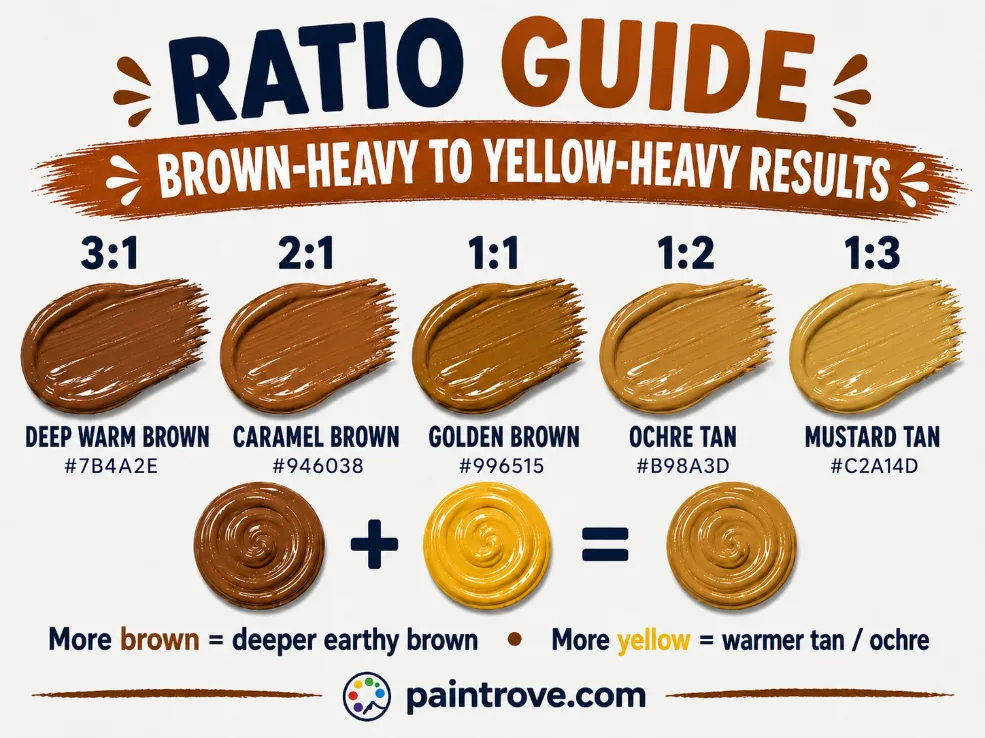
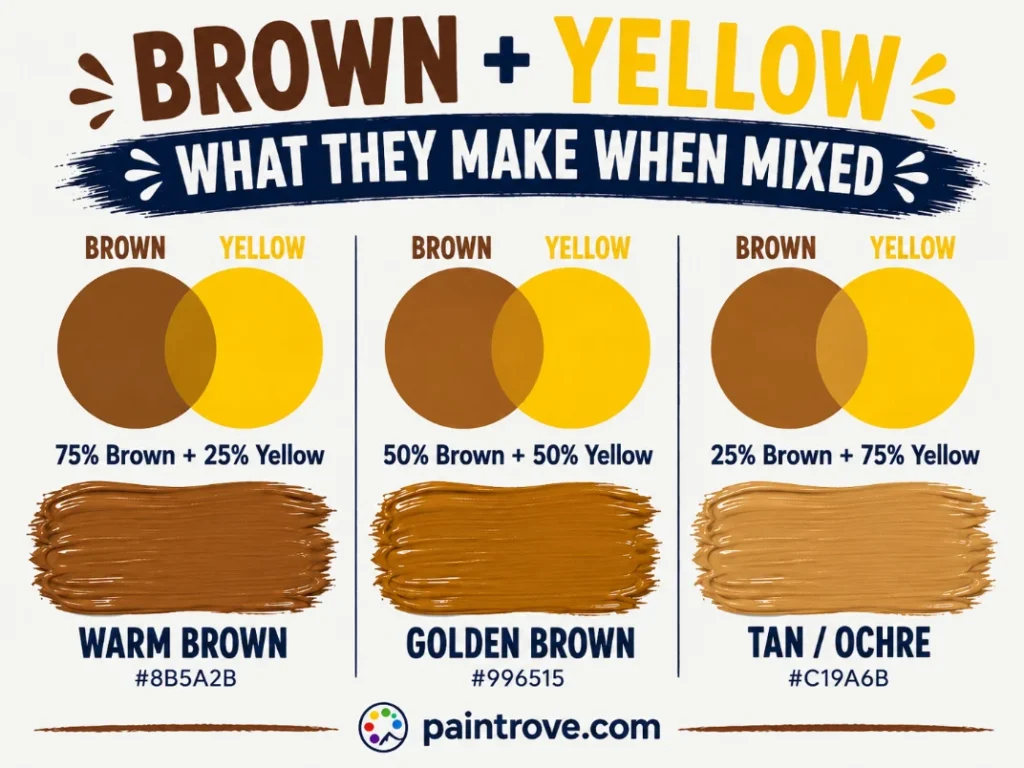
The ratio controls how golden or earthy your result is. Here is the working chart with hex targets in plain text:
| Ratio (Brown : Yellow) | Resulting shade | Hex code |
|---|---|---|
| 3 : 1 | Deep caramel brown | Hex #8B5A2B |
| 2 : 1 | Ochre-brown | Hex #B07728 |
| 1 : 1 | Mustard | Hex #C9A227 |
| 1 : 2 | Golden honey | Hex #E0A82E |
| 1 : 3 | Bright amber-gold | Hex #F0B846 |
| 1 : 1 plus white | Camel / tan | Hex #C19A6B |
| 1 : 1 plus a touch of gray | Khaki | Hex #C3B091 |
| 1 : 1 with a green-brown | Olive-brown | Hex #6B6142 |
Practical notes:
- Add yellow to brown gradually. Yellow lightens and warms quickly, so build the gold slowly to hit the exact shade.
- Mix thoroughly before judging. A half-mixed blend looks streaky and darker than the finished color.
- Test on white paper and let it dry. Golden browns are easier to judge than dark ones, but acrylics still dry slightly darker.
Which Brown and Yellow Pigments Should You Use?
The type of yellow and brown decides the character of the gold:
| Brown used | Yellow used | Resulting gold |
|---|---|---|
| Warm red-brown (burnt sienna) | Cadmium yellow | Rich, glowing mustard-ochre |
| Neutral brown (raw umber) | Cadmium yellow | Balanced golden brown |
| Cool brown | Lemon yellow | Muted khaki-gold |
| Warm brown | Yellow ochre | Deep, earthy golden brown |
| Any brown | Lemon yellow | Cooler, greener gold |
The pattern: a warm brown with a warm cadmium yellow gives the richest, most glowing mustard, while a cool brown or a cool lemon yellow pulls the mix toward a greener, more muted khaki. For classic mustard and ochre, reach for a warm brown and cadmium yellow. Note that a green-leaning yellow can push the mix toward olive, since it introduces more of the yellow-blue combination that makes green.
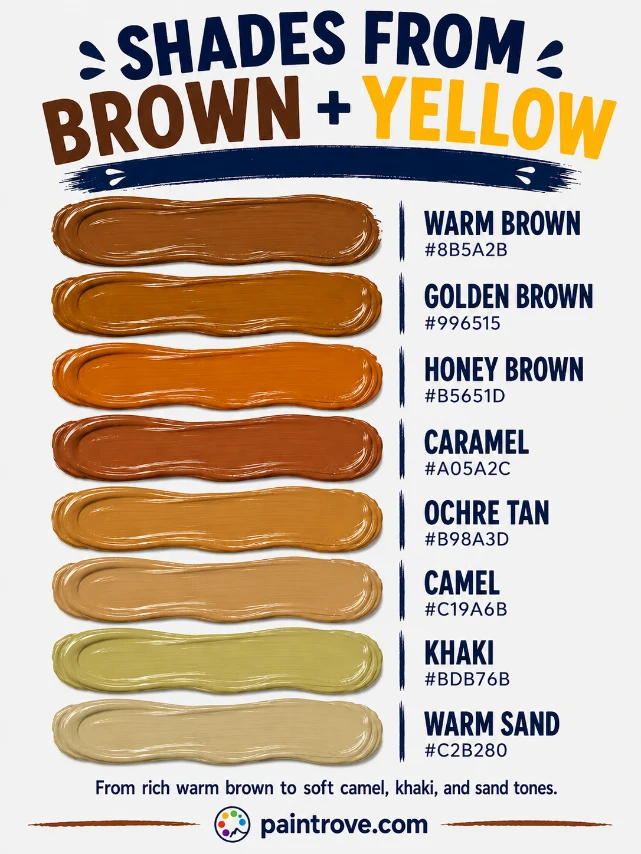
Every Golden Brown Shade You Can Make
Between ratio, pigment choice, and additions of white or gray, brown and yellow cover the warm golden side of the earth-tone family. The reference table:
| Shade | Hex code | How to mix it |
|---|---|---|
| Mustard | Hex #C9A227 | Equal parts brown and yellow |
| Ochre | Hex #CC7722 | Brown-heavy mix |
| Golden tan | Hex #D2B48C | Yellow-heavy mix plus white |
| Honey | Hex #EBA937 | Yellow-heavy mix |
| Amber | Hex #FFBF00 | Very yellow-heavy mix |
| Camel | Hex #C19A6B | Balanced mix plus white |
| Khaki | Hex #C3B091 | Yellow plus grayer brown |
| Olive-brown | Hex #6B6142 | Yellow plus green-brown |
| Caramel | Hex #AF6E4D | Brown-heavy warm mix |
| Wheat | Hex #F5DEB3 | Golden mix plus generous white |
| Bronze | Hex #CD7F32 | Brown-heavy mix, deep gold |
| Sand | Hex #C2B280 | Muted gold plus white |
How Do You Make Mustard Yellow from Brown and Yellow?
Mix roughly equal parts of a warm brown and a warm yellow, then adjust: add more yellow for a brighter, more golden mustard, or more brown for a deeper, dustier mustard. A tiny touch of red deepens it toward a classic dark mustard. Mustard sits at around hex #C9A227, and it is one of the most-searched results of this mix because it is hard to buy as a single tube yet easy to blend.
How Do You Make Golden Tan or Camel?
Add white to a golden mix to reach camel, tan, and wheat, the soft, warm neutrals used for sand, skin, and cozy interiors. To keep the warmth as you lighten, add a little extra yellow along with the white. The full lightening route is covered in brown and white mixed, and the sandy end of this family has its own guide at how to make sand color.
How Do You Make Olive or Khaki?
Use a cooler or green-leaning yellow, or add a touch of gray, to shift the mix toward khaki and olive-brown. Because these carry a hint of green, they connect to the olive tones of yellow and green mixed and orange and green mixed.
What Do Brown and Yellow Make in Light?
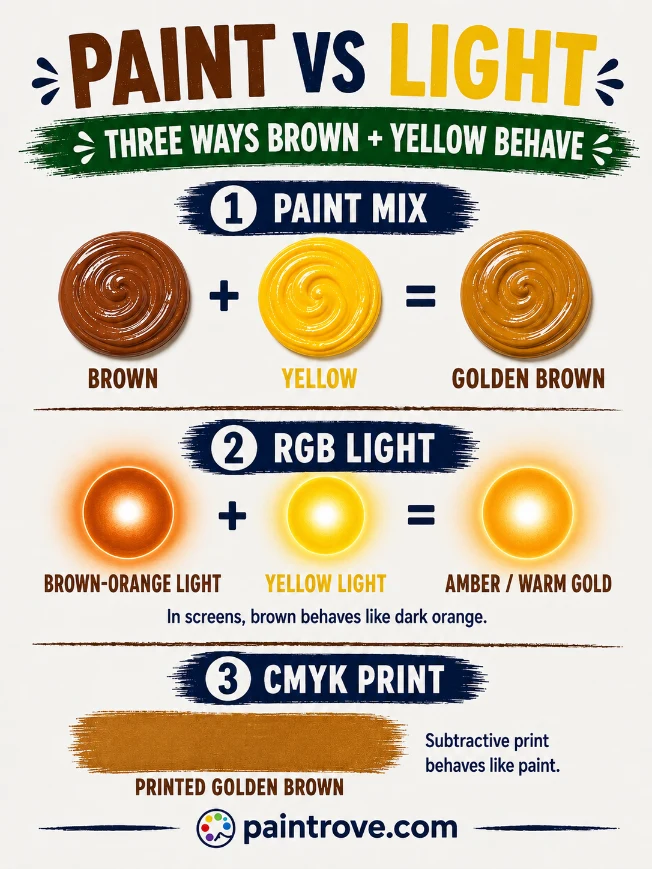
Brown and yellow cannot be mixed in light, because brown light does not exist. This is a genuinely interesting quirk of how color works.
Screens and lights use the RGB model, where colors add together and brighten. Brown only exists as a dark, dull orange seen in context, and light cannot be dark or dull, since adding light only makes things brighter.
There is no brown on the visible light spectrum and no brown light to mix. If you try to create brown and yellow together in RGB, you end up with a brighter orange, amber, or sepia tone rather than a true golden brown.
| System | Type | Brown + Yellow makes | Result |
|---|---|---|---|
| RYB (paint) | Subtractive | Mustard, golden brown | Hex #C9A227 |
| RGB (light and screens) | Additive | Bright orange or amber (no true brown) | Varies |
| CMYK (printing) | Subtractive | Golden brown | Varies |
Printing, covered in our guide to the CMYK color model, behaves like paint since it is subtractive, producing golden browns from combined inks.
Troubleshooting yellow and brown combination
The mix looks dull or muddy. Your brown may be too dark or too cool, or your yellow too weak. Use a warmer brown and a strong cadmium yellow for a cleaner, brighter gold.
The mix turned greenish. Your yellow leans green (lemon yellow), or your brown has a green bias, pushing toward olive. Switch to a warm cadmium yellow for a truer gold.
The mix is not golden enough. Add more yellow. It takes a fair amount to shift a dark brown toward mustard, so keep adding gradually.
The mustard is too pale. Too much yellow or white. Add a little more brown to deepen and richen it.
It dried darker. Standard acrylic behavior. Mix a step brighter and lighter than your target.
Mustard and Golden Brown in Art, Fashion, and Design
The golden browns from brown and yellow are among the warmest, most inviting colors in any palette, carrying strong associations with autumn, harvest, and vintage warmth.
In Art
Mustard, ochre, and golden brown are essential to landscape and still-life painting, capturing autumn foliage, dried grass, golden light, wood, and warm skin. Ochre in particular is one of the oldest pigments known, used in cave paintings over 40,000 years ago, and it remains a studio staple.
Mixing golden browns from brown and yellow rather than relying on a single tube gives precise control over exactly how warm, deep, or bright the gold sits, which is invaluable for capturing sunlight and warmth convincingly.
In Fashion
Mustard yellow has become one of fashion’s defining warm tones, reading as retro, cozy, and confident, a staple of autumn wardrobes and vintage-inspired style. Camel and tan, the lighter members of this family, are timeless neutrals, with the camel coat a lasting symbol of quiet luxury.
Golden browns flatter warm skin tones especially well and pair naturally with denim, cream, forest green, and burgundy.
In Interiors and Branding
Mustard, ochre, and golden brown bring warmth and a vintage, earthy character to interiors, working beautifully with wood, leather, and deep greens in cozy, retro-leaning schemes.
In branding, golden browns signal warmth, craft, tradition, and quality, which is why they appear across artisanal food, heritage, and hospitality identities aiming to feel warm and established.
Quick Reference: Brown + Yellow Cheat Sheet
| Question | Answer |
|---|---|
| Brown + yellow in paint | Mustard / golden brown (hex #C9A227) |
| Brown + yellow in light | Cannot mix; brown light does not exist |
| More yellow | Honey, amber, bright gold |
| More brown | Ochre, caramel, deep earthy brown |
| Plus white | Camel, tan, wheat |
| Plus gray | Khaki |
| Green-leaning yellow | Olive-brown |
| Best pigments | Warm brown + cadmium yellow |
| Color type | Warm golden brown, a tint of brown |
FAQs: brown and yellow make what color
what color does brown and yellow make when mixed?
Brown and yellow make mustard, a warm golden-brown at around hex #C9A227. Adding yellow lightens and warms the brown, producing earthy golden tones like mustard, ochre, tan, and honey. The more yellow, the brighter and more golden the result.
How do you make mustard yellow?
Mix roughly equal parts of a warm brown and a warm cadmium yellow, then adjust with more yellow for brightness or more brown for depth. A tiny touch of red gives a classic dark mustard. Mustard is easier to mix than to buy as a single tube.
Do brown and yellow make gold?
Yes, effectively. A yellow-heavy mix of brown and yellow produces honey, amber, and golden tones close to gold. Adding white gives the softer golden tans and camels of the same family.
Why does my brown and yellow mix look green?
Your yellow or brown leans green. A lemon yellow or a green-biased brown introduces the yellow-blue combination that makes green, pushing the mix toward olive. Use a warm cadmium yellow and a warm brown for a true gold.
Can you mix brown and yellow in light?
No. Brown light does not exist, because brown is a dark, dull orange and light can only add brightness. Combining brown and yellow in RGB produces a bright orange or amber rather than a true golden brown.
How do you make tan or camel from brown and yellow?
Mix brown and yellow to a golden brown, then add white to lighten it into camel, tan, and wheat tones. Add a little extra yellow while lightening to keep the warmth from going chalky.
What is the difference between mustard, ochre, and khaki?
All three come from brown and yellow. Mustard is a warm golden-brown at hex #C9A227. Ochre is deeper and more orange at hex #CC7722. Khaki is a muted, grayer, greener gold at hex #C3B091. They differ mainly in warmth and how muted each is.
Is mustard warm or cool?
Mustard is a warm color. It is built on brown, which is rooted in red and yellow, and boosted with more yellow, placing it firmly on the warm side of the palette. This warmth is why it reads as cozy and autumnal.
Brown and yellow make mustard and the whole golden-brown family, from bright honey and amber to soft camel and tan. It is one of the friendliest mixes on the palette: yellow simply lifts and warms brown into gold, with no mud in sight.
For the full neutral system, see how to make brown, explore the parent color at what colors make yellow, lighten toward sand with how to make sand color, or step back to the color wheel.